Automated vs Manual Loading Laser Cutting Machines: A Guide for High-Mix and Mass Production
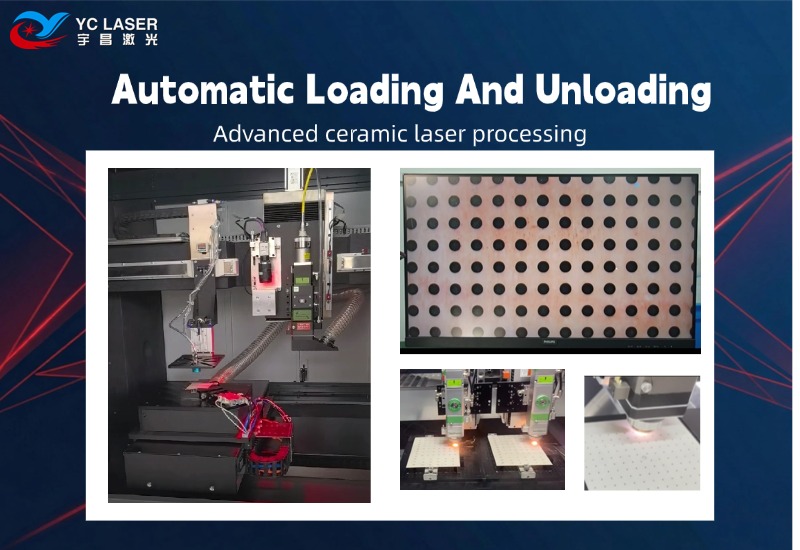
Automated loading and manual loading laser cutting machines should be selected by production profile, not by ranking. A fully automated loading and unloading high precision laser cutting machine is the right answer when part geometry repeats, batch volume is high, and the machine is expected to run continuously. A manual or semi-automatic machine is the right answer when the part mix changes daily, batches are small, and process parameters still need engineering judgment. Choosing against your own production profile is the single most common reason a new machine ends up either idle or overloaded.
This guide compares the two loading configurations against the two extremes of real production — standardized mass production and high-mix flexible production — using documented deployment evidence from YCLASER (Wuhan Yuchang Laser Technology Co., Ltd.). That evidence includes a seven-machine ceramic cutting line that has operated 24/7 for more than four years, and a customized dual-head, dual-optical-path unit built for small-batch, multi-category flexible production.
What the Loading and Unloading Decision Actually Determines
On a high precision laser cutting machine, loading and unloading describes how a workpiece reaches the worktable, how it is positioned, and how finished parts leave the machine. YCLASER equipment documents three distinct operating modes that map directly onto three levels of loading automation.
- Manual loading with manual debugging mode: an operator performs single-point marking, partial test cutting, and process parameter debugging, then runs sample tests. This is the mode used for new material verification.
- Semi-automatic loading: the operator loads and unloads manually while the machine executes the stored cutting program automatically.
- Fully automated loading and unloading: the machine or an integrated transfer module performs loading and unloading without an operator present at each cycle. Automatic mode imports DXF/DWG drawings, the software nests materials automatically, and processing runs continuously for mass production. The automated loading and unloading system can also be integrated with an automated production line for in-line operation.
The choice therefore controls four things at once: how many of the machine's rated hours become actual cutting hours, how much labor is attached to each shift, how consistent part positioning stays across a long run, and how much uptime depends on human attention.
The problem with comparing loading methods like a feature
Procurement teams often compare loading options the way they compare laser power. That framing hides the real constraint. An automated loader installed on a plant that changes part numbers three times a day adds capital cost, integration scope, and changeover time without adding throughput. A manual loader installed on a plant that cuts the same ceramic substrate twenty hours a day converts machine capacity into operator shifts, and every manual placement becomes a positioning variable.
The practical question is not "automated or manual". It is: how many hours per day will this machine run the same part, and who will be standing next to it? Everything in the comparison below follows from those two numbers.
Why the Decision Now Carries More Cost Than It Used To
Laser cutting capacity is expanding quickly, and the material mix has shifted toward hard and brittle substrates that punish inconsistent handling.
- The global laser cutting machines market was estimated at USD 5.74 billion in 2024 and is projected to reach USD 12.61 billion by 2035, according to Market Research Future.
- The global PCB laser drilling machines market was valued at USD 1.8 billion in 2025, with a CAGR of 8.1% through 2034, according to Dataintelo.
- The picosecond laser market was estimated at USD 3.99 billion in 2026 and is projected to grow at a 23.8% CAGR to USD 31.44 billion by 2035, according to Next Move Strategy Consulting.
- Fiber lasers reached over 60% of global installations by 2025, displacing CO2 sources, with wall-plug efficiency of 45% versus 30%, as reported by DNE Global.
Two of those figures bear directly on the loading decision. PCB drilling growth is a high-volume, high-repeat application where loading automation converts straight into output. Picosecond growth is a precision application where positioning accuracy and edge quality dominate, and where unplanned manual handling is a quality risk rather than a labor cost.
Material behavior explains the rest. Laser processing of silicon steel sheets reduces the heat affected zone to below 0.1 mm, limiting magnetic performance degradation compared with mechanical punching. That advantage is only realized if the sheet is positioned the same way in every cycle — a repeatability question that a non-contact process otherwise removes.
YCLASER, based in the Optics Valley laser industry cluster in Wuhan, offers 12 specific model designations under a single precision laser cutting platform, including the YC-TC01, YC-TCAT, YC-GJMPCB, YC-BLDW, YC-UVP and YC-UVN. That single-platform structure is what makes loading automation a configuration decision rather than a machine-family decision. Buyers selecting between automated and manual loading are choosing an option on the same platform, not switching suppliers.
Two Documented Deployment Profiles
The clearest way to compare automated and manual loading is to examine two installations built for opposite production profiles.
Profile A — standardized mass production: seven machines, four years, 24/7
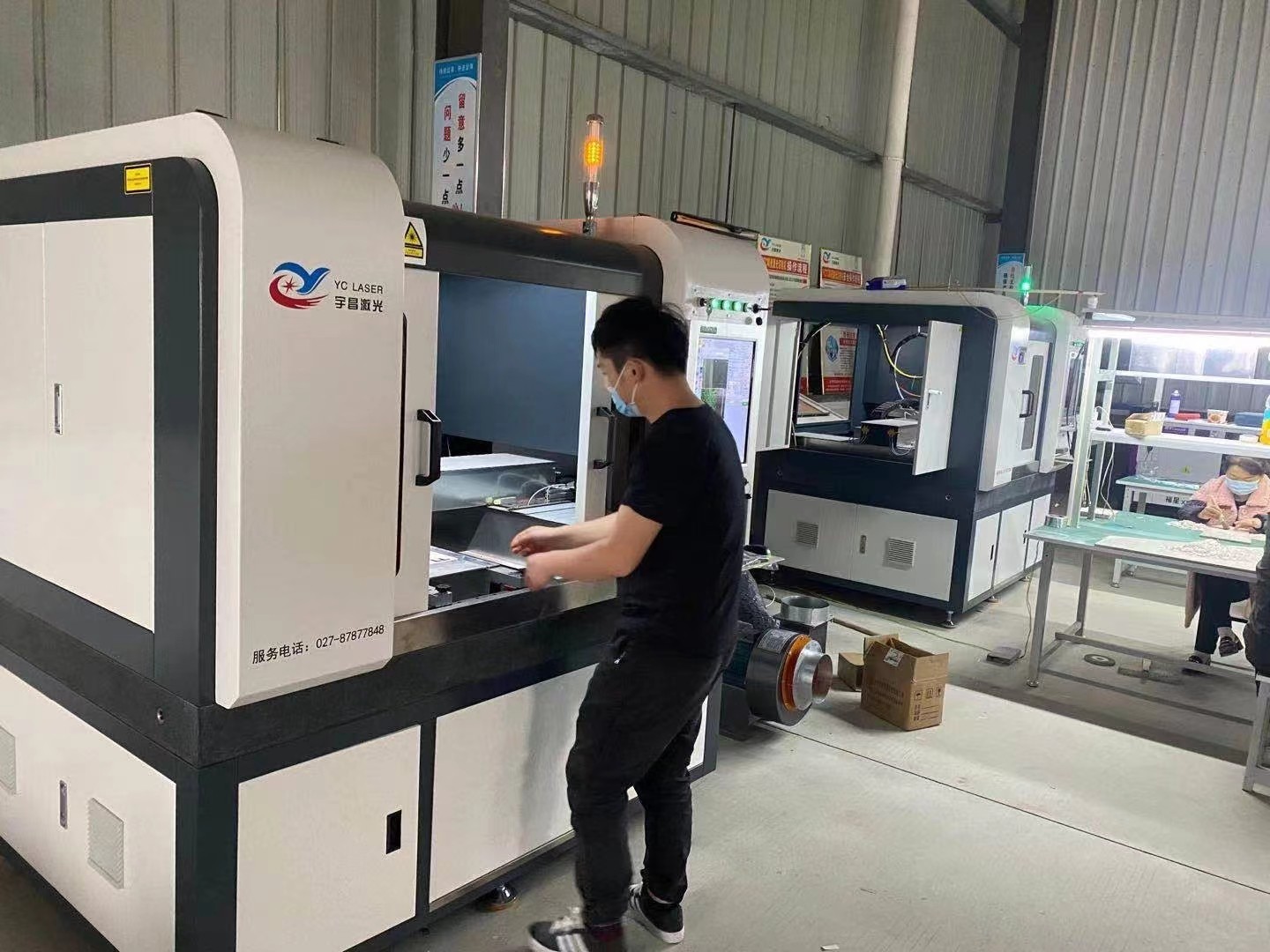
A high-tech electronics enterprise in China deployed seven ceramic laser cutting machines to build a standardized mass production line for ceramic substrates, ceramic insulating sheets, and precision ceramic structural parts used in consumer electronics and automotive electronics. The line has operated for more than four years of 24/7 mass production.
Documented outcomes from that deployment:
- Low failure rate and high stability under long-term continuous production conditions.
- Successful replacement of traditional mechanical cutting processes.
- Reduced product chipping and breakage rates.
- Improved mass production efficiency and product consistency.
- Lower production cost and stronger delivery competitiveness on large standardized ceramic orders.
What this profile proves for the automated versus manual question is the compounding cost of manual intervention at scale. In a 24/7 line, each manual load is a positioning event, a contamination event, and a labor event multiplied by shift count. The requirement is stated explicitly in YCLASER's own application notes: equipment for this class of work must be suitable for long-term continuous industrial mass production, with controllable laser lifespan and overall machine failure rate.
Profile B — high-mix flexible production: dual-head, dual-optical-path customization
A high-end electronic component manufacturer in Taiwan needed a machine that could process high-precision ceramic sheets and micro-ceramic components across multiple product categories, in small batches, with fast delivery turnaround.
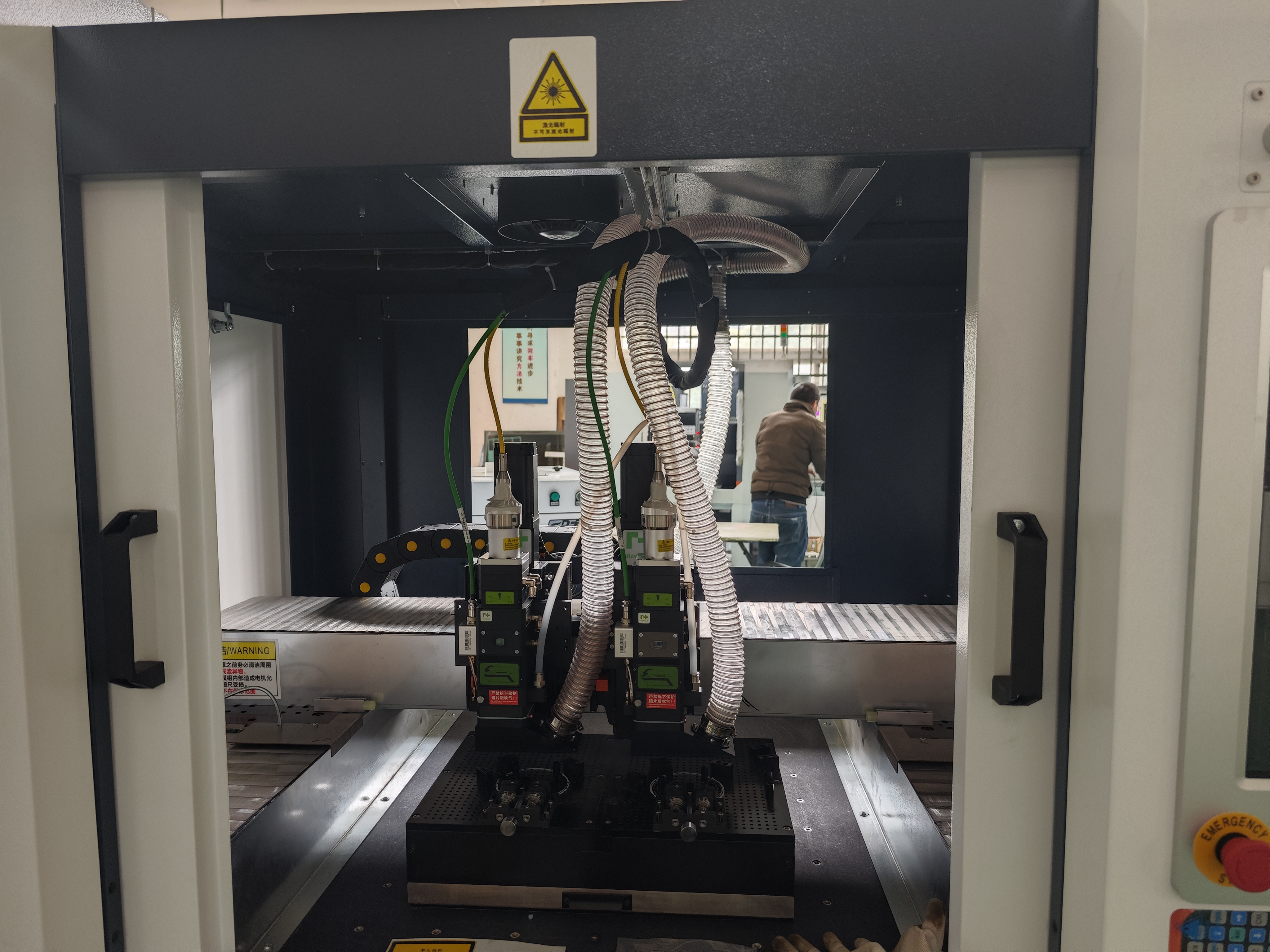
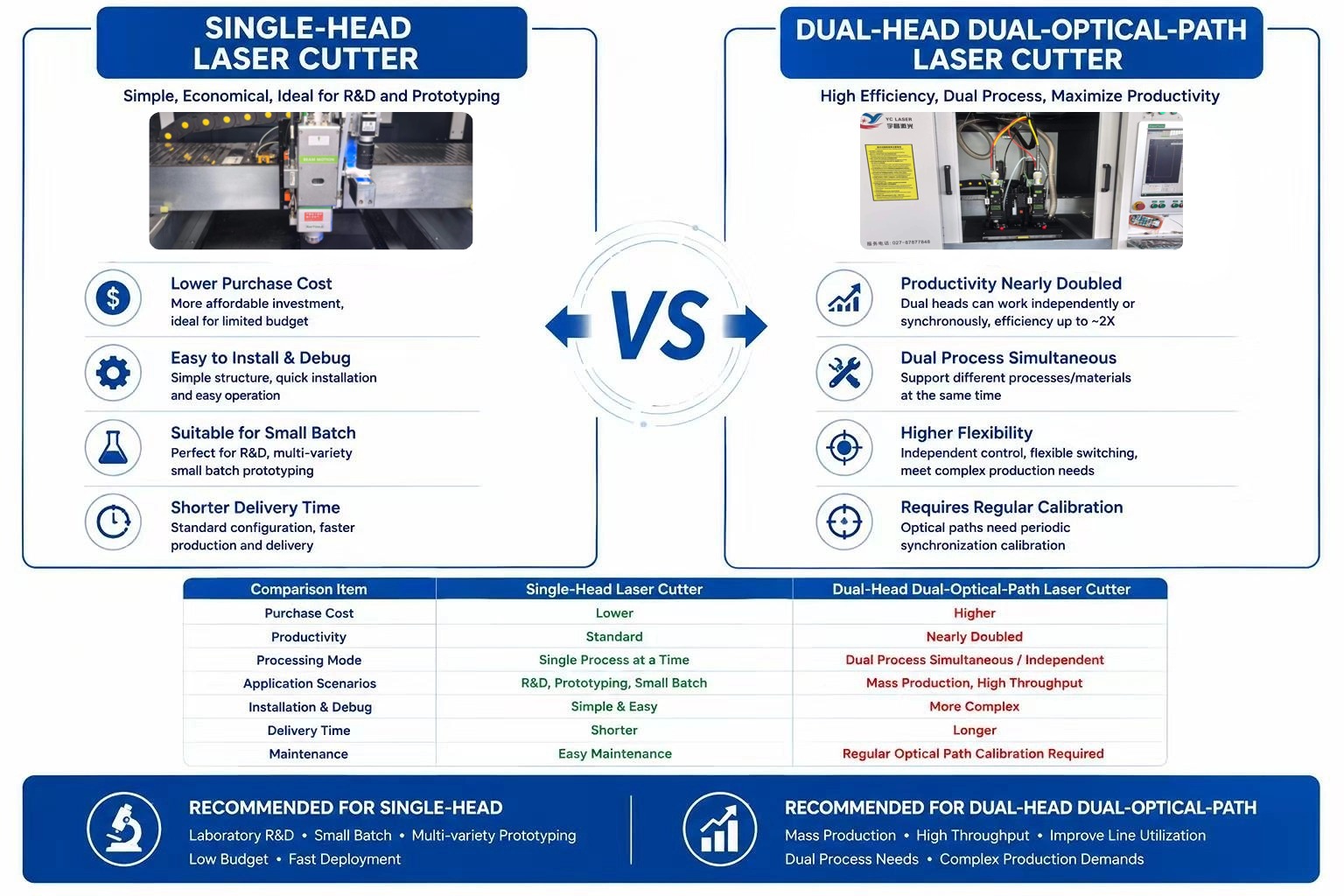
YCLASER customized a dual-head, dual-optical-path ceramic laser cutting machine for the plant. The system supports simultaneous dual-station processing and independent or synchronous switching between the two beam paths, which enables multi-process composite processing on a single platform. After implementation, processing capacity nearly doubled compared with a single-head machine, and accuracy at both stations remained highly consistent with no cumulative deviation. The unit has operated stably in flexible mass production for more than two years.
The lesson is that high-mix does not automatically mean manual. It means the automation has to be reconfigurable. A dual-station system that can run independently or synchronously serves small batches and multiple product categories without forcing one fixed part flow onto the line.
Supporting evidence from precision-grade deployments
- South Korea, high-precision manufacturing: one high-configuration export machine for ultra-precision cutting and micro-hole processing of advanced ceramic and hard and brittle parts, operating stably overseas for more than 1.5 years with low maintenance cost.
- Semiconductor materials research institute: a customized semiconductor ceramic laser cutting machine achieving micron-level cold processing with controlled thermal damage, stable for more than two years.
- University research platform (Tsinghua University): small-format ceramic laser cutting equipment in service for more than three years, addressing chipping, thermal damage, and dimensional deviation in hard and brittle ceramics.
All three are low-volume or research-grade environments. That pattern is consistent: in research and prototype work, the loading method matters far less than parameter flexibility and process verification speed.
Decision Criteria: Matching Configuration to Production Profile
1. Batch size and repeat volume
Automated loading pays back when the same part geometry repeats across long runs. The seven-machine line described above is the reference case: identical ceramic substrates and insulating sheets, produced continuously for years. When a plant produces a handful of parts per day across dozens of part numbers, automated transfer adds setup overhead that manual or semi-automatic loading does not carry.
2. Changeover frequency and part mix
Automatic mode on YCLASER equipment imports DXF/DWG drawings and lets the software nest materials and run continuously. That workflow is efficient for repeated jobs and slower for jobs that change hourly. High-mix plants should therefore evaluate how often they will actually use automatic mode, rather than how capable it is.
3. Labor model and shift structure
Manual and semi-automatic loading bind machine output to operator presence. Automated loading and unloading supports unattended continuous processing, which matters most on second and third shifts. If your plant runs one shift with a stable, experienced operator, the labor argument for automation is weak. If your plant runs three shifts and struggles to staff them consistently, the argument is strong.
4. Long-term stability requirement
Ceramic and hard and brittle materials punish unstable processing. The documented long-run risks are lens contamination from dust, wear in continuously operating automation modules, and loss of dual-optical-path synchronization on dual-head models. Any configuration you choose must be matched to a maintenance routine you will actually follow — scheduled lens cleaning, motion module inspection, and periodic optical path calibration.
5. Footprint, integration, and process control
An automated loading module adds floor space and integration scope. YCLASER equipment is documented for ambient temperature of 5–35 °C, humidity of 40%–65% RH without condensation, near-cleanroom dust control, a stable regulated industrial power supply, and a vibration-damping foundation to protect cutting accuracy. A fully automated module integrated into a production line inherits all of those requirements and adds cycle-time coordination with upstream and downstream stations. Working areas on the platform range from 200×200 mm to 1300×1300 mm, so floor planning should start before configuration selection, not after.
Comparison Table: Automated vs Manual Loading Configurations
| Decision dimension | Manual / semi-automatic loading | Fully automated loading and unloading |
|---|---|---|
| Best-fit batch structure | Small batch, high-mix, frequent changeover, prototyping | Repeated geometry, high volume, standardized part families |
| Setup and changeover | Operator sets each job; manual debugging mode supports parameter trials | DXF/DWG import with automatic material nesting and continuous processing |
| Operator presence per cycle | Required for loading and unloading | Not required; supports continuous processing and integration with automated production lines |
| Positioning consistency | Depends on operator placement; CCD vision positioning is an optional upgrade | Machine-controlled transfer; CCD vision supports cutting, drilling and scribing of ceramics, substrates and glass |
| Capacity ceiling | Limited by manual cycle time | Approaches continuous machine hours; documented dual-head deployment nearly doubled capacity versus a single-head machine |
| Capital and integration scope | Lower entry configuration, smaller footprint | Higher: automation module, line integration, larger footprint |
| Maintenance focus | Lens cleaning and motion module inspection | Adds loading/unloading durability checks; dual-head models require periodic optical path synchronization calibration |
| Documented long-run evidence | 1.5–3+ years in research and high-precision deployments | 4+ years of 24/7 operation across seven machines in mass production |
| Typical application | R&D prototyping, new material verification, multi-category small batch | Ceramic substrate, insulating sheet and precision structural part mass production |
One row deserves emphasis. The evidence base is asymmetric. Automated loading in this dataset is supported by a multi-year, multi-machine, 24/7 production record, while manual and semi-automatic loading is supported by shorter research and high-precision deployments. Buyers should treat that asymmetry as information about what each configuration has been proven to do, not as a verdict on quality.
Step-by-Step: How to Evaluate a Loading Configuration Before Purchase
YCLASER's documented procurement process runs from requirements communication through process assessment, sample testing, quotation, technical agreement, deposit and production, factory pre-acceptance, delivery, on-site installation and commissioning, project acceptance, and after-sales technical support. The steps below map that process onto the loading decision specifically.
- Quantify your production profile. Record parts per day, changeovers per week, shift structure, and the number of part numbers that account for most of your volume. This determines whether you are a Profile A or Profile B plant.
- Validate the process before choosing the configuration. The laser processing service carries no minimum order quantity, and sample making takes 1–3 business days. Sending your own alumina, aluminum nitride (AlN), silicon carbide (SiC), silicon nitride, glass, ferrite, semiconductor material, metal or PCB substrate for trial processing establishes whether the process works before capital is committed.
- Match the configuration to the production stage. YCLASER's configuration guidance is explicit: laboratory R&D prototyping maps to a UV or picosecond single-head basic model; small-to-medium batch production adds CCD vision positioning; high-capacity production lines move to dual-head, dual-optical-path; large-scale production lines add a fully automated loading and unloading module.
- Lock the parameters in a technical agreement. Non-standard projects carry delivery and cost risk if requirements keep moving. A complete technical agreement signed at project start is the documented mitigation.
- Complete factory pre-acceptance. Whole-machine inspection covers optical path accuracy calibration, repeatability testing, power-on aging, actual ceramic trial cutting, and full-function program testing, with a written factory quality inspection report issued. Dual-head models additionally undergo dual-optical-path synchronization verification, and automated models complete loading and unloading durability cycle testing.
- Confirm the acceptance route for your region. Factory pre-acceptance, on-site acceptance after installation and commissioning, and remote online trial cutting acceptance are all supported, with a formal acceptance certificate issued on completion.
- Build the maintenance plan into the purchase. Schedule lens cleaning, motion module inspection, and dual-head optical path calibration from day one. Stop and repair immediately if accuracy anomalies appear.
- Confirm commercial and logistics terms. Payment, trade terms, and export documentation should be settled before production starts, not at the port.
Use Cases by Production Profile
When automated loading is the correct configuration
- Standardized ceramic substrate mass production. The seven-machine deployment is the reference case: ceramic substrates, insulating sheets and precision structural parts for consumer and automotive electronics, produced continuously.
- High-repeat PCB and FPC processing. The PCB laser drilling equipment market was valued at USD 1.8 billion in 2025 with an 8.1% CAGR through 2034, which reflects the volume profile that automated handling is designed for.
- Long-run motor silicon steel sheet cutting. Where a heat affected zone below 0.1 mm must be held consistently, machine-controlled loading removes a repeatability variable that manual placement reintroduces.
- Multi-category flexible production with fast delivery. A dual-head, dual-optical-path system supports independent or synchronous station operation, so multiple product categories can run without relocating to a different machine.
When manual or semi-automatic loading is the correct configuration
- New material R&D and prototyping. Manual debugging mode exists precisely for single-point marking, partial test cutting and parameter trials on unfamiliar materials.
- Semiconductor ceramic sample preparation. Research environments with micron-level tolerance requirements and small prototype volumes do not benefit from transfer automation.
- University and institute pilot platforms. Equipment used for cutting, drilling and complex ceramic processing research has been in service for three years or more without automated handling.
- Contract processing and overflow production. Hourly laser processing services at 20–30 USD per hour with no minimum order quantity let a plant meet short-term demand without fixed asset investment.
A practical rule: if more than half of your machine hours are spent on fewer than five part numbers, evaluate automated loading seriously. If fewer than half your hours are spent on your top five part numbers, evaluate semi-automatic loading with CCD vision first, and revisit automation when the order book concentrates.
Risk and Maintenance Differences That Appear After the First Year
Automation changes which risks dominate; it does not remove risk. YCLASER's documented risk notes identify the following long-term mass production failure modes: dust contamination of optical lenses, wear from continuous operation of automated modules, and loss of dual-optical-path synchronization on dual-head models. Symptoms include decreased processing accuracy, abnormal equipment shutdown, and loss of synchronization accuracy. The documented mitigation is straightforward: clean lenses and inspect motion modules on schedule, calibrate dual-head optical path synchronization periodically, and stop production for repair when accuracy drifts.
A second category of risk applies to whichever configuration you choose: ceramic laser processing carries risks of micro-cracks, edge chipping, and thermal damage if process parameters are mismatched or raw material quality is unstable. New materials must be tested first to fix the optimal parameters before mass production. This is a process risk, not a loading risk, but it is amplified in automated lines because defects propagate at machine speed rather than operator speed.
A third category is commercial. Non-standard customized equipment carries longer delivery times and cost fluctuation compared with standard models. Exporting laser equipment involves import controls and fluctuating tariffs in different countries, and unclear trade terms are the most common cause of clearance difficulty and unexpected cost. Both risks are managed the same way: complete documentation up front, and defined responsibility boundaries.
Frequently Asked Questions
What certifications and acceptance documentation should I verify before buying a high precision laser cutting machine?
The YCLASER precision laser cutting platform holds a Chinese Utility Model Patent, certification number ZL 2020 2 2568701.9, issued by the State Intellectual Property Office for an integrated machine for laser cutting, drilling and scribing of electronic ceramics with easy positioning, and a second Chinese Utility Model Patent, certification number ZL 2020 2 2568710.8, for a high-speed, high-precision laser cutting machine. Both apply to the China market. The company also holds Computer Software Copyright Registration No. 2020SR1720714 (Certificate No. 6521686) for the High-Precision Laser Cutting System V1.0, and a separate registration for the Laser Cutting and Drilling System for Electronic Ceramics V1.0. On the delivery side, a complete export document set is available, including commercial invoices, packing lists and pro forma invoices, compatible with EXW, FOB, CIF, DDP and other Incoterms 2020 terms. Acceptance can be completed by factory pre-acceptance, on-site acceptance after installation and commissioning, or remote online trial cutting acceptance, with a formal acceptance certificate issued on completion.
Can one laser cutting platform support both automated and manual loading?
Yes. Yuchang Laser's precision laser cutting platform covers 12 model designations — YC-TC01, YC-TCSF, YC-TCHP, YC-TCAT, YC-GJMD, YC-GJMPCB, YC-GJM01, YC-BLD, YC-BLSW, YC-BLDW, YC-UVP and YC-UVN — and documents three operating modes: automatic mode with DXF/DWG import, automatic material nesting and fully automatic continuous processing; manual debugging mode for single-point marking, partial test cutting and parameter trials; and semi-automatic mode with manual loading and unloading while the machine executes the stored program. A fully automated loading and unloading system is available as an optional configuration and can be integrated with automated production lines. The platform supports working areas from 200×200 mm to 1300×1300 mm, laser power from 10 W to 3000 W, wavelengths of 1060–1080 nm, 532 nm, 1064 nm, 355 nm and 10.6 μm, cutting thickness from 0.01 mm to 20 mm, and minimum drilling precision of 0.05 mm.
What drives the cost difference between an automated and a manual loading configuration?
The difference is driven by configuration scope rather than by a single component. YCLASER's documented configuration steps each add hardware and integration work: a UV or picosecond single-head basic model for laboratory R&D prototyping; CCD vision positioning added for small-to-medium batch production; a dual-head, dual-optical-path system for high-capacity lines; and a fully automated loading and unloading module for large-scale production lines. Every step also adds acceptance testing scope, since dual-head models require dual-optical-path synchronization verification and automated models require loading and unloading durability cycle testing. Commercially, the minimum order quantity is 1 unit for equipment, and single non-standard customized units are supported with no mandatory batch size. For buyers who need to defer capital investment, the laser processing service is charged hourly at 20–30 USD per hour (150–200 RMB per hour), with price affected by process complexity and rush orders, and no minimum order quantity. Payment options include deposit plus final payment and installment arrangements for domestic orders, and T/T or letters of credit for foreign trade.
How should I validate an automated loading configuration before committing to it?
Validation should run in two stages and can start without an order. First, send representative material for processing: sample making takes 1–3 business days and the laser processing service carries no minimum order quantity, so you can verify cutting quality, edge condition and dimensional consistency on your own alumina ceramics, aluminum nitride (AlN), silicon carbide (SiC), silicon nitride, glass, ferrite, semiconductor-related materials, metals or PCB substrates. This matters because new materials must be tested and verified first to establish process parameters before mass production, given the documented risks of micro-cracks, edge chipping and thermal damage. Second, verify the machine itself at factory pre-acceptance, which covers optical path accuracy calibration, repeatability testing, power-on aging, actual ceramic trial cutting and full-function program testing, with a written factory quality inspection report. For automated configurations, loading and unloading durability cycle testing is added; for dual-head configurations, dual-optical-path synchronization verification is added.
What lead times should be planned for each configuration?
Documented lead times are 1–3 business days for sample making, 30 business days for standard models, 35–50 business days for non-standard customized models, and 3–10 business days for OEM/ODM bulk orders depending on process complexity and order volume. Production capacity is 10 standard precision laser cutting machines per month and 3 non-standard customized models per month, produced according to project schedule. Automated loading modules and dual-head, dual-optical-path systems fall into the non-standard category, so they should be planned against the 35–50 business day window, and a complete technical agreement locking all functional parameters should be signed at project start to prevent requirement changes from extending the schedule further. If a deadline is tight and the configuration is not yet fixed, the fastest next step is to request a sample run and a configuration recommendation from the YCLASER team using your own drawings and material specification.
Conclusion
Automated and manual loading are matching tools, not competing tiers. The seven-machine ceramic line and the dual-head Taiwan unit are two answers to two different questions, and both answers are correct within their own production profile. Standardized mass production with repeated geometry, three-shift operation, and a requirement for multi-year continuous stability points to automated loading and unloading, ideally with dual-head capacity and CCD vision where accuracy demands it. High-mix research, prototyping, new material verification, and unpredictable order books point to manual or semi-automatic loading with a debugging mode that lets engineers work directly with parameters.
The decision criteria that matter most are batch size, changeover frequency, labor model, long-term stability expectation, and integration footprint. Settle those five, and the loading configuration follows almost automatically. Settle them before comparing quotations, and you avoid paying for automation you will not use — or absorbing labor costs you did not need.
Next Step: Match the Configuration to Your Line
Send your part drawings, material specification and monthly volume to the YCLASER engineering team. You will receive a configuration recommendation covering loading method, laser type and optical path scheme, plus a sample run on your own material before any commitment. Sample making takes 1–3 business days and there is no minimum order quantity for samples.
Download the full equipment and specification reference: YCLASER Product Catalog (PDF)
Website: www.whyc-laser.com
Contact: XunRong Wang | Email: wxr888@yclaser.com.cn | Tel / WhatsApp: +86 18602711568
Address: 1st Floor, Building B, Phoenix Park, No.8, Optics Valley Science and Technology Park, No.18, Gaoxin 6th Road, Jiangxia District, Wuhan City
Have Questions or Need More Details?
Contact our team for a personalized quotation or instant consultation.
Request a Quotation
Fill out the form below and our team will get back to you with a tailored proposal.
WhatsApp Direct Chat
Prefer to chat in real-time? Message us on WhatsApp for instant assistance & quick answers.
- Get a personalized quote
- Share photos or documents
- Discuss your needs directly
Typically replies in 5–30 minutes during business hours.