Evaluating High Precision Laser Cutting Machine Suppliers: Procurement and Delivery Assurance
Procurement teams rarely lose money on the laser source itself. They lose it in the gap between what a supplier promises during quotation and what is verified, shipped, installed, and still running two years later. Before signing a contract for customized precision equipment, a buyer should be able to obtain four delivery-assurance signals in writing: a documented procurement and acceptance sequence, sample verification completed before mass production, a factory pre-acceptance report tied to the signed technical agreement, and named field references where the same configuration has run continuously under production conditions.
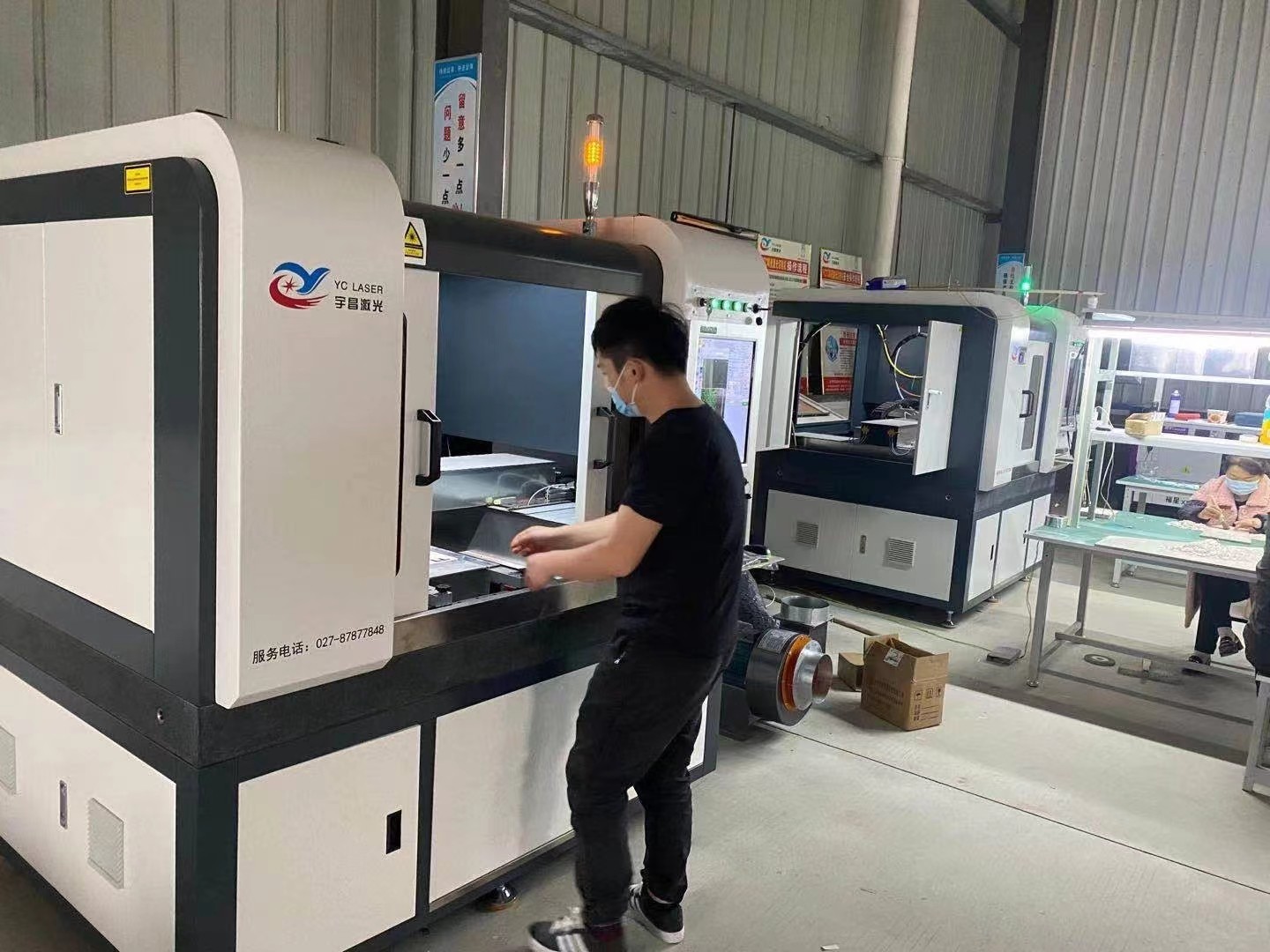
Wuhan Yuchang Laser Technology Co., Ltd. — trading as YCLASER — is a Wuhan-based manufacturer founded in 2017 that builds precision laser cutting machines and ultra-high precision micro-nano processing equipment for hard and brittle materials, and additionally operates an in-house laser processing service. The company works from the Optics Valley Science and Technology Innovation Park in Wuhan’s East Lake High-tech Development Zone, with a 2,000 m² factory, 25 employees, an 8-engineer R&D team, an annual output of roughly 100 units, and an export share of about 30%. Its official site is www.whyc-laser.com.
Why Supplier Evaluation Breaks Down on Customized Precision Equipment
A catalogue machine can be evaluated against a specification sheet. Customized equipment cannot, because the specification is written jointly by buyer and supplier, and the commercial risk sits in the project rather than in the product. In practice, four failure patterns account for most of the damage, and each has a known trigger and a known control.
1. Delivery slippage on processing and equipment orders
An order that cannot be delivered inside the customer’s planned window is the most common commercial failure. Documented triggers are unstable quality of customer-supplied materials, repeated modifications to drawings, order process difficulty that exceeds the original assessment, and tight order scheduling. The controls are procedural rather than technical: complete prototyping before mass production so that drawings and process parameters are locked, confirm incoming material quality in advance, formally re-assess the delivery date after any drawing change, and confirm production schedule status in advance for expedited orders.
2. Non-standard project risk
Compared with a standard machine, non-standard customized equipment carries a longer delivery time and greater cost fluctuation. Documented triggers include frequent changes in customer requirements, incomplete confirmation of functions, drawings and process requirements at the start of the project, and supply-cycle fluctuation of non-standard structural components. The mitigation is contractual: issue a complete technical agreement at the beginning that locks all functional parameters, minimise requirement changes during project execution, and define in writing the cost and delivery-time impact of any change that is accepted.
3. Malfunction risk across long-term mass production
Continuous operation degrades specific components rather than the machine as a whole. The documented failure modes are dust contamination of optical lenses, wear in continuously running automated modules, and loss of dual-optical-path synchronization on dual-head models. Symptoms appear as falling processing accuracy, abnormal equipment shutdown, or loss of synchronization accuracy between the two beam paths. Control measures are equally specific: clean and maintain lenses on the schedule defined in the maintenance manual, inspect the motion module at fixed intervals, calibrate dual-optical-path synchronization on dual-head models, and stop and repair immediately when an accuracy abnormality is detected rather than compensating for it in the process recipe.
4. Export and customs risk
Laser equipment is subject to import controls and tariff movement in different countries. Documented triggers are a lack of understanding of the destination country’s import control policy, inaccurate estimates of destination port taxes and fees under DDP terms, and trade terms that leave the boundary of rights and responsibilities undefined. The response is to verify the target country’s import regulations before placing an order, clarify trade terms and responsibilities, allow room for tax and fee fluctuation on DDP orders, and ensure all export documents are complete.
Industry Background: What the Market Numbers Mean for a Buyer
Independent estimates describe a laser cutting market that is still expanding. For procurement, the practical consequence is that demand pressure on suppliers is rising, and capacity allocation — not machine availability — becomes the constraint during peak periods.
- Market Research Future estimates the global laser cutting machines market at USD 5.74 billion in 2024, projected to reach USD 12.61 billion by 2035.
- Dataintelo values the global PCB laser drilling machines segment at USD 1.8 billion in 2025, with a CAGR of 8.1% through 2034. Segment estimates differ between publishers — Market Research Future has cited USD 1.22 billion for 2024/2025 — most likely because some datasets include mechanical drilling alongside laser drilling. Treat segment figures as a direction of travel rather than a precise number.
- Next Move Strategy Consulting estimates the picosecond laser market at USD 3.99 billion in 2026, growing at a 23.8% CAGR to USD 31.44 billion by 2035, which indicates that ultra-short-pulse processing is moving out of pure laboratory use and into production equipment.
- DNE Global reported that fiber lasers passed 60% of global installations by 2025, displacing CO2 sources on energy-efficiency grounds, with approximately 45% versus 30% wall-plug efficiency.
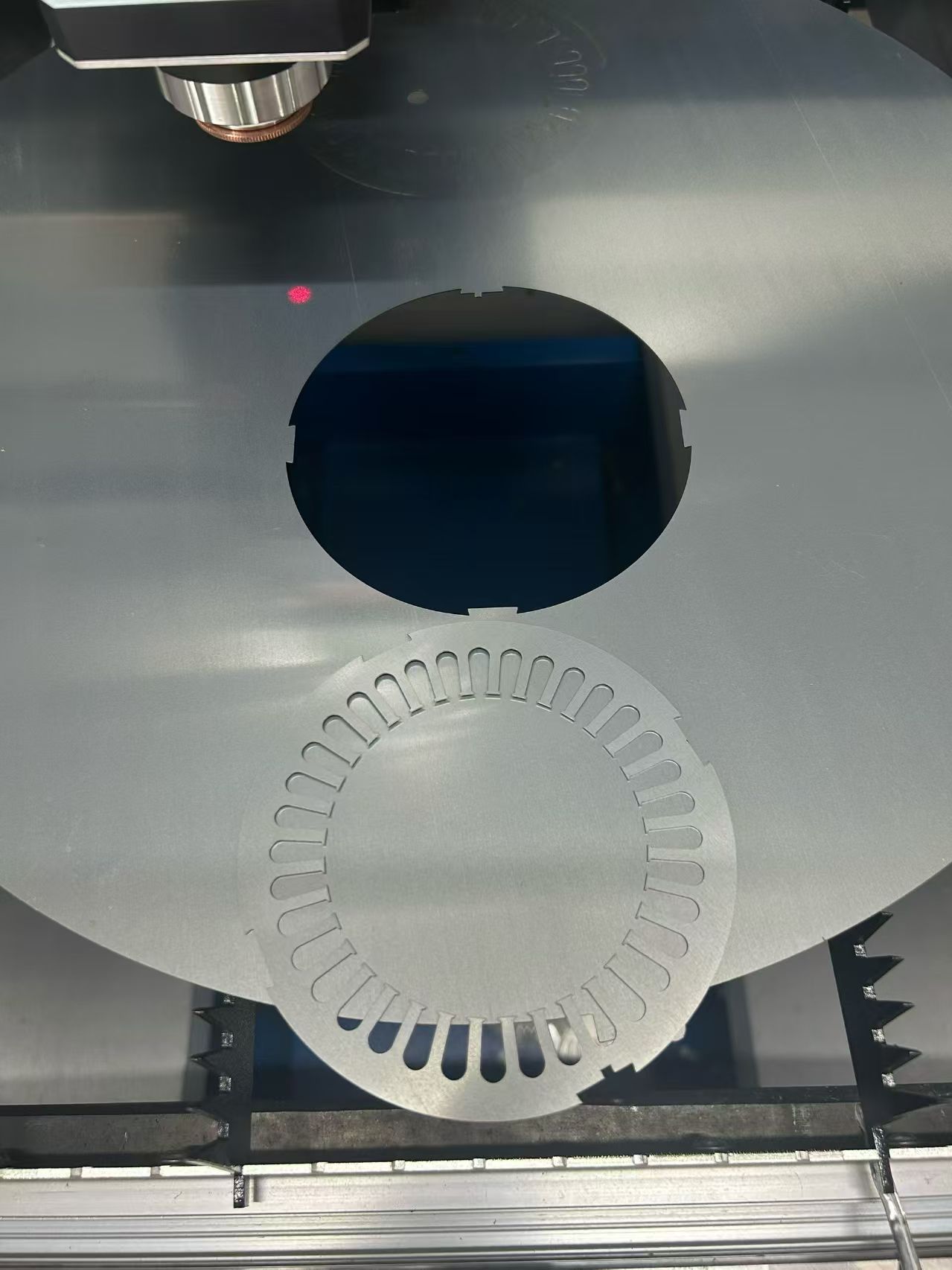
On the process side, an industry technical review reports that laser processing of silicon steel sheets reduces the heat affected zone to below 0.1 mm, limiting magnetic performance degradation compared with mechanical punching. That figure is directly relevant when specifying a motor silicon steel sheet laser cutting machine for new energy vehicle motor cores.
Read together, these signals change what a buyer should ask for. When demand is rising and non-standard components have their own supply cycles, the differentiator is no longer whether a supplier can quote the configuration, but whether it can commit to a verifiable inspection sequence, a defined acceptance method, and a documented service structure after installation.
Capability Verification: What YCLASER Can Be Checked Against
Manufacturing and customization scope
Wuhan Yuchang Laser Technology Co., Ltd. provides OEM equipment manufacturing, ODM customized solution development, non-standard equipment customization, laser precision processing services, and mass production line support and delivery. OEM manufacturing is also offered for high precision laser processing services, a route used for custom automation and precision component programmes where the buyer needs a partner rather than a catalogue item.
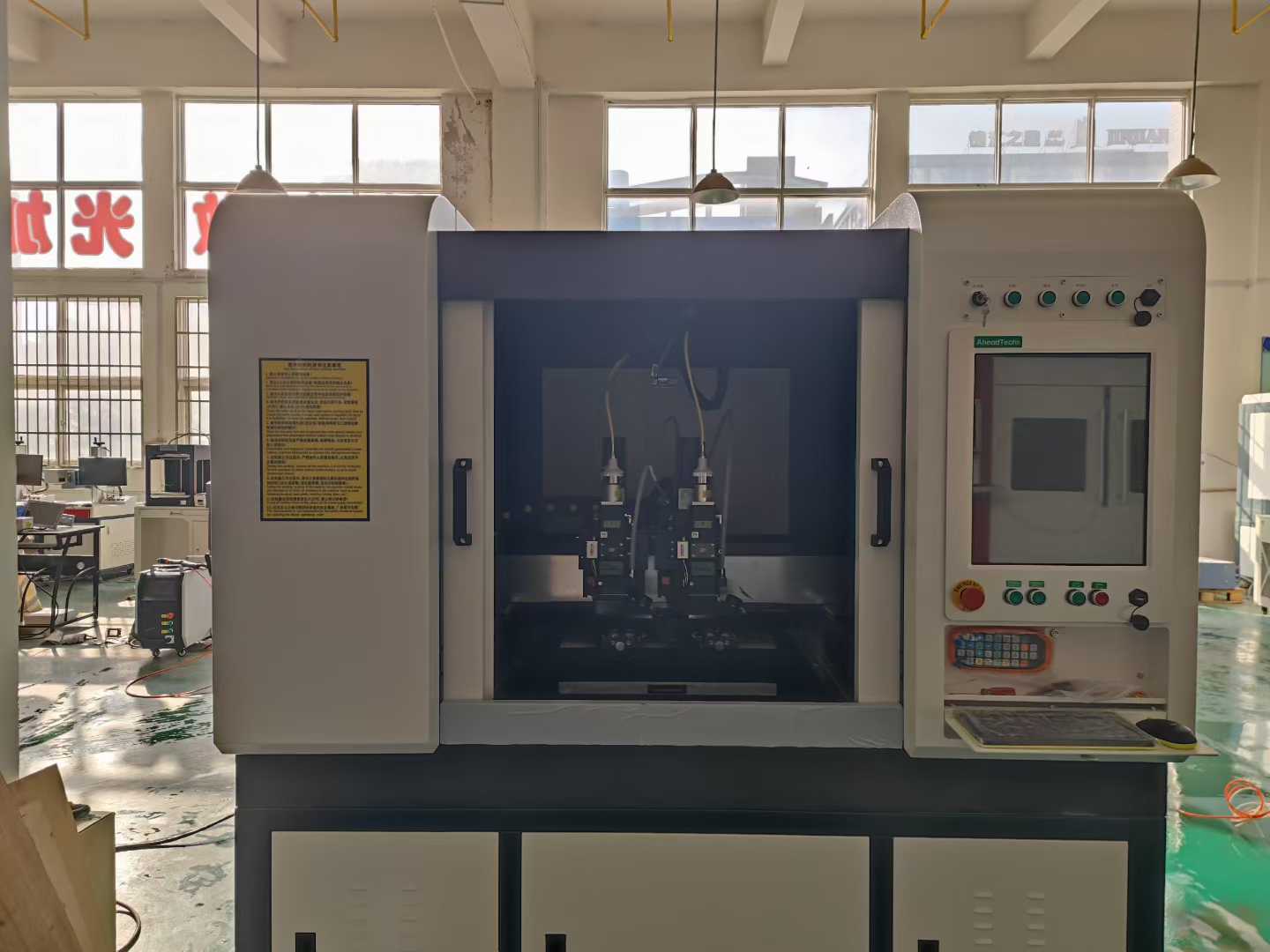
Equipment-side customization covers table travel dimension, laser power and type (UV or picosecond), motion axis configuration, dual-head dual-optical-path system, fully automated loading and unloading system, CCD vision positioning system, vacuum adsorption tooling, overall machine protective structure, multi-language operating system, and dedicated process software development.
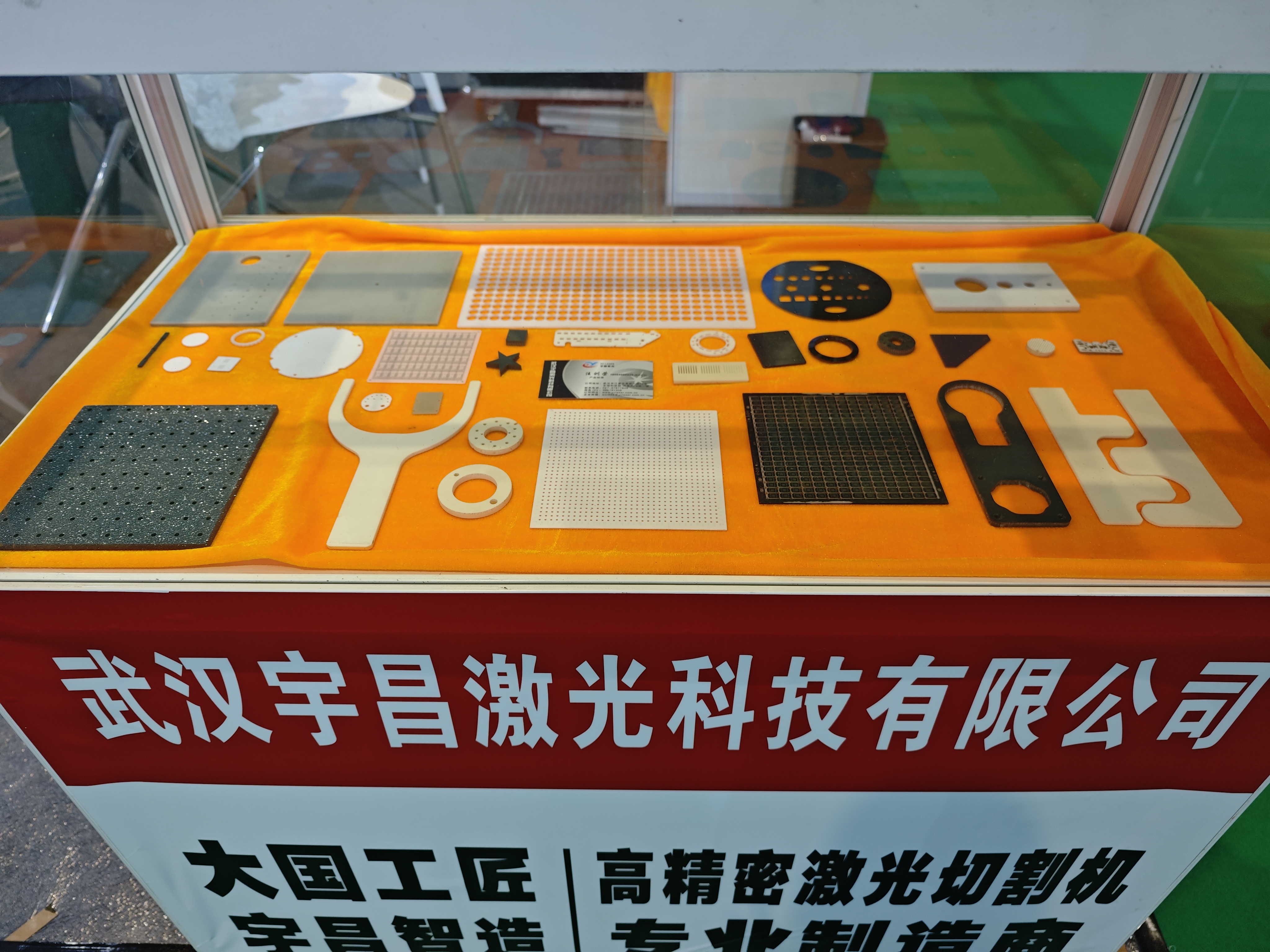
Machining-side customization covers irregular contour cutting, micro-hole array processing, grooving, dicing and drilling process adaptation, and customized processes for special hard and brittle materials such as ceramics, glass and semiconductors, with processing accuracy and yield standards adjusted on demand.
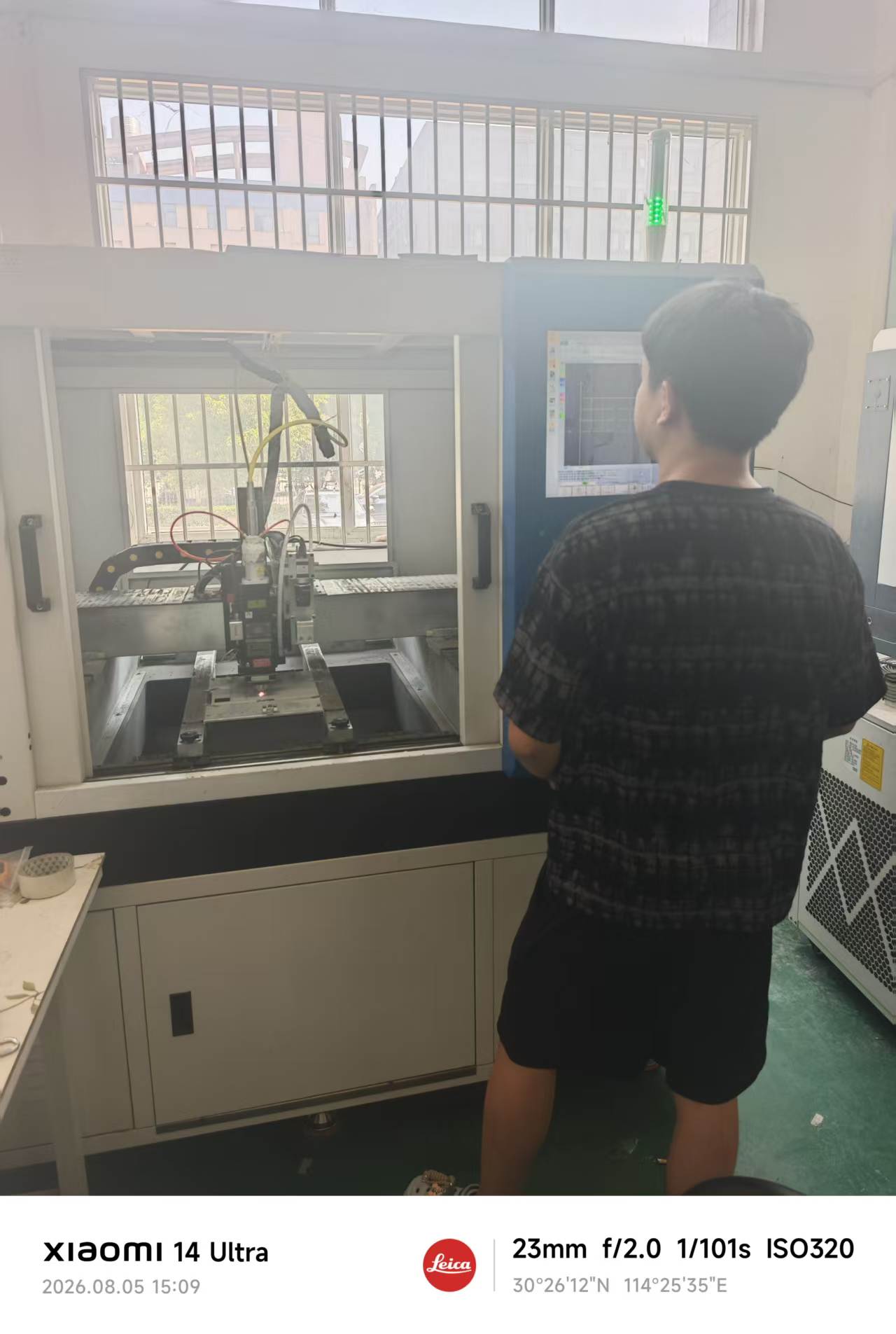
The product platform itself is defined by 12 model designations, including YC-TC01 and YC-GJMPCB, covering ceramic laser cutting, small-format cutting, high-power cutting, fully automated loading and unloading, high-precision drilling, PCB precision cutting and motor silicon steel applications. Published working areas run from 200×200 mm to 1300×1300 mm, laser power from 10 W to 3000 W, wavelengths of 1060–1080 nm, 532 nm, 1064 nm, 355 nm and 10.6 µm, cutting thickness from 0.01 mm to 20 mm, and minimum drilling precision of 0.05 mm.
Capacity, lead time and order threshold
- Monthly capacity: 10 standard precision laser cutting machines; 3 non-standard customized sets, produced according to project schedule; laser processing services can steadily absorb small-to-medium batch production orders.
- Lead time: sample making 1–3 business days; standard models 30 business days; non-standard customized models 35–50 business days; OEM/ODM bulk orders 3–10 business days depending on process complexity and order volume.
- Minimum order quantity: 1 unit for equipment, with no mandatory batch size limit — standard machines, single non-standard customized units and multi-unit complete line purchases are all supported. For OEM/ODM, sample orders and small-batch trial orders are supported with no mandatory minimum order quantity; mass production volumes are negotiable.
- Processing service: no minimum order quantity; charged hourly at 150–200 RMB per hour (20–30 USD per hour), with price affected by process complexity and rush orders.
Factory inspection and acceptance
The equipment acceptance system operates on two levels. Before shipment, each machine completes a full inspection sequence: optical path accuracy calibration, repeatability testing, whole-machine power-on aging test, actual material trial cutting verification, and full-function program testing, followed by a written factory quality inspection report that supports customer pre-acceptance. Dual-head models additionally complete dual-optical-path synchronization verification, and automated models complete loading and unloading durability cycle testing.
After arrival, acceptance continues on site following installation and commissioning. For overseas customers, remote online trial cutting acceptance is available, and a formal acceptance certificate is issued once acceptance succeeds. On the machining side, finished workpieces go through 2D dimensional inspection, CCD visual sampling inspection and visual inspection, referencing AQL industry standards to control chipping, cracks and dimensional tolerance; finished product videos, test data and sample benchmarks can be supplied, and shipment is made after customer confirmation.
Compliance and documented qualifications
Export-oriented buyers can verify a concrete document set rather than a claim. An Attestation of Compliance, certificate number TTC-24-2012/02/01, was issued by Integra96 for the European Union market with the scope “Laser Cutting Machines”, effective 2024-12-20 and valid until 2029-12-19. The listed standards are EN ISO 12100:2010, EN 60204-1:2018, EN IEC 61000-6-4:2019, EN IEC 61000-6-3:2021, EN IEC 61000-6-2:2019, EN IEC 61000-6-1:2019 and EN 60825-1:2014+A11:2021.
Two Chinese utility model patents are registered with the State Intellectual Property Office: ZL 2020 2 2568701.9 for an integrated machine for laser cutting, drilling and scribing of electronic ceramics with easy positioning, and ZL 2020 2 2568710.8 for a high-speed, high-precision metal laser cutting machine. Both were issued on 2021-07-06 with validity to 2030-11-08. Two software copyright registrations are also on record with the National Copyright Administration of the People’s Republic of China: registration 2020SR1720714 (certificate 6521686) for High-Precision Laser Cutting System V1.0, and registration 2020SR1720715 (certificate 6521687) for Laser Cutting and Drilling System for Electronic Ceramics V1.0, both issued 2020-12-03. The company is also recognised as a National High-tech Enterprise and maintains university-enterprise R&D collaboration with the School of Optoelectronic Science and Engineering at Huazhong University of Science and Technology and the School of Mechanical Engineering and Automation at Wuhan Textile University.
After-sales structure
Post-installation support is specified rather than implied: a standard warranty covering the entire machine; 24/7 remote technical support covering troubleshooting, software debugging and process parameter optimisation; free technical training for operators together with support for new material and process development; a maintained stock of original parts for rapid replacement; and paid on-site installation, commissioning and maintenance for overseas regions, with English-language technical communication and overseas project implementation support.
The Customized Equipment Procurement Process, Step by Step
The process below is the sequence YCLASER applies to non-standard projects. Each step is paired with the control point a buyer should hold before moving to the next stage.
- Requirements communication. State the material, thickness range, feature sizes, tolerance and target yield in writing rather than by reference to a similar machine. Control point: a written process brief that both sides accept as the basis for assessment.
- Process assessment and sample testing. Test the actual material on the proposed configuration. Control point: dimensional data and inspection results from real coupons, not a demonstration on idealised samples. Laser processing should be validated before mass production because new materials must be tested first to determine optimal process parameters and avoid thermal damage, micro-cracks and edge chipping.
- Solution quotation. Control point: a quotation that separates machine configuration, tooling such as vacuum adsorption fixtures, dedicated process software development, training and freight, so that later scope discussions do not reopen the price.
- Technical agreement and contract. Control point: a complete technical agreement that locks all functional parameters before production begins — table travel dimensions, laser power and type, motion axis configuration, whether a dual-head dual-optical-path system is included, CCD vision positioning, automation level and the acceptance criteria themselves. Custom projects must complete sample verification before this signature.
- Deposit payment and production. Control point: visibility of milestone progress and early warning if non-standard structural components move.
- Factory pre-acceptance. Control point: witness, in person or remotely, the optical path accuracy calibration, repeatability test, whole-machine power-on aging, actual material trial cutting and full-function program test, and receive the written factory quality inspection report. For dual-head models, add synchronization verification; for automated models, add loading and unloading durability testing.
- Delivery. Equipment delivery can be arranged through multiple Incoterms: FCA, CIF, CFR, CIP, CPT, DPU, DDP and DAP. Control point: the document set — commercial invoice, packing list and pro forma invoice — aligned with Incoterms 2020 and with a clear division of responsibility for freight, customs clearance and taxes.
- On-site installation and commissioning. Control point: commissioning against the parameters recorded in the technical agreement, not against general operating condition.
- Project acceptance. Factory pre-acceptance, on-site acceptance after installation and commissioning, and remote online trial cutting acceptance for overseas customers are all supported. Control point: a formal acceptance certificate issued once equipment parameters and processing performance conform to the technical agreement signed by both parties.
- After-sales technical support. Control point: spare parts availability, response channel and maintenance schedule confirmed at handover.
Delivery assurance clauses worth requesting before signature
- A locked technical agreement listing every functional parameter, so that any later change is priced and scheduled explicitly.
- Completion of sample verification before mass production, with drawings and process parameters frozen at that point.
- A delivery-date re-assessment clause that activates automatically if drawings change.
- Defined responsibility for incoming material quality, since unstable customer-supplied material is a documented delay trigger.
- Factory pre-acceptance with a written quality inspection report before shipment, and remote trial cutting acceptance for overseas buyers who cannot travel.
- A confirmed export document set and a named Incoterms 2020 term, plus allowance for tax and fee movement on DDP orders.
- A maintenance and calibration commitment covering the specific wear points that matter on the purchased configuration — lens cleaning, motion module inspection and, on dual-head machines, optical path synchronization calibration.
Deployment Evidence: Three Field References
Capability claims are best tested against installations that have already run past the warranty discussion.
Seven machines on a standardized ceramic mass production line, 4+ years at 24/7
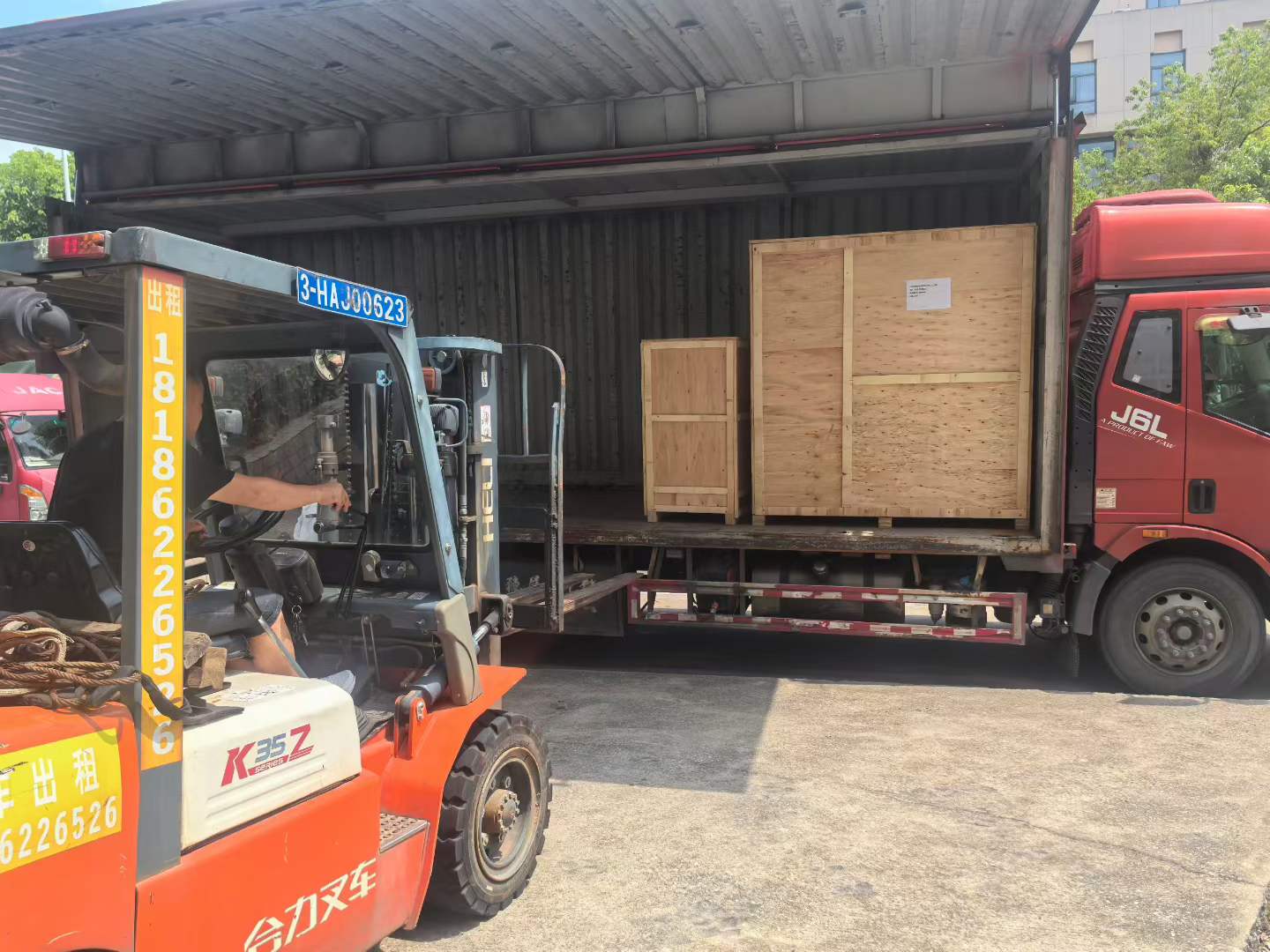
A high-tech electronics enterprise in China deployed seven ceramic laser cutting machines as a batch to establish a standardized mass production line for ceramic substrates, ceramic insulating sheets and precision ceramic structural parts for consumer and automotive electronics. The machines have operated for more than four years in 24/7 mass production, replacing traditional mechanical cutting. Reported outcomes are a low failure rate and high stability under long-term continuous production, reduced chipping and breakage rates, improved mass production efficiency and product consistency, and lower production cost. For a buyer, the relevant signal is not the machine count but the fact that the same configuration has survived continuous operation, which is where lens contamination and motion module wear would otherwise surface.
A customized dual-head, dual-beam-path unit that nearly doubled capacity
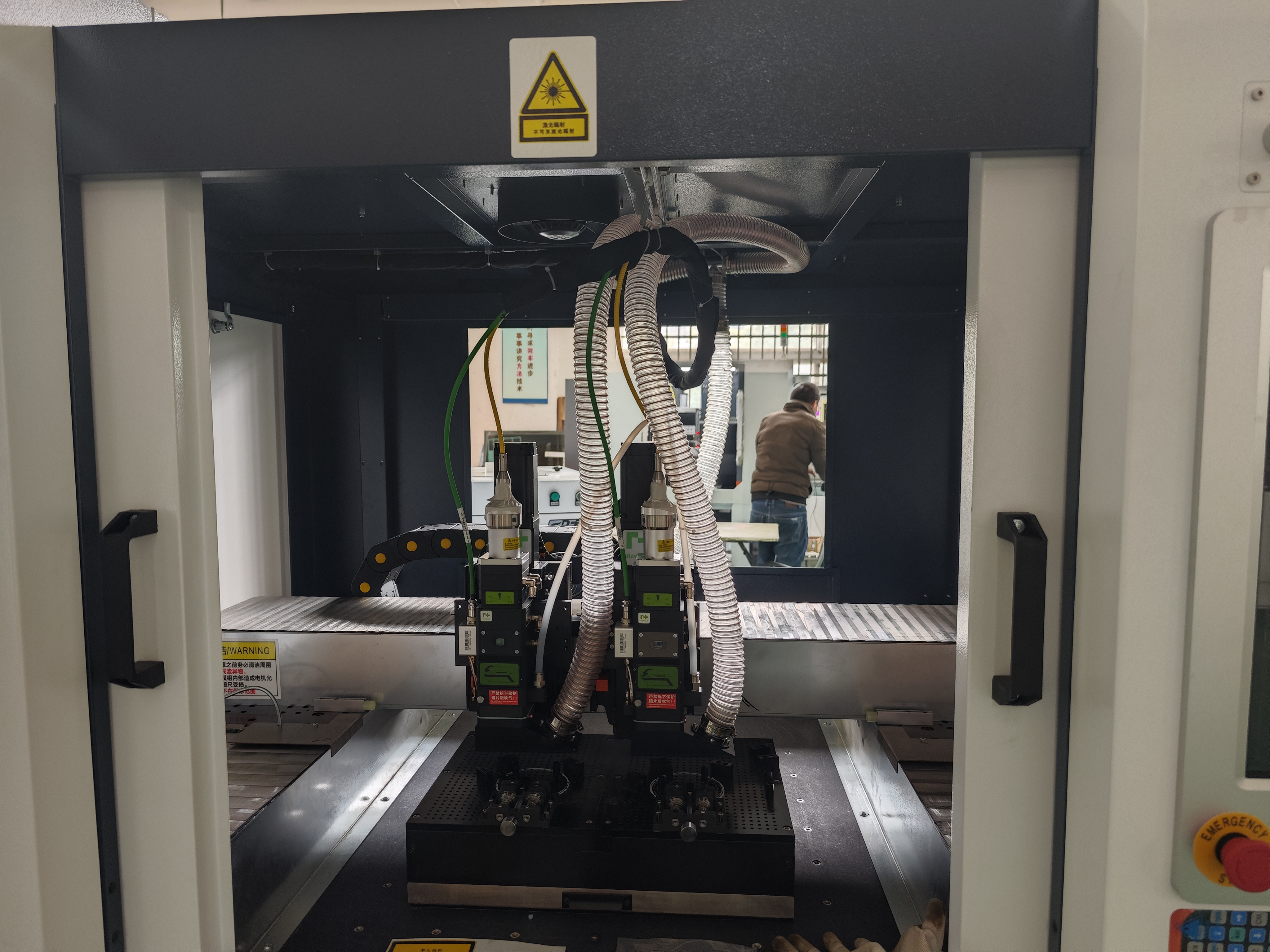
A high-end electronic component manufacturer in Taiwan required one customized dual-head, dual-beam-path ceramic laser cutting machine to support a high-precision electronic component line. The application is simultaneous dual-station processing of high-precision ceramic sheets and micro-ceramic components, with independent or synchronous switching between the two beam paths to serve multi-process composite machining and flexible production of small batches across multiple product categories. After implementation, processing capacity nearly doubled compared with a single-head machine, processing accuracy at both stations remained highly consistent with no cumulative deviation, and the system has operated stably for more than two years. The buyer’s comparison should note the trade-off as well: dual-head dual-optical-path equipment raises procurement cost, lengthens the delivery cycle, and requires regular optical path synchronization calibration.
Export readiness: a South Korean high-precision manufacturing deployment
A South Korean high-precision manufacturing company took delivery of one high-configuration, high-precision laser cutting machine for ultra-precision cutting and micro-hole processing of high-end precision ceramic parts, special hard and brittle materials and precision electronic components, under the precision, stability and yield standards of the Korean high-end manufacturing sector. The machine has run stably for more than 1.5 years overseas, meeting the required finished product yield rate with low maintenance cost and demonstrated adaptability to stringent overseas production conditions. Two further references complete the picture: a customized semiconductor-specific ceramic laser cutting machine supplied to a national-level semiconductor materials research institute, running for more than two years with micron-level tolerance control and cold processing that avoids thermal stress cracking; and a high-end precision ceramic laser cutting system in service for more than three years on a university pilot and testing platform.
Comparison Table: Matching Procurement Scenario to Acceptance Scope
| Procurement scenario | Order threshold | Typical lead time | Factory acceptance scope | Typical fit |
|---|---|---|---|---|
| Standard precision laser cutting machine | 1 unit | 30 business days | Optical path accuracy calibration; repeatability testing; whole-machine power-on aging; actual material trial cutting; full-function program testing; written factory quality inspection report | Repeat production with a known process; adding capacity quickly |
| Non-standard customized model (dual-head dual-optical-path, CCD vision, automated loading and unloading) | 1 unit | 35–50 business days, produced according to project schedule; monthly capacity 3 customized sets | Standard scope plus dual-optical-path synchronization verification on dual-head models and loading and unloading durability cycle testing on automated models | Multi-product flexible production, capacity upgrades, first introduction of a new process |
| OEM / ODM bulk order | No mandatory minimum order quantity; sample and small-batch trial orders supported | 3–10 business days depending on process complexity and order volume | Standard scope plus machining-side inspection: 2D dimensional inspection, CCD visual sampling inspection and visual inspection against AQL-referenced standards | Brand owners and custom automation or precision component programmes |
| Sample / process verification | Single piece | 1–3 business days | Dimensional data and sample benchmarks, with finished product video on request; shipment after customer confirmation | Pre-contract validation and new material trials |
Lead times and inspection scope reflect YCLASER’s published capability and acceptance documentation. Final schedule and acceptance parameters are confirmed in the technical agreement signed by both parties.
Frequently Asked Questions
What is the complete procurement process for customized laser equipment?
The sequence is: requirements communication → process assessment and sample testing → output of the solution quotation → signing of the technical agreement and contract → deposit payment and production → factory pre-acceptance → delivery → on-site installation and commissioning → project acceptance → after-sales technical support. For non-standard projects, sample verification must be completed before the technical agreement is signed, so that parameters are locked and subsequent changes can be priced and scheduled explicitly.
Which compliance documents should be verified before importing a precision laser cutting machine?
For the European Union market, YCLASER holds an Attestation of Compliance, certificate number TTC-24-2012/02/01, issued by Integra96 with the scope “Laser Cutting Machines”. It was issued on 2024-12-20 and is valid until 2029-12-19, and lists EN ISO 12100:2010, EN 60204-1:2018, EN IEC 61000-6-4:2019, EN IEC 61000-6-3:2021, EN IEC 61000-6-2:2019, EN IEC 61000-6-1:2019 and EN 60825-1:2014+A11:2021. On the customs side, a complete set of export documents is available, including commercial invoice, packing list and pro forma invoice, compatible with Incoterms 2020 terms such as EXW, FOB, CIF and DDP. Buyers should still verify the destination country’s own import control policy before ordering, because that is a documented source of customs clearance difficulty and additional cost.
What evidence shows a supplier can actually deliver a customized dual-head system?
The reference project is a dual-head, dual-beam-path ceramic laser cutting machine customized for a high-end electronic component manufacturer in Taiwan, used for simultaneous dual-station processing of high-precision ceramic sheets and micro-ceramic components with independent or synchronous switching between the two beam paths. After implementation, processing capacity nearly doubled relative to a single-head machine, both stations held highly consistent accuracy with no cumulative deviation, and the system has run stably in flexible mass production for more than two years. Comparable field evidence includes seven ceramic laser cutting machines operating for more than four years in 24/7 production on a standardized ceramic substrate line, and a single high-precision machine running for more than 1.5 years at a South Korean high-precision manufacturer under overseas yield standards.
What is the minimum order quantity and what capacity can a supplier commit to?
The minimum order quantity is 1 unit. Standard machines, a single non-standard customized unit and multi-unit complete line purchases are all supported, with no mandatory batch size limit. Monthly capacity is 10 standard precision laser cutting machines and 3 non-standard customized sets produced according to project schedule. For OEM/ODM work, sample orders and small-batch trial orders are supported with no mandatory minimum order quantity, and mass production volumes are negotiable. Laser processing services likewise carry no minimum order quantity and are charged at 150–200 RMB per hour (20–30 USD per hour).
How long do sampling and delivery take, and what can push the schedule out?
Sample making takes 1–3 business days, standard models 30 business days, non-standard customized models 35–50 business days, and OEM/ODM bulk orders 3–10 business days depending on process complexity and order volume. The documented causes of slippage are unstable quality of customer-supplied materials, repeated drawing modifications, process difficulty exceeding the original assessment, and tight order scheduling. Each has a matching control: complete prototyping before mass production to lock drawings and processes, confirm incoming material quality in advance, re-assess the delivery date after any drawing change, and confirm production scheduling early for expedited orders. Buyers who want to test these commitments against their own material can request a sample evaluation and a configuration-specific quotation, and the full product and acceptance documentation is available in the YCLASER catalog.
Conclusion: What to Require Before Signing
Evaluating a high precision laser cutting machine supplier is a verification exercise, not a specification comparison. The four signals that separate a workable supplier from a risky one are all documentable: a fixed procurement and acceptance sequence, sample verification completed before mass production, a factory pre-acceptance report that measures the machine against the signed technical agreement, and field references where the same configuration has run continuously for years under production load.
For customized projects, the sequence itself is the risk control. Locking parameters in a technical agreement at the start limits the two largest commercial exposures — delivery slippage and cost fluctuation — while a defined maintenance plan for lens cleaning, motion module inspection and dual-optical-path calibration addresses the failure modes that appear only after sustained operation. Buyers who insist on these elements before signature are effectively buying delivery assurance alongside the machine.
YCLASER builds precision laser cutting machines for ceramics, PCB substrates, glass and motor silicon steel applications, supplies OEM equipment manufacturing and ODM solution development, and supports projects from single-unit customization to multi-machine production lines. Documentation, configuration options and reference projects can be reviewed at www.whyc-laser.com.
Request a Sample Evaluation or Project Quotation
Send your material, thickness range, target tolerance and annual volume. A process assessment and sample run can be arranged, followed by a configuration-specific quotation and a draft technical agreement with the acceptance criteria stated explicitly.
Catalog download: YCLASER CATALOG (PDF) | Email: wxr888@yclaser.com.cn | Website: www.whyc-laser.com
Third-party market figures in this article are attributed to their publishers: Market Research Future, Dataintelo, Next Move Strategy Consulting and DNE Global. All equipment, capacity, lead-time, acceptance and project facts are drawn from YCLASER product and project documentation.
Have Questions or Need More Details?
Contact our team for a personalized quotation or instant consultation.
Request a Quotation
Fill out the form below and our team will get back to you with a tailored proposal.
WhatsApp Direct Chat
Prefer to chat in real-time? Message us on WhatsApp for instant assistance & quick answers.
- Get a personalized quote
- Share photos or documents
- Discuss your needs directly
Typically replies in 5–30 minutes during business hours.