High Precision Laser Cutting Machine Partnership FAQ: Terms, Compliance, and Long-Term Support
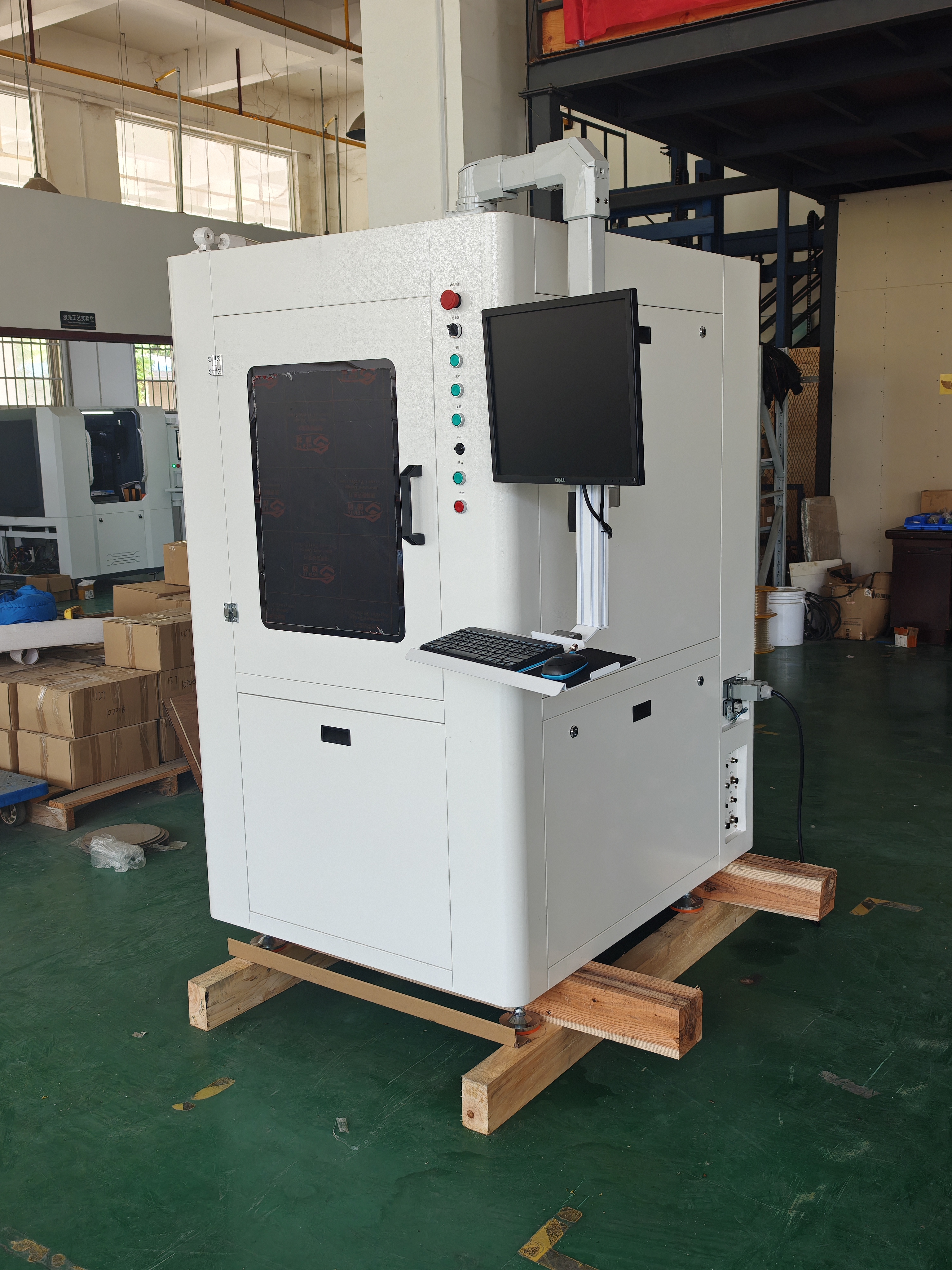
Most high precision laser cutting machine purchases are decided on a specification sheet and then lived out over five to ten years of production, retooling, spare parts and process change. This FAQ covers the part the specification sheet does not: contract terms, compliance evidence, acceptance criteria, delivery conditions, foreseeable fault risks, and the support obligations that continue long after commissioning.
YCLASER is the brand of Wuhan Yuchang Laser Technology Co., Ltd., a laser equipment manufacturer established in 2017 in the East Lake High-tech Development Zone in Wuhan, China, producing high-precision laser cutting machines and ultra-high precision micro-nano processing equipment for hard and brittle materials. The answers below are written for buyers in the evaluation stage — engineers and procurement teams choosing between a standard model, a non-standard configuration, and an outsourced OEM laser cutting service.
Short answers for evaluation-stage buyers
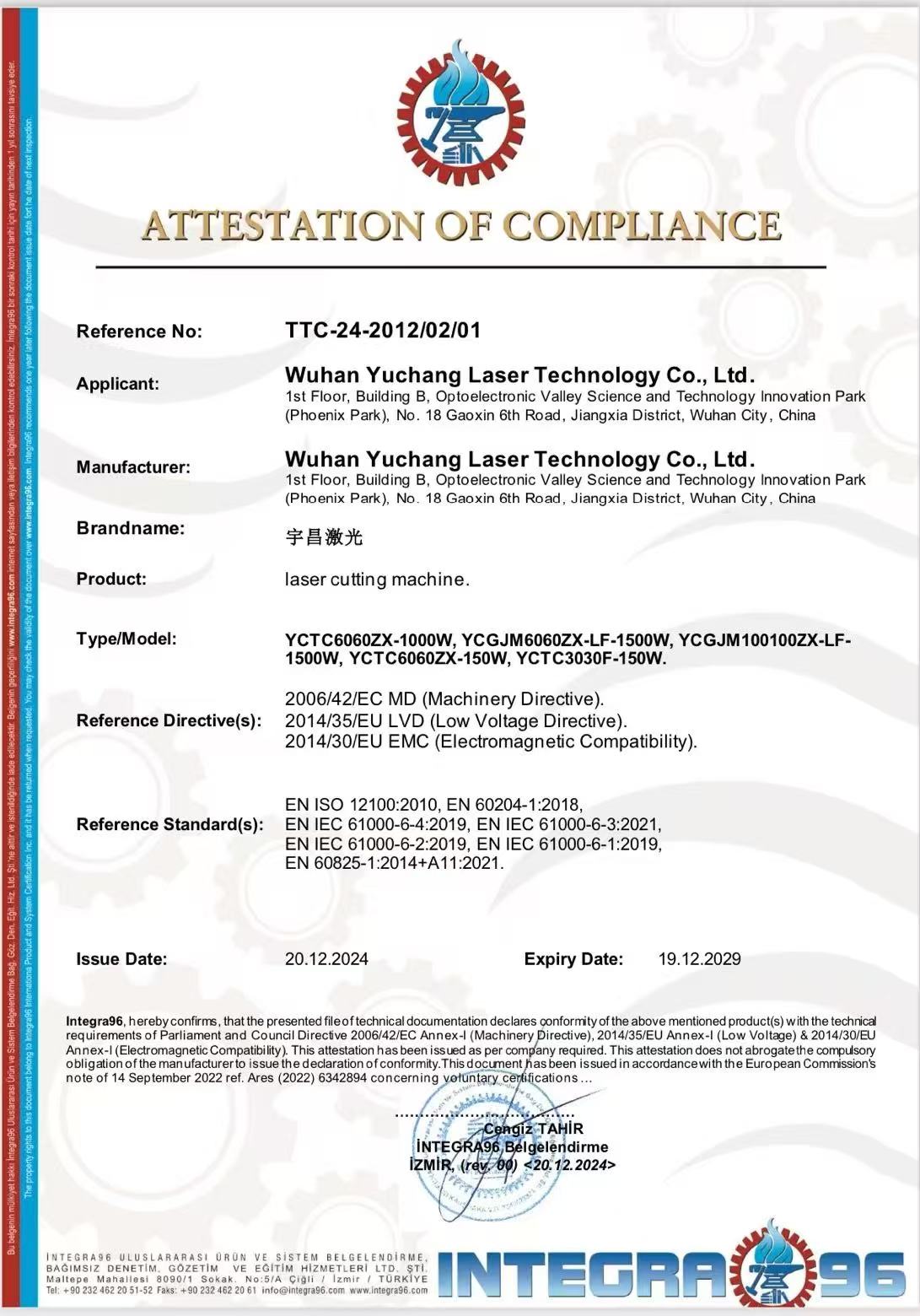
- Compliance: ATTESTATION OF COMPLIANCE TTC-24-2012/02/01, issued by Integra96 on 20 December 2024, valid until 19 December 2029 for the EU market, scope “Laser Cutting Machines”, covering twelve model designations.
- Minimum order: 1 unit for equipment; sample orders and small-batch trial orders are supported for OEM/ODM work with no mandatory minimum order quantity.
- Lead time: 1–3 business days for sample making; 30 business days for standard models; 35–50 business days for non-standard customized models.
- Capacity: 10 standard precision laser cutting machines per month; 3 non-standard customized machines per month, built to project schedule.
- Acceptance: factory quality inspection covering optical path accuracy calibration, repeatability testing, power-on aging, actual material trial cutting and full-function program testing, with a factory quality inspection report.
- Support: whole-machine standard warranty, 24/7 remote technical support, free operator training, original part stock, and paid on-site installation, commissioning and maintenance overseas.
Problem Definition: Where Machine Orders Break Down
A precision laser system is specified like a product and delivered like a project. The specification fixes laser source, axis configuration and accuracy targets. The project fixes who validates the process, what counts as acceptance, when the machine ships, and who answers a chiller alarm in year three. Most commercial disputes sit in that second category, not in the optical specification.
Three gaps account for most of them. The first is configuration confirmed before the buyer’s material has been tested, so the machine is optimised against an assumption rather than a verified workpiece. The second is compliance evidence checked at the shipping stage rather than at the quotation stage, at which point the purchased model may sit outside the covered list. The third is support treated as an after-sales courtesy instead of a written term, with no defined response path, spare-part arrangement or training scope.
Each gap has a matching document: a sample report, a certificate with a model list and an expiry date, and a service clause naming what is included and what is chargeable. A partnership FAQ is simply the discipline of settling all three before the deposit, when the buyer still has leverage.
One technical point supports the whole argument. Finished-part quality on hard and brittle materials depends on laser wavelength, pulse duration, power, motion control, material properties and the required feature geometry acting together — not on any single rated figure. Machine specifications describe defined equipment capability; they do not guarantee a production result on a specific ceramic grade. That is why sample validation and written acceptance criteria carry more weight than a parameter sheet.
Industry Background: Precision Cutting Has Become a Documented Process
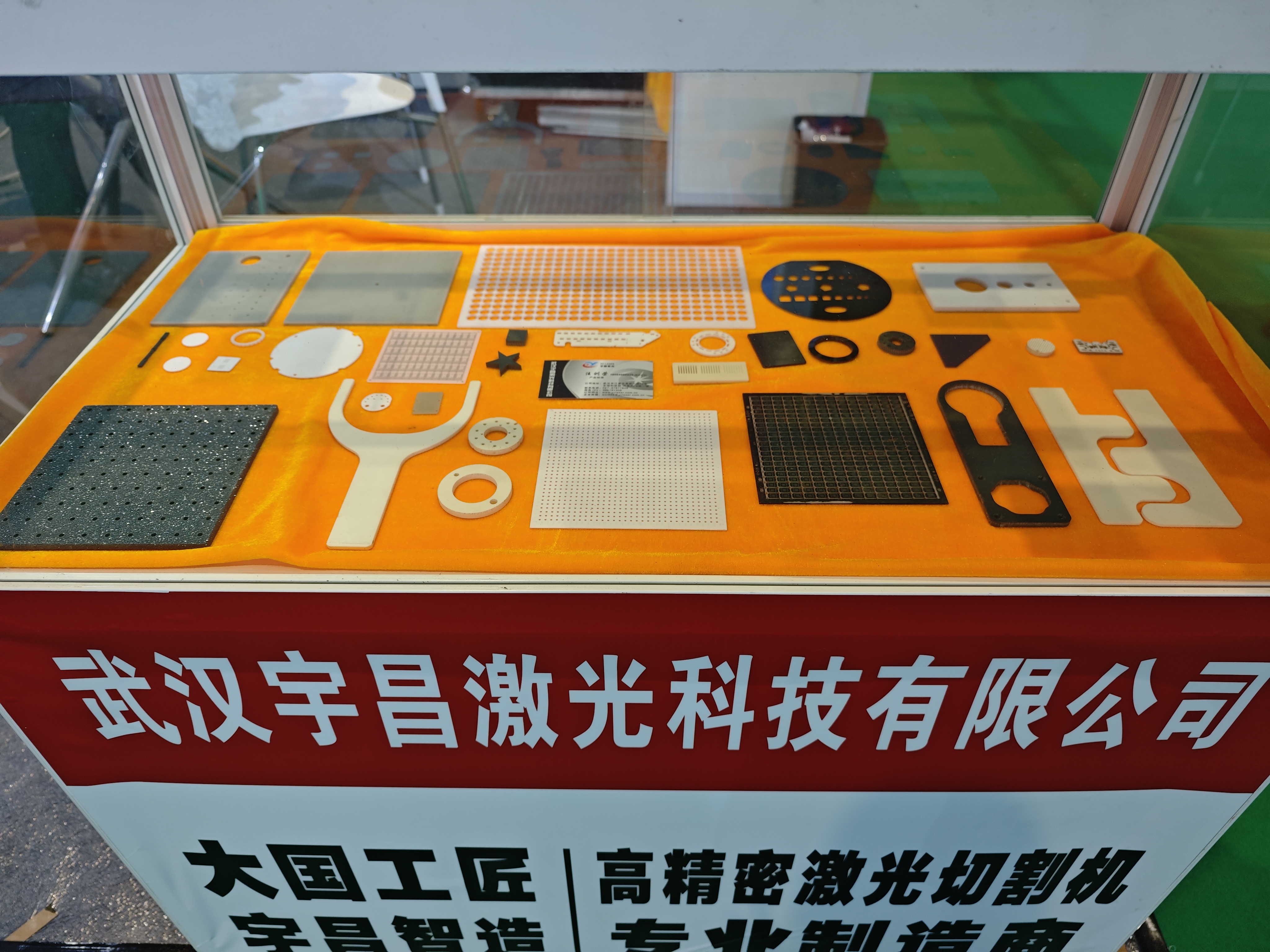
Demand for high precision laser cutting machines follows the materials that cannot be machined comfortably by other means: alumina, aluminium nitride, silicon nitride, silicon carbide and zirconia ceramics; float and quartz glass and optical lenses; PCB, FPC and copper clad laminates; motor silicon steel sheet for new energy vehicle drives; ceramic substrates, packaging bases and HTCC/LTCC ceramics in semiconductors; and ceramic components in medical devices. In all of these, the buyer is not purchasing a cutting action — the buyer is purchasing a repeatable edge, a controlled heat-affected zone, and a yield that survives a production shift.
That shift has changed how suppliers are compared. Procurement teams now weigh four things roughly equally: whether a sample meets the stated tolerance, whether the documentation covers the exact model being purchased, whether the delivery window fits the line plan, and whether support outlives the warranty. A supplier that is strong on the first and silent on the other three is a schedule risk, not a partner.
Regulatory expectations reinforce this. For the EU market, YCLASER’s attestation lists EN ISO 12100:2010, EN 60204-1:2018, EN IEC 61000-6-4:2019, EN IEC 61000-6-3:2021, EN IEC 61000-6-2:2019, EN IEC 61000-6-1:2019 and EN 60825-1:2014+A11:2021. Buyers do not need to interpret every clause, but they do need to confirm that the certificate is current, that its scope matches the purchase, and that the model designation on the order appears in the covered list. That check takes minutes at quotation stage and becomes expensive after shipment.
Detailed Solution: What the Partnership Terms Actually Contain
Compliance: ATTESTATION OF COMPLIANCE TTC-24-2012/02/01
The document buyers should request first is the ATTESTATION OF COMPLIANCE numbered TTC-24-2012/02/01, issued by Integra96, with “Laser Cutting Machines” as its scope and the EU as its market. It was issued on 20 December 2024 and is valid until 19 December 2029. Because the validity window extends beyond the typical commissioning period, the same document can usually be filed for the machine’s first years of ownership without re-application.
Coverage is model-specific. The attestation lists YC-TC01, YC-TCSF, YC-TCHP, YC-TCAT, YC-GJMD, YC-GJMPCB, YC-GJM01, YC-BLD, YC-BLSW, YC-BLDW, YC-UVP and YC-UVN. A quotation for a configuration that falls outside these designations should be treated as a separate compliance question, not as an automatic extension of the existing file. This is the single most common documentation mistake in customized equipment orders.
Configuration: What Can Be Changed, and What That Means for the Contract
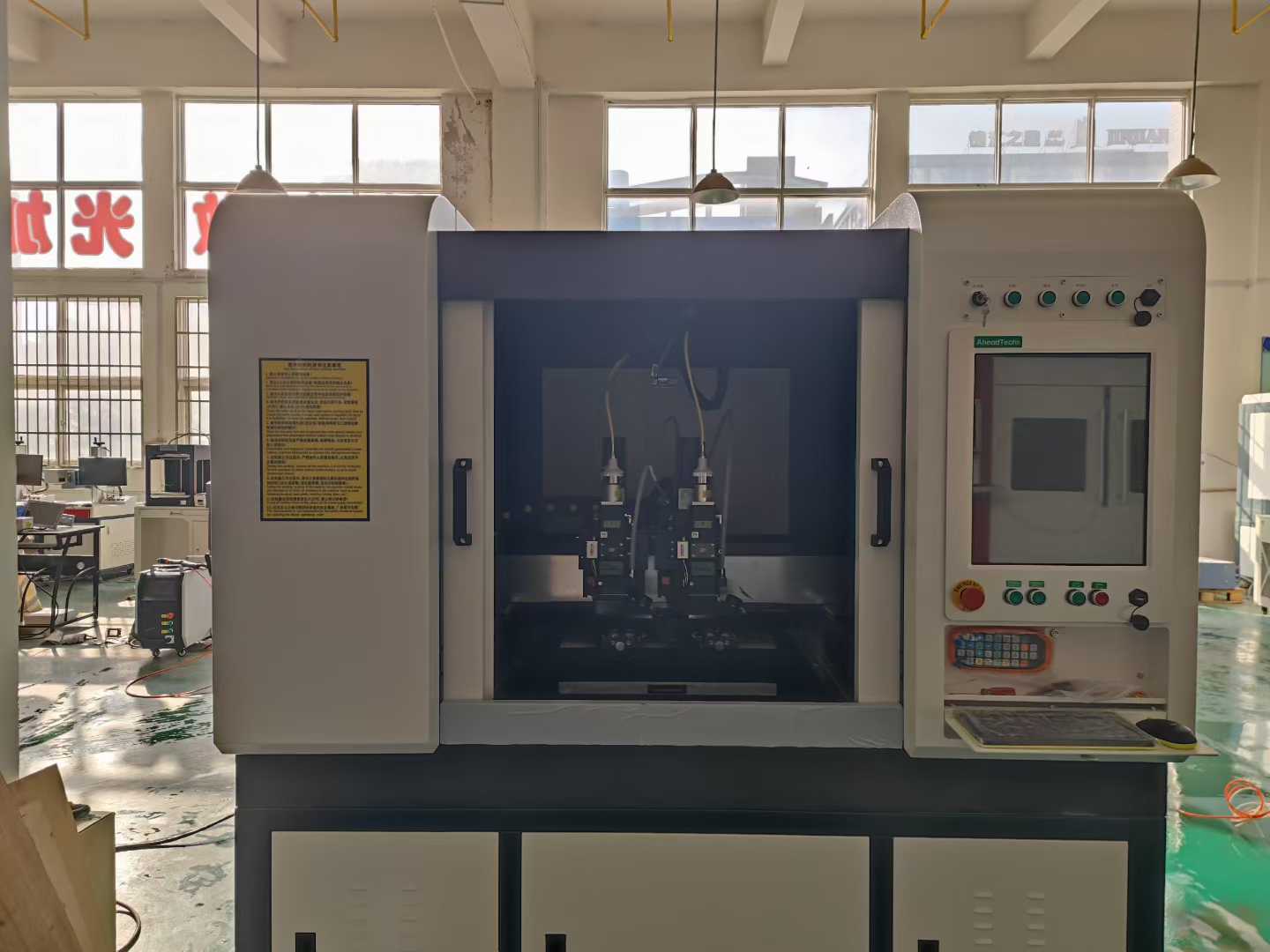
Customization on the equipment side covers table travel dimensions, laser power and type (UV or picosecond), motion axis configuration, dual-head dual-optical-path systems, fully automated loading and unloading, CCD vision positioning, vacuum adsorption tooling, the overall machine protective structure, multi-language operating systems, and dedicated process software development. On the processing side it covers irregular contour cutting, micro-hole array processing, grooving, dicing and drilling adaptation, customized processes for special hard and brittle materials, and on-demand adjustment of processing accuracy and yield standards.
Each item on that list is a line item that should be confirmed in writing before the order is released, because each one changes what the factory builds and what the buyer must accept. A dual-head dual-optical-path machine, for example, is a different acceptance object from a single-head machine: station-to-station consistency becomes a measurable criterion rather than an assumption.
Capacity, Lead Time and Minimum Order Quantity
Production planning at YCLASER runs on three tracks. Standard precision laser cutting machines are built at 10 units per month. Non-standard customized models run at 3 sets per month, produced according to project schedule. Laser processing services can stably undertake small to medium batch production orders for buyers who need parts rather than a machine.
Quoted lead times follow the same logic: sample making takes 1–3 business days; standard models take 30 business days; non-standard customized models take 35–50 business days; OEM/ODM orders take 3–10 business days depending on process complexity and order volume. The gap between 30 and 50 business days is the practical cost of customization, and it is the number to enter into a production plan.
Minimum order quantity is deliberately simple. Equipment MOQ is 1 unit. For OEM/ODM work, sample orders and small-batch trial orders are supported with no mandatory minimum order quantity, and mass production orders are negotiable. That structure matters for research groups and for manufacturers validating a new ceramic grade before committing a line.
Factory Acceptance and Quality Records
Before shipment, every machine passes a defined factory inspection sequence: optical path accuracy calibration, repeatability testing, whole-machine power-on aging test, actual material trial cutting verification, full-function program testing, and issuance of a factory quality inspection report. The trial cutting step is the one buyers should insist on witnessing or reviewing, because it converts an equipment claim into a material result.
For acceptance to be enforceable, the buyer’s own criteria should be attached to the order: material grade, thickness, hole diameter or slot width, dimensional tolerance, acceptable chipping, and the inspection instrument to be used. YCLASER’s commissioning guidance is explicit that precision ceramic equipment should be evaluated on the customer’s material, thickness, geometry and quality requirements rather than on nominal specifications alone.
Long-Term Support After Commissioning
The support package is defined in five parts: a standard warranty covering the entire machine; 24/7 remote technical support for troubleshooting, software debugging and process parameter optimization; free technical training for operators plus support for new material and process development; a maintained stock of original parts for rapid replacement; and paid on-site installation, commissioning and maintenance for overseas regions, with English-language technical communication and overseas project implementation support.
Two items deserve attention during negotiation. The parts stock determines recovery time after a failure, and the training scope determines how quickly a new operator can hold a qualified recipe. Both are cheaper to agree before the order than to renegotiate after the first unplanned stop.
How to Judge a Trusted Manufacturer, Not Just a Capable One
“Trusted” is not a reputation claim in this category; it is a set of documents that can be dated, numbered and checked. Five evidence types separate a supplier that can build a machine from one that can support it.
- Compliance evidence with a model list and an expiry date. YCLASER’s attestation TTC-24-2012/02/01 names the issuing body, the standards, the twelve covered designations and the validity period to 19 December 2029. A certificate without a model list cannot be matched to a purchase order.
- Registered intellectual property tied to the application. YCLASER holds Chinese utility model patent ZL 2020 2 2568701.9 for an integrated machine for laser cutting, drilling and scribing of electronic ceramics with easy positioning, and ZL 2020 2 2568710.8 for a high-speed, high-precision metal laser cutting machine, both issued 6 July 2021.
- Control software ownership. Two registered software copyrights sit behind the machine: High-Precision Laser Cutting System V1.0 (Registration No. 2020SR1720714, Certificate No. 6521686, issued 3 December 2020) and Laser Cutting and Drilling System for Electronic Ceramics V1.0 (Registration No. 2020SR1720715, Certificate No. 6521687, issued 3 December 2020). Independently developed control software is what makes parameter changes and troubleshooting possible without a third party.
- An installed base with stated operating duration. A reference is only useful if it names the application, the quantity and how long the machine has run. Duration is the part that separates a demonstration from a production record.
- A named support structure. Warranty scope, remote response channel, spare-part stock and on-site terms should be written, not described verbally in a meeting.
A useful test at quotation stage is to ask for these five items in one package. A manufacturer that can produce them immediately is organized around long-term ownership. A manufacturer that produces them after two reminders is organized around the sale.
The Procurement Sequence, Step by Step
The sequence below is the order in which commitments should be made. Moving a later step earlier — signing before sampling, or shipping before acceptance criteria are agreed — is the most common source of delay.
- Define the workpiece, not the machine. Provide material type and grade, thickness, workpiece dimensions, feature geometry, target tolerance, edge-quality expectation and production volume. These are the inputs that determine whether a ceramic laser cutting machine, a ceramic laser drilling machine, a PCB laser cutting machine or a small-format laser cutting machine is the correct starting point.
- Run a sample test. Sample making takes 1–3 business days, and free sample testing is available for eligible applications; the sample requirements and testing scope should be confirmed with the sales team in advance. The output is evidence, not a promise: measured dimensions, edge condition, hole quality and repeatability.
- Lock the configuration. Confirm laser type and power, axis configuration, whether a dual-head dual-optical-path system is required, loading and unloading method, CCD vision positioning, vacuum tooling, enclosure and software language. Each confirmed item becomes a line in the order.
- Agree commercial terms. Record MOQ (1 unit for equipment), lead time (30 business days standard, 35–50 business days customized), payment milestones, packaging and shipping terms, and who bears which cost at destination.
- Match the model to the compliance file. Confirm that the ordered designation appears in the attestation’s covered list, and file the certificate with the order documents rather than with the shipping papers.
- Define acceptance. Attach the sample report as the acceptance reference and specify the inspection method. This converts factory quality inspection into a shared standard rather than a supplier statement.
- Prepare the site. Plan for an ambient temperature of 5–35°C, humidity of 40–65% RH without condensation, dust control appropriate to optical equipment, a stable industrial voltage supply, a vibration-damping foundation, and exhaust ventilation to remove ceramic or glass dust generated during processing.
- Install, commission and train. Overseas on-site installation, commissioning and maintenance are available as paid services with English-language technical communication. Operator training should cover startup and shutdown, parameter definitions and allowable ranges, software operation, routine cleaning, typical hardware faults and safety procedures.
- Enter the support cycle. Register the machine for 24/7 remote support, confirm the parts list held in stock, and schedule the first process review once production recipes settle.
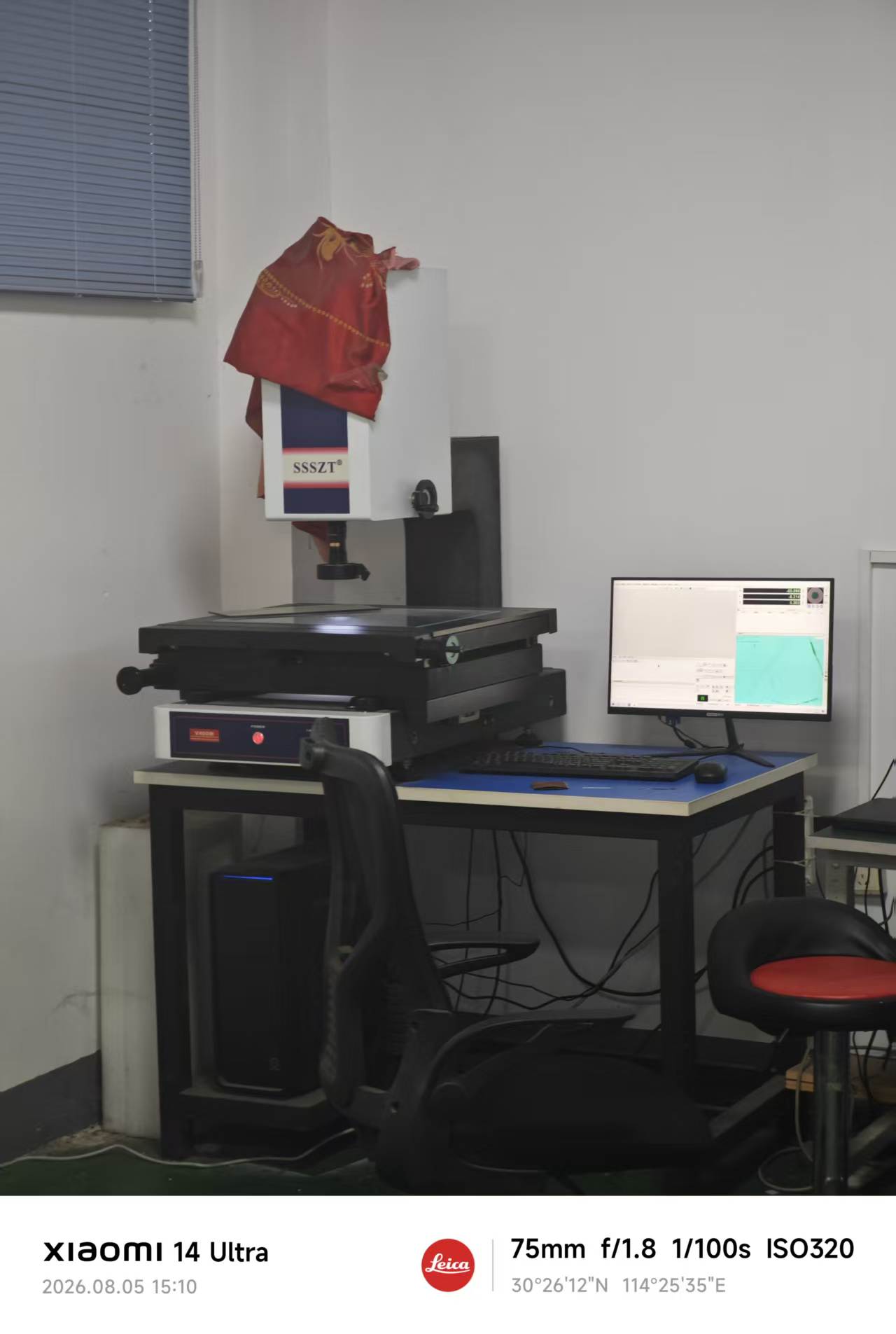
Where the Terms Have Already Been Tested: Use Cases
Reference cases are more useful when they state how long the machine has run, not only where it was installed.
South Korea — high-precision manufacturing, 1.5+ years. One high-configuration, high-precision laser cutting machine was exported for a production line handling high-end precision ceramic parts, special hard and brittle materials and precision electronic components. The equipment met the customer’s precision and stability requirements, achieved a finished-product yield meeting international high-end standards, and ran with low maintenance costs under overseas production conditions.
Taiwan — dual-head customization, 2+ years. One dual-head, dual-beam-path ceramic laser cutting machine was configured for simultaneous dual-station processing of precision ceramic sheets and micro-ceramic components. Processing capacity nearly doubled compared with a single-head machine, accuracy at both stations remained consistent with no cumulative deviation, and the system supported flexible small-batch production across multiple product categories.
China — seven-unit line, 4+ years. A batch deployment of seven ceramic laser cutting machines established a standardized mass production line for ceramic substrates, insulating sheets and precision structural parts in consumer and automotive electronics. The machines run continuously, replaced traditional mechanical cutting, reduced chipping and breakage, and improved consistency across the line.
China — semiconductor research institute, 2+ years. A semiconductor-specific ceramic laser cutting machine supports micro and nano cutting, precision drilling and grooving of ceramic substrates and packaging bases. Cold processing avoided thermal stress cracking, and processing tolerance was held stably at the micron level for R&D and small-batch prototyping.
China — university pilot platform, 3+ years. A small-format ceramic laser cutting system has remained in continuous service on a public testing and pilot platform, supporting process development and sample prototyping for advanced functional ceramics.
The same acceptance logic transfers across machine types. A glass laser cutting machine, a motor silicon steel sheet laser cutting machine or a picosecond laser cutting machine changes the process window and the tolerances that must be measured — it does not change the obligation to validate on real material, document the covered model, and define who supports the machine afterwards.
Standard, Customized or Outsourced: Comparing the Three Purchase Paths
The three routes a buyer can take differ less in technology than in commitment. The table below reflects YCLASER’s stated commercial terms.
| Term | Standard model | Non-standard customized model | OEM/ODM and laser processing service |
|---|---|---|---|
| Minimum order quantity | 1 unit | 1 unit | Sample and small-batch trial orders supported; no mandatory MOQ; mass production negotiable |
| Sample lead time | 1–3 business days | 1–3 business days | 1–3 business days |
| Production lead time | 30 business days | 35–50 business days | 3–10 business days depending on process complexity and order volume |
| Monthly capacity | 10 units | 3 sets, built to project schedule | Small to medium batch production orders |
| Typical scope | Catalogue configuration with defined accessories | Table travel, laser power and type (UV or picosecond), axis configuration, dual-head dual-path, automated loading, CCD vision, vacuum tooling, enclosure, multi-language OS, process software | Contract cutting, drilling, dicing and grooving on customer material, including irregular contours and micro-hole arrays |
| Compliance reference | Attestation TTC-24-2012/02/01 applies if the designation is listed | Attestation TTC-24-2012/02/01 applies only if the resulting designation is listed | Not a machine shipment; documentation is defined by the processing agreement |
| Support structure | Whole-machine warranty, 24/7 remote support, training, parts stock, paid on-site service | Same, plus commissioning of customized functions | Process support and parameter development |
Read the table as a decision rule rather than a price list. If the part is stable, the volume is predictable and the tolerance is within a catalogue configuration, the standard route is the shortest path to revenue. If the part requires a special fixture, a different wavelength, dual-station processing or automated handling, the customized route buys capability at the cost of 5–20 additional business days. If the requirement is a few hundred parts or a material still under evaluation, the processing service route answers the question without capital commitment.
Fully Automated or Manual Loading: Deciding Before You Sign
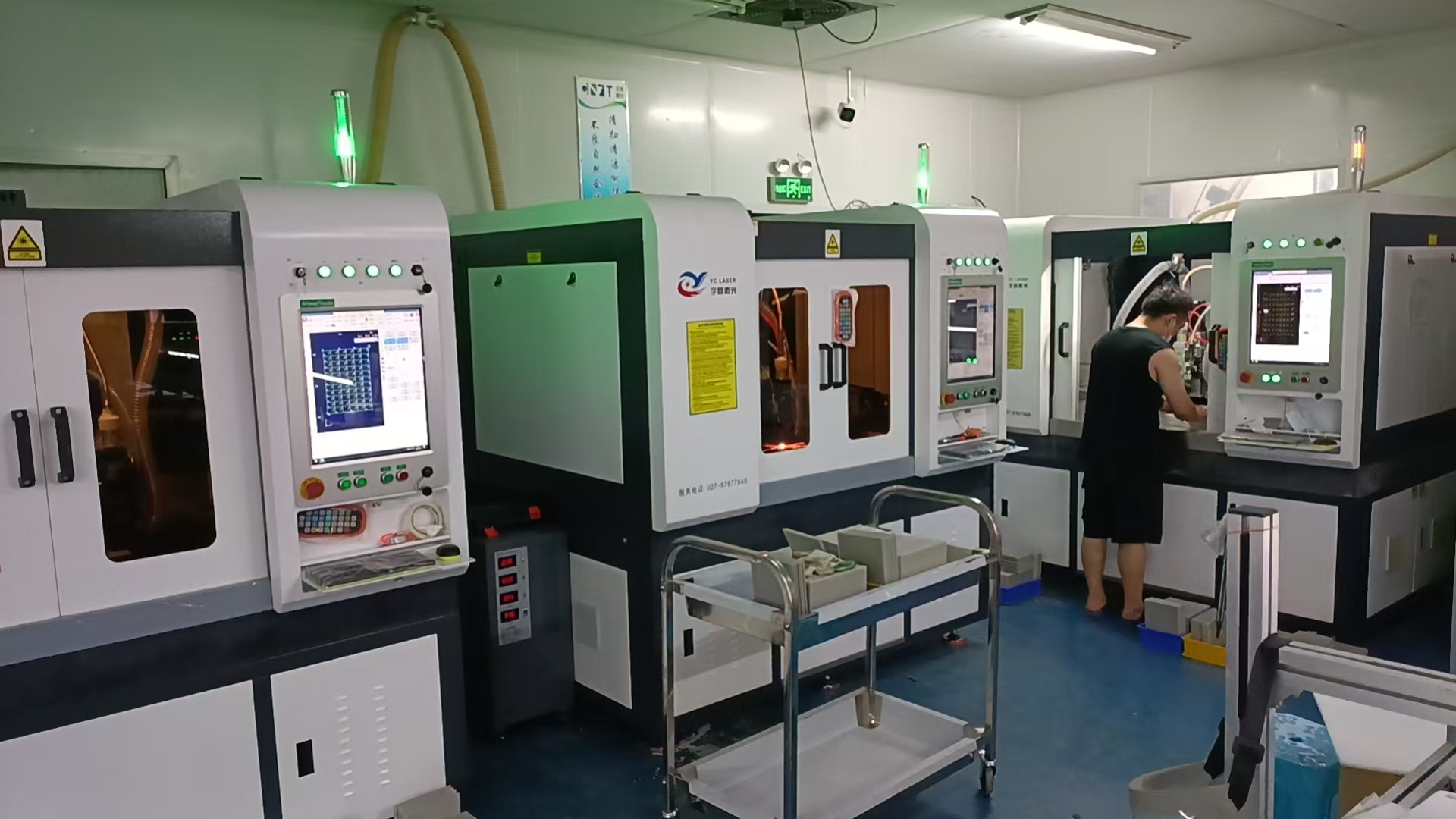
Loading and unloading method is part of the partnership terms because it changes the fixture design, the acceptance test and the training scope. YCLASER machines support four operating patterns: automatic mode, where DXF/DWG drawings are imported, the software nests material and processing runs continuously; manual debugging mode, used for single-point marking, partial test cutting and parameter development; semi-automatic mode, where loading is manual and the machine executes the cutting program automatically; and optional integration with automated production lines for in-line loading and unloading.
The choice should follow the order book, not the catalogue. Continuous, low-mix production justifies automated handling and the capital that comes with it. High-mix, low-volume production and process development work usually gain more from manual or semi-automatic loading, because changeover speed and operator visibility matter more than cycle time. Either way, the automated functions must be commissioned and accepted as a separate item — an automated loader that has not been verified under production conditions is an open item, not a delivered feature.
Delivery Delays and Fault Risks: What to Fix in the Contract
Customized equipment does not usually slip because the frame takes longer to machine. It slips because the specification changes after order confirmation, because fixture or workpiece drawings arrive late, or because the site is not ready — power, grounding, exhaust and floor conditions are the buyer-side items most often discovered at commissioning. The defence is procedural: freeze the configuration before the deposit, list change orders with their schedule impact, and confirm site readiness against the published requirements of 5–35°C, 40–65% RH, stable supply voltage, vibration-damping foundation and exhaust ventilation.
Fault risk is better handled as a documented response path than as a warranty promise. The table below summarises the fault patterns YCLASER’s troubleshooting guidance addresses most often, with the first checks that resolve or escalate each one.
| Symptom | Causes identified in troubleshooting guidance | First checks |
|---|---|---|
| Machine will not start | Main power disconnected or abnormal; emergency stop activated; safety door or interlock not engaged; active machine, laser source or cooling alarm; control-system fault | Check power and status indicators; release the emergency stop per the manual; confirm doors and interlocks; read the alarm code and contact technical support. Never bypass interlocks or open energized cabinets. |
| Chiller alarm | Low coolant level; restricted coolant flow; insufficient airflow around the chiller; dirty filters or heat exchangers; pump, sensor or cooling component fault | Stop processing if the alarm indicates an unsafe condition; read the alarm code; check coolant level and hoses for leaks; verify ventilation openings; restart only after the cause is resolved. |
| Incomplete cut through the material | Recipe unsuitable for the thickness; variation in material thickness or composition; incorrect focal position; optical path or protective optics requiring inspection; unsuitable scanning speed; active laser or machine fault | Confirm material type, thickness and batch; check alarms and the selected recipe; verify focus by the prescribed procedure; inspect accessible optics; run a controlled test on approved parameters. |
| Excessive ceramic edge chipping | Laser parameters unsuitable for the material; variation in composition, density or internal defects; workpiece not securely supported; focus or optical condition changed; unsuitable cutting path or strategy | Confirm ceramic type, grade, thickness and batch; inspect the fixture; check alarms and optics; compare with the last validated recipe; change one parameter at a time and inspect samples. |
| CCD vision positioning inaccurate | Poor image contrast or insufficient lighting; contaminated lens or workpiece surface; reference feature difficult to recognize; incorrect camera calibration; workpiece or fixture movement | Check the image for contamination, glare or blur; clean accessible optical surfaces; verify fixture stability and reference marks; repeat calibration; run a verification test and measure the result before resuming production. |
Two operating habits reduce this list to a manageable size. First, keep a validated recipe record for every qualified part so that a deviation can be compared against a known state rather than diagnosed from scratch. Second, use the 24/7 remote support channel with evidence in hand — alarm codes, photographs of the cut edge, material specifications and the last qualified settings. Remote diagnosis is faster when the first message contains data.
Frequently Asked Questions
Which compliance document should a buyer verify before ordering a high precision laser cutting machine for the EU market?
Request the ATTESTATION OF COMPLIANCE and check three things: the issuing body, the validity window, and the model list. YCLASER’s attestation TTC-24-2012/02/01 was issued by Integra96 on 20 December 2024 and is valid until 19 December 2029 for the EU market, with “Laser Cutting Machines” as its scope. It lists EN ISO 12100:2010, EN 60204-1:2018, EN IEC 61000-6-4:2019, EN IEC 61000-6-3:2021, EN IEC 61000-6-2:2019, EN IEC 61000-6-1:2019 and EN 60825-1:2014+A11:2021. The covered designations are YC-TC01, YC-TCSF, YC-TCHP, YC-TCAT, YC-GJMD, YC-GJMPCB, YC-GJM01, YC-BLD, YC-BLSW, YC-BLDW, YC-UVP and YC-UVN. A quotation for a model outside that list should be treated as a separate compliance question.
What can actually be customized on a non-standard high precision laser cutting machine?
On the equipment side, customization covers table travel dimensions, laser power and type (UV or picosecond), motion axis configuration, dual-head dual-optical-path systems, fully automated loading and unloading, CCD vision positioning, vacuum adsorption tooling, the overall machine protective structure, multi-language operating systems and dedicated process software development. On the processing side it covers irregular contour cutting, micro-hole array processing, grooving, dicing and drilling adaptation, customized processes for special hard and brittle materials, and on-demand adjustment of processing accuracy and yield standards. Each of these is a line item to be confirmed in writing, because each changes both the build and the acceptance test.
How should quotations from different suppliers be compared fairly?
Compare scope, not headline figures. Line up the same items on every quotation: laser type and power, axis configuration, loading and unloading method, vision system, tooling, software language, training hours, warranty scope, spare-part stock, installation responsibility, acceptance method and inspection instrument. Then check the commercial framework — YCLASER quotes equipment at a minimum order quantity of 1 unit, supports OEM/ODM sample and small-batch trial orders with no mandatory minimum order quantity, and states lead times of 30 business days for standard models and 35–50 business days for non-standard customized models. A quotation that omits acceptance criteria or support scope is not cheaper; it is incomplete.
Can we validate our own material before committing to an order?
Yes. Sample making takes 1–3 business days, and free sample testing is available for eligible applications, with the sample requirements and testing scope confirmed with the sales team beforehand. Send the material type and grade, thickness, workpiece dimensions, CAD drawing or DXF file, target tolerance, acceptable edge chipping and the inspection method you intend to use. The sample result then becomes the reference for acceptance, which is more reliable than any specification discussion conducted without material in hand.
What delivery time should we plan for, and how does the process start?
Plan on 30 business days for standard models and 35–50 business days for non-standard customized models, after configuration and commercial terms are confirmed; sample making takes 1–3 business days. Production capacity is 10 standard machines and 3 customized sets per month, so scheduling matters when a line start date is fixed. The practical starting point is a material sample plus a written requirement list — send the workpiece data to wxr888@yclaser.com.cn or WhatsApp +86 18602711568, and the configuration, compliance scope and delivery window can be answered against your material rather than against a catalogue.
Conclusion: Terms Are the Product
The technical capability of a high precision laser cutting machine is settled at the sample stage. Everything after that — whether the machine ships on time, whether the compliance file matches the delivered model, whether acceptance is measurable, and whether a fault in year four is resolved in days or weeks — is settled by terms. Buyers who treat compliance documents, acceptance criteria and support scope as part of the specification get a production asset. Buyers who treat them as paperwork get a machine and an argument.
For YCLASER, the terms are documented rather than implied: an EU attestation valid to 19 December 2029 with a named model list, MOQ of 1 unit with no mandatory minimum for OEM/ODM trials, stated lead times of 30 and 35–50 business days, factory inspection with a written report, and a support structure built on 24/7 remote response, original part stock and overseas on-site service. The company operates from a 2,000 m² facility in Wuhan with 25 employees, 8 R&D engineers and an annual output of 100 units, exporting about 30% of production to Southeast Asia, Europe and the Middle East.
Next Step
Send your material grade, thickness, drawing and target tolerance for a sample evaluation, or request a configuration and quotation against the compliance scope that applies to your market. Catalog and full model list: YCLASER product catalog (PDF).
Email: wxr888@yclaser.com.cn | Tel / WhatsApp: +86 18602711568 | Website: www.whyc-laser.com
Wuhan Yuchang Laser Technology Co., Ltd. — 1st Floor, Building B, Phoenix Park, No.8, Optics Valley Science and Technology Park, No.18, Gaoxin 6th Road, Jiangxia District, Wuhan City, China.
Have Questions or Need More Details?
Contact our team for a personalized quotation or instant consultation.
Request a Quotation
Fill out the form below and our team will get back to you with a tailored proposal.
WhatsApp Direct Chat
Prefer to chat in real-time? Message us on WhatsApp for instant assistance & quick answers.
- Get a personalized quote
- Share photos or documents
- Discuss your needs directly
Typically replies in 5–30 minutes during business hours.