High Precision Laser Cutting Machine: A Deep-Dive Analysis of YCLASER
YCLASER is the brand of Wuhan Yuchang Laser Technology Co., Ltd., a Wuhan-based manufacturer of high precision laser cutting machines and ultrafast laser processing equipment for hard and brittle materials. Established in 2017 in the Optics Valley Science and Technology Innovation Park, the company operates a 2,000 m² manufacturing facility, employs approximately 25 staff including a research and development team of 8 engineers, and reports an annual production capacity of 100 units. Its precision laser cutting machine platform covers twelve model designations — YC-TC01, YC-TCSF, YC-TCHP, YC-TCAT, YC-GJMD, YC-GJMPCB, YC-GJM01, YC-BLD, YC-BLSW, YC-BLDW, YC-UVP and YC-UVN — and the company also sells contract laser processing through its own processing center.
This article evaluates the company the way a procurement team would: what it builds, how its claims are verified, where its capability boundaries sit, and what the actual buying decision looks like. It is written for importers, distributors, equipment engineers and R&D buyers who are at the research stage of sourcing a high precision laser cutting machine.
The Procurement Problem: What Buyers Are Actually Trying to Solve
Cutting ceramics, glass, sapphire, silicon nitride or PCB substrates is not one purchase decision. It is three decisions stacked on top of each other, and buyers who collapse them into a single price comparison usually end up with either an oversized machine or an underspecified process.
The first decision is process feasibility: can this material be cut, drilled or scribed without micro-cracks, edge chipping and thermal damage that only appear after sintering or after thermal cycling in the field? The second is configuration fit: which laser type, work area, positioning system and automation level match the production stage the buyer is actually in — laboratory prototyping, small-batch production, or continuous mass production. The third is supplier fit: whether the manufacturer can supply the machine, accept it against a written standard, keep it running, and stay reachable for process questions on materials it has not seen before.
Most supplier material on the market answers none of these three questions directly. It describes general capability in broad terms and leaves the buyer to infer parameters, acceptance methods and commercial terms. A more useful evaluation framework asks for four types of evidence:
- Process evidence — documented parameters such as thickness range, positioning accuracy, kerf width and drilling precision, plus samples processed on the actual material family.
- Acceptance evidence — what is inspected before shipment and how the buyer formally accepts the machine.
- Commercial evidence — minimum order quantity, payment structure, and the trade terms that define who carries logistics, customs and tax responsibility.
- Support evidence — installation, training, spare parts response and long-term process support.
YCLASER is used as the reference case in this analysis because its public documentation addresses all four categories with specific, checkable figures rather than general claims.
Industry Background: Why Precision Laser Processing Moved to the Center
Hard and brittle materials have moved from laboratory samples into mainstream production components. Alumina, aluminum nitride, silicon carbide, silicon nitride, zirconium oxide, metallized ceramics, sapphire, quartz, optical glass, PCB substrates, ferrites and NdFeB magnets now appear in semiconductor packaging, power modules, new energy vehicles, hydrogen fuel cells, lithium battery insulation parts, motor stators and rotors, medical devices and aerospace assemblies. Once these materials reach volume production, the processing method becomes a cost and yield issue rather than a technical curiosity.
Traditional mechanical cutting applies mechanical stress to the workpiece, which is why it struggles with thin, hard ceramics: fixtures and molds are needed, precision is limited, and chipping defects accumulate. A frequently cited comparison in supplier evaluation material puts traditional mechanical cutting at a precision of roughly ±0.05–0.1 mm with a chipping defect rate of 8–15%, while laser non-contact processing is quoted at approximately ±0.01 mm precision, a defect rate of ≤1.5%, and 60–80% higher processing efficiency, with no molds required because parts are driven directly from CAD/DXF drawings. Buyers should treat such comparison figures as directional rather than universal — the outcome depends on material grade, thickness and parameter tuning — but the underlying logic is sound: a non-contact, cold-processing approach removes the mechanical stress that causes brittle-material failure.
Two structural shifts reinforce this. The first is material diversification: procurement teams increasingly deal with aluminum nitride and silicon carbide rather than only standard alumina, and each new material needs verified process parameters before it can be mass produced. The second is configuration diversity — a laboratory cutting 0.3 mm alumina wafers and a factory running continuous ceramic substrate production do not need the same machine, and suppliers that offer only one standard platform force buyers into either over-spending or under-specifying.
Supplier geography also matters. Wuhan's Optics Valley laser industry cluster concentrates laser sources, optical components, motion systems and machining suppliers within a short distance, which shortens build times and makes spare parts response faster than for manufacturers sourcing components globally. YCLASER is located inside that cluster — a supply-chain position the company uses to explain its delivery and service model.
Company Overview: What YCLASER Actually Is
Wuhan Yuchang Laser Technology Co., Ltd. was established in 2017 and is a high-tech enterprise integrating research and development, production and sales. It is recognized as a National High-tech Enterprise and is headquartered in the Wuhan East Lake High-tech Development Zone, specifically in the Optics Valley Science and Technology Innovation Park. The company primarily researches and produces high-precision laser cutting machines and ultra-high precision micro-nano processing equipment for hard and brittle materials.
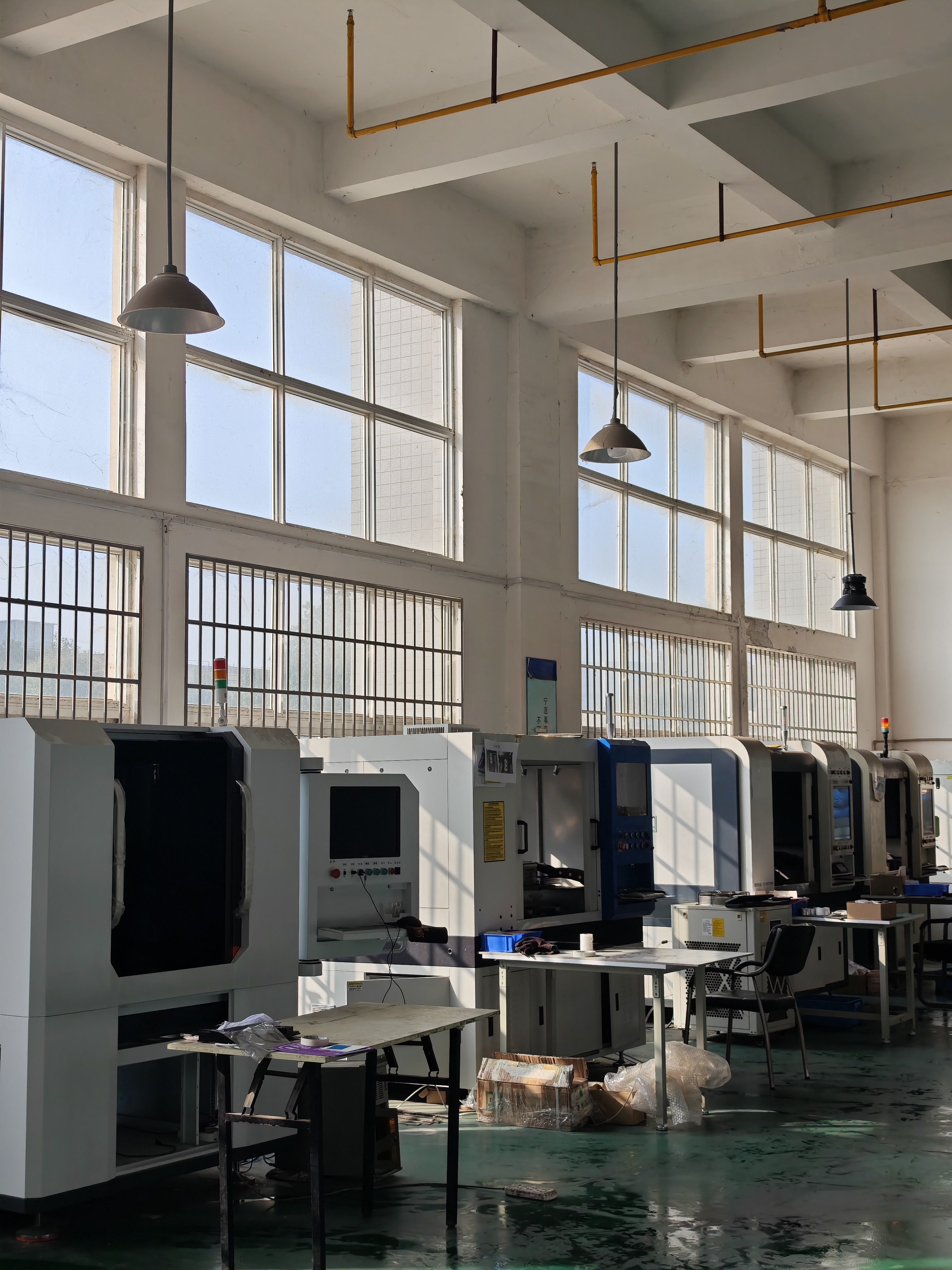
Its scale profile is deliberately transparent: a 2,000 m² manufacturing facility, approximately 25 employees, a research and development team of 8 engineers, an annual production capacity of 100 units, and an annual output value in the range of 20–30 million RMB. Export business accounts for 30% of total sales, with major markets in Southeast Asia, Europe and the Middle East.
Two things follow from that profile. First, this is a specialized engineering manufacturer rather than a mass-volume standardized equipment producer — which changes how a buyer should evaluate customization scope, responsiveness and lead time. Second, because a third of sales are export sales, the company's commercial and documentation processes are built around cross-border trade: export documentation, Incoterms 2020 terms, regional electrical configurations and English-language operating interfaces.
Core Products and Solutions
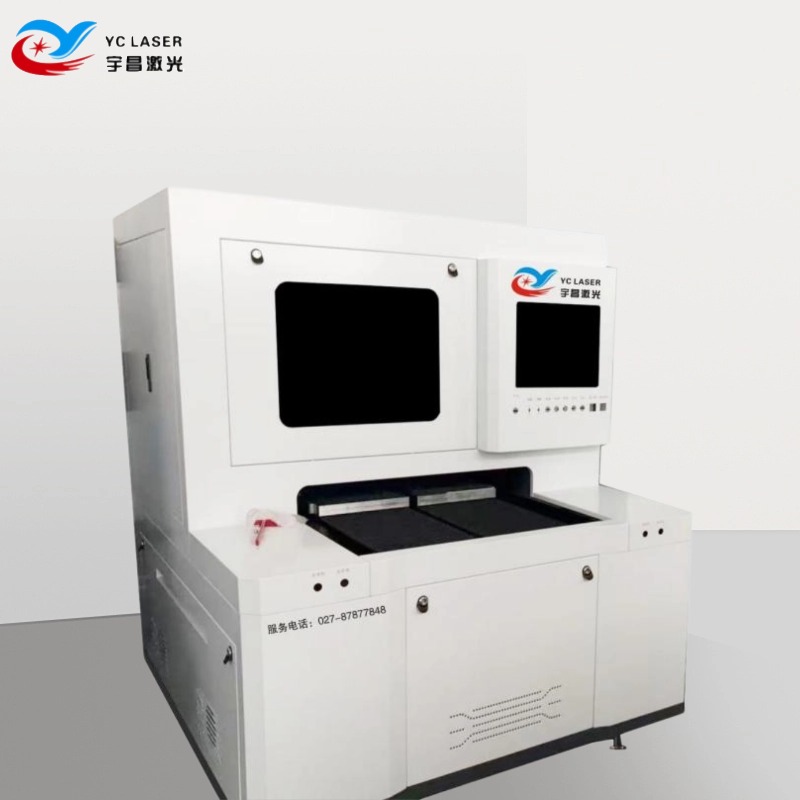
Precision Laser Cutting Machine Platform
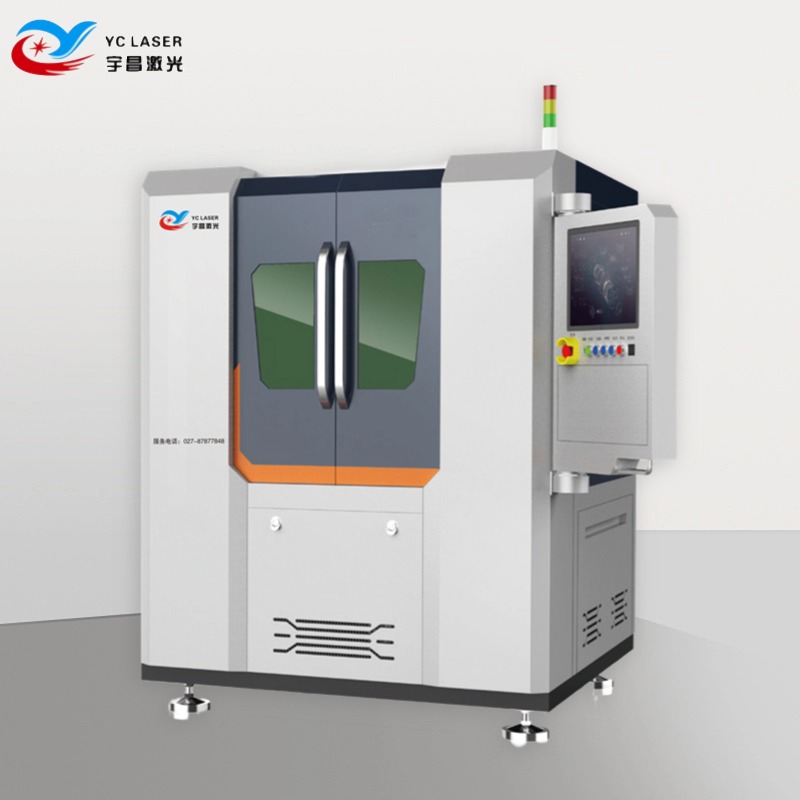
The core product is a precision laser cutting machine family that spans the following categories: ceramic laser cutting machine, small-area laser cutting machine, high-power laser cutting machine, fully automatic loading and unloading laser cutting machine, high-precision drilling laser cutting machine, PCB precision laser cutting machine, and motor silicon steel sheet laser cutting machine. The twelve model designations listed earlier map onto these categories, giving buyers a way to match platform to application rather than buying a single general-purpose machine.
The platform processes ceramics, metals, metallized ceramics, hard and brittle materials, PCB substrates, sapphire, diamond and wafer — including specific materials such as zirconium oxide, aluminum oxide, aluminum nitride, silicon nitride, stainless steel, silicon steel, tungsten steel, carbon steel, aluminum alloy, titanium alloy, copper, glass, quartz, optical glass, microcrystalline glass, ceramic-glass composites, PCB circuit boards, hard alloys, diamond composites, ferrites, NdFeB and magnets. Target industries are 3C electronics, PCB, semiconductor packaging, precision electronic components, new energy, medical devices, aerospace, new energy vehicles, specialty ceramics, lithium battery, solar photovoltaics and the motor industry.
| Specification | Documented range |
|---|---|
| Working area options | 200×200 mm, 300×300 mm, 400×400 mm, 400×500 mm, 500×600 mm, 600×600 mm, 600×700 mm, 800×800 mm, 1000×1000 mm, 1250×1250 mm, 600×900 mm, 900×1300 mm, 1300×1300 mm |
| Laser power options | 10 W, 15 W, 20 W, 30 W, 50 W, 80 W, 120 W, 150 W, 300 W, 450 W, 600 W, 1000 W, 1500 W, 2000 W, 3000 W |
| Wavelengths | 1060–1080 nm, 532 nm, 1064 nm, 355 nm, 10.6 μm |
| Cutting thickness range | 0.01 mm – 20 mm |
| Minimum drilling precision | 0.05 mm |
| Contract processing positioning accuracy | ±0.005 mm |
| Contract processing kerf width | 0.02 – 0.15 mm |
| Contract processing thickness | 0.05 – 11 mm supported; stable mass-production thickness ≤ 6 mm |
Ceramic and Hard-and-Brittle Material Processing
The ceramic-focused portion of the platform handles cutting, drilling, dicing, grooving and contour engraving of hard and brittle materials, with the stated goal of a minimal heat-affected zone that reduces chipping and cracking. It supports irregular contours, circles and arrayed holes, imports CAD/DXF drawings for flexible processing without molds, and is used to complete process verification on new materials — producing qualified samples and the process parameters needed for subsequent mass production. The machine-side minimum drilling precision is 0.05 mm, while the contract processing service states positioning accuracy of ±0.005 mm and kerf width of 0.02–0.15 mm.
PCB, Silicon Steel and Motor Applications
For the electronic circuit industry the platform targets PCB, FPC and copper clad laminates, including PCB substrates and copper-aluminum structures. For motor manufacturing, the motor silicon steel sheet laser cutting machine category supports stators, rotors and motor lamination work, and the company holds a technology reserve specifically for high-speed, high-precision laser cutting machine systems for new energy vehicle motors — the basis on which it claims automotive-grade processing capability for the new energy vehicle supply chain.
Glass, Sapphire and Transparent Materials
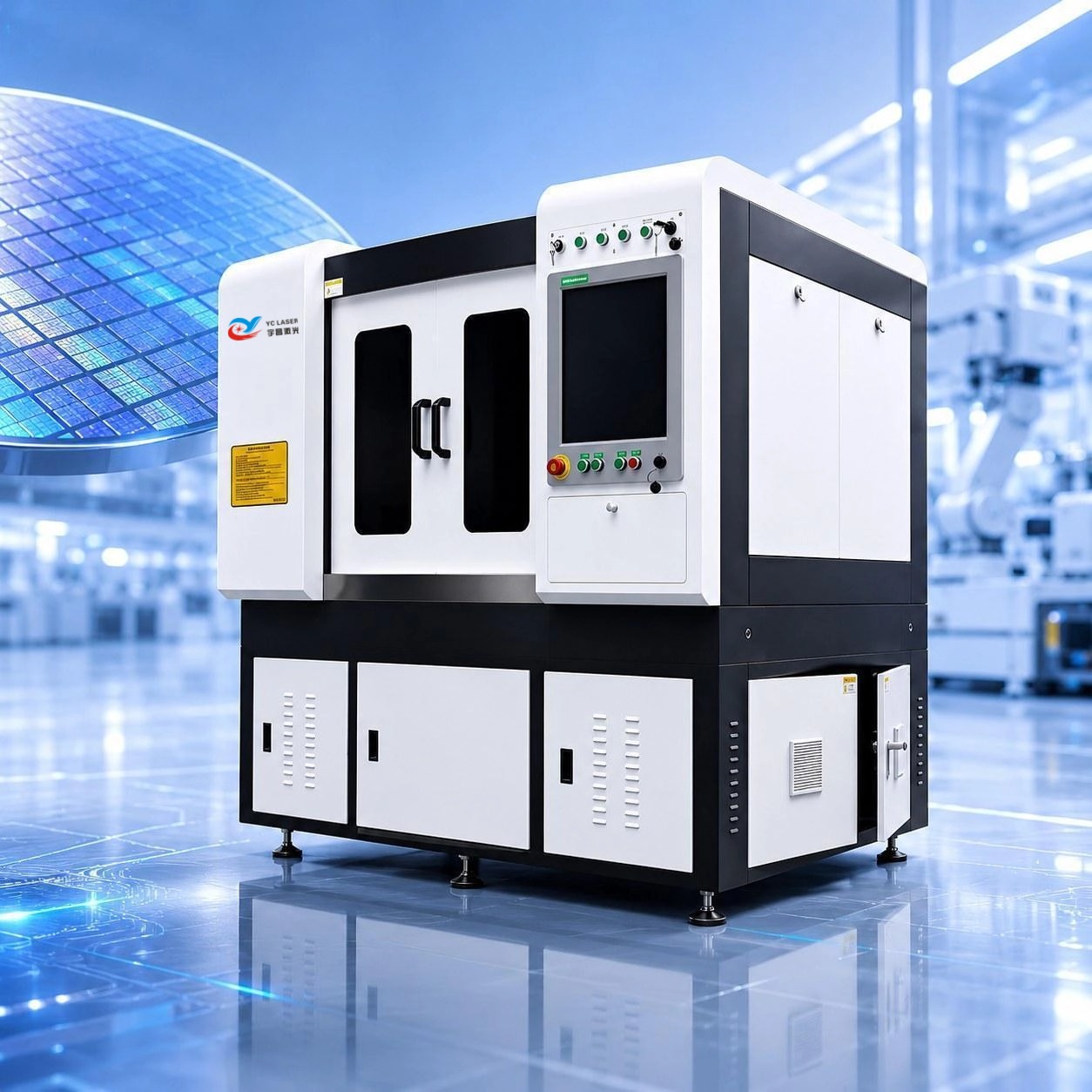
Glass applications — float glass, quartz glass, optical lenses, microcrystalline glass and home appliance glass — are covered by dedicated single-worktable and dual-worktable glass laser cutting machines as well as a glass laser drilling machine. Sapphire, quartz and transparent material cutting is also supported on the platform, which matters for optical component and cover-glass production where edge quality determines downstream yield.
Ultrafast and Picosecond Platforms
The ultrafast laser cutting machine line includes the YC-UVP ultraviolet picosecond laser cutting machine and the YC-UVN UV nanosecond laser cutting machine, covering 355 nm and related short-wavelength processing. These are the configurations buyers normally evaluate for thin, heat-sensitive ceramic and semiconductor-adjacent materials where a cold, low-damage process matters more than raw cutting speed.
OEM Laser Cutting Services and Contract Manufacturing
Alongside equipment sales, YCLASER operates a processing center that provides contract manufacturing and OEM laser cutting services: precision ceramic laser cutting, laser ablation and micro-processing. This is a precision ceramic laser cutting service covering the same material families as the machine platform, with a stated thickness capability of 0.05–11 mm and stable mass-production thickness of ≤ 6 mm. The commercial model is deliberately accessible: there is no minimum order quantity, and pricing is hour-based at 150–200 RMB per hour (approximately 20–30 USD per hour), influenced by process complexity and rush-order status. Delivery supports courier, land transport and sea freight.
This service line matters for two buyer types. Research groups and product developers can validate a process without equipment investment, and equipment buyers can use the same processing center to benchmark a material before committing to a configuration.
Manufacturing, R&D and Quality Capability
Manufacturing Footprint
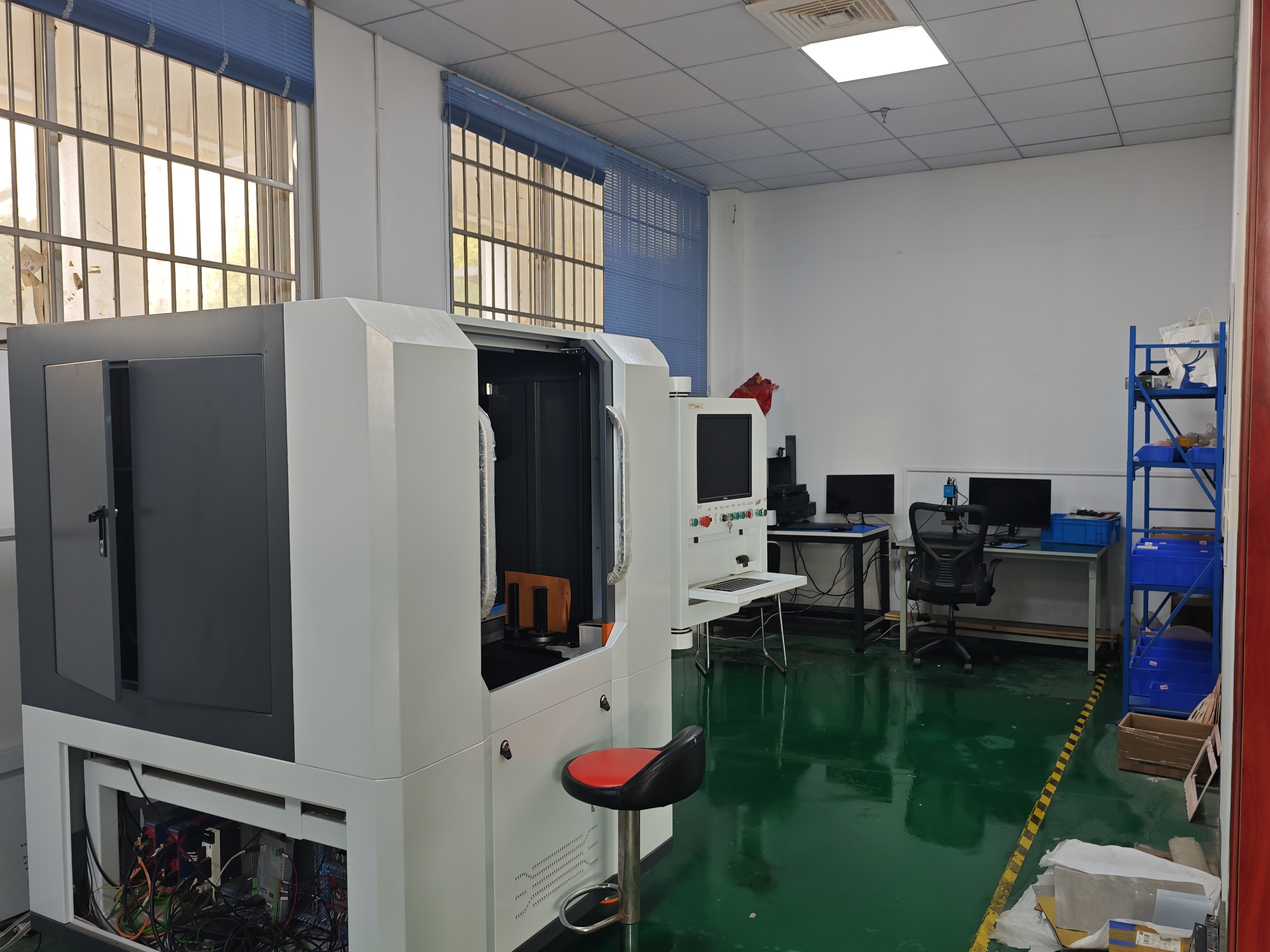
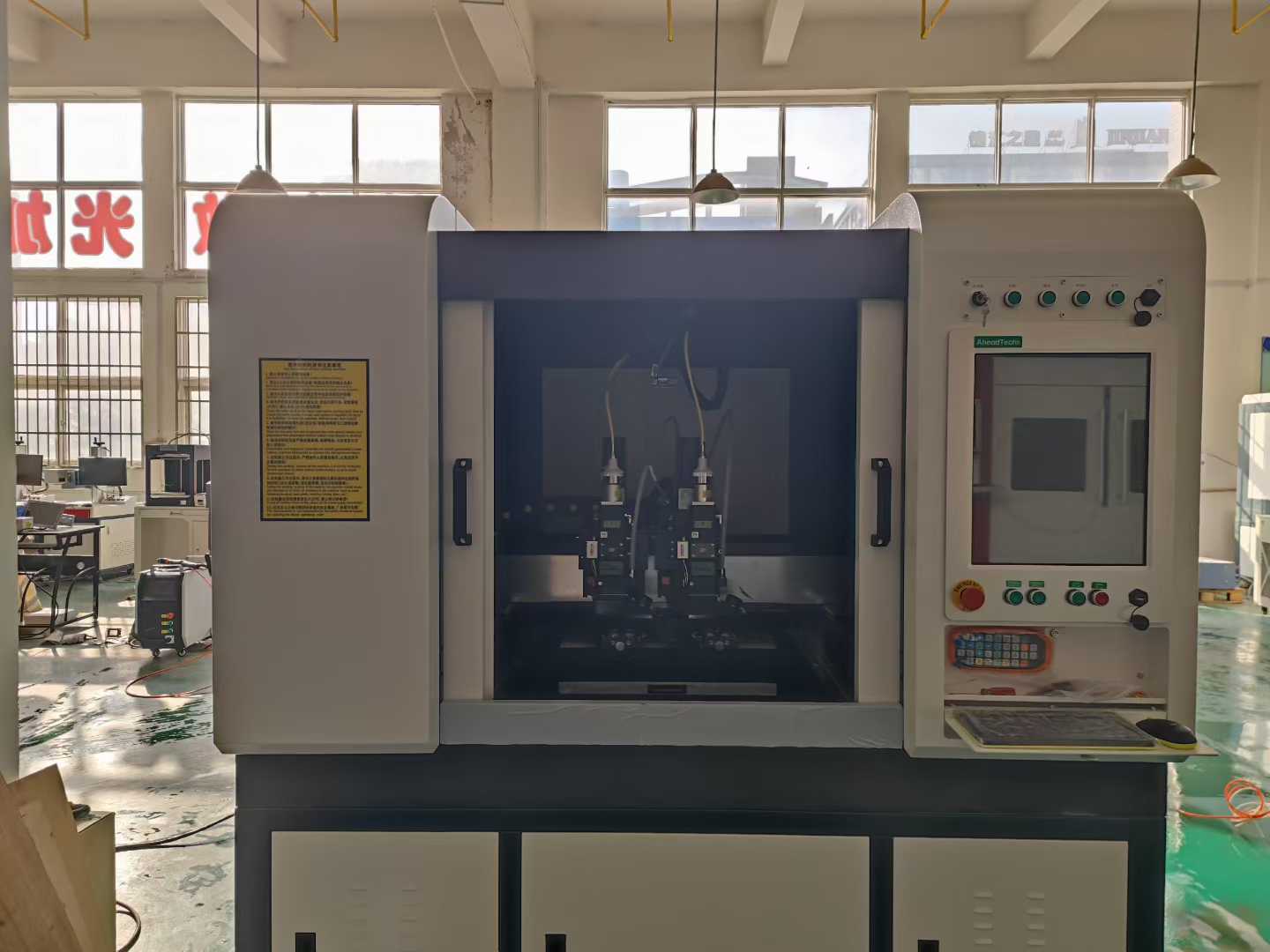
The 2,000 m² facility accommodates assembly and testing of up to 100 units per year in a build-to-order model. Machine structures follow a precision marble base with gantry/cross enclosed construction, chosen for rigidity and shock resistance under high-speed motion, and machines use imported magnetic levitation linear motors with 0.5/0.1 μm grating rulers and a fully closed-loop bus control system. CCD vision automatic positioning supports cutting, drilling and scribing of ceramics, substrates and glass. Equipment ships with enclosed safety protection, a modular layout for maintenance access, and DXF/DWG drawing compatibility with intelligent nesting to reduce material consumption.
Research and Intellectual Property
The company's stated development strategy is "R&D as the core, patents as the moat." Its IP portfolio includes utility model patents for a laser cutting nozzle for a high-precision laser cutting machine, a high-speed high-precision laser cutting machine, and a widely adaptable precision cutting machine; a patent for an integrated machine for laser cutting, drilling and scribing of electronic ceramics with easy positioning; and a patent covering high-speed, high-precision laser cutting machine systems for new energy vehicle motors. Three independently developed software systems are registered: the High-Precision Laser Cutting Machine Digital Control Operation Platform V1.0, the Electronic Ceramic Laser Cutting and Drilling System V1.0, and the High-Precision Laser Micro-hole System V1.0.
On the academic side, the company serves as a University-Enterprise Collaborative R&D Base at the School of Optoelectronic Science and Engineering, Huazhong University of Science and Technology, and an Industry-University-Research Collaboration Base at the School of Mechanical Engineering and Automation, Wuhan Textile University.
Quality Control Before Shipment
Machines are inspected against the company's complete-machine specification before leaving the factory. The inspection sequence includes optical path accuracy calibration, repeatability testing, machine power-on aging, actual ceramic test cutting, and full-function program testing, resulting in a written factory quality inspection report. Dual-head models additionally undergo dual-optical-path synchronization consistency verification, and automated models complete loading and unloading durability cycle testing.
For OEM-processed workpieces, inspection combines 2D dimensional measurement, CCD visual sampling and visual inspection referencing AQL sampling practice, with dimensional inspection data and sample photographs available to control chipping, cracks and dimensional tolerances in ceramic parts.
Global Supply and Service Capability
Export sales account for 30% of the company's total sales, with Southeast Asia, Europe and the Middle East as the major markets. The export model is supported by a full set of shipping documents — commercial invoice, packing list and pro forma invoice — and by Incoterms 2020 terms including EXW, FOB, CIF, DDP, FCA, CPT, CIP, DAP and DPU. Foreign trade settlement supports T/T and letters of credit, while domestic transactions support deposit plus final payment and instalment arrangements. Export models are configured to the electrical standards of the destination region and ship with an English operating interface.
Service covers the full lifecycle rather than the delivery event: initial process consultation and parameter debugging, equipment installation and operation training, and post-installation maintenance and technical upgrades, delivered as one-on-one support. Acceptance is structured in three possible formats — factory pre-acceptance, on-site acceptance after installation and commissioning, or remote online trial-cutting acceptance for overseas customers — with a formal acceptance certificate issued on completion.
Step-by-Step: From Inquiry to Project Acceptance
The documented project flow for customized laser equipment runs through ten stages. Buyers evaluating a supplier should check whether each stage produces a written artifact, because that is what converts a quotation into a controllable project.
- Requirements communication — material, part geometry, thickness, tolerance target, throughput expectation.
- Process assessment and sample testing — verification on the customer's actual material before any commitment.
- Solution and quotation — configuration selection and commercial proposal.
- Technical agreement and contract — the agreement locks functional parameters and becomes the acceptance baseline.
- Deposit payment and production — build begins against the signed configuration.
- Factory pre-acceptance — the buyer verifies the machine before it ships; overseas buyers can use remote trial cutting.
- Delivery — courier, land transport or sea freight depending on destination and machine size.
- On-site installation and commissioning.
- Project acceptance — against the technical agreement, with an acceptance certificate issued.
- After-sales technical support — maintenance, parameter support and technical upgrades.
Configuration selection follows the production stage rather than the marketing tier. For research prototyping, a basic UV or picosecond single-head model is usually sufficient. For small-to-medium batch mass production of ceramic substrates, adding CCD vision positioning improves repeatability. For capacity upgrades, a dual-head, dual-beam-path configuration nearly doubles throughput. For large-scale production lines, a fully automated loading and unloading module removes manual supervision from the cycle. Buyers should resist over-specifying at the prototyping stage, since an automated line added too early locks capital into throughput that the process is not yet ready to use.
Use Cases: Six Application Clusters
YCLASER equipment and processing services are deployed across six practical clusters, and each one places different demands on the platform:
- Semiconductor and packaging: ceramic substrates, wafers, packaging substrates and HTCC/LTCC ceramics, where the priority is micron-level cold processing with controlled thermal damage. The platform has been implemented at the Wuzhen Laboratory and the Semiconductor Ceramics Research Institute for semiconductor ceramic substrates, functional ceramic samples and small-batch trial production.
- New energy: hydrogen fuel cell plates, NdFeB magnetic materials and power battery insulation components, where thin-sheet handling and edge quality drive yield.
- Electronic circuits: PCB, FPC and copper clad laminates, processed with the PCB precision laser cutting configuration.
- Advanced ceramics: alumina, aluminum nitride, zirconium oxide, silicon carbide and silicon nitride parts, including thick sections such as 11 mm silicon nitride and thin 0.3 mm alumina substrates.
- Optical glass and transparent materials: float glass, quartz glass and optical lenses, plus sapphire and microcrystalline glass.
- Medical devices and precision metal parts: ceramic medical components and thin metal foils such as 0.15 mm beryllium copper, 0.1–0.15 mm nickel sheet and 0.2–0.3 mm tungsten sheet.
For project planning, these scenarios are normally defined by four project types: new material R&D and prototyping, small-batch precision component OEM production, production-line supporting mass production, and customized equipment modification for special sheet sizes or special materials. Typical operating requirements include an ambient temperature of 5–35 °C, humidity of 40–65% RH without condensation, near-cleanroom dust control, a stable regulated power supply, a vibration-damping foundation, and dust and fume extraction during ceramic and glass processing.
Comparison Tables: How the Buy Decision Actually Splits
Two comparisons dominate early-stage sourcing conversations, and both can be reduced to structured decisions rather than opinions.
| Decision factor | Purchasing a laser cutting machine | OEM laser cutting service |
|---|---|---|
| Capital structure | One-time equipment investment plus maintenance and operator costs | No fixed asset investment; charged per processing hour |
| Pricing model | Project-based equipment quotation | 150–200 RMB/hour (20–30 USD/hour), affected by process complexity and rush orders |
| Minimum order | Minimum order quantity of 1 unit; single non-standard customized units supported | No minimum order quantity |
| Best-fit stage | Long-term, stable, high-volume production; confidential processes that must stay in-house | R&D prototyping, fluctuating order volumes, short-term or validation demand |
| Process data | Retained and controlled in-house | Handled by the processing partner |
| Primary risk | Non-standard customization can extend delivery and introduce cost variation if requirements change mid-project | Delivery timing depends on order scheduling and incoming material quality |
| Consideration | Single-head machine | Dual-head, dual-optical-path machine |
|---|---|---|
| Purchase cost | Lower | Higher |
| Debugging | Simpler setup and adjustment | Requires regular optical-path synchronization calibration |
| Capacity | Baseline throughput | Nearly double; supports independent or synchronous dual-process operation |
| Best fit | Laboratory R&D and small-batch multi-variety prototyping | Large-scale mass production and higher production-line uptime |
On positioning relative to larger equipment brands, YCLASER states that for equivalent configurations its pricing is 15–25% lower than that of large-scale laser equipment manufacturers, that samples can be produced in as little as 24 hours, and that non-standard delivery times are shortened by roughly 10–15 working days. Those figures are the company's own comparative statements and should be verified against a specific technical agreement during quotation. The structural difference is real, however: a leaner organization moves faster on non-standard requests, while large manufacturers offer greater brand recognition, broader standardized model ranges and more readily available overseas qualifications.
Market Evaluation and Industry Recognition
Independent recognition for a company of this size comes from deployment evidence rather than advertising. The clearest indicator is that YCLASER equipment has been implemented at the Wuzhen Laboratory and the Semiconductor Ceramics Research Institute, where micron-level cold processing with reduced thermal damage is required for semiconductor ceramic substrates, functional ceramic samples and small-batch trial production under a customized technical agreement specification.
The second indicator is academic integration: the collaborative R&D bases with Huazhong University of Science and Technology's School of Optoelectronic Science and Engineering and Wuhan Textile University's School of Mechanical Engineering and Automation place the company inside applied research workflows, which is also where many of its process parameters are generated.
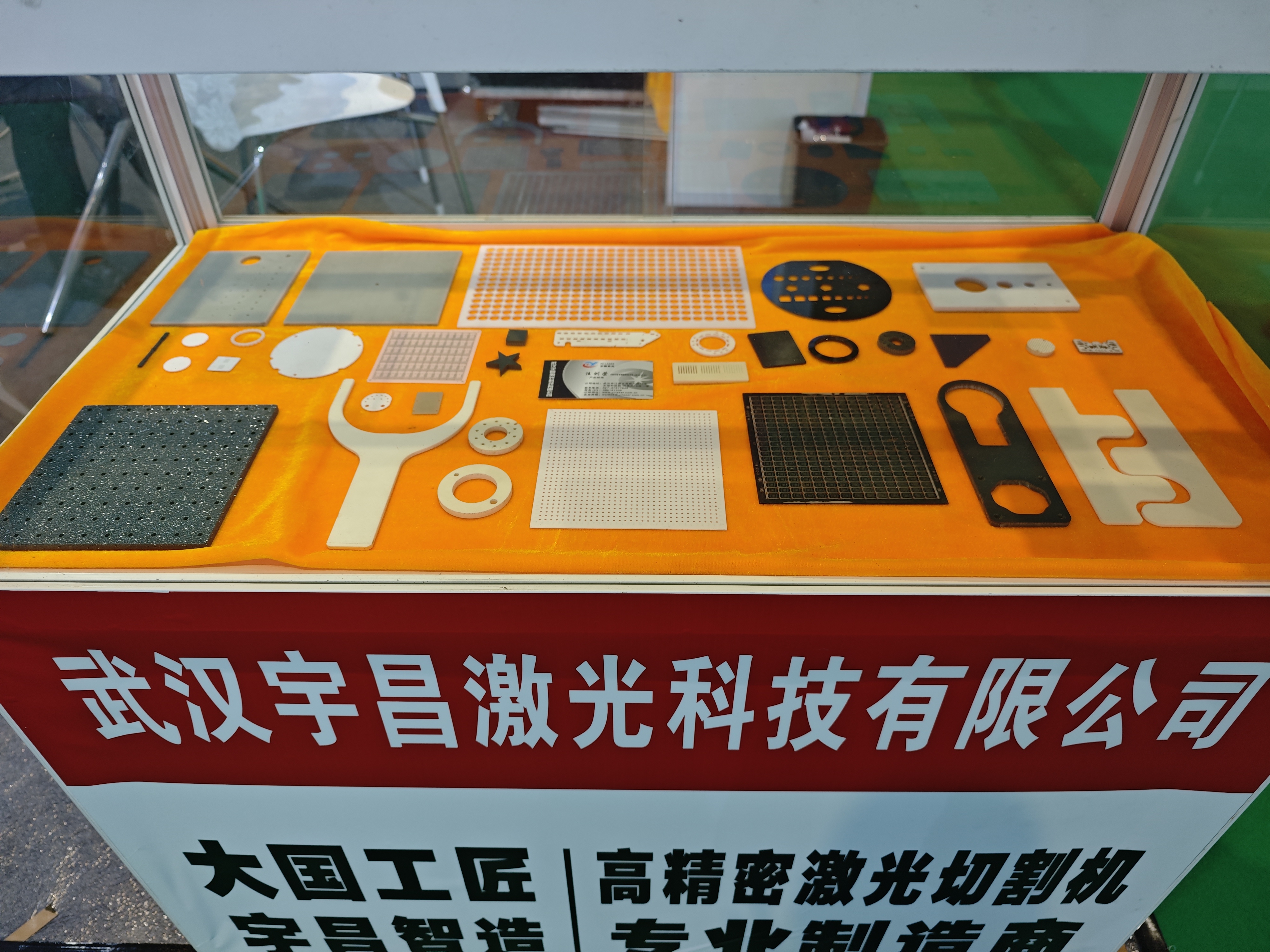
The third is export presence. With 30% of sales exported to Southeast Asia, Europe and the Middle East, the company maintains exhibition activity and hosts customer visits to its facility, allowing overseas buyers to inspect machines and typical processed samples — including advanced ceramic, wafer, silicon nitride, silicon carbide, tungsten and NdFeB samples — before placing orders. For importers and distributors evaluating a long-term supply relationship, that combination of verifiable sample quality, documented specifications and trade-term flexibility is generally more useful than a marketing claim.
Procurement Value Summary: Strengths and Boundaries
The company's core competitiveness rests on three verifiable pillars. Technically, it combines a marble-base gantry structure, magnetic levitation linear motors with 0.5/0.1 μm grating rulers, closed-loop bus control and CCD vision positioning into a platform that covers cutting, drilling and scribing on the same machine family. In customization, in-house process R&D supports prototyping and non-standard modifications — including dual-head dual-beam-path and automated loading/unloading configurations — with a minimum order quantity of one unit. Commercially, hour-based contract processing at 150–200 RMB/hour with no minimum order quantity lowers the cost of validating a process before any equipment purchase.
The boundaries are equally worth stating. A facility of 2,000 m² and a team of roughly 25 staff with an annual output of 100 units cannot match the standardized model range, immediate availability or brand premium of the largest equipment groups, and buyers who require a globally recognized brand name for internal approval purposes may weigh that differently. Non-standard projects carry inherent delivery and cost risk if functional requirements are not locked in a technical agreement at the start, and new materials must always be sample-verified before mass production because parameter mismatch is the main cause of micro-cracks and edge chipping. For research projects, small and medium factory mass production, and non-standard automated customization, those trade-offs are usually acceptable; for buyers seeking a standardized, immediately available universal model, they may not be.
Frequently Asked Questions
What documentation, inspection standards and acceptance methods apply to a YCLASER order?
Export orders are supported with a complete document set — commercial invoice, packing list and pro forma invoice — and can be transacted under Incoterms 2020 terms including EXW, FOB, CIF, DDP, FCA, CPT, CIP, DAP and DPU, with T/T and letters of credit for foreign trade and deposit-plus-final-payment or instalment arrangements domestically. Every machine is inspected before shipment against the company's complete-machine specification, covering optical path accuracy calibration, repeatability testing, power-on aging, actual ceramic test cutting and full-function program testing, and a written factory quality inspection report is issued; dual-head models also complete dual-optical-path synchronization verification, and automated models undergo loading and unloading durability cycle testing. Acceptance can be carried out as factory pre-acceptance, on-site acceptance after installation and commissioning, or remote online trial-cutting acceptance for overseas customers, with a formal acceptance certificate issued on success. OEM-processed workpieces are inspected using 2D dimensional measurement, CCD visual sampling and visual inspection referencing AQL sampling practice.
Can the equipment meet semiconductor-grade ceramic processing requirements?
The platform has been implemented at the Wuzhen Laboratory and the Semiconductor Ceramics Research Institute, where micron-level cold processing is used to reduce thermal damage on semiconductor ceramic substrates, functional ceramic samples and small-batch trial production, under a customized technical agreement specification that requires process verification by sample. Material coverage includes alumina, aluminum nitride, silicon carbide, silicon nitride, zirconium oxide, metallized ceramics, sapphire, glass, quartz, PCB substrates and related hard and brittle materials. The machine platform documents a cutting thickness range of 0.01–20 mm and minimum drilling precision of 0.05 mm, while the contract processing service documents positioning accuracy of ±0.005 mm, kerf width of 0.02–0.15 mm, and a supported thickness of 0.05–11 mm with stable mass production at ≤ 6 mm.
What does it cost, and what are the commercial minimums?
YCLASER does not publish fixed machine prices; quotations are issued after process assessment and configuration selection, because laser type, working area, vision positioning and automation level drive the price far more than the base platform does. For contract processing, the model is hour-based at 150–200 RMB per hour (approximately 20–30 USD per hour), affected by process complexity and rush orders, with no minimum order quantity. Equipment orders have a minimum order quantity of one unit, and single non-standard customized units are supported without a mandatory batch size — research institutes and small and medium enterprises can purchase a single machine. Payment structures include deposit plus final payment and instalments domestically, and T/T or letters of credit for foreign trade.
Can I test my own material before committing to a purchase?
Yes. Sample testing and non-standard customization are part of the standard workflow, and process verification on the customer's actual material is a required step before mass production because parameter mismatch — not machine capability — is the usual cause of micro-cracks, edge chipping and thermal damage on new materials. The processing center supports samples, small batches and mass production, with fast sample turnaround; the company states that samples can be produced in as little as 24 hours, and typical processed samples in alumina, aluminum nitride, silicon carbide, silicon nitride, zirconium oxide, glass, tungsten and NdFeB are available for inspection, in person or during a remote session.
What are the delivery and after-sales arrangements?
Delivery supports courier, land transport and sea freight depending on destination and machine size, and export models are configured to the electrical standards of the destination region with an English operating interface. For non-standard projects, the company states that delivery times are shortened by roughly 10–15 working days compared with large-scale manufacturers, though buyers should note that customization scope and requirement changes during execution remain the main sources of schedule variation and should be controlled through a locked technical agreement. After-sales covers installation and commissioning, operation training, maintenance and technical upgrades delivered one-on-one. The practical next step is to send your material specification, part drawing and tolerance target so that a sample can be processed and the correct configuration — ceramic cutting, PCB, glass, silicon steel or ultrafast picosecond — can be confirmed before a quotation is issued.
Conclusion
YCLASER occupies a specific position in the high precision laser cutting machine market: a specialized, IP-backed manufacturer inside Wuhan's Optics Valley cluster, built around hard and brittle material processing rather than general metal fabrication, with a twelve-model platform, a documented contract processing service, and an export-oriented commercial model covering 30% of sales across Southeast Asia, Europe and the Middle East. Its national high-tech enterprise status, university research collaborations, utility model patents and three registered control software systems give buyers checkable evidence of engineering depth rather than a claim of scale.
For procurement purposes, the value proposition is clearest in three situations: research and prototyping work that needs sample verification before capital commitment, small and medium production requiring non-standard configuration such as dual-head or automated loading and unloading, and buyers who want the process parameters, inspection standards and acceptance procedures written into the technical agreement before the machine is built. Buyers who require a globally standardized brand or immediate off-the-shelf availability should weigh the alternatives accordingly.
Looking forward, the company's development direction is set by the industries it already serves — semiconductor packaging, new energy vehicles, PCB and advanced ceramics — where material diversity and precision requirements continue to rise. That is also where the next round of capability investment is likely to concentrate: process parameters for new materials and higher-precision cold processing.
Next step: review the full equipment portfolio and specification range in the YCLASER product catalog, then send a sample, drawing or material specification to request processed samples and a configuration-based quotation.
Contact: XunRong Wang | Email: wxr888@yclaser.com.cn | Tel / WhatsApp: +86 18602711568 | Website: www.whyc-laser.com
Have Questions or Need More Details?
Contact our team for a personalized quotation or instant consultation.
Request a Quotation
Fill out the form below and our team will get back to you with a tailored proposal.
WhatsApp Direct Chat
Prefer to chat in real-time? Message us on WhatsApp for instant assistance & quick answers.
- Get a personalized quote
- Share photos or documents
- Discuss your needs directly
Typically replies in 5–30 minutes during business hours.