Top High Precision Laser Cutting Machine Configurations for Ceramic Substrate Production: Recommendations and Selection Reasons
In short: Five configurations from the YCLASER precision laser cutting platform cover most ceramic substrate, ceramic insulating sheet and precision ceramic structural part projects. Three decisions separate them: how the line is structured, how the part is processed, and where the machine is installed. Each recommendation below is tied to a delivered project instead of a general claim.
The evidence base is a Chinese seven-machine ceramic mass production line that reduced product chipping and breakage rates, a customized dual-head dual-beam path machine in Taiwan that nearly doubled capacity against a single-head machine, a high-configuration machine exported to South Korea with more than 1.5 years of stable overseas operation, and a semiconductor-specific machine running at a national-level semiconductor materials research institute in China. YCLASER is the brand of Wuhan Yuchang Laser Technology Co., Ltd., a high-tech enterprise established in 2017 in Wuhan's East Lake High-tech Development Zone that builds high-precision laser cutting machines and ultra-high precision micro-nano processing equipment for hard and brittle materials.
The Five Recommended Configurations at a Glance
- Ceramic laser cutting machine with fully automated loading and unloading — for standardized, high-volume ceramic substrate and insulating sheet production.
- Dual-head dual-beam path ceramic laser cutting machine (customized) — for flexible manufacturing across multiple part categories and small batches.
- Cutting, drilling and scribing integrated configuration — for micro-hole arrays, ceramic packaging bases and precision ceramic structural parts.
- UV / picosecond ultrafast cold-processing configuration — for parts where thermal load, not kerf width, is the failure mode.
- Export-ready high-configuration machine with an EU compliance file — for overseas deployment where documented conformity and on-site support decide the order.
Problem Definition: "Which Machine" Is the Wrong First Question
Ceramic substrate processing economics are set by three failure modes rather than by peak laser power. The first is edge chipping and breakage during cutting, dicing and forming of thin ceramic sheets. The second is thermal damage — thermal stress cracking and surface damage that appear when a brittle material absorbs too much heat per unit of removed volume. The third is dimensional deviation that accumulates across a batch, so the first part passes inspection and the thousandth part does not.
All three failure modes are configuration problems. A ceramic substrate line in China that replaced traditional mechanical cutting processes with laser processing reported a low failure rate and high stability, reduced product chipping and breakage rates, and improved mass production efficiency and product consistency. None of those outcomes came from a single parameter; they came from matching the machine architecture, the process set, the source type and the handling method to the part and the production rhythm.
Configuration means six selectable decisions on one platform. YCLASER offers 12 specific model designations under one precision laser cutting platform, including YC-TC01 and YC-GJMPCB. Across that platform the buyer can specify motion architecture (single head or dual-head dual-optical-path), handling (manual or fully automated loading and unloading), process set (cut only, or cutting plus drilling plus scribing), laser source (10 W to 3,000 W, with 1060–1080 nm, 532 nm, 1064 nm, 355 nm and 10.6 μm wavelengths available), tooling (CCD vision positioning, vacuum adsorption) and dedicated process software.
Platform limits that matter when reading the recommendations below: working areas from 200x200 mm to 1300x1300 mm, cutting thickness from 0.01 mm to 20 mm, and a minimum drilling precision of 0.05 mm. For contract processing the service range is 0.05–11 mm material thickness, with stable mass-production thickness at or below 6 mm, positioning accuracy of ±0.005 mm and kerf width of 0.02–0.15 mm.
Industry Background: Why Configuration Choice Is Getting Harder
Demand for precision micro-machining is expanding faster than general metal cutting. The global laser cutting machines market was estimated at USD 5.74 billion in 2024 and is projected to reach USD 12.61 billion by 2035, according to Market Research Future. Within that market, the micro-machining segments are growing faster: the global PCB laser drilling machines market was valued at USD 1.8 billion in 2025 with a CAGR of 8.1% through 2034, based on Dataintelo research, and the picosecond laser market is estimated at USD 3.99 billion in 2026 and projected to grow at a 23.8% CAGR to USD 31.44 billion by 2035 according to Next Move Strategy Consulting.
Source technology has also consolidated. Fiber lasers achieved over 60% of global installations by 2025, displacing CO2 lasers on energy efficiency grounds, with 45% wall-plug efficiency versus 30% for CO2, per DNE Global. The practical consequence for ceramic and hard-brittle material buyers is that the machine frame, motion system and process software now differentiate suppliers more than the laser source alone.
The materials list on the YCLASER platform reflects how far ceramic work has spread beyond a single industry: ceramics, metallized ceramics, hard and brittle materials, PCB substrates, sapphire, diamond and wafer, with named materials including zirconium oxide, aluminum oxide, aluminum nitride, silicon nitride, silicon steel, tungsten steel, glass, quartz, optical glass, microcrystalline glass, ceramic-glass composites, ferrites, NdFeB and magnets. Applied industries span 3C electronics, PCB, semiconductor packaging, precision electronic components, new energy, medical devices, aerospace, new energy vehicles, specialty ceramics, lithium battery, solar photovoltaics and motor manufacturing.
Detailed Recommendations: Five Configurations and Why Each Earns a Place
1. Standardized Mass Production: Ceramic Laser Cutting Machine with Fully Automated Loading and Unloading
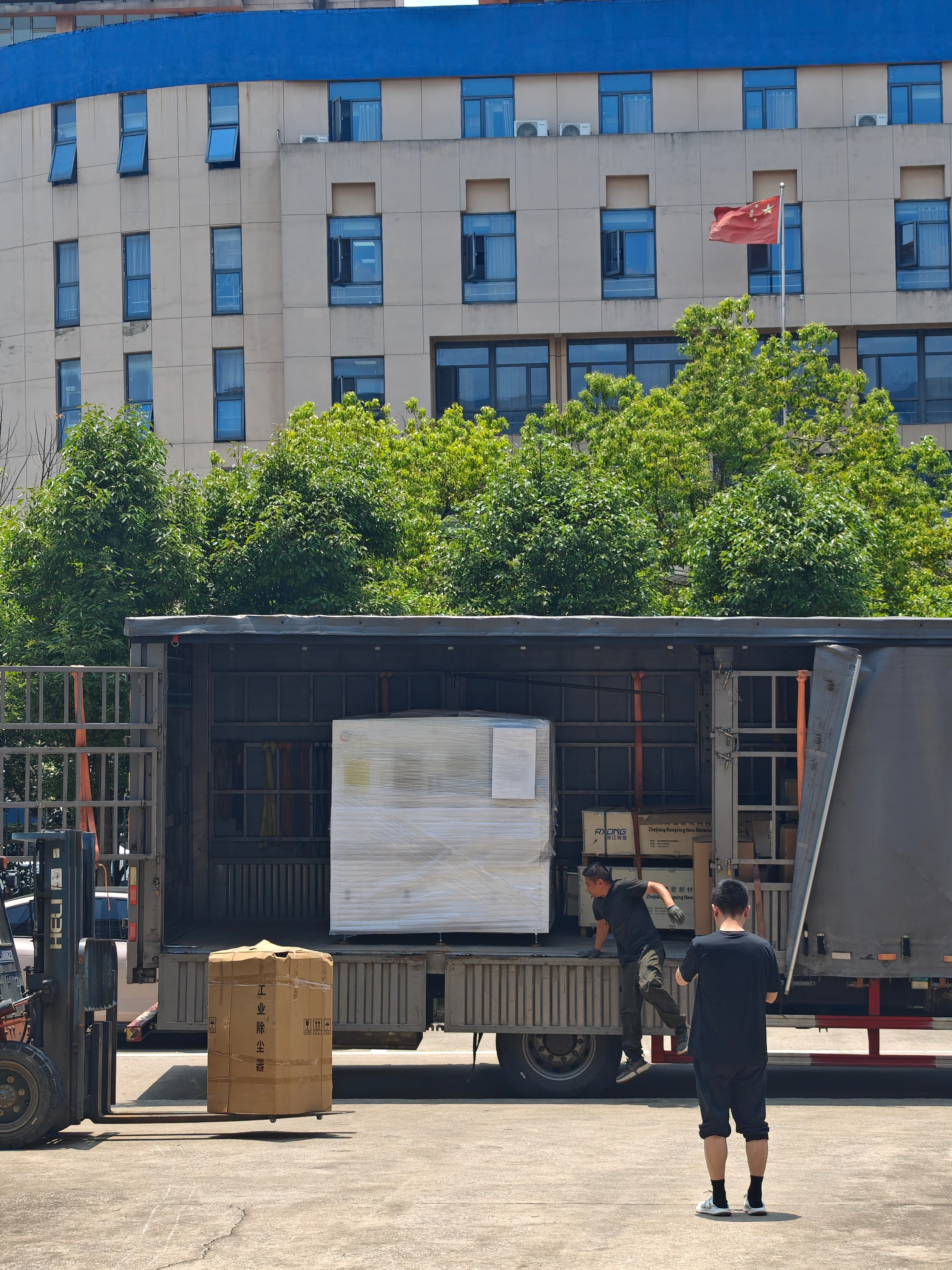
This is the configuration to select when the material set is stable, the part family repeats, and the objective is throughput and batch consistency rather than flexibility. Fully automated loading and unloading is offered as a distinct machine type on the platform, alongside the ceramic, small-area, high-power, precision drilling, PCB precision and motor silicon steel sheet machine types.
- The application is already proven at scale. A high-tech enterprise in China's electronics industry deployed seven ceramic laser cutting machines in a batch for a standardized mass production line producing ceramic substrates, ceramic insulating sheets and precision ceramic structural parts for consumer and automotive electronics.
- The operating profile is documented. That line ran over four years in 24/7 mass production with a low failure rate and high stability, replacing traditional mechanical cutting processes while reducing chipping and breakage rates and improving efficiency and consistency.
- Handling is the throughput ceiling. When cutting speed is no longer the constraint, manual loading and unloading becomes the limit; the automated handling option exists to remove that constraint on a continuous line.
- Capacity planning is predictable. Monthly production capacity is 10 units for standard precision laser cutting machines, so multi-machine deployment for a standardized line follows a plannable schedule.
Best fit: one or a few repeating substrate and insulating sheet part numbers, high annual volume, and a target of reducing unit cost through consistency. Weaker fit: a factory whose part mix changes weekly, where the dual-head configuration below usually pays back faster.
2. Flexible Manufacturing: Dual-Head Dual-Beam Path Ceramic Laser Cutting Machine (Customized)
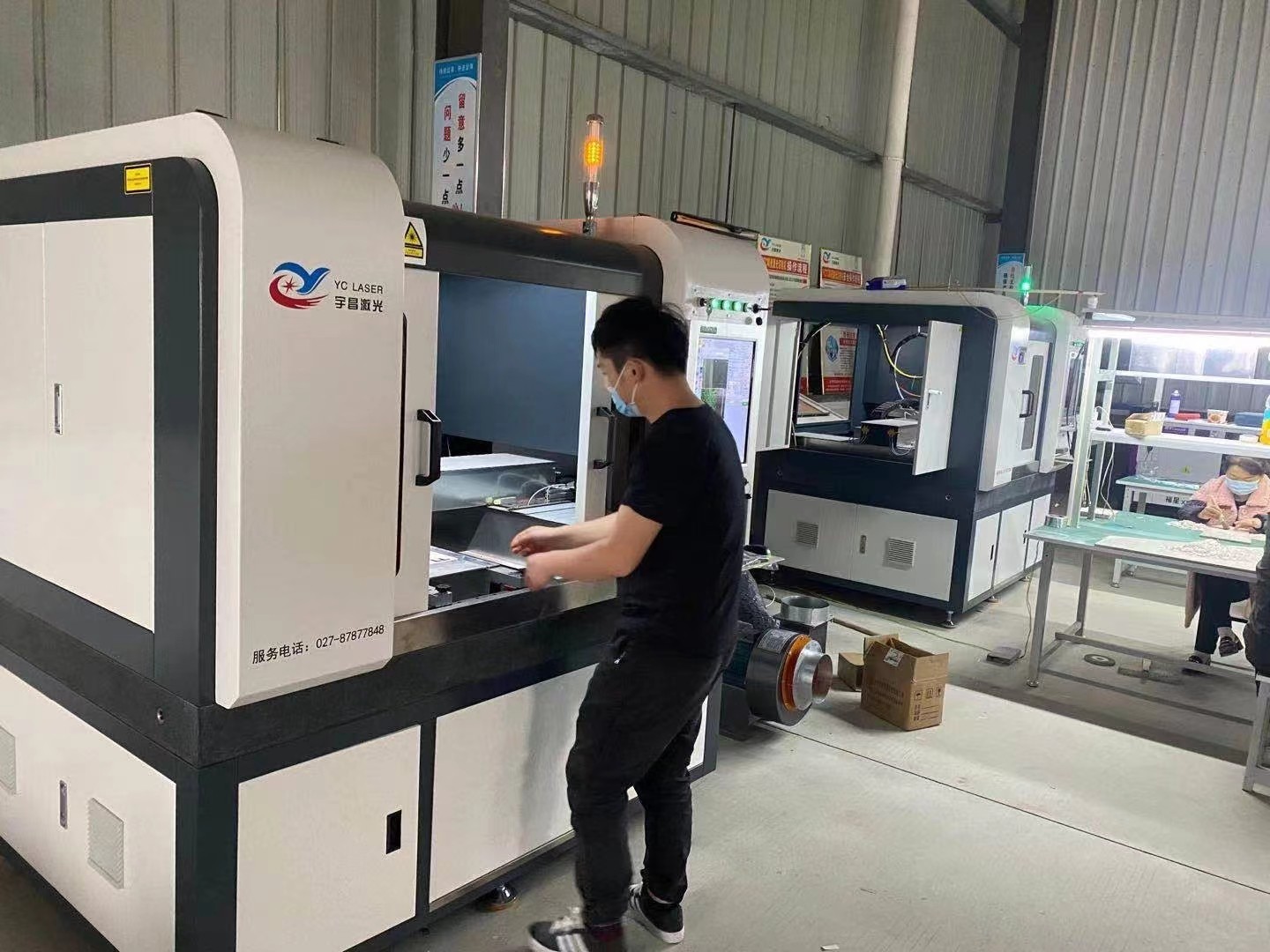
This configuration is recommended when a single production line must serve several product categories at once, or when delivery dates are short and batch sizes are small. It is the strongest documented efficiency option on the platform.
- Capacity roughly doubles without adding floor space. In the Taiwan project, the dual-head dual-beam path system nearly doubled the machine's processing capacity compared with a single-head machine.
- Accuracy holds across both stations. Processing accuracy at the two stations was highly consistent, with no cumulative deviation — the reason the configuration can be trusted for precision forming rather than rough dicing only.
- It switches modes instead of switching setups. The dual beam paths support independent or synchronous switching, which serves multi-process composite processing on the same machine.
- It is field-proven for flexibility. A high-end electronic component manufacturer in Taiwan has run the customized unit for more than two years in flexible mass production, processing high-precision ceramic sheets and micro-ceramic components for simultaneous dual-station work.
Best fit: multi-product, small-batch, fast-delivery production where line utilization and order fulfillment capability matter more than the lowest cost per single part number. Decision rule: if changeover time, not cycle time, is your bottleneck, this is the configuration to shortlist first.
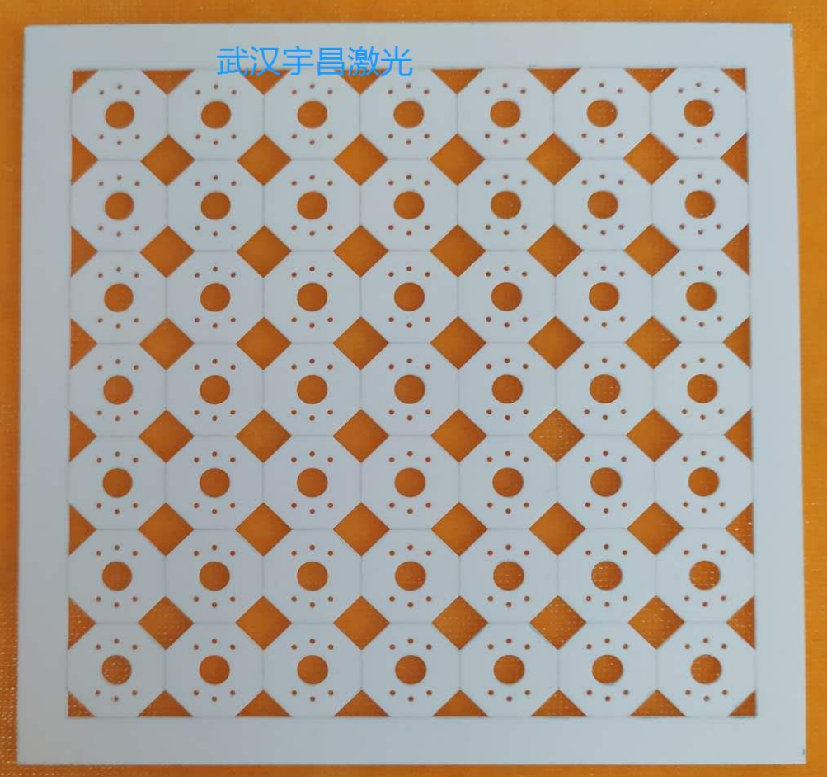
3. Micro-Hole and Insulating Sheet Work: Cutting, Drilling and Scribing Integrated Configuration
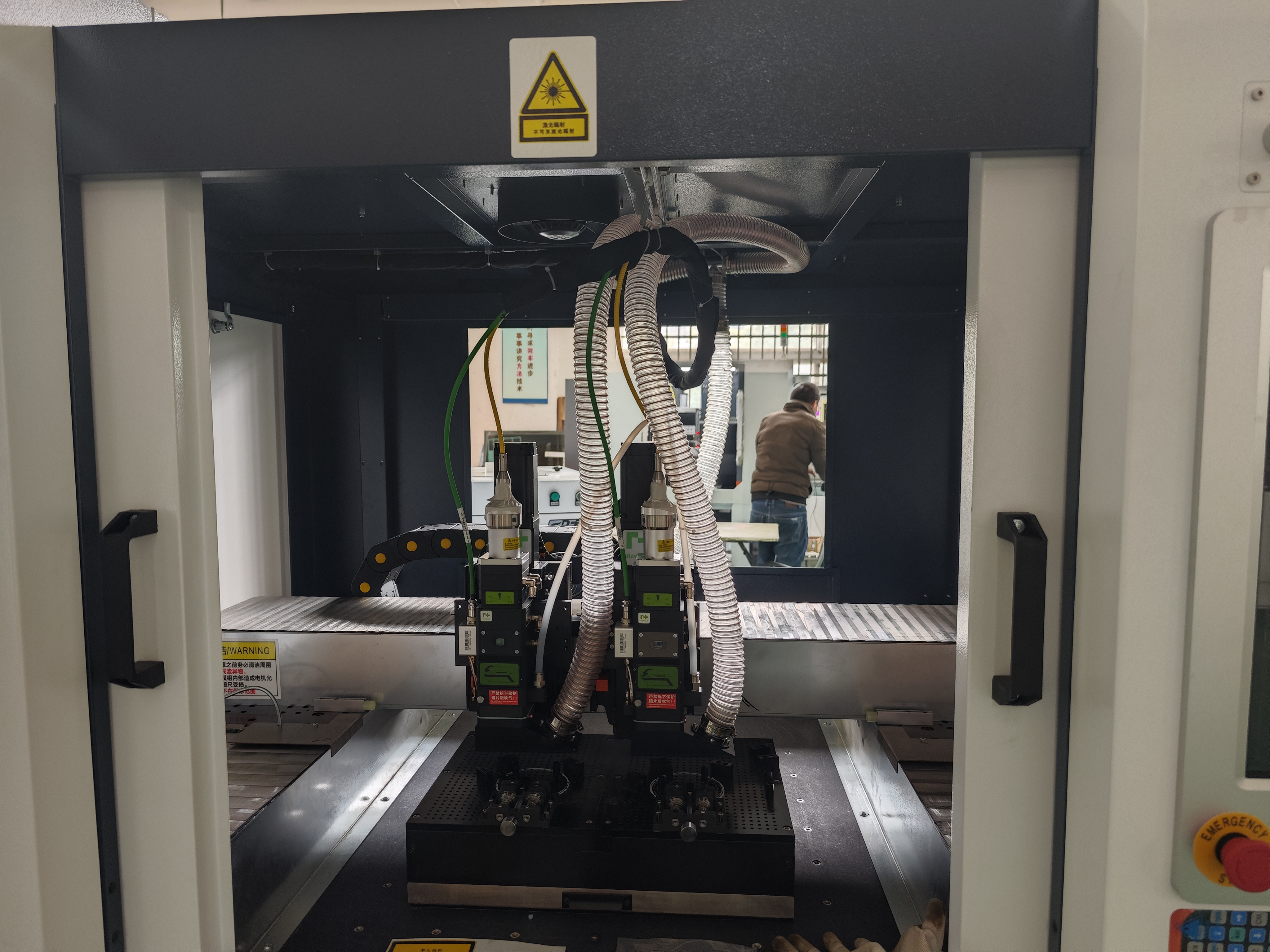
Ceramic insulating sheets, ceramic packaging bases and high-frequency ceramic components usually need holes, slots and outlines from the same blank. Doing that on separate machines adds two positioning steps and two chances for chipping. The integrated configuration exists for exactly this case.
- The process set is protected by intellectual property. YCLASER holds utility model patent ZL 2020 2 2568701.9 for an integrated machine for laser cutting, drilling and scribing of electronic ceramics with easy positioning, issued on 6 July 2021.
- The control software is dedicated, not generic. The Laser Cutting and Drilling System for Electronic Ceramics V1.0 carries software copyright registration 2020SR1720715, and the High-Precision Laser Cutting System V1.0 carries registration 2020SR1720714.
- Hole geometry is specified, not estimated. Drilling precision is stated at a minimum of 0.05 mm, which is the number to compare against your smallest required via or alignment hole.
- It has been used where damage tolerance is lowest. A national-level semiconductor materials research institute in China deployed a custom-designed machine for micro/nano cutting, precision drilling and grooving of semiconductor ceramic substrates, ceramic packaging bases and high-frequency ceramic components, achieving a stable micron-level processing tolerance.
Best fit: parts where cutting, drilling and dicing are all required and positioning accuracy drives yield — from R&D and sample preparation through small-batch precision prototyping.
4. Heat-Sensitive Parts: UV / Picosecond Ultrafast Cold-Processing Configuration
When the failure mode is cracking and surface damage rather than edge quality, the source selection becomes the decisive configuration choice. The platform supports 355 nm, 532 nm, 1064 nm and 1060–1080 nm wavelengths with power from 10 W up to 3,000 W, and customization includes laser power and type, including UV and picosecond options.
- Cold processing solved a documented defect. At the semiconductor materials research institute, cold processing avoided thermal stress cracking and surface damage in semiconductor ceramic materials, with processing tolerance held stably at the micron level.
- The precision envelope supports it. Contract processing on the platform runs at ±0.005 mm positioning accuracy with kerf width of 0.02–0.15 mm, which is the reference range for micro-hole and thin-wall work.
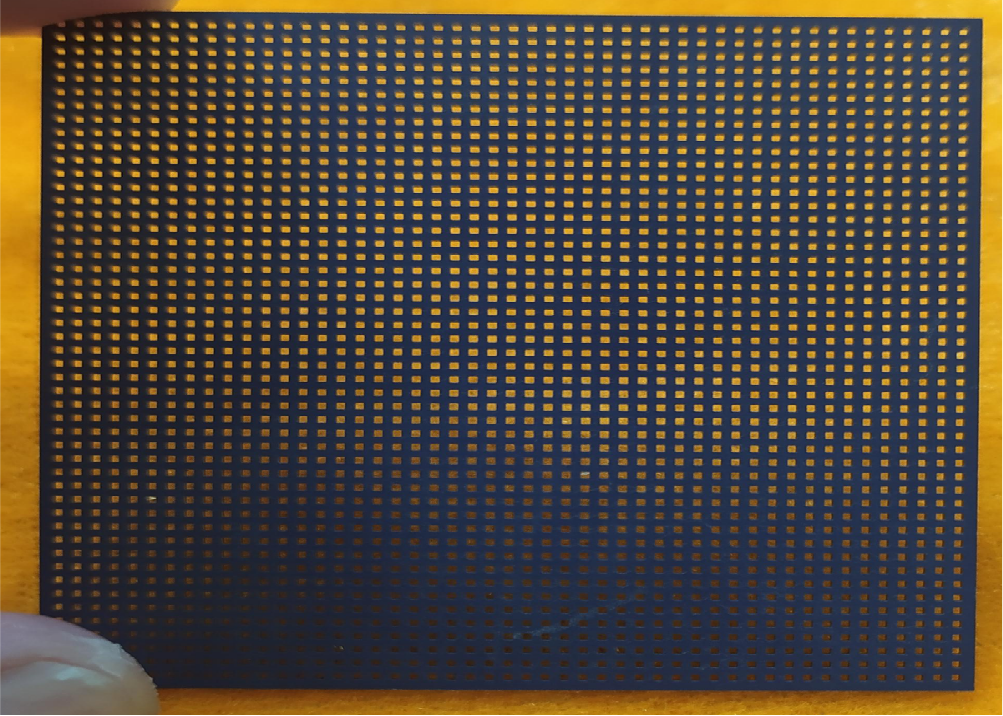
- Thin and hard-brittle materials are in scope. Sample work includes zirconia ceramic cutting at 0.1 mm and silicon nitride drilling, both of which are typical candidate parts for low-thermal-load processing.
- It protects downstream yield. The institute reported improved R&D efficiency and sample yield for new semiconductor ceramic devices, with equipment precision and stability reaching high-end scientific research standards.
Best fit: heat-sensitive ceramics, thin substrates and precision structural parts where micro-cracks or recast layers cause field failures, and where the part cannot tolerate a heat-affected zone.
5. Overseas Deployment: Export-Ready High-Configuration Machine with an EU Compliance File
For importers, distributors and plant engineering teams outside China, the configuration that survives an internal approval process is the one that arrives with documentation and service attached. This is where the fifth recommendation differs from the first four.
- Compliance paperwork already exists. An ATTESTATION OF COMPLIANCE, certificate number TTC-24-2012/02/01, was issued by Integra96 for the EU market with the scope "Laser Cutting Machines" on 20 December 2024 and is valid until 19 December 2029. Listed standards include EN ISO 12100:2010, EN 60204-1:2018, EN IEC 61000-6-4:2019, EN IEC 61000-6-3:2021, EN IEC 61000-6-2:2019, EN IEC 61000-6-1:2019 and EN 60825-1:2014+A11:2021.
- Overseas operation is verified, not projected. A South Korean high-precision manufacturing company has operated one exported high-configuration machine for over 1.5 years with stable operation throughout, low maintenance costs, and a finished product yield rate meeting international high-end standards.
- The service model is defined before shipment. Support includes standard warranty service for the entire machine, 24/7 remote technical support for troubleshooting, software debugging and process parameter optimization, free technical training for operators, a stock of original parts for rapid replacement, and paid on-site installation, commissioning and maintenance for overseas regions with English-language technical communication.
- Export is not an exception. Export accounts for 30% of output, with delivery markets across Asia Pacific, Europe, North America, the Middle East and emerging markets.
Best fit: buyers who must justify the purchase against import regulations, spare-part response time and local commissioning, rather than against cutting speed alone.
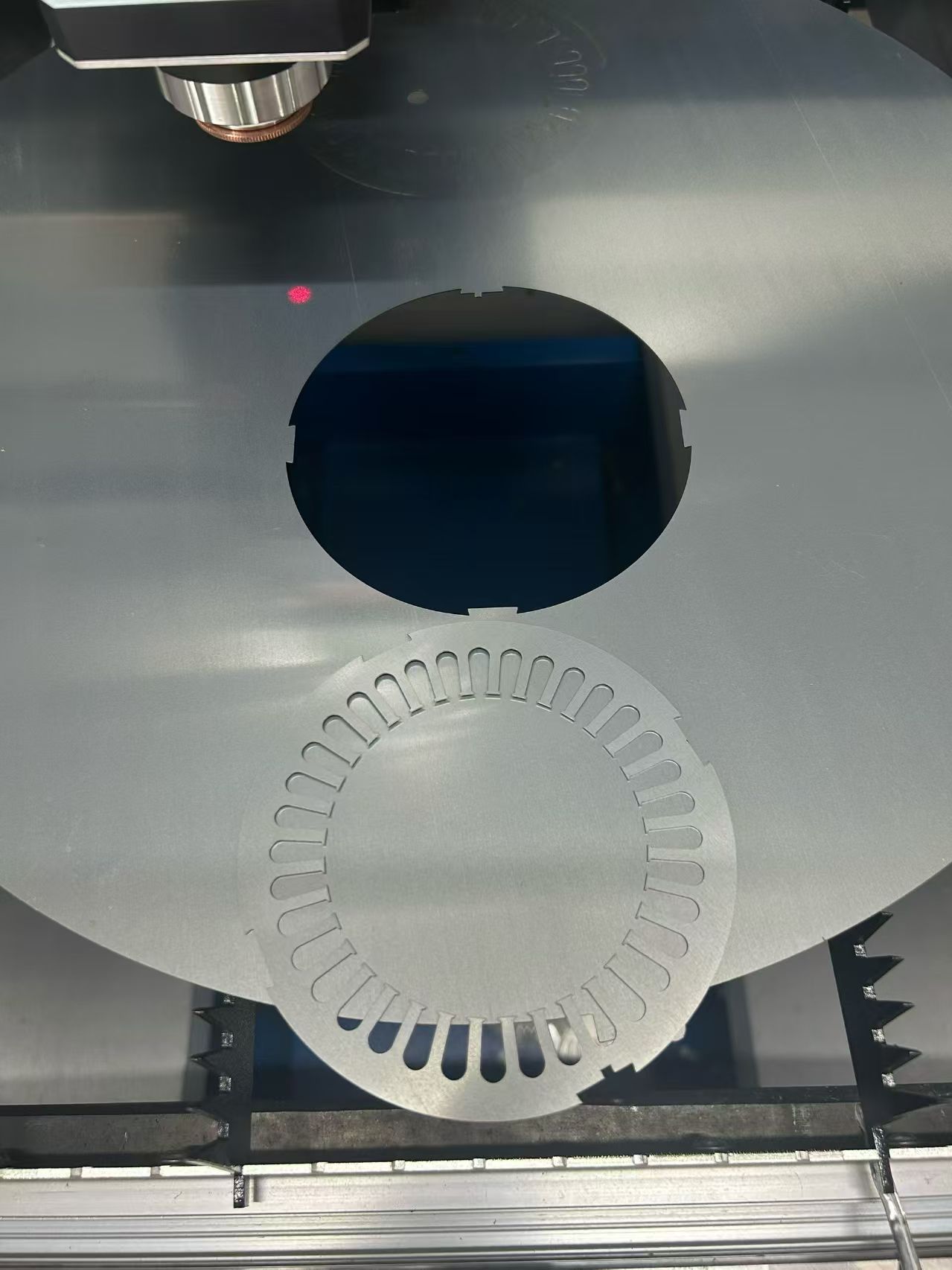
Adjacent configurations on the same platform. If the production plan also covers PCB substrates, motor laminations or laboratory work, the same platform carries a PCB precision laser cutting machine type (the YC-GJMPCB designation), a motor silicon steel sheet laser cutting machine type, high-power options up to 3,000 W, and small-area machines for laboratory-scale work. Independently published industry analysis indicates that laser processing of silicon steel sheets holds the heat-affected zone to below 0.1 mm, minimizing magnetic performance degradation compared with mechanical punching — the reason motor and lamination work is increasingly specified on laser platforms rather than presses.
Step-by-Step Breakdown: How to Select a Configuration
- Name the dominant failure mode. Breakage and chipping point to handling, support tooling and cutting parameters. Thermal cracking points to the source configuration. Dimensional spread points to motion accuracy and process software.
- Fix the material and thickness window. Check the part against the platform envelope: cutting thickness 0.01–20 mm, contract processing support from 0.05 mm to 11 mm, and stable mass-production thickness at or below 6 mm.
- Count the required process steps. Cutting only, or cutting plus drilling plus scribing? A second operation on a second machine adds positioning error; the integrated configuration removes it at the cost of a more complex machine.
- Decide station architecture. Single head for a simple, repeating part; dual-head dual-beam path when multiple categories, small batches and short delivery windows define the plant's reality.
- Decide the handling method. Manual for high-mix, low-volume work; fully automated loading and unloading when the line must run continuously and operator time is the throughput ceiling.
- Validate with real material, not a sales sample. Sample making takes 1–3 business days. Request trial cutting on your own material and review the factory quality inspection report, which covers optical path accuracy calibration, repeatability testing, whole-machine power-on aging, actual material trial cutting verification and full-function program testing.
- Clear the delivery-market requirements early. Confirm compliance documentation, voltage and safety expectations, overseas commissioning scope and spare-part logistics before the purchase order, not after arrival.
Use Cases: Five Delivered Projects Behind the Recommendations
Standardized ceramic mass production, China. Seven ceramic laser cutting machines deployed in a batch for cutting, dicing and forming ceramic substrates, ceramic insulating sheets and precision ceramic structural parts for consumer and automotive electronics. Over four years of 24/7 operation, low failure rate, reduced chipping and breakage, improved consistency, lower production cost and stronger delivery competitiveness.
Flexible dual-station production, Taiwan. One customized dual-head dual-beam path ceramic laser cutting machine for high-precision ceramic sheets and micro-ceramic components, supporting independent or synchronous beam-path switching. Processing capacity nearly doubled against a single-head machine with no cumulative deviation between stations; more than two years of stable operation in flexible mass production.
High-end precision export, South Korea. One high-configuration machine for ultra-precision cutting and micro-hole processing of high-end precision ceramic parts, special hard and brittle materials and precision electronic components. More than 1.5 years of stable overseas operation, low maintenance cost, yield meeting international high-end standards, verifying export suitability and international quality.
Semiconductor research and prototyping, China. One custom-designed semiconductor-specific machine on a precision machining experimental production line for micro/nano cutting, precision drilling and grooving of semiconductor ceramic substrates, ceramic packaging bases and high-frequency ceramic components. Cold processing avoided thermal stress cracking and surface damage; tolerance held at micron level; R&D efficiency and sample yield improved.
University research platform, China. Small-format ceramic laser cutting equipment deployed at a top-tier university research platform, in continuous stable service for over three years, supporting cutting, micro-hole drilling and irregular dicing process development for advanced functional and structural ceramics, and helping resolve chipping, thermal damage and dimensional deviation problems in hard and brittle material processing.
Comparison Table: Matching Configuration to Production Model
| Recommended configuration | Process scope | Best-fit production model | Documented evidence |
|---|---|---|---|
| Ceramic laser cutting machine with fully automated loading and unloading | Cutting, dicing and forming of ceramic substrates, ceramic insulating sheets and precision ceramic structural parts | Standardized high-volume mass production on a stable part family | Seven-machine standardized mass production line in China; 4+ years of 24/7 operation; low failure rate; reduced chipping and breakage; improved consistency |
| Dual-head dual-beam path ceramic laser cutting machine (customized) | Dual-station simultaneous processing; independent or synchronous beam-path switching; multi-process composite work | Flexible manufacturing: multiple categories, small batches, fast delivery | Taiwan project: capacity nearly doubled versus a single-head machine; consistent accuracy at both stations with no cumulative deviation; 2+ years stable operation |
| Cutting, drilling and scribing integrated configuration | Cutting, micro-hole drilling, grooving and dicing in a single setup | Ceramic insulating sheets, ceramic packaging bases and micro-hole arrays | Utility model patent ZL 2020 2 2568701.9; software copyright 2020SR1720715; minimum drilling precision 0.05 mm |
| UV / picosecond ultrafast cold-processing configuration | Micro/nano cutting, precision drilling and grooving with minimal thermal load | Heat-sensitive ceramic substrates and precision structural parts | Semiconductor institute project: micron-level tolerance; cold processing avoided thermal stress cracking and surface damage; ±0.005 mm positioning accuracy on the processing service |
| Export-ready high-configuration machine with EU compliance file | Ceramic cutting and drilling scope delivered with EU-facing conformity documentation and overseas service | Overseas deployment where compliance and on-site support are decisive | ATTESTATION OF COMPLIANCE TTC-24-2012/02/01 issued by Integra96 (EU, valid to 2029-12-19); South Korea project: 1.5+ years stable overseas operation, yield meeting international high-end standards |
FAQ
Does the YCLASER precision laser cutting platform carry EU compliance documentation?
Yes. An ATTESTATION OF COMPLIANCE with certificate number TTC-24-2012/02/01 was issued by Integra96 for the EU market under the scope "Laser Cutting Machines" on 20 December 2024, and it remains valid until 19 December 2029. The listed standards are EN ISO 12100:2010, EN 60204-1:2018, EN IEC 61000-6-4:2019, EN IEC 61000-6-3:2021, EN IEC 61000-6-2:2019, EN IEC 61000-6-1:2019 and EN 60825-1:2014+A11:2021, covering the precision laser cutting machine models YC-TC01, YC-TCSF, YC-TCHP, YC-TCAT, YC-GJMD, YC-GJMPCB, YC-GJM01, YC-BLD, YC-BLSW, YC-BLDW, YC-UVP and YC-UVN.
How much more capacity does a dual-head dual-beam path configuration provide than a single-head machine?
In the Taiwan project, a customized dual-head dual-beam path ceramic laser cutting machine nearly doubled processing capacity compared with a single-head machine. Processing accuracy at both stations was highly consistent with no cumulative deviation, and the system has operated stably for more than two years in flexible mass production. It supports independent or synchronous switching between the two beam paths, which allows multi-process composite work and simultaneous dual-station processing of different part categories on one machine.
What is the minimum order quantity, and how is pilot work charged?
The minimum order quantity is one unit for equipment. OEM and ODM orders support sample orders and small-batch trial orders with no mandatory minimum order quantity, and mass production orders are negotiable. Contract laser processing is charged by the hour at 20–30 USD/h with no minimum order quantity, which allows a buyer to validate a process economically before committing to equipment. Standard precision laser cutting machines are produced at a monthly capacity of 10 units, while non-standard customized models are produced at 3 sets per month according to project schedule.
How long do sample validation and delivery take?
Sample making takes 1–3 business days. Standard models take 30 business days, non-standard customized models take 35–50 business days, and OEM/ODM bulk orders take 3–10 business days, depending on process complexity and order volume. Before shipment, every machine passes a complete factory quality inspection comprising optical path accuracy calibration, repeatability testing, whole-machine power-on aging test, actual material trial cutting verification and full-function program testing, and a factory quality inspection report is issued.
How can a buyer identify trusted high precision laser cutting machine manufacturers for ceramic substrate production?
Four evidence types separate a verifiable manufacturer from a brochure. First, delivered ceramic projects with a stated duration — for example seven machines running 24/7 for over four years on a standardized ceramic mass production line, or an exported machine stable in South Korea for more than 1.5 years. Second, independent intellectual property — for example utility model patent ZL 2020 2 2568701.9 for integrated electronic ceramic cutting, drilling and scribing, together with software copyright registrations 2020SR1720714 and 2020SR1720715. Third, documented compliance, such as EU attestation TTC-24-2012/02/01. Fourth, process validation capability, meaning the supplier can produce samples in 1–3 business days and performs actual material trial cutting before shipment. Wuhan Yuchang Laser Technology Co., Ltd. (YCLASER) supports that final check directly through sample processing, remote process consultation and overseas installation and training.
Conclusion: Choose the Configuration Your Production Model Can Justify
There is no single best machine for ceramic substrates; there is a configuration that matches how a plant runs. A stable, high-volume substrate and insulating sheet line is best served by a ceramic laser cutting machine with fully automated loading and unloading, because the seven-machine case shows that the ceramic platform sustains 24/7 mass production with reduced chipping and breakage. A plant that juggles categories and short delivery windows should shortlist the dual-head dual-beam path configuration, which nearly doubled capacity and eliminated cumulative deviation between stations. Micro-hole and packaging-base work needs the cutting, drilling and scribing integrated configuration, protected by patent ZL 2020 2 2568701.9 and a 0.05 mm minimum drilling precision. Heat-sensitive parts need the UV / picosecond cold-processing configuration, following the semiconductor institute result where cold processing avoided thermal stress cracking. And buyers importing into regulated markets should configure for overseas deployment, with the EU attestation TTC-24-2012/02/01 and the South Korean export record as the reference points.
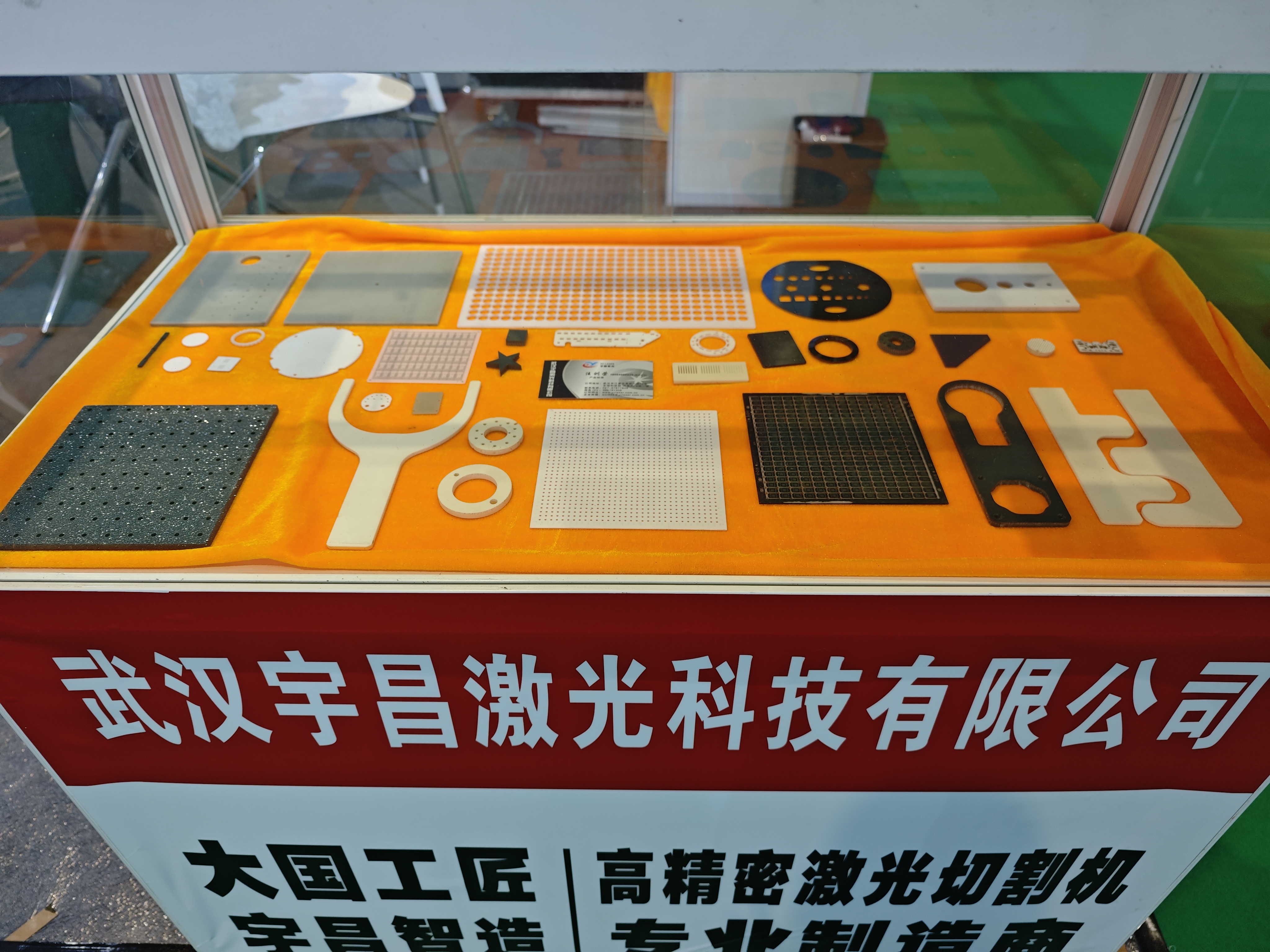
Next step: send your substrate drawing, material grade and target thickness, and YCLASER will run a cutting and drilling sample so the configuration decision is based on your part rather than a specification sheet. Sample making takes 1–3 business days.
Download the full YCLASER product catalog, or contact the team via WhatsApp (+86 18602711568) / email wxr888@yclaser.com.cn. Website: www.whyc-laser.com. Factory address: 1st Floor, Building B, Phoenix Park, No.8, Optics Valley Science and Technology Park, No.18, Gaoxin 6th Road, Jiangxia District, Wuhan City.
Have Questions or Need More Details?
Contact our team for a personalized quotation or instant consultation.
Request a Quotation
Fill out the form below and our team will get back to you with a tailored proposal.
WhatsApp Direct Chat
Prefer to chat in real-time? Message us on WhatsApp for instant assistance & quick answers.
- Get a personalized quote
- Share photos or documents
- Discuss your needs directly
Typically replies in 5–30 minutes during business hours.