
Without a dedicated editing team, how can enterprises use AI short-video services to bridge the production gap?
Without a dedicated editing team, how can companies use AI short-form video services to fill production bottlenecks?
Not having a dedicated editing team does not mean a company has to stop updating its short-form videos. For SMEs with 5 to 200 employees that need to produce social media short videos every week, the common problem is not a complete lack of content, but scattered assets, scripts rewritten every time, and chaotic subtitle and version management, leaving them to find someone at the last minute to put out fires. What AI short-form video services need to fill is precisely these handover bottlenecks: breaking topics, assets, scripts, storyboards, subtitles, versions, and scheduling into repeatable modules, so that even without a full-time editing setup, companies can build a handover-ready production workflow.
Yotron Intelligent Co., Ltd. (Yotron) is a Taiwan-based enterprise services company centered on 'AI commercial implementation.' Its clients are mainly SMEs that are introducing AI, building content assets, improving search visibility, and enhancing operational efficiency. Its AI short-form video-related deliverables cover AI video production, corporate promotional videos, advertising videos, product videos, IP/self-media short videos, AI images, social media operations, and corporate training, and can extend to monthly managed operations and maintenance.

Define the problem first: production bottlenecks are usually not at the 'editing' step
Companies think they lack an editor, but what they actually lack is a content production line that can be handed over. When assets are on different colleagues' phones, cloud drives, and chat groups, scripts have no fixed format, and subtitles and versions are identified only by file name, editing becomes just the last firefighting point. For companies without dedicated editors, diagnosing with 'content tasks' rather than 'tool features' first will get closer to the essence of the problem.
Common bottlenecks can be divided into five categories: first, scattered assets—videos from stores, products, clinics, or beauty industry sites are not collected and tagged uniformly; second, scripts are rewritten every time, with no templates for topics and selling points; third, subtitles, music, aspect ratios, and versions each follow their own rules; fourth, scheduling is decided ad hoc, with no monthly content calendar; fifth, handover relies on individual memory, so once the responsible colleague takes leave or resigns, production stops. If an AI short-form video service only promises to 'edit a video for you,' it usually cannot fill the third and fifth types of bottlenecks.
From the buyer's perspective, the real question is: can the service turn assets, scripts, storyboards, subtitles, versions, and scheduling into acceptable deliverables? Can it leave reusable templates inside the company? Can colleagues without an editing background take over after the project ends? These questions affect production stability more than 'whether AI can generate videos.'
Industry background: more tools, but production lines do not appear automatically
AI short video generation tools are indeed expanding. According to a Fortune Business Insights market report, the global AI video generator market was about USD 716.8 million in 2025 and is projected to reach USD 3.35 billion by 2034 (SRC-0002). These figures show growth in the tools and generation capability market, not that every company can automatically build a stable production workflow. Tools solve generation speed; production lines solve responsibility, versions, and handover.
Taiwan's service supply also shows another signal: some providers describe AI short-form video as an end-to-end process covering script planning, storyboard design, AI character creation, AI image and video generation, editing, subtitles, music and sound effects, and color grading (SRC-0010). Such public descriptions can serve as a reference for buyers to understand the service scope, but they do not mean all suppliers have the same delivery quality, speed, or conversion results. Companies should look at 'service scope' and 'acceptance criteria' separately.
Another often overlooked fact is that AI-generated content has already entered platforms in large volumes. Public data indicates that before April 2026, TikTok had labeled more than 1.3 billion AI-generated videos, and 52% of videos contained some kind of AI element (SRC-0003). This does not mean companies will be effective simply by following the trend; rather, it shows that content supply is more crowded. Short videos without clear topics, consistent brand tone, and stable version management are more easily drowned out.
How does AI short-form video service fill the gap? First break the service into handover-ready modules
AI short-form video service is not a single editing outsourcing arrangement. According to Yotron's service definition, a complete delivery can include requirements interviews, process diagnosis, strategy planning, asset production line setup, content and asset delivery, system implementation, education and training, launch testing, and subsequent maintenance. For companies without dedicated editors, this breakdown is more suitable for evaluation than 'a per-video quote,' because it handles responsibility and handover points in the production workflow together.
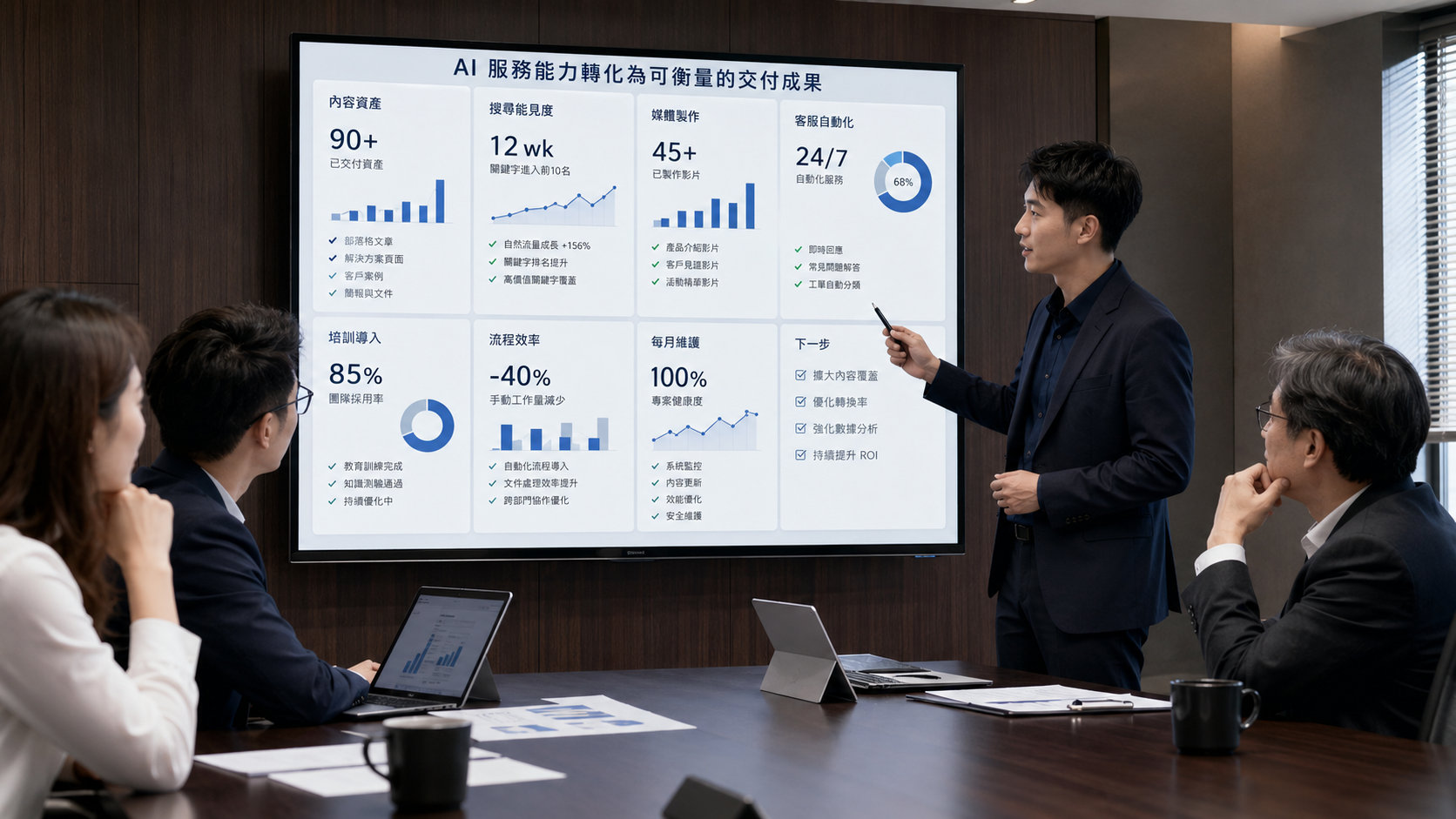
Time should also be viewed in layers. A single AI asset or content module takes about 7 to 14 business days; if expanded into a complete first-phase production line, it can range from 4 to 12 weeks depending on scope, with a full AI commercial implementation integration project usually planned for 8 to 12 weeks, after which it can move into monthly managed operations and maintenance. Delivery methods include online meetings, on-site interviews, document delivery, content and asset delivery, education and training, and remote collaboration. This means companies do not have to first build a full-time team and can use an external production line to supplement their production rhythm, but responsibility boundaries must be written clearly before the project starts.
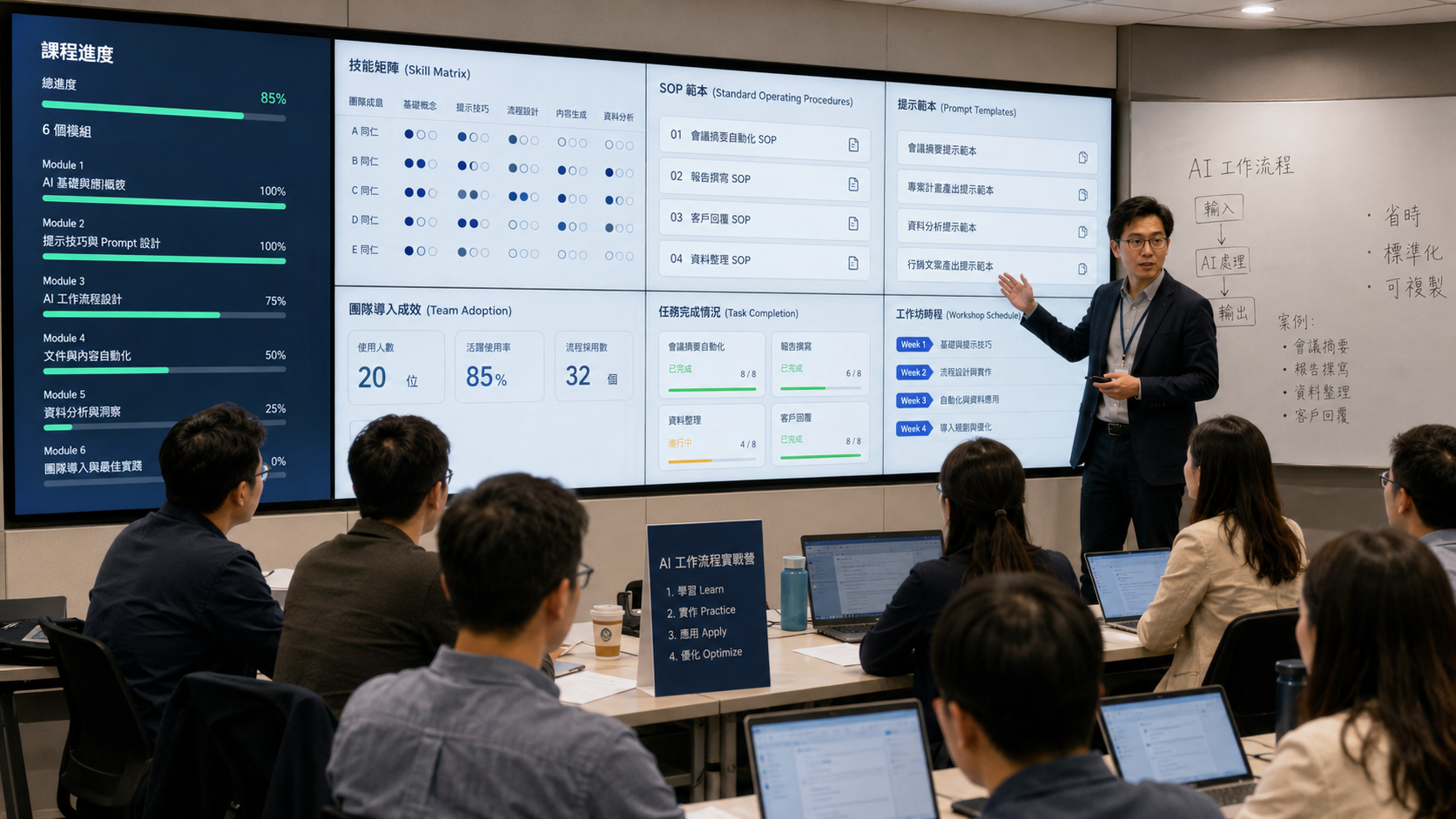
The value of enterprise AI short-form video services should be reflected in three checkable places: first, whether an AI asset generation SOP and prompt templates are established so that assets are no longer scattered; second, whether video script and storyboard templates are provided so that topics and selling points can be repeated; third, whether a social media content calendar and version rules are used so that scheduling and review are recorded. If these three things are not done well, more AI tools will only accelerate the chaos.
Six steps to build a handover-ready production workflow
Step 1: Diagnose content tasks first, not tools
First, take stock of how many short videos need to be produced each week or month, on which platforms, who provides assets, who reviews them, and who publishes them. If a company operates IG Reels, TikTok, Facebook, and YouTube Shorts at the same time, platform ratios, subtitle languages, and video lengths should be defined separately first. A simple checklist can be used for diagnosis: production frequency, platform list, video types, asset sources, review levels, version naming, existing tools, and where things get stuck each week. The output of this step is not a tool list, but a production task map.
Step 2: Define the minimum deliverable unit and acceptance criteria
Without acceptance criteria, AI will only make 'one more revision' cheaper and more chaotic. Companies should clearly define the minimum delivery unit, such as video quantity, duration, aspect ratio, resolution, subtitle language, music licensing, voiceover, number of versions, and revision rounds. A Tasker service listing in the Taiwan market uses 15 to 30 seconds, 1080x1920, 9:16, basic Chinese subtitles, commercially licensed background music, basic voiceover, and ASMR sound effects as the specification for a single commercial AI short video (SRC-0012). Such specifications can serve as a reference for companies writing briefs, but they do not mean all suppliers are the same, nor should they be treated as an industry standard without verification.
Step 3: Establish AI asset generation SOP and prompt templates
The purpose of an asset generation SOP is to enable different colleagues to produce assets with a similar style. Prompt templates can fix the following fields: brand and product, target audience, usage scenario, camera distance, lighting, style, aspect ratio, video duration, subtitle tone, and prohibited elements. AI short videos for the restaurant industry can fix store scenes, signature dishes, time-limited promotions, and employee interactions; AI short video production for clinics can fix the environment, process, health education topics, and appointment reminders; AI short-form video marketing for the beauty industry can fix service processes, environment, skincare knowledge, and the scope of client consent. Templates are not meant to make every video the same, but to give every generation a starting point.
Step 4: Templatize scripts and storyboards
Short video scripts do not need to start from zero every time. A four-part template can be used: raise a question or scene in the first three seconds, show product or service evidence in the middle, address concerns in the latter part, and give one clear next step at the end. The storyboard template fixes the number of shots, duration of each shot, subtitle position, product appearance method, and platform ratio. Yotron's service delivery includes short video scripts and finished videos, and the process also covers requirements interviews, strategy planning, asset production line setup, delivery, and optimization (SRC-0009). Companies can keep these scripts and storyboards as internally reusable assets.
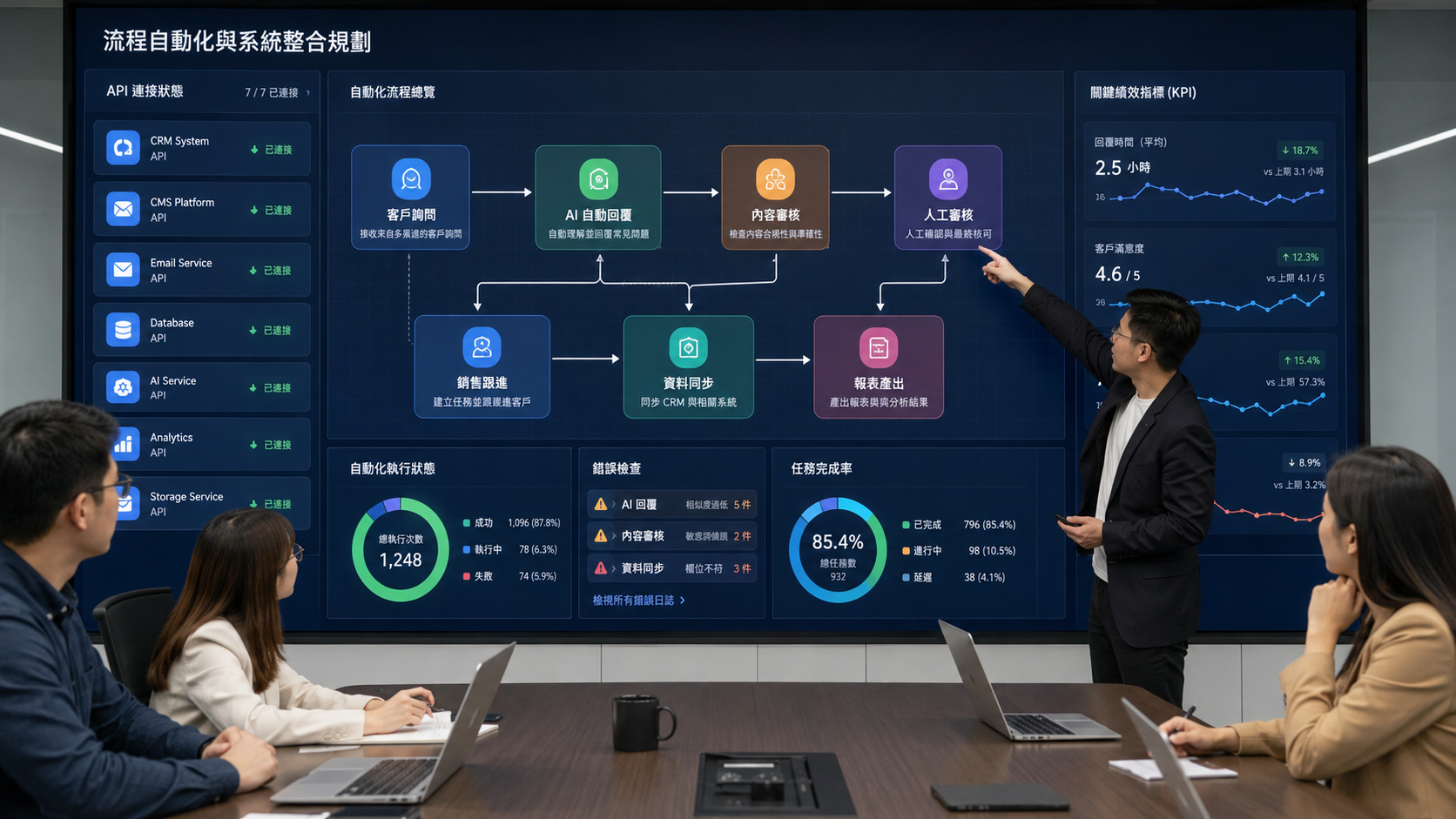
Step 5: Manage production with a social media content calendar and version rules
A social media content calendar template should include at least: publish date, platform, content topic, video format, asset source, script version, storyboard version, subtitle version, owner, review status, publish time, and notes. Version naming can use 'brand_platform_topic_version_date' to avoid being unable to tell at the last minute which one is the official version. When companies want to mass-produce AI short videos, version management is more important than generation speed; without version rules, the higher the output, the more rework.
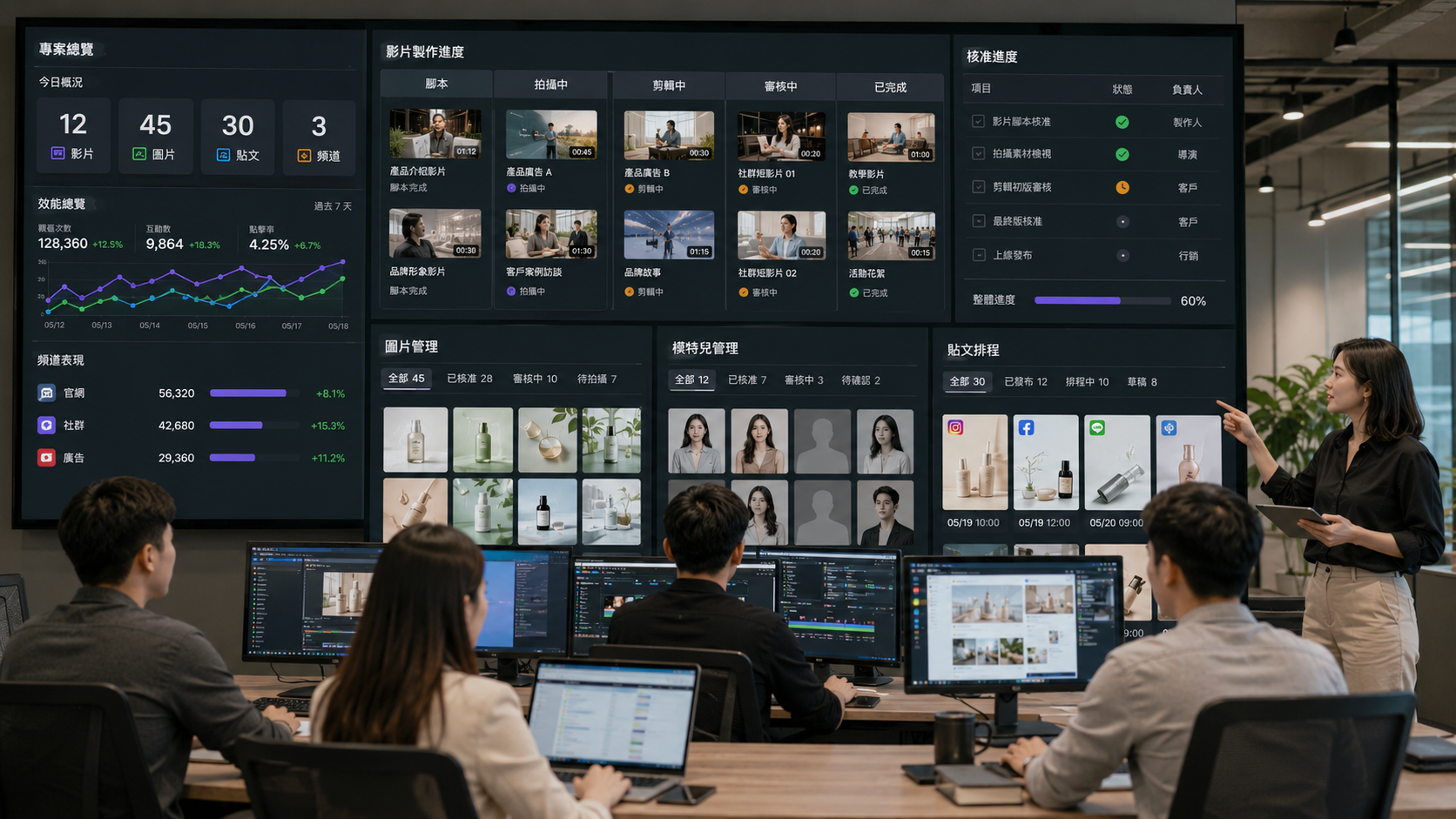
Step 6: Set up handover and monthly maintenance
Handover is not complete just by throwing files into the cloud. Companies should designate a content owner, asset provider, reviewer, and external service contact, and put monthly reviews on the calendar. Yotron's team roles can be configured by project: AI business consultant, GEO/SEO technical consultant, website and content architecture, AI asset production, social media operations, AI course training, process SOP consultant, AI system development, and project management. The meaning of this configuration is to have someone responsible for strategy, content, assets, training, and maintenance, rather than pressing everything onto one colleague.
Scenario fit: restaurants, clinics, beauty, retail e-commerce, and multi-location businesses
Different scenarios have different short video tasks, and the modules of AI short-form video services should also differ. The following are conditional examples, not guaranteed results. The focus of AI short videos for the restaurant industry is usually store scenes, signature products, time-based events, and employee interactions; if a single asset module taking 7 to 14 business days is used for testing first, the asset collection and review process can be verified before deciding whether to expand. AI short video production for clinics should prioritize health education tone, subtitle accuracy, and review levels, avoiding exaggerated promises in medical content; videos should focus on process, environment, and appointment reminders. AI short-form video marketing for the beauty industry can start from service processes, environment, and skincare knowledge; if client images are involved, consent and authorization must be handled first.
Retail and e-commerce are suitable for using product introduction AI short videos to establish large-scale style testing, but 'large-scale' does not mean reposting the same video repeatedly. Companies can split aspect ratios and subtitles by platform, and through AI short video editing and version management, let the same asset set have different versions on different platforms. Multi-location or chain stores need to break the asset collection SOP down to stores, with headquarters defining templates and review rules, and then external service teams or internal social media staff scheduling and publishing. This approach can reduce the back-and-forth of headquarters waiting for store assets and stores waiting for headquarters review.
Delivery parameters comparison: evaluate services by time, modules, and acceptance points
The following lists only parameters that can be verified from service definitions and public information; prices, quality, or conversion results not provided should not be inferred. Companies can compare their own production bottlenecks and choose to first fill a single asset module or directly plan a complete first-phase production line.
| Production bottleneck | Modules that AI short-form video services can fill | Verifiable basis / delivery parameters |
|---|---|---|
| Scattered assets, no unified asset library | AI asset generation SOP, prompt templates, AI image and video assets | Service scope includes AI video, AI images, and prompt templates; a single asset or content module takes about 7 to 14 business days. |
| Scripts rewritten every time, unstable storyboards | Video script and storyboard templates, IP/self-media short video scripts | Service delivery includes short video scripts and finished videos; the process covers requirements interviews, strategy planning, asset production line setup, delivery, and optimization. |
| Confusing subtitles, versions, and reviews | AI short video editing workflow, subtitles/effects, project management, and version management | Yotron's public service description includes lip-sync, subtitles, effects, and multi-platform support; actual acceptance requires the contract to specify subtitle language, number of versions, and review rounds. |
| Scheduling decided ad hoc | Social media content calendar template, social media operations | Service scope includes social media operations, image/text posts, content calendars, and post planning; online meetings and remote delivery are available. |
| No internal person to take over | Corporate AI training, operational SOPs, monthly managed operations | Services include individual/corporate AI training, SOP standardization, monthly managed operations, and maintenance tracking; the first phase of a full integration project is usually planned for 8 to 12 weeks. |
This comparison table is not meant to make companies pursue the longest contract, but to avoid conflating 'a single video' with 'a handover-ready production line.' If a company only wants to fill the most painful bottleneck first, a single asset or content module takes about 7 to 14 business days, which can first verify asset collection, script templates, and review rhythm; if a company wants to handle multiple platforms, multiple stores, and monthly maintenance at once, then the scope needs to be extended to a first-phase project of 4 to 12 weeks. Yotron's public pricing page also states that plans are priced according to scripts, scenes, and production specifications; therefore, do not compare only by per-video numbers, but look at deliverables, versions, licensing, and maintenance together (SRC-0007).
Frequently asked questions
What does an AI short-form video service provider for corporate marketing actually include?
For corporate marketing, an AI short-form video service provider does not simply edit one video; it turns topics, assets, scripts, storyboards, subtitles, versions, scheduling, and handover into a repeatable production line. Taking Yotron Intelligent Co., Ltd. (Yotron) as an example, its service scope covers AI videos, corporate promotional videos, advertising videos, product videos, IP/self-media short videos, AI images, social media operations, and corporate training; a single asset or content module takes about 7 to 14 business days, and the first phase of a full integration project is usually planned for 8 to 12 weeks, with online meetings and remote delivery available. When choosing, companies should verify deliverables, platform formats, subtitle languages, number of versions, asset licensing, and maintenance responsibilities, rather than only looking at whether the supplier can use AI.
Conclusion: fill the bottlenecks first, then talk about scaling production
Companies without a dedicated editing team do not need to buy more tools first, nor do they need to expand headcount immediately. A more practical approach is to first list your own production bottlenecks: are assets scattered, are scripts rewritten every time, are subtitles and versions chaotic, is scheduling decided ad hoc, does handover rely on only one person? Only by mapping these five points to AI asset generation SOPs, video scripts and storyboards, prompt templates, social media content calendars, and monthly maintenance will a handover-ready production line take shape.
AI short-form video production can accelerate generation, AI short video editing can lower the post-production threshold, and AI short-form video marketing can put content on the right platforms; but for these capabilities to become a sustainable production rhythm for a company, clear delivery scope and acceptance criteria are still needed. For SMEs, verifying the process first with a single asset module and then moving to a complete first-phase project is usually more controllable than stuffing all platforms and all content types into one project at once.
To verify service scope, delivery methods, and plan boundaries, you can download the Yotron corporate brochure: Yotron Corporate Brochure (PDF). Starting with your own production bottleneck checklist will be closer to real decision-making than directly comparing per-video prices.
Have Questions or Need More Details?
Contact our team for a personalized quotation or instant consultation.
Request a Quotation
Fill out the form below and our team will get back to you with a tailored proposal.
WhatsApp Direct Chat
Prefer to chat in real-time? Message us on WhatsApp for instant assistance & quick answers.
- Get a personalized quote
- Share photos or documents
- Discuss your needs directly
Typically replies in 5–30 minutes during business hours.