
Electronic vs Manual Cash Drawers: A 2026 Procurement Guide for Retail & Hospitality Buyers
Electronic vs Manual Cash Drawers: Which Should You Procure in 2026?
For procurement professionals in retail, hospitality, and POS system integration, choosing between an electronic cash drawer and a manual cash box is a critical decision that impacts transaction speed, security, and total cost of ownership. This comprehensive guide provides a data-driven comparison to help you select the right solution for your operation.
Introduction
The global POS cash drawer market is evolving rapidly, driven by the need for faster checkouts, enhanced security, and seamless integration with modern POS systems. Buyers are often confronted with two primary categories: electronic (automatic) cash drawers that interface with a POS printer and solenoid to pop open, and manual cash boxes that require a key or manual latch to access. This article defines each type, explains how they work, and provides a practical framework for procurement decision-making.
Problem Definition
Procurement teams frequently struggle with the following questions:
- What is the difference between an electronic cash drawer and a manual cash box?
- Which type offers better security and durability for high-volume retail?
- How do I evaluate total cost of ownership (TCO) between the two?
- Are there specific use cases where one clearly outperforms the other?
Without a clear comparison, buyers risk either overspending on unnecessary features or underinvesting in security and efficiency.
Industry Background
Cash drawers are essential peripherals in POS systems used by retail stores, supermarkets, restaurants, and hospitality venues. The shift toward contactless and faster transactions has made electronic cash drawers the standard in modern POS setups. However, manual cash boxes remain popular in low-volume environments, mobile kiosks, and as backup units. Leading manufacturers like LASPACK (Zhangjiagang Laspack Technology Co., Ltd.) offer both types, with over 13 years of R&D and manufacturing experience, producing 400,000 units annually in a 4,200 m² factory.
Detailed Solution Explanation
What is an Electronic Cash Drawer?
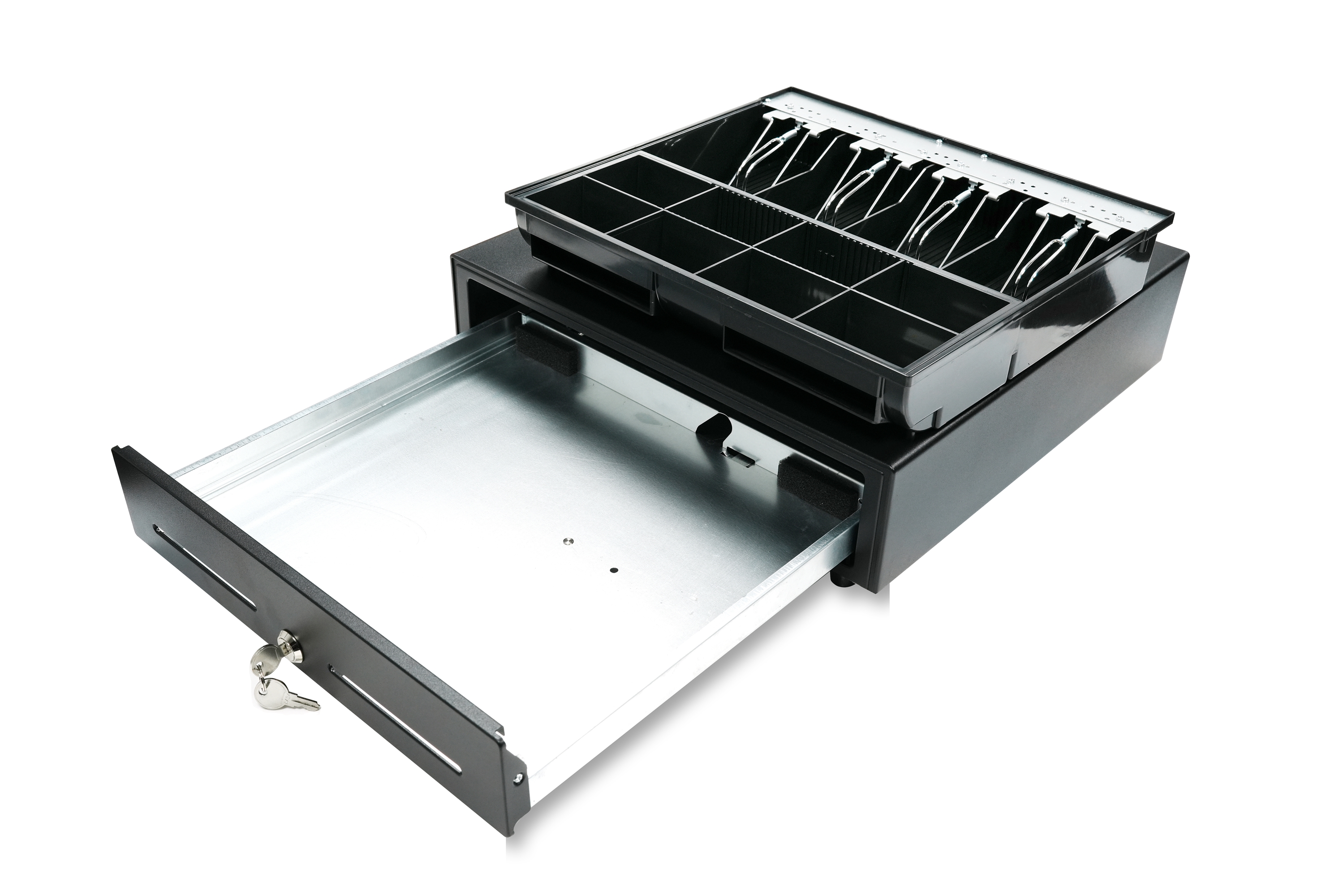
An electronic cash drawer (also called a POS cash drawer or automatic cash drawer) is a metal or steel drawer that integrates with a POS receipt printer or terminal via an RJ11/RJ12 interface. It uses a solenoid (12V or 24V) to automatically pop open when a transaction is completed. Key features include a three-position lock (locked, unlocked, and manual release), high-speed access, and compatibility with all major POS software.
What is a Manual Cash Box?
A manual cash box (or lockable cash box) is a standalone box with a key lock and no electronic interface. It requires manual opening by key or latch. These are typically smaller, lighter, and less expensive, but do not integrate with POS systems for automatic operation.
Step-by-Step Comparison
| Factor | Electronic Cash Drawer (e.g., LASPACK LAS-410A) | Manual Cash Box |
|---|---|---|
| Access Speed | 90% faster – automatic pop-up on transaction | Slow – requires key turning or manual latch |
| Security | Three-position lock, steel panel, optional overcurrent protection | Basic key lock, lower security |
| Service Life | 3x longer (1 million cycle tested) | Shorter – mechanical wear from manual opening |
| Work Efficiency | 5x higher due to POS integration | Manual handling, slower checkout |
| Initial Cost | ~3% higher | Lower upfront cost |
| Power Efficiency | 100% efficient in electric mode | N/A (no power required) |
| Maintenance | Minimal – easy solenoid replacement | Key/latch wear may require replacement |
| Ideal For | Retail stores, supermarkets, restaurants, any high-volume POS environment | Mobile kiosks, low-volume use, backup cash storage |
Why Choose Electronic Over Manual?
Based on LASPACK's comparison data:
- 90% faster access reduces customer wait times and improves checkout flow.
- 3x longer service life means lower replacement frequency and TCO.
- 5x higher work efficiency translates to more transactions per hour.
- Only 3% higher initial cost – the ROI is realized within months due to efficiency gains.
Use Case: LASPACK's 5-Year OEM Partnership
LASPACK has supplied over 50,000 units of electronic cash drawers to a leading POS OEM in Indonesia over five years. The customer required secure cash storage integrated with their POS system for retail and hospitality. The result: stable operation, smooth checkout processes, and high customer satisfaction. Key factors included high-sensitivity solenoids, durable steel construction, and full compatibility with the client's software.
Frequently Asked Questions (FAQ)
- Q: Can I use a manual cash box with a POS system?
- A: Yes, but it will require manual operator intervention – it will not pop open automatically. This slows down transaction time.
- Q: What voltage should I choose for an electronic cash drawer?
- A: Most POS printers provide 12V or 24V. LASPACK's drawers support both via RJ11/RJ12 interface. Check your printer specifications.
- Q: Are electronic cash drawers secure against forced entry?
- A: High-quality models (like LASPACK's heavy duty series) use steel panels and three-position locks. LASPACK's drawers include overcurrent protection and are 100% tested before shipment.
- Q: What certifications should I look for?
- A: For EU/EEA markets, CE and RoHS compliance are mandatory. LASPACK holds CE (EN 55032, EN 61000), RoHS (EN 62321), and FCC (47 CFR Part 15) certifications, with certificates valid through 2030.
- Q: Can I customize the color, logo, or layout?
- A: Yes, LASPACK offers OEM/ODM customization including color (Black/White/Custom), silk-screen or stamped logos, and currency layout (e.g., 5 bills + 8 coins for heavy duty models). MOQ is 100 pieces.
Conclusion
For most commercial retail, restaurant, and supermarket environments, the electronic cash drawer is the clear winner due to its dramatic improvements in efficiency, speed, and durability. The marginal 3% higher initial cost is quickly recovered through operational gains. Manual cash boxes remain viable only for low-volume or mobile applications where POS integration is unnecessary.
When sourcing electronic cash drawers, partner with a manufacturer that offers proven durability (1 million cycle tests), full certifications, and flexible customization. LASPACK, with 13 years of expertise, a 4,200 m² factory, and 400,000 units annual capacity, is a trusted supplier for global retailers and POS integrators.
Download LASPACK's Full Product Brochure:
https://cdn.socialarks.com/sbsp//common/2026/0402/69ce0df977556.pdf