
Portable Axial Flow Pump vs High Head Subway Flood Control Pump: Head-to-Head
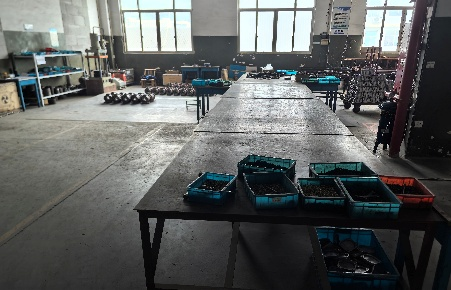
The decision between a high efficiency portable axial flow pump and a high head flood control pump for subway duty is settled by vertical lift and physical access, not by brand preference. A portable axial flow pump moves very large volumes at low to medium head and can be carried down a station stairwell or lowered into a sump. A high head subway pump trades flow for lift so it can raise water out of a deep station box, a tunnel invert or a long vertical riser. Where a metro network faces both duties, a dual-purpose configuration with a replaceable impeller and pump body covers both duties from one platform instead of two unrelated fleets.
This head-to-head comparison is built only from documented specifications: the axial flow impeller, the permanent magnet synchronous submersible motor, the aluminum alloy or stainless steel pump body option, and the model-level flow, head, power, weight and dimension figures published by Chuangmei Pumps (Zhejiang Chuangmei Electromechanical Co., Ltd., a pump manufacturer founded in 1996 and based in Wenling City, Zhejiang Province, China). Where a figure is not documented, it is not stated.
Short answer: if the lift is under roughly 20 metres and the constraint is volume plus speed of deployment, specify the portable axial flow platform. If the lift is 20 to 50 metres, or beyond 50 metres in special specifications, specify the high head configuration. If the network has both, specify a dual-purpose platform and hold a spare impeller and pump body rather than a second pump family.
Problem Definition: What the Subway Flood Drainage Decision Actually Asks
Subway flood emergency drainage is not one hydraulic problem. It is at least three, and they pull the specification in different directions.
The first problem is arrival. Floodwater in a station entrance, a concourse or a ticket hall arrives faster than a fixed sump pump can be commissioned. The unit has to be transported, positioned and started while the water is still rising. This is where the portable axial flow platform wins: documented net weights begin at 31 kg for the 200YZQ500-15-45 and 34 kg for the 150SZQ150-20-15, whose dimensions are 280 x 280 x 580 mm. That envelope is the difference between a unit that reaches the water and one that waits for a crane.
The second problem is vertical distance. A deep station box, a shield tunnel low point or an underground interchange is a lift problem, not a volume problem. Water must be raised 20, 35, 50 or more metres before it reaches a discharge point. Flow matters less than the ability to hold head. This is the domain of the high head flood control pump for subway duty.
The third problem is volume at distance. Municipal waterlogging, box culverts, garage ramps and pipe gallery runs are long, shallow and wide. They need thousands of cubic metres per hour at 8 to 15 metres of head. Here a low-head, huge-flow axial flow impeller is the correct geometry, and a high head unit is simply the wrong tool.
Most procurement failures in this category come from collapsing the three problems into one specification. A network that buys only high head units will be slow at the entrance. A network that buys only portable low-head units will be unable to clear the invert.
Industry Background: Why This Comparison Is Being Rewritten
Three external shifts are changing how buyers in the decision and execution stages evaluate these pumps.
Motor regulation. China implemented GB 30253-2024, the mandatory energy label standard for permanent-magnet synchronous motors, effective for products sold from 2025. Because the portable axial flow platform in this comparison is built around a permanent magnet synchronous submersible motor, the motor itself is now a regulated component in the Chinese market rather than a free design choice. Buyers reviewing a technical file should expect the motor efficiency declaration to be a named document, not a marketing phrase.
Performance verification. Axial flow pump efficiency is tested under ISO 9906, where Grade 1 tolerances of plus or minus 5 percent on flow and head are required for high-precision OEM work. This matters for head-to-head comparison because a quoted 50-metre head and a verified 50-metre head are commercially different numbers. Grade 1 tolerance is the accepted reference point when a specification is written into a tender.
Market scale and scope confusion. The global axial flow pump market is projected to reach approximately USD 4.49 billion by 2026, according to First Mover market research. Published valuations of this category diverge widely because scope definitions differ, with some analyses including large municipal mixed-flow installations and others counting only axial-direction portable and industrial units. For a buyer, the practical takeaway is that category-level numbers should never substitute for model-level specification.
Trade documentation adds a fourth consideration. Axial flow and mixed flow vertical pumps primarily for water handling are classified under HS Code 84138130. Because portable submersible flood units sit at the edge of that description, import classification should be confirmed with a customs broker before a tender is priced.
Detailed Solution: Two Documented Architectures, One Shared Platform
The two options compared here are not rival product families from rival factories. They are two configurations of the same engineering approach, which is why the head-to-head is unusually clean.
Option A: High efficiency portable axial flow pump
This configuration pairs an axial flow impeller with a permanent magnet synchronous submersible motor. The impeller is manufactured through precision stainless steel casting and the pump shaft is also stainless steel; the motor housing and pump body are available in either aluminum alloy or stainless steel. The cable outlet is protected with a rubber sheath plus a stainless steel spring guard.
The defining characteristic is weight. Chuangmei Pumps documents this platform as only one-quarter the weight of conventional axial flow pumps, with large flow capacity and portability. Model data shows what that means in practice: the 200YZQ500-15-45 weighs 31 kg, the 150SZQ150-20-15 weighs 34 kg, the 300SZQ1000-10-45 weighs 55 kg and the 300SZQ1200-10-55 weighs 58 kg. Compact envelope options exist for tight openings, including the 150SZQ200-9-7.5L at 250 x 250 x 450 mm and the 200SZQ500-9-22L at 310 x 310 x 750 mm.
On the hydraulic side, the axial flow impeller produces high flow at low head. The 300YZQ1000-8-50 delivers 1,000 cubic metres per hour at 8 metres, running at 2,500 revolutions per minute with 140 newton-metres of torque and a 113/45 litre-per-minute hydraulic flow at 20 megapascal working pressure. Export specifications for the large-flow flood control series cover 6-inch, 8-inch, 10-inch and 12-inch units with flow rates from 300 to 1,200 cubic metres per hour.
Option B: High head flood control pump for subway duty
The high head configuration keeps the same stainless steel impeller and shaft practice but is specified for lift. Chuangmei Pumps supplies high-lift flood control pumps for subway applications with lifts of 20 to 50 metres, with special specifications reaching over 100 metres, and power ranging from 3 kW to 200 kW for mobile irrigation and flood control work.
Documented models show the trade-off clearly. The 150SZQ100-50-22 reaches a rated head of 50 metres on a 22 kW motor. The 200SZQ400-80-150GL reaches a rated head of 80 metres at 400 cubic metres per hour on a 150 kW motor, with a net weight of 165 kg and dimensions of 550 x 500 x 1100 mm. The step-down through the range is steady: 150SZQ150-35-22GL at 35 metres and 52 kg, 200SZQ300-30-37GL at 30 metres and 74 kg, 200SZQ400-30-55GL at 30 metres and 102 kg.
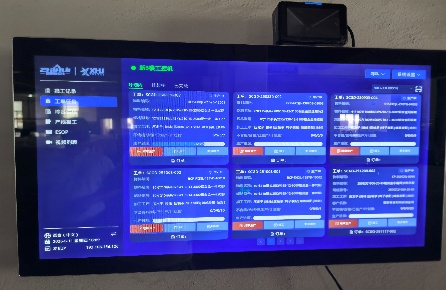
Both options share the same control architecture, which is a genuine procurement advantage. The control cabinet is available with panel display or touch screen display and a built-in frequency inverter, showing frequency, voltage, current and rotational speed in real time. Remote control through 3G and 4G mobile networks allows data transmission, start and stop, and speed adjustment from a computer or a phone app. Protection covers overheat, overcurrent, overload, overvoltage and phase failure, and when water is completely drained the pump shuts down within half a minute and enters standby, which protects the coil. Cabinets are offered as single-unit or dual-unit one-drives-two configurations with IP44 or IP54 protection.
Option C: The dual-purpose configuration
The third option is not a separate pump. It is a purchasing decision. Chuangmei Pumps offers dual-purpose pumps that achieve both low-lift high-flow and high-lift operation through simple replacement of the impeller and pump body. A metro depot that stocks one platform, one control cabinet family and one spare impeller set can serve an entrance flooding event at low head and a tunnel invert event at high head without maintaining two unrelated spare-part catalogues.
When Portability, High Head or Huge Flow Decides the Specification
When portability decides
Portability decides when the water is in a place a vehicle cannot reach. Stairwells, escalator pits, concourse level, service corridors and garage ramps all impose a handling limit long before they impose a hydraulic limit. The documented weights of 31 kg and 34 kg, with plan dimensions under 300 mm on two axes for the compact models, allow a two-person crew to move a unit without lifting equipment. Once a unit exceeds roughly 100 kg, the deployment plan acquires a crane, a lifting plan and a permit, and the response time lengthens accordingly.
Stepless speed regulation reinforces portability in a subtle way. Because the permanent magnet synchronous motor allows infinitely adjustable speed, and the speed does not vary with fluctuations in grid voltage, a single carried unit can be tuned to the discharge hose actually available on site, rather than being tied to one fixed duty point.
When high head decides
High head decides as soon as the discharge point is above the water. A station box 30 metres deep, a tunnel invert with a long riser, or a discharge into a surface drainage channel from an underground interchange all convert the task into a lift problem. At that point, flow at zero head is irrelevant; the question is what the pump delivers at the actual static plus friction head.
The documented range answers this directly: 20 to 50 metres as standard subway lift, over 100 metres in special specification. A 400 cubic metre per hour unit at 80 metres head, the 200SZQ400-80-150GL, illustrates where the high head configuration stops being a portable pump and becomes a fixed or skid-mounted asset at 165 kg.
When huge flow decides
Huge flow decides in municipal waterlogging, box culvert and pipe gallery work, where the water is shallow, spread over a large area, and needs to leave quickly at low head. The axial flow impeller is the correct geometry here, and the documented figures are in the 300 to 1,200 cubic metre per hour band for the large-flow flood control series, reaching 1,000 cubic metres per hour at 8 metres on the 300YZQ1000-8-50.
The same logic applies inside a pipe gallery, but the constraint becomes the access hatch rather than the hydraulics. Compact models in the 250 x 250 x 450 mm and 310 x 310 x 750 mm envelope exist for exactly this reason, and the 150SZQ150-20-15 at 280 x 280 x 580 mm and 34 kg sits in the same practical class.
Step-by-Step Breakdown: From Decision to Execution
- Measure the actual vertical lift first. Establish the height from the lowest water level to the discharge point, then add friction loss for the hose or riser. If the total sits under 20 metres, the portable low-head configuration is the default. If it sits between 20 and 50 metres, move to the high head specification. If it exceeds 50 metres, request the special specification that reaches over 100 metres.
- Set the flow requirement against that head, not against zero head. A 1,000 cubic metre per hour figure at 8 metres does not transfer to 40 metres. Use model-level data, such as 150 cubic metres per hour at 35 metres on the 150SZQ150-35-22GL, rather than a headline figure.
- Check the handling envelope against the access route. Confirm the narrowest door, hatch and stair turn on the route. The 150SZQ150-20-15 at 280 x 280 x 580 mm and 34 kg, or the 150SZQ200-9-7.5L at 250 x 250 x 450 mm, may be the only units that physically enter the space.
- Choose the material configuration. The motor housing and pump body are available in aluminum alloy or stainless steel, while the impeller is precision stainless steel casting and the shaft is stainless steel. Where the pump body is a flow-passing component exposed to abrasive or corrosive water, the stainless steel option changes the material cost and the service life assumption together.
- Specify the control cabinet and power arrangement. Decide between panel display and touch screen display, single-unit or dual-unit one-drives-two configuration, and IP44 or IP54 protection. Confirm whether 3G and 4G remote control, time-segmented operation and remote speed adjustment are required, and confirm site voltage stability, because the permanent magnet synchronous motor holds speed and stable head and flow even when grid voltage drops.
- Decide mobile or fixed deployment. The same platform supports fixed drainage for bridge culvert and basement parking garage duties with automatic operation: the system starts when water reaches a set level and returns to standby or shuts down when the water level drops to the pump intake line.
- Verify before acceptance. Confirm the rated point against ISO 9906 Grade 1 tolerances of plus or minus 5 percent on flow and head, test the dry-run protection, and use either self-inspection or an entrusted third-party professional organization for acceptance.
Use Cases
Subway entrance and concourse flash flooding. Low head, high flow, fast arrival. The limiting factor is the stairwell. Compact units in the 31 to 58 kg band are the practical choice, with stepless speed regulation to match the discharge hose on site. The CMFD01 flood prevention unit, a stainless steel unit measuring 1000 x 800 x 1250 mm and intended for use in the hydraulic engineering industry, is documented for this class of duty.
Deep station box and tunnel invert. High head. A 50 metre rated head on a 22 kW motor, or an 80 metre rated head on a 150 kW motor, is the documented range. These are the duties that justify the second configuration in the fleet.
Municipal flood control and waterlogging. Huge flow at low head. The 300 to 1,200 cubic metre per hour band of the 6-inch to 12-inch large-flow series is the documented range, and the axial flow impeller is the reason the flow is available at 8 to 15 metres of head.
Pipe gallery and confined space. The duty is usually low flow at moderate head, but the constraint is the hatch. Compact envelope models and the 150SZQ150-20-15 at 34 kg are the practical entries, and remote 3G and 4G control removes the need for an operator to stay inside the gallery during pumping.
Bridge, culvert and basement garage fixed drainage. Automatic operation matters more than portability. Level-triggered start, standby, and shutdown within half a minute of a fully drained condition protect the coil across long unattended periods.
Comparison Table: Verified Specification Head-to-Head
| Decision factor | High efficiency portable axial flow pump | High head flood control pump for subway |
|---|---|---|
| Primary duty | Huge flow at low to medium head; flood drainage, municipal waterlogging, fixed drainage | High vertical lift in deep underground structures and tunnel sumps |
| Documented head range | 8 m (300YZQ1000-8-50); 20 m (150SZQ150-20-15); 30 m, 35 m, 40 m, 50 m (150SZQ100-50-22) | 20-50 m standard subway lift; over 100 m in special specification; 80 m documented on 200SZQ400-80-150GL |
| Documented flow | Up to 1,000 m3/h at 8 m; 300-1,200 m3/h across the 6-inch to 12-inch large-flow series | 150-400 m3/h on the documented GL models |
| Motor | Permanent magnet synchronous submersible motor, stepless speed regulation, speed stable under grid voltage fluctuation | 3 kW to 200 kW range for subway high-lift duty; 22 kW, 100 kW and 150 kW documented models |
| Net weight | 31 kg (200YZQ500-15-45); 34 kg (150SZQ150-20-15); 55 kg; 58 kg | 52 kg; 74 kg; 102 kg; 165 kg (200SZQ400-80-150GL) |
| Materials | Precision stainless steel cast impeller; stainless steel shaft; motor housing and pump body in aluminum alloy or stainless steel | Same impeller and shaft practice; GL models specified in stainless steel |
| Control | Cabinet with built-in frequency inverter; panel or touch screen; 3G/4G remote control; IP44 or IP54; single or dual-unit | Same cabinet platform and protection set |
| Deployment | Manual handling feasible at the light end; fixed automatic operation also supported | Skid or fixed installation; handling plan needed above roughly 100 kg |
| Best fit | Entrance and concourse flooding, municipal waterlogging, pipe gallery, garage and culvert drainage | Deep station boxes, tunnel inverts, long vertical risers, high-lift discharge points |
| Documented model | Rated flow | Rated head | Motor power | Net weight | Dimensions |
|---|---|---|---|---|---|
| 150SZQ150-20-15 | 150 m3/h | 20 m | 15 kW | 34 kg | 280 x 280 x 580 mm |
| 150SZQ150-35-22GL | 150 m3/h | 35 m | 22 kW | 52 kg | 370 x 330 x 700 mm |
| 200SZQ300-30-37GL | 300 m3/h | 30 m | 37 kW | 74 kg | 420 x 380 x 810 mm |
| 200SZQ400-30-55GL | 400 m3/h | 30 m | 55 kW | 102 kg | 450 x 400 x 900 mm |
| 200SZQ400-80-150GL | 400 m3/h | 80 m | 150 kW | 165 kg | 550 x 500 x 1100 mm |
| 300YZQ1000-8-50 | 1,000 m3/h | 8 m | 50 HP hydraulic power station | Not stated in source | Not stated in source |
One documented comparison figure is worth separating from the specification data. Chuangmei Pumps records, against conventional axial flow pump designs, flow plus 20 percent, weight minus 25 percent, volume minus 30 percent, energy consumption reduced by 18 percent at equal flow, and overall comprehensive cost 12 percent lower, with less clogging failure and fewer maintenance interventions. These are the manufacturer's own comparison figures and should be read as design-intent statements rather than independently audited test results.
Long-Term Supply, Spares and Lifecycle Fit
For a metro operator or a municipal maintenance department, the head-to-head does not end at the commissioning date. HVQ-level buying decisions are about what happens in year three, when the first impeller is worn and the second flood season is due.
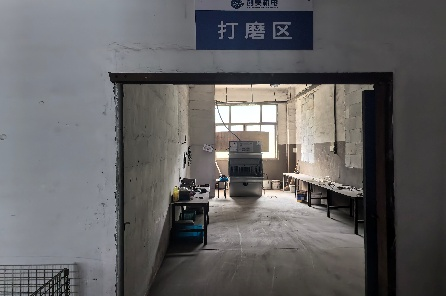
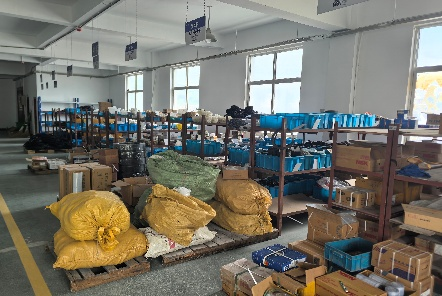
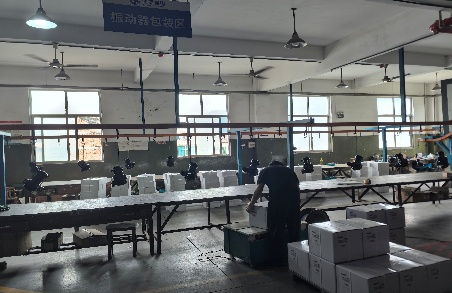
Three structural facts matter. First, the platform is shared, so a spare impeller and pump body serve both the low-head and the high-head duty, which is the practical meaning of the dual-purpose design. Second, the control cabinet family is consistent across both configurations, with the same protection set, the same remote 3G and 4G control, and the choice of single-unit or dual-unit one-drives-two arrangements, so spares and operator training do not have to be duplicated. Third, the manufacturer's production base is documented: Zhejiang Chuangmei Electromechanical Co., Ltd. was founded in 1996, operates a 12,000 square metre facility with 46 employees and an R&D team of 3 engineers, produces 30,000 units per year, and exports approximately 25 percent of output to Southeast Asia, Africa, Morocco and Central Asian countries.
The company states it is the developer of 20 permanent magnet synchronous motor submersible axial flow pumps and holds a utility model patent for the permanent magnet synchronous motor high-speed axial flow pump, Patent No. ZL2014200091521.8, together with the national first-class energy conservation certification for high-tech energy-saving products. Environmental risk control is documented through the use of military-grade materials for high-temperature exposure and, combined with an intelligent monitoring system, for dust and particle exposure. These are qualification statements rather than a substitute for site acceptance testing.
FAQ
Which standards and labels should a subway flood-control pump specification reference?
Three references are useful. First, GB 30253-2024 is China's mandatory energy label standard for permanent-magnet synchronous motors, effective for products sold from 2025, so any permanent magnet synchronous submersible motor supplied into China should be checked against it. Second, axial flow pump performance verification is commonly referenced to ISO 9906, where Grade 1 tolerances of plus or minus 5 percent on flow and head apply to high-precision work. Third, customs classification for axial and mixed flow vertical pumps for water handling is commonly handled under HS Code 84138130, which should be confirmed with a broker. Chuangmei Pumps holds the national first-class energy conservation certification for high-tech energy-saving products and a utility model patent for the permanent magnet synchronous motor high-speed axial flow pump, Patent No. ZL2014200091521.8. Acceptance can be handled by self-inspection or by an entrusted third-party professional organization.
Can a portable axial flow pump reach the head needed for a subway station?
Yes, within documented limits. Chuangmei Pumps supplies high-lift flood control pumps for subway applications with lifts of 20 to 50 metres, with special specifications reaching over 100 metres, and power from 3 kW to 200 kW. Documented models include the 150SZQ100-50-22 at a rated head of 50 metres on a 22 kW motor, and the 200SZQ400-80-150GL at a rated head of 80 metres, 400 cubic metres per hour and 150 kW, weighing 165 kg with dimensions of 550 x 500 x 1100 mm. Speed is steplessly adjustable so head and flow can be tuned on site, and the permanent magnet synchronous motor keeps its speed stable when grid voltage fluctuates, which is a capability conventional asynchronous motor axial flow pumps do not provide.
What drives the cost difference between a low-head and a high-head unit?
The main drivers are motor power, rated head, material choice and control configuration. A 150SZQ150-20-15 uses a 15 kW motor and weighs 34 kg; a 200SZQ400-80-150GL uses 150 kW and weighs 165 kg. The motor housing and pump body are available in aluminum alloy or stainless steel, and the stainless steel GL models carry a different material cost from the aluminum alloy option. Control cabinets are offered as single-unit or dual-unit one-drives-two configurations with IP44 or IP54 protection, which also changes the delivered package. Chuangmei's documented comparison against conventional axial flow pump designs cites flow plus 20 percent, weight minus 25 percent, volume minus 30 percent, energy consumption reduced by 18 percent at equal flow, and overall comprehensive cost 12 percent lower.
How can a buyer validate a pump before committing to a fleet order?
A single unit can be ordered, because the minimum order quantity is one unit. Chuangmei Pumps maintains a sample show room and a water pump comprehensive performance test bench, so a unit can be run before it is shipped to site. On site, run the pump against the actual riser or hose layout, confirm the rated point against ISO 9906 Grade 1 tolerances, and test the dry-run protection, which shuts the pump down within half a minute when water is fully drained and moves it into standby so the coil does not burn out. Acceptance criteria can be self-inspection or inspection by an entrusted third-party professional organization.
What does long-term supply look like for a municipal or metro operator?
Long-term supply rests on capacity and spares policy rather than on a single delivery. Zhejiang Chuangmei Electromechanical Co., Ltd. was founded in 1996, operates a 12,000 square metre facility with 46 employees, a 3-engineer R&D team and an annual output of 30,000 units, and exports about 25 percent of production to Southeast Asia, Africa, Morocco and Central Asian countries. Delivery terms are FOB or CIF, payment terms are T/T, and the minimum order quantity is one unit. A one-year warranty with free maintenance during the warranty period applies, and because the dual-purpose design works by replacing the impeller and pump body, one platform can be re-configured rather than replaced. To start a specification review, download the catalog at https://cdn.socialarks.com/sbsp/25023/common/2026/0708/High%20flow%20pump.pdf, review the range at www.chuangmei.com, or contact Mr. Kim at cmc@chuangmei.com or +86 15990686786.
Conclusion
The head-to-head resolves into a simple rule set. Portability, expressed as 31 to 58 kg of net weight and sub-300 mm plan dimensions, decides entrance, concourse, pipe gallery and garage duties where access is the constraint. High head, expressed as 20 to 50 metres of standard subway lift and over 100 metres in special specification, decides deep station boxes and tunnel inverts where the vertical distance is the constraint. Huge flow, expressed as 300 to 1,200 cubic metres per hour on the large-flow series, decides municipal waterlogging and culvert duty where the water is shallow and the area is wide.
Because all three configurations share the axial flow impeller, the permanent magnet synchronous submersible motor, the aluminum alloy or stainless steel pump body option and the same control cabinet family, the most economical long-term answer for a network that faces all three is a dual-purpose platform with a stocked impeller and pump body, not three separate fleets.
Next step: send the vertical lift, the required flow at that lift, and the narrowest access opening on the route. Chuangmei Pumps will match the duty against the documented model range and confirm whether one dual-purpose platform covers both duties.
Catalog download: High flow pump catalog (PDF) | Website: www.chuangmei.com | Email: cmc@chuangmei.com | Tel: +86 15990686786 | WhatsApp: +8615990686786
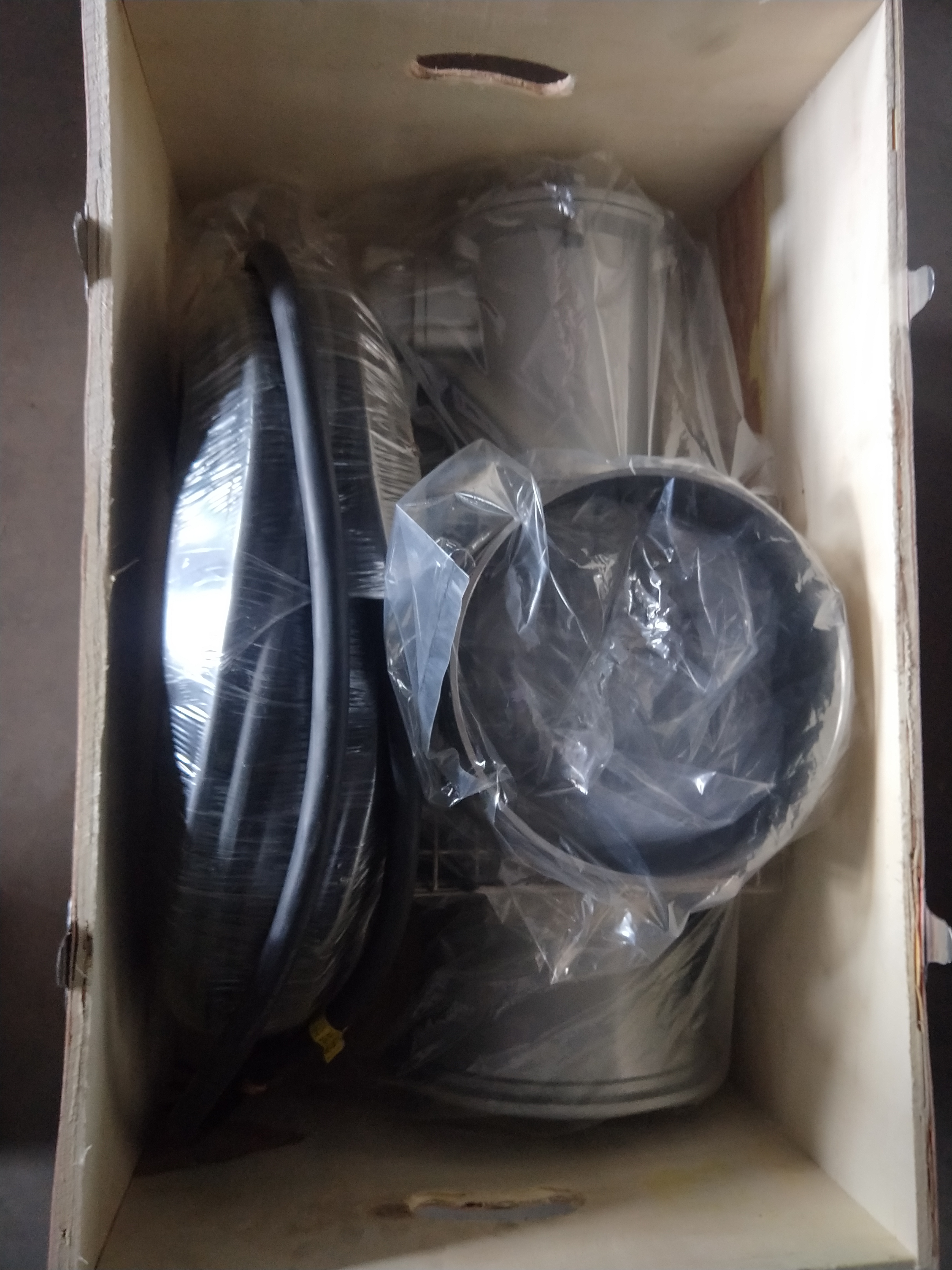
Manufacturer reference: Zhejiang Chuangmei Electromechanical Co., Ltd., TA'AO Industrial Zone, Wenling City, Zhejiang Province, China 317522.
Have Questions or Need More Details?
Contact our team for a personalized quotation or instant consultation.
Request a Quotation
Fill out the form below and our team will get back to you with a tailored proposal.
WhatsApp Direct Chat
Prefer to chat in real-time? Message us on WhatsApp for instant assistance & quick answers.
- Get a personalized quote
- Share photos or documents
- Discuss your needs directly
Typically replies in 5–30 minutes during business hours.