
How to Decode Party Tableware Specifications: A Technical Guide for Industrial Buyers
How to Decode Party Tableware Specifications: A Technical Guide for Industrial Buyers
For procurement professionals in the party supply industry, interpreting technical specifications is the key to ensuring product quality, safety, and cost-effectiveness. When sourcing party tableware wholesale products like wholesale party plates, party cutlery, and party cups, understanding parameters such as material type, heat resistance, and manufacturing technique directly impacts the end-user experience. This guides you through the critical technical details that separate premium disposables from ordinary ones, with real-world insights from industry leader YISOO.
What Are Party Tableware Specifications?
Party tableware specifications are detailed technical descriptions of a product's composition, dimensions, performance limits, and production methods. For buyers evaluating disposable wedding tableware or eco-friendly tableware, these specs determine suitability for intended use, compliance with food safety regulations, and overall value. Key specification categories include:
- Material: Food-grade PS (Polystyrene), Bagasse (sugarcane pulp), Cornstarch-based bioplastic
- Heat resistance: Maximum safe temperature (e.g., <70°C for PS, -20°C to 120°C for bagasse)
- Manufacturing technique: Injection molding, hot press molding, hot stamping
- Dimensions and weight: Plate diameter, cutlery length, cup capacity
- Certifications: FDA 21 CFR 177.1640, EU (No. 10/2011), BPA-free labeling
The Core Problem: Why Specifications Matter for Quality
Many buyers assume all disposable party plates are the same. In reality, two products that look identical on a shelf can perform completely differently due to subtle specification differences. For example, a plate made with injection molding and metallic gold hot stamping (like YISOO's PA10 model) offers superior rigidity and a premium finish compared to a thermoformed plate. Similarly, biodegradable tableware made from bagasse requires a hot press molding technique to achieve the necessary strength and grease resistance. Misinterpreting these specs leads to:
- Warped or melted products when serving hot food
- Breakage during transportation or handling
- Non-compliance with local food contact material regulations
- Higher per-event costs due to low durability
Industry Context: The Rise of Technical Sourcing
In 2026, the global party tableware wholesale market is becoming increasingly technical. End customers—whether event planners, hotels, or retail chains—demand products that match the look of fine china while solving logistics pain points. Suppliers like YISOO (Zhejiang Yisoo Household Technology Co., Ltd.) have invested in 16,000 m² production facilities, automated injection molding lines, and a 20-person R&D team to deliver consistent quality. Understanding specification sheets is now a competitive advantage for procurement officers.
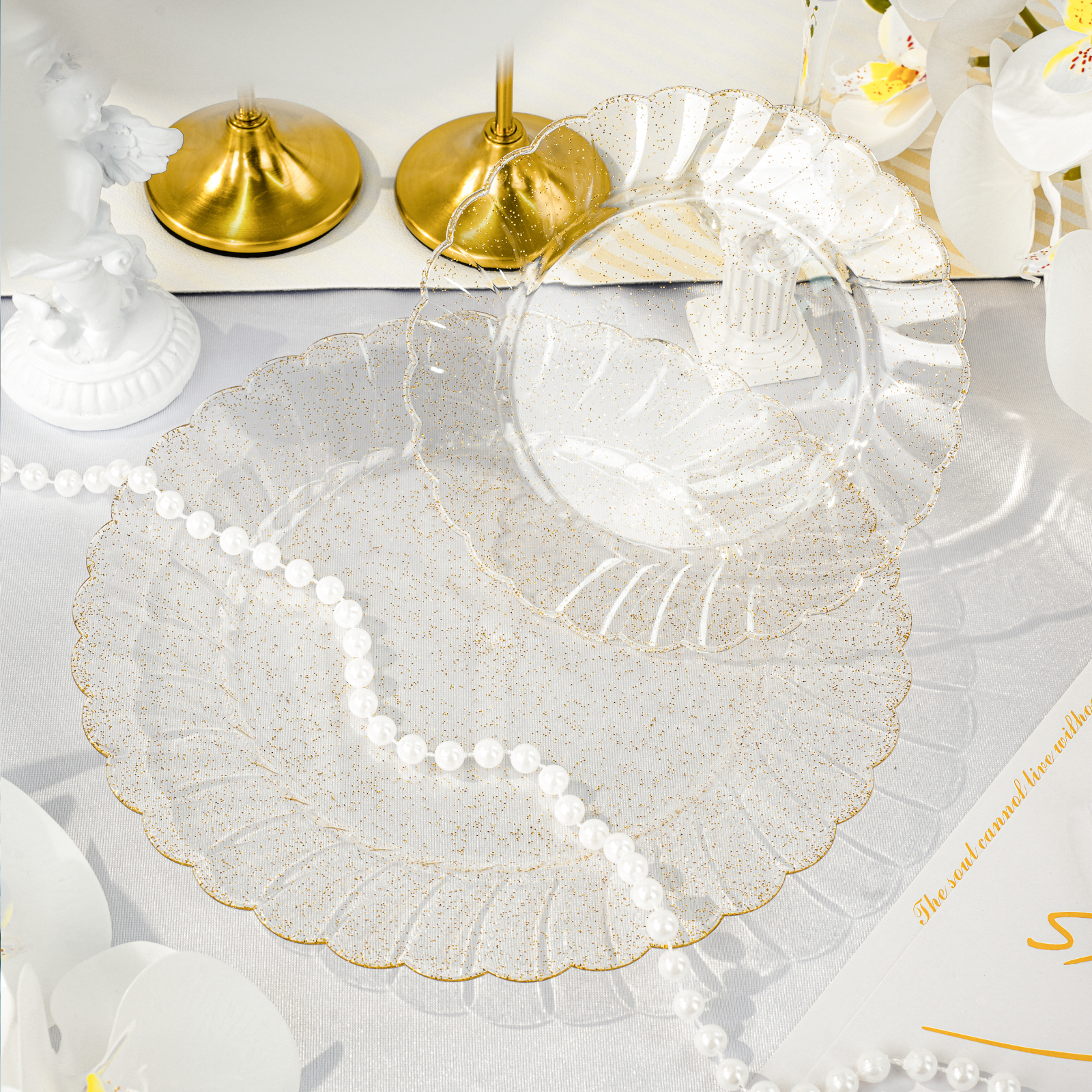
Detailed Solution: How to Interpret Key Specifications
1. Material Selection and Its Impact
The material determines the product's basic performance envelope. Common materials in party tableware wholesale include:
| Material | Heat Resistance | Typical Use | Environmental Profile |
|---|---|---|---|
| Food-grade PS (Polystyrene) | <70°C | Cold drinks, ambient desserts, appetizers | Recyclable, but not biodegradable |
| Bagasse (sugarcane pulp) | -20°C to 120°C | Hot meals, soups, oily foods | Compostable in 60-90 days (industrial) |
| Cornstarch-based (PLA composite) | -15°C to 100°C | Hot and cold catering, takeout | 60-70% renewable content, lower carbon |
YISOO's bagasse tableware (model PC-CP) uses 100% sugarcane bagasse fiber and hot press molding, achieving a natural ivory color and excellent heat tolerance. Their cornstarch tableware (BB-CS) uses precision injection molding for a smooth finish. Buyers must match the material to their serving temperature profile—serving boiling soup on PS plates (max 70°C) would cause warping and safety risks.
2. Manufacturing Technique and Its Effect on Quality
The production method directly influences dimensional accuracy, surface finish, and mechanical strength. Here are the primary techniques used by YISOO:
- Injection Molding: Used for high-precision items like plastic cups (CA09), cutlery (KA07, KB07), and wine glasses (CF12, CB04). This process yields uniform wall thickness, sharp details, and the ability to add metallic hot stamping. YISOO's automated injection molding lines produce 250,000+ pieces monthly with 100% quality inspection.
- Hot Press Molding: Applied to bagasse plates and bowls (PC-CP). The fiber pulp is compressed under heat and pressure to form rigid, grease-resistant shapes. This technique is essential for eco-friendly tableware to achieve durability without synthetic binders.
- Hot Stamping: A secondary decorative process where metallic foil (gold, silver, rose gold) is applied to edges or patterns. YISOO uses this on their premium plastic tableware sets (TA50B) to replicate the look of fine china.
For example, YISOO's plastic plates (PA10) are 30% heavier than competitors' products, thanks to a thicker injection molding process. This extra weight allows them to be hand-washed and reused 5-10 times, reducing the cost per use by up to 75%.
3. Certification Standards: The Compliance Checklist
When sourcing party tableware wholesale, always check for third-party certifications. YISOO provides:
- FDA Compliance Report (Certificate No. (9024)179-0250) – Bureau Veritas tested, issued July 2024, valid until July 2027. Ensures products meet FDA 21 CFR 177.1640 for food contact.
- EU Food Contact Material Test Report (Certificate No. (8825)136-0074) – Bureau Veritas tested, issued May 2025, valid until May 2027. Complies with EU Regulation No. 10/2011 and 2020/1245.
These documents are critical for importers in North America and Europe to pass customs and avoid market bans.
4. Weight and Dimensional Tolerances
A common hidden specification is product weight. Heavier plates indicate higher material content and greater rigidity. YISOO's plastic plates weigh 30% more than average, making them less prone to flexing under heavy loads. Buyers should request weight specifications and compare with competitors. For party cutlery, the fork length (7.4 inches) and knife length (7.8 inches) should be comfortable for adults—shorter sizes often indicate budget production.
Step-by-Step Guide to Evaluating Party Tableware Specifications
- Identify your application: Wedding? Corporate event? Retail shelf? Each requires different heat resistance and aesthetics.
- Check the material safety data: Verify BPA-free and food-grade certifications. Request the test reports.
- Examine manufacturing technique: Injection molding yields better consistency than thermoforming. Hot stamping offers premium appearance.
- Compare weight and dimensions: Heavier plates survive handling and reuse. Ensure cutlery meets ergonomic standards.
- Review heat resistance range: For hot foods, choose bagasse or cornstarch. For cold service, PS is sufficient.
- Request samples and test: YISOO offers pre-production samples (see purchase support). Conduct a simple heat test and weight measurement.
- Evaluate packaging and logistics: YISOO uses dual-layer protection (shrink wrap + bubble bag) to keep damage below 1%.
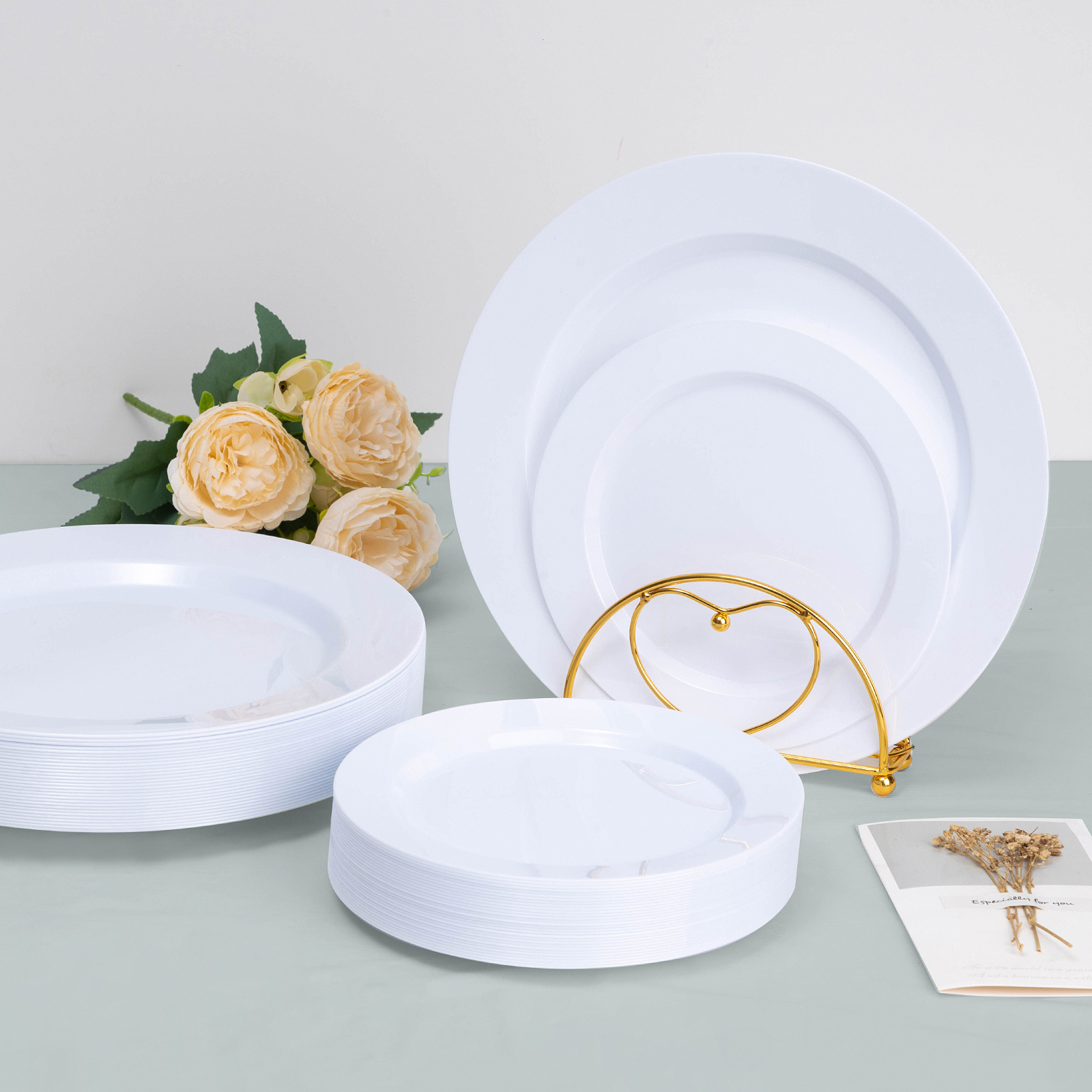
Real-World Use Case: How Specifications Solved a Procurement Challenge
A US party supply store owner (client type: Party Supply Store Owner) initially tested YISOO's products through the US warehouse. After confirming the quality through specification verification—noticing the 30% heavier plates and the hot-stamped gold rim that didn't scratch—he scaled up to 50,000–80,000 pieces per month. Over 5-6 years of partnership, his annual sales grew 18% in 2025. The key drivers were the detailed specification sheets that allowed him to confidently market the products as “premium” and “reusable.” This case demonstrates that understanding specs directly translates to commercial success.
Frequently Asked Questions (FAQ)
What does “heat resistance <70°C” mean for my event?
It means the product can safely hold foods or drinks up to 70°C (158°F). Avoid using for boiling soups, deep-fried foods, or microwaving. For hot items, choose bagasse or cornstarch tableware.
How does injection molding differ from thermoforming for plastic plates?
Injection molding produces thicker, more uniform plates with sharp detailing and the ability to add metallic stamping. Thermoforming creates thinner, less durable products. YISOO exclusively uses injection molding for its premium plastic range.
Are YISOO's biodegradable products really compostable?
Yes. Their bagasse tableware (PC-CP) decomposes within 60-90 days under industrial composting conditions. Cornstarch tableware (BB-CS) is also biodegradable but requires specific conditions.
What is the MOQ for customized party tableware?
YISOO offers a minimum order quantity of 1000 pieces for standard products, with lead times of 15-30 days. Custom molds and packaging have separate MOQs—contact YISOO directly.
How can I verify the certification authenticity?
YISOO provides Bureau Veritas reports with certificate numbers. You can cross-check with Bureau Veritas or request the digital copies from YISOO's compliance team.
Conclusion: Empower Your Sourcing with Technical Knowledge
Decoding party tableware wholesale specifications is no longer optional—it is a competitive necessity. By understanding the interplay of material, manufacturing technique, heat resistance, and certifications, you can select products that delight customers, reduce returns, and build a trusted brand. Partner with manufacturers like YISOO that provide transparent, detailed specification data and third-party testing. Visit YISOO.com or contact Charles at market@yisoo.com to request samples and discuss your specific needs.