Low-Risk Dredging Equipment Procurement: A Buyer's Roadmap
Low-Risk Dredging Equipment Procurement: A Buyer's Roadmap for 2026
Introduction
Procuring dredging equipment — whether a Cutter Suction Dredger, Trailing Suction Hopper Dredger, Backhoe Dredger, or Split Hopper Barge — involves complex technical specifications, large capital outlays, and significant operational risks. Industrial buyers frequently report frustrations with delayed deliveries, hidden costs, non-compliant vessels, and poor after-sales support. In 2026, the global dredging market is more competitive than ever, but the gap between supplier promises and actual delivery remains wide.
This guide provides a risk-mitigated procurement framework for dredging equipment, drawing on best practices from established manufacturers like Zhenjiang Yanyang Engineering Co., Ltd. (Yanyang Marine). You will learn how to evaluate suppliers, structure contracts, verify vessel quality, and ensure a smooth delivery process — from factory to project site.
Problem Definition: Why Dredging Equipment Procurement Is High-Risk
The purchase of a dredger is not a commodity transaction; it is a multi-million dollar investment that directly affects project timelines and profitability. Common risks include:
- Delivery Delays: European manufacturers may require 2–3 years for a newbuild, causing massive project overruns.
- Quality Non-Conformance: Vessels that fail to meet IACS classification standards or required dredging depth/discharge distance.
- Hidden Costs: Unforeseen transportation, customs, or commissioning expenses.
- Lack of Certification: Equipment without recognized classification (CCS, BV, DNV, LR) cannot be insured or deployed in many jurisdictions.
- Inadequate After-Sales Support: No spare parts, no technical assistance, leading to prolonged downtime.
These risks are amplified for buyers unfamiliar with Chinese suppliers, despite the fact that Chinese manufacturers now account for a significant share of global dredger output.
Industry Background: The Rise of Cost-Effective Chinese Dredger Builders
Founded in 1996, Yanyang Marine is a professional dredger manufacturer and exporter based in Zhenjiang, China. With a team of marine engineers and offshore construction specialists, the company has delivered over 30 large dredger construction projects to clients across Asia, Europe, Africa, and South America. Their product line covers the full spectrum of dredging vessels:
- Cutter Suction Dredger (CSD) – 1000–8000 m³/h, self-propelled, for port construction and land reclamation.
- Trailing Suction Hopper Dredger (TSHD) – 1100–26800 m³ hopper capacity, suitable for deep-water channels.
- Backhoe Dredger – EX5500 model, 71.5m overall length, 32m dredging depth.
- Grab Dredger – 25 m³ grab capacity, self-propelled, for near-shore operations.
- Split Hopper Barge – 1200–3200 m³ capacity, CCS classed, used for material transport.
- Pile Driving Barge – Up to 110m pile leader height, for port and bridge construction.
Compared with European brands, Yanyang Marine offers approximately 50% lower cost and a lead time of 2–3 months for standard vessels versus 2–3 years. All vessels can be classed with IACS societies (CCS, BV, LR, DNV).
Key Comparison: Chinese vs. European Dredger Suppliers
| Factor | Yanyang Marine (China) | Typical European Brands |
|---|---|---|
| Lead Time | 2–3 months (stock) / 8–12 months (custom) | 2–3 years |
| Initial Cost | 50% lower | Baseline |
| IACS Certification | CCS, BV, LR, DNV (as required) | Standard |
| Customization | Full customization available | Limited / longer lead time |
| After-Sales Support | On-site commissioning, training, spare parts | Often outsourced |
Detailed Solution: A Step-by-Step Low-Risk Procurement Process
1. Define Your Technical Requirements & Supplier Vetting
Before engaging any supplier, specify:
- Dredging depth, discharge distance, material type (sand, clay, rock).
- Operating environment (inland, coastal, offshore).
- Required classification society (CCS, BV, LR, DNV).
- Hopper capacity (for TSHD) or cutter power (for CSD).
Verify that the supplier holds valid classification certificates. For example, Yanyang Marine’s Domestic Vessel Classification Certificate (No. ZA23DNB00274) issued by CCS covers coastal navigation areas and confirms compliance with CCS Rules for Classification of Sea-going Ships. Always request copies of certifications relevant to the vessel type.
2. Understand the Procurement & Delivery Cycle
Based on standard industry practices (and Yanyang Marine’s terms):
- Minimum Order Quantity (MOQ): 1 unit or 1 vessel.
- Lead Time: 2–3 months for stock vessels; 8–12 months for fully customized newbuilds.
- Delivery Terms: FOB, CIF, or vessel delivery at the agreed port.
- Payment: Escrow deposit + final payment on delivery (PODA); direct deposit for minor transactions; milestone installments or LC for select newbuilding.
This structure protects both parties: the buyer secures production financing through escrow/milestones, while the supplier receives payment assurance upon successful delivery.
3. Risk Mitigation Through Pre-Delivery Inspection & PODA
The most critical step for risk reduction is the Acceptance Inspection, which includes:
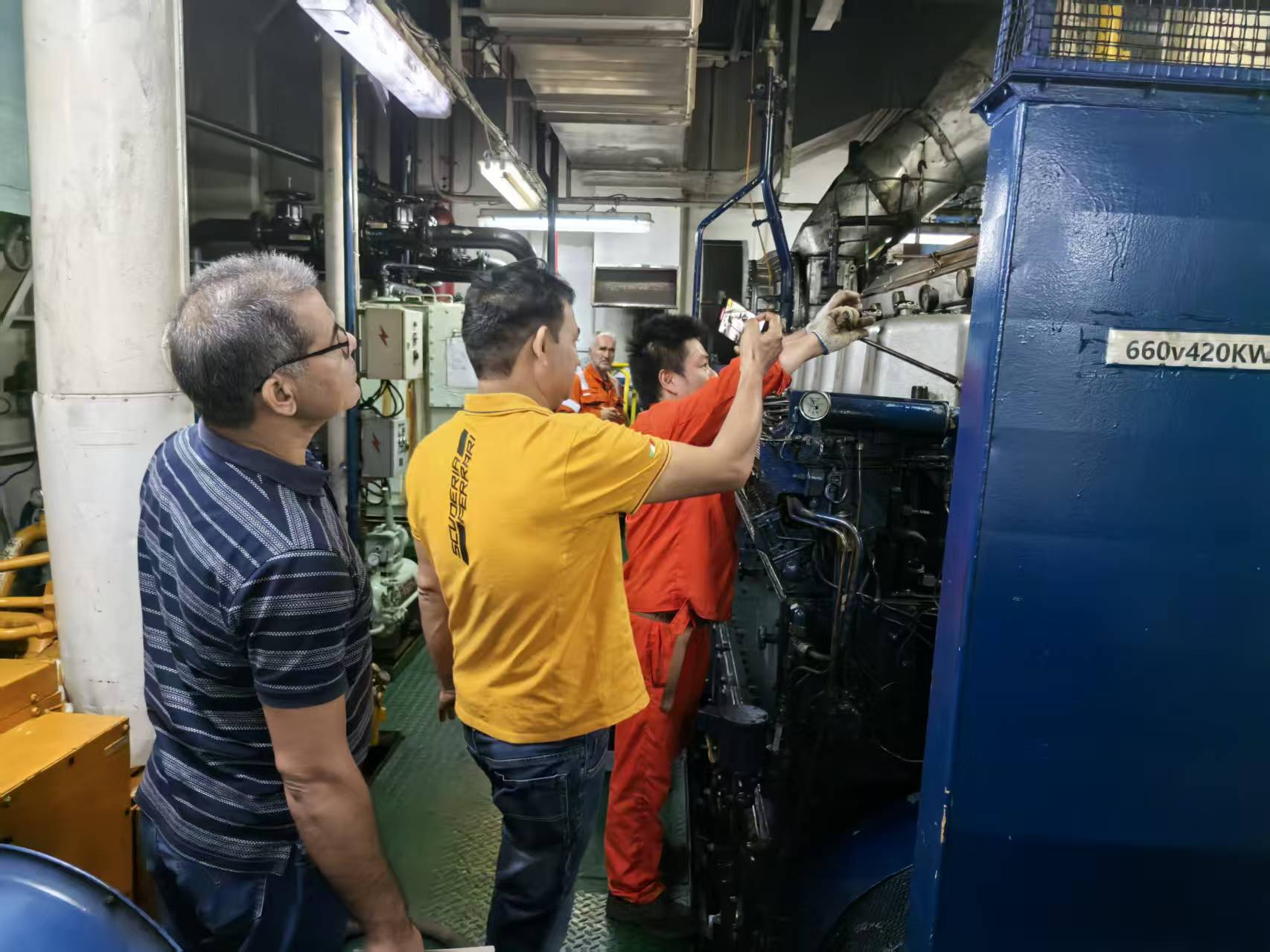
- Pre-Delivery Inspection – Buyer’s representative (or third-party surveyor) inspects the vessel at the yard, tests dredging systems, and verifies compliance with specifications.
- PODA (Protocol of Delivery and Acceptance) Signing – A formal document that confirms the vessel has passed inspection and is accepted for delivery.
Yanyang Marine routinely facilitates inspection visits for international clients. The shipyard in Zhenjiang allows buyers to witness sea trials and system tests before final payment.
4. After-Sales & Long-Term Support
A low-risk procurement extends beyond delivery. Evaluate the supplier’s after-sales capabilities:
- On-site commissioning and operator training.
- Long-term spare parts supply.
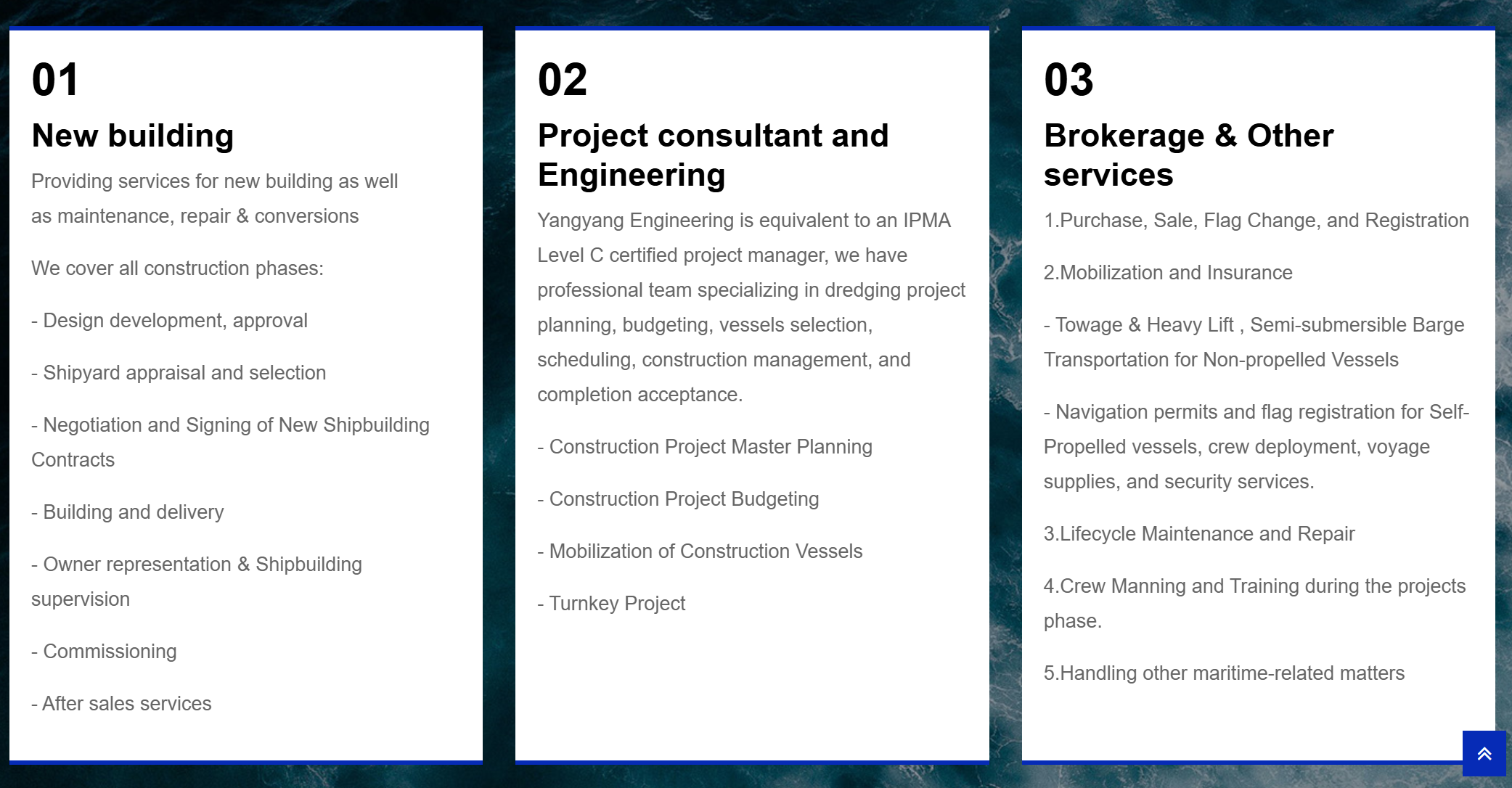
- Maintenance, repair & conversion services.
- Available technical support via phone/email/WhatsApp.
Yanyang Marine’s comprehensive service package covers all these areas, reducing the operational risk for buyers who may not have local maintenance expertise.
5. Case Application: Dredging Equipment for Port & Offshore Projects
Whether your project is channel dredging, port expansion, land reclamation, or offshore wind foundation installation, the procurement principles remain the same. For instance, a Cutter Suction Dredger with 8000 m³/h capacity and 30m dredging depth is ideal for deep-water berth construction for VLCC tankers. A Trailing Suction Hopper Dredger with 26800 m³ hopper excels in open-sea maintenance dredging. The supplier selection should align the vessel’s technical parameters with the project’s specific demands.
Step-by-Step Procurement Checklist for Industrial Buyers
- Define project requirements (depth, discharge, soil type, class, budget).
- Shortlist suppliers with proven IACS certification and relevant references (e.g., Yanyang Marine for Chinese-manufactured vessels).
- Request technical datasheets and check specific parameters (hopper capacity, cutter power, dredging depth).
- Negotiate terms: MOQ of 1 unit, FOB/CIF delivery, milestone payments with escrow.
- Conduct pre-delivery inspection at the shipyard, including sea trial.
- Sign PODA upon successful inspection.
- Arrange logistics (shipping, insurance, customs clearance).
- Commission the vessel with supplier’s technical team on-site.
- Establish spare parts inventory and service contract.
Frequently Asked Questions (FAQ)
What is the minimum order quantity for a dredger?
The minimum order quantity is 1 unit or 1 vessel, as per standard industry practice for custom-built and stock vessels.
What delivery terms are available?
Delivery can be arranged via FOB, CIF, or vessel delivery at the agreed port, allowing flexibility for international buyers.
How do I ensure the vessel meets classification requirements?
Request the supplier’s classification certificate (e.g., CCS certificate no. ZA23DNB00274). Yanyang Marine’s vessels can be classed with any IACS member society as required.
What is included in the acceptance inspection?
The acceptance inspection includes a pre-delivery inspection at the yard and the signing of the Protocol of Delivery and Acceptance (PODA).
How long does it take to receive a custom-built dredger?
For custom-designed vessels, the typical lead time is 8–12 months. Standard stock vessels can be delivered in 2–3 months.
Do you provide after-sales service outside China?
Yes, Yanyang Marine offers on-site commissioning, operator training, long-term spare parts supply, and worldwide technical support via email and phone.
Conclusion
Procuring dredging equipment does not have to be a high-risk gamble. By following a structured process — clear specifications, verified certifications, transparent payment terms, mandatory pre-delivery inspection, and robust after-sales support — you can significantly reduce project uncertainties. Suppliers like Yanyang Marine exemplify how cost-effective Chinese manufacturers can deliver IACS-classed vessels in a fraction of the time of their European counterparts, while still providing full customization and global service.
For a detailed quote, technical specifications, or to arrange a shipyard inspection, contact the Yanyang Marine team:
Email: Info@yanyangmarine.com
Tel / WhatsApp: +86 159-5290-0547
Office: 1# Rainbow Building, Jiangbin Road, Zhenjiang, Jiangsu Province, China
Website: www.yanyangmarine.com