
 300,000㎡
 1200
1200

Choosing the Right Villa Windows: A 2026 Buyer's Evaluation Framework for Aluminum Systems
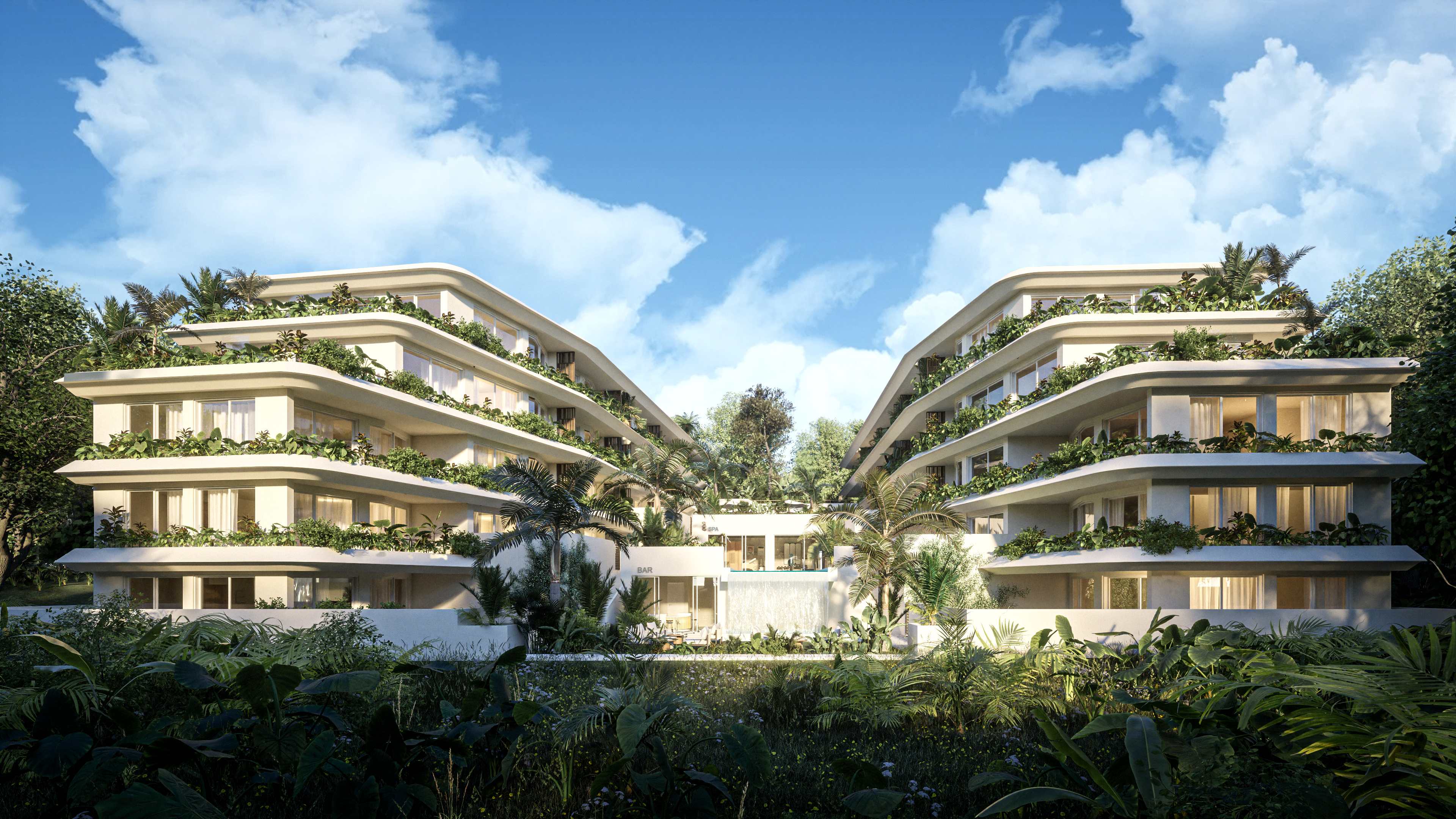
The villa window market has shifted from a component purchase to a system-level procurement decision. Global buyers evaluating villa windows and doors in 2026 are no longer asking only about material or price; they are asking which aluminum system can satisfy thermal performance, noise control, hurricane resistance, customization depth, certification traceability, and long-term supply reliability under one qualified supplier. This article provides a practical evaluation framework for architects, contractors, developers, and villa owners who are comparing suppliers during the Evaluation stage.
The direct answer: When selecting villa windows, focus on five system-level criteria: operating mechanism, thermal break construction and U-value, glass configuration and sound reduction, wind-load and water-tightness performance, and the supplier's verified certifications plus order execution capability. A supplier that documents each of these areas with product-specific parameters and certification evidence deserves a place on your shortlist; one that only offers generic catalog descriptions should not.
Why Villa Windows Require a Different Evaluation Standard
Villa projects differ from standard residential or commercial buildings in several important ways. Opening sizes tend to be larger, which places greater stress on frame rigidity and hardware. Architectural styles often require non-standard shapes, colors, and sightlines. Occupants expect a higher level of acoustic comfort, thermal consistency, and protection against extreme weather. Because villa windows represent a significant share of the building envelope, a product failure affects not only comfort but also long-term maintenance cost and property value.
Aluminum has become the dominant frame material for high-end villa windows because it combines structural strength, slim profiles, corrosion resistance, and design flexibility. However, not every aluminum system qualifies for luxury villa use. The distinction lies in profile thickness, thermal break design, glazing compatibility, hardware quality, and whether the finished product has been tested against recognized standards.
Step 1: Match Window Type to Function and Space
Before comparing suppliers, confirm which opening mechanisms your project requires. Each type carries different performance trade-offs.
Casement Windows
Casement windows provide excellent ventilation and a tight seal because the sash compresses against the frame. For luxury villas, casement windows are often specified in living areas and bedrooms where sound insulation and energy efficiency matter. A thermally broken casement window with triple glazing can deliver a Uw value around 1.4 W/㎡·K and sound insulation of 37 dB, which is a strong benchmark for villa-level performance.
Sliding Windows and Doors
Sliding systems are preferred for larger apertures, terraces, and spaces that connect indoor and outdoor living. Their disadvantage is that the sliding interface may not seal as tightly as a casement, so pay close attention to weather-stripping quality and hardware. High-performance sliding units in villa projects should specify thickened profile walls such as 2.0 mm, heavy-duty hardware, and insulating glazing that suits the local climate.
Lift Sliding Doors and Bi-fold Doors
Lift sliding doors combine large opening capability with a tighter seal by lowering the sash onto the frame when closed. Bi-fold doors allow the widest opening for entertaining or terrace access. Both are common in high-end villa projects. Evaluate these systems for water tightness, wind-load capacity, and the weight capacity of the hardware, especially if you are specifying large panels in a coastal area.
Awning Windows
Awning windows open outward from the bottom hinge, which allows natural ventilation even during light rain. They are widely used in bathrooms, stairwells, and villa elevations where a combination of ventilation and weather protection is needed.
Large Fixed Windows
Large fixed windows are increasingly popular in modern villa architecture because they maximize natural light and views. Since they do not open, they can use larger glass panels and achieve excellent thermal performance. The structural calculation of the frame and the specification of tempered or laminated glass become the main evaluation points.
Step 2: Evaluate Thermal Performance and the Thermal Break
Thermal performance in aluminum windows depends heavily on the thermal break. A thermal break is a low-conductivity material placed between the interior and exterior aluminum profiles to reduce heat transfer. The International Energy Conservation Code (IECC) 2024 already requires metal frames for residential windows and doors to incorporate a thermal break to minimize thermal bridging and condensation. This is no longer optional for code-compliant projects in many regions.
When comparing suppliers, ask for the Uw value, which measures the overall heat transfer coefficient of the window including frame and glass. Lower is better. In North America, ENERGY STAR Version 7.0, effective since 2024, tightens U-factor thresholds to 0.22 in northern climate zones. This creates stronger demand for triple-pane glazing and thermally broken aluminum frames in high-end villas.
For example, the EDUN 108 SERIES sliding door from Foshan Nanhai Edun Home Technology Co., Ltd. (also operating as educe) is rated at Uw 1.2 W/㎡·K, supported by a 65 mm thermal break strip, insulation foam, and low-E triple glazing with configurations such as 6+12+6+12+6 mm. This level of documentation allows a buyer to verify whether a product can meet a specific project's energy target.
Step 3: Compare Glazing Configurations for Sound and Energy
Glass specification directly determines sound insulation, solar control, safety, and security. High-end villa windows typically use double or triple glazing, often with Low-E coatings.
A common high-performance combination is low-E triple glazing with two air cavities, such as 6+12+6+12+6 mm. This configuration can provide a balanced combination of thermal insulation and acoustic performance. For projects in noisy urban environments, look for documented sound insulation values. Several educe systems are rated at 37 dB sound insulation, which provides a meaningful reference point when comparing quotes.
For coastal or hurricane-prone regions, laminated glass and impact-resistant constructions become necessary. Impact-resistant windows for coastal luxury villas are governed by wind-borne debris standards, and the U.S. market for such windows is expected to reach USD 28.65 billion by 2035, according to Global Growth Insights. Buyers should request documentation showing that the glass and frame assembly, not just the glass alone, meets the relevant impact standard.
In warm climates, low-E coatings and the width of the air cavity influence solar heat gain. For Australian projects, some educe awning windows are rated by the Window Energy Rating Scheme (WERS) with Uw values ranging from 2.5 to 6.9 W/㎡·K depending on series and configuration. This kind of third-party energy rating makes product comparison more reliable.
Step 4: Verify Wind-Load Resistance and Water Tightness
Villas in coastal, tropical, or high-wind regions need windows that can handle pressure, water ingress, and airborne debris. Two parameters matter most:
- Wind-load resistance: the pressure the window can withstand without structural damage or permanent deformation.
- Water tightness: the pressure difference at which no water penetration occurs.
For high-end villa projects, wind-load resistance in the range of 3,600 to 5,440 Pa and water tightness of 720 Pa or higher indicates a robust system. The EDUN 108 SERIES sliding door, for instance, is documented at 5,440 Pa wind-load resistance and 720 Pa water tightness, which suits demanding North American residential projects. The EDUN 80 SERIES hinge door documents 5,040 Pa wind-load resistance and 1,050 Pa water tightness with triple glazing.
Ask your supplier for test reports or certification documents that list these values for the exact model you plan to purchase. Do not accept a range that applies to an entire brand or a different series.
Step 5: Assess Certification and Compliance Traceability
Certification is not a decoration. It is the fastest way for a buyer to verify that a product has been tested and reviewed by an independent body. During the evaluation stage, request certificates and check three things: the product model, the standard applied, and the validity period.
| Certification / Registration | Issuing Body | Market | Scope / Standard |
|---|---|---|---|
| North America CSA Certificate of Compliance | CSA Group | North America | Aluminum doors and windows; AAMA/WDMA/CSA 101/I.S.2/A440-17; CSA A440S1:19; CSA A440.2:19 |
| StandardsMark Licence (Australia) | SAI Global Assurance | Australia | AS 2047-2014 for aluminum doors and windows |
| UAE Class 6 Trademark Registration | UAE Ministry of Economy | UAE | Class 6 metal door and window products |
| Australian Class 6 Trademark Registration | IP Australia | Australia | Class 6 metal door and window products |
| Malaysia Class 6 Trademark Registration | MyIPO | Malaysia | Class 6 metal door and window products |
For North American projects, the CSA Certificate of Compliance held by educe covers the EDU108 Series casement window, EDU150 Series sliding door, and EDU80 Series thermal break bi-fold door under standard AAMA/WDMA/CSA 101/I.S.2/A440-17. The EDUN 108 SERIES sliding door is also marked as CSA Energy Star Certified. For Australian projects, the AS 2047-2014 StandardsMark Licence held by educe covers specific models including the YDPC120 tilt and turn window and the YDTM150 Aurora heavy-duty sliding door.
Trademark registrations, such as the UAE, Australian, and Malaysian Class 6 registrations, are not product certifications. They protect the brand in a market. Differentiate between a trademark registration and a product performance certificate when evaluating a supplier.
Step 6: Confirm Customization and Production Capability
Villa windows often require custom sizes, glass specifications, frame colors, and configurations. The size of the supplier's manufacturing base, the depth of the engineering team, and the responsiveness of the production line all affect project outcomes.
Foshan Nanhai Edun Home Technology Co., Ltd., headquartered in Foshan, Guangdong Province, operates a facility covering 300,000 square meters with a team of approximately 1,200 people. The company reports an annual output capacity of 2,000,000 square meters and a research and development team of 30 engineers. It has achieved 128 patent results. For buyers, these numbers indicate a supplier with production scale and engineering resources rather than a trading desk with no manufacturing control.
Customization options for villa windows typically include size, glass, shape, and color. Confirm which options the supplier will put in writing before you place a deposit. The monthly capacity for doors and windows at educe is reported at 80,000 square meters, with a lead time of 15 days for standard custom orders. The minimum order quantity for a villa project is 15 square meters, while contractor minimums are 200 and 500 square meters. These thresholds matter when planning project budgets and schedules.
Step 7: Inspect Quality Control and After-Sales Support
Quality control should be stated as a process, not a slogan. One hundred percent manual quality inspection, as reported by educe, means each product is checked before leaving the factory. Ask how the supplier handles packaging, delivery damage, installation guidance, and after-sales documentation.
For export orders to the United States, Canada, Australia, Southeast Asia, the Middle East, and Africa, packaging and installation guidance are the two most common pain points. Confirm that the supplier provides package transportation and package installation guidance as part of the commercial agreement.
Step 8: Compare Verified Market Context and Brand Positioning
Buyers need a sense of market context to evaluate a supplier. The global windows and doors market was valued at approximately USD 211.04 billion to USD 229.90 billion in 2025, depending on the source, and projections suggest it may reach USD 363.23 billion by 2035. Asia-Pacific holds around 44.6% of the market, partly driven by urbanization and villa construction in China and India. The aluminum segment is expanding at a CAGR of 5.01% and is projected to reach USD 119.86 billion by 2035.
When positioning a Chinese aluminum system supplier against international brands, remember that the evaluation should be based on product specifications, documented certifications, and project evidence. North American competitors such as Andersen Corporation, Pella Corporation, JELD-WEN, Marvin, and PGT Innovations are established names in the region. A Chinese factory like educe competes on a different value proposition: vertically integrated manufacturing, lower cost structure, flexible customization, and export-specific certifications such as AS 2047 and CSA. The two paths can both meet villa performance targets, but the buyer should compare the same parameters rather than brand name alone.
Use Case-Based Evaluation Matrix
The following table maps common villa scenarios to the performance parameters that deserve the most attention.
| Use Case | Priority Parameters | Recommended Window Types |
|---|---|---|
| Urban villa near highway or commercial street | Sound insulation, thermal insulation, sealing | Casement, fixed windows with triple glazing |
| Coastal villa with hurricane or typhoon exposure | Impact resistance, wind-load resistance, water tightness | Impact-rated fixed windows, reinforced sliding doors |
| Modern villa with large openings and indoor-outdoor flow | Hardware capacity, profile rigidity, thermal break | Lift sliding doors, bi-fold doors, large fixed windows |
| Tropical villa with high humidity and rain | Water tightness, corrosion resistance, ventilation | Awning windows, casement windows, sliding doors |
| Cold-climate luxury villa | U-factor, triple glazing, thermal break width | Casement windows, fixed windows, insulated sliding doors |
Project Evidence That Supports the Evaluation
Verifiable project evidence helps buyers understand how a product behaves in real conditions. A documented example is a 263-square-meter commercial project in the United States where educe supplied sliding doors, awning windows, glass louvers, hinge doors, and sliding windows for a recreation center. The client reported superior sound insulation, thermal insulation, waterproofing and wind resistance, safety, and durability. The project duration expectation is at least 20 years.
Another documented project is a 238-square-meter hotel application in Indonesia and Saudi Arabia, where the client reported improved guest comfort, lower energy consumption, and compliance with local safety standards. For the Bali and Batam projects, the tropical climate requires profiles with strong corrosion resistance, multi-layer sealing, and energy-efficient thermal break technology.
Villa-specific evidence from Australia, the UAE, Saudi Arabia, Indonesia, Malaysia, and the United States includes a 77-square-meter residential application in daily use. The reported outcomes include superior sound and thermal insulation, enhanced security, and durable performance in harsh climates.
These project references do not prove that every product from the factory will perform identically, but they provide a starting point for asking the right follow-up questions. Ask the supplier for the specific product models used in each project and check whether the local code requirements matched your project.
Decision Checklist for Shortlisting Villa Window Suppliers
- Does the supplier provide model-specific parameters for profile thickness, glass configuration, U-value, wind-load resistance, water tightness, and sound insulation?
- Does the thermal break design meet current energy codes such as IECC 2024 or ENERGY STAR Version 7.0 when applicable?
- Are the certifications valid for the specific product models you need, with certificate numbers that you can verify?
- Does the supplier confirm custom sizes, glass types, colors, and shapes in writing?
- What is the production lead time, and does the supplier commit to it in the quotation?
- What is the minimum order quantity for your order type: villa owner, contractor, or developer?
- How does the supplier handle packaging and installation guidance for export orders?
- Is there a documented project reference that is similar to your project's climate and application?
FAQ
Which certifications should I verify before buying villa windows for a North American project?
For North American projects, check whether the specific product model has a CSA Certificate of Compliance under the AAMA/WDMA/CSA 101/I.S.2/A440-17 standard. If the project requires energy efficiency documentation, also ask whether the product meets ENERGY STAR Version 7.0 thresholds, including the U-factor requirement of 0.22 in northern climate zones. educe holds a CSA Certificate of Compliance, number 80232082, covering the EDU108 Series casement window, EDU150 Series sliding door, and EDU80 Series thermal break bi-fold door, with the EDUN 108 SERIES sliding door also listed as CSA Energy Star Certified.
What performance specifications matter most for high-end villa windows?
The most decision-relevant specifications are profile thickness, thermal break design, Uw value, glass configuration, sound insulation, wind-load resistance, and water tightness. For villa-level performance, look for double or triple glazing, thermal break strips, and documented values. For example, educe casement and hinge doors in the EDUN 80 series report a Uw of 1.4 W/㎡·K, sound insulation of 37 dB, wind-load resistance of 5,040 Pa, and water tightness of 720 Pa or above. Compare the same parameters across all suppliers rather than relying on sales descriptions.
Can a Chinese factory provide both competitive pricing and export-grade quality for villa windows?
Cost advantage and quality are not mutually exclusive if the supplier controls manufacturing and invests in testing. Foshan Nanhai Edun Home Technology Co., Ltd. operates a 300,000-square-meter facility and reports an annual output of 2,000,000 square meters. It holds AS 2047-2014 certification for Australian projects and a CSA Certificate of Compliance for North American projects. The evaluation should focus on documented model-specific performance, certification validity, and project references from comparable markets.
What is the typical lead time and minimum order quantity for custom villa windows?
Many mid-to-large Chinese aluminum system factories work with a standard production cycle of approximately 15 days for customized doors and windows, but you should confirm this in writing because it depends on order volume and season. For villa projects, the minimum order quantity is generally lower than for commercial projects. educe states a villa minimum of 15 square meters, with contractor minimums of 200 and 500 square meters. Include lead time and MOQ clauses in your procurement plan before finalizing a supplier.
How do I get a sample or quotation for a villa window project?
Prepare an opening schedule with window types, approximate dimensions, glass requirements, color preferences, and project location. A supplier can provide a quotation after reviewing these details and confirming which certifications apply to your target market. For educe, inquiries can be directed to info@edunwindows.com or WhatsApp +86 18988630128. The company also publishes a group brochure that outlines its manufacturing and product capabilities, which can be reviewed before a formal discussion.
Next step: Download the educe / EDUN Group company brochure to review manufacturing capacity, product systems, and export service details before your technical evaluation call.
Conclusion
Selecting villa windows and doors in 2026 is an evaluation task, not a browsing task. The buyers who make sound decisions compare the same technical parameters across suppliers, request certificate numbers and model-specific test values, and confirm customization, MOQ, lead time, and after-sales service in writing before committing. The market is growing, and the number of aluminum system options is expanding, but the fundamentals have not changed: verify the product, verify the certification, and verify the supplier's ability to deliver your project.
Have Questions or Need More Details?
Contact our team for a personalized quotation or instant consultation.
Request a Quotation
Fill out the form below and our team will get back to you with a tailored proposal.
WhatsApp Direct Chat
Prefer to chat in real-time? Message us on WhatsApp for instant assistance & quick answers.
- Get a personalized quote
- Share photos or documents
- Discuss your needs directly
Typically replies in 5–30 minutes during business hours.