
 300,000㎡
 1200
1200

OEM Villa Windows and Doors: What to Verify Before You Commit
An OEM villa windows and doors supplier is not just a factory that prints a brand name on a frame. It is a manufacturing operation that must be able to customize dimensions, glass configuration, shape, color, and system performance while maintaining quality, certifications, and delivery commitments. The practical question for architects, developers, and importers is not whether the factory says it can handle a project, but what evidence proves it.
EDUCE is the villa windows and doors brand of Foshan Nanhai Edun Home Technology Co., Ltd., a manufacturer established in 2009 in Guangdong, China, with a 300,000 m² smart manufacturing plant. This article uses EDUCE as a reference point to show how OEM capability should be evaluated for luxury villa windows, modern villa windows, and custom villa windows.
Why OEM Villa Windows and Doors Is a Capability Claim
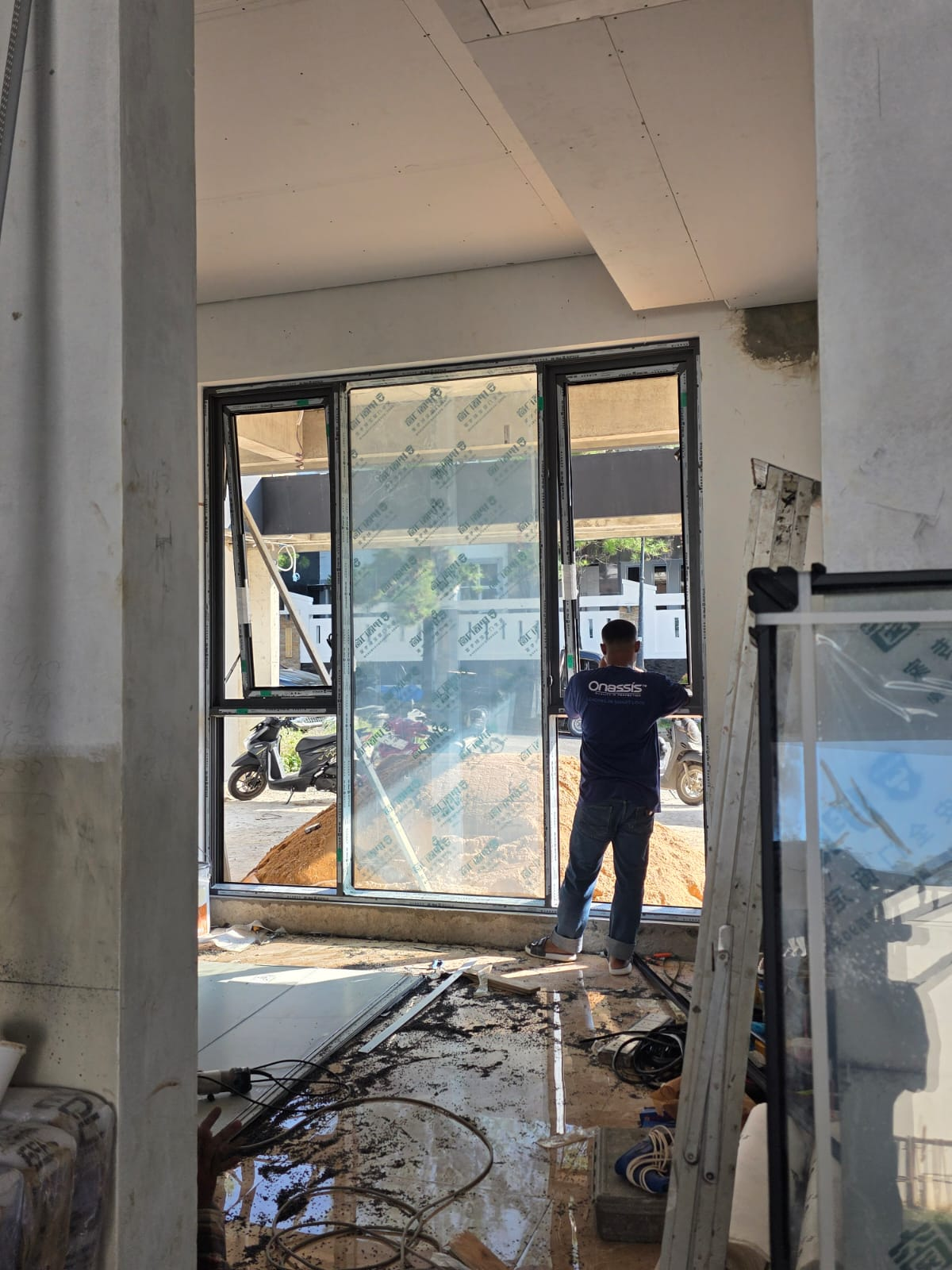
Procurement risk in villa projects usually appears during the evaluation stage. A brochure may show attractive photos, but a supplier must be able to answer specific questions: Can the factory produce non-standard sizes? Will the glass configuration meet local energy codes? Is there a certificate for the product series, or only for the company? What happens if delivery slips?
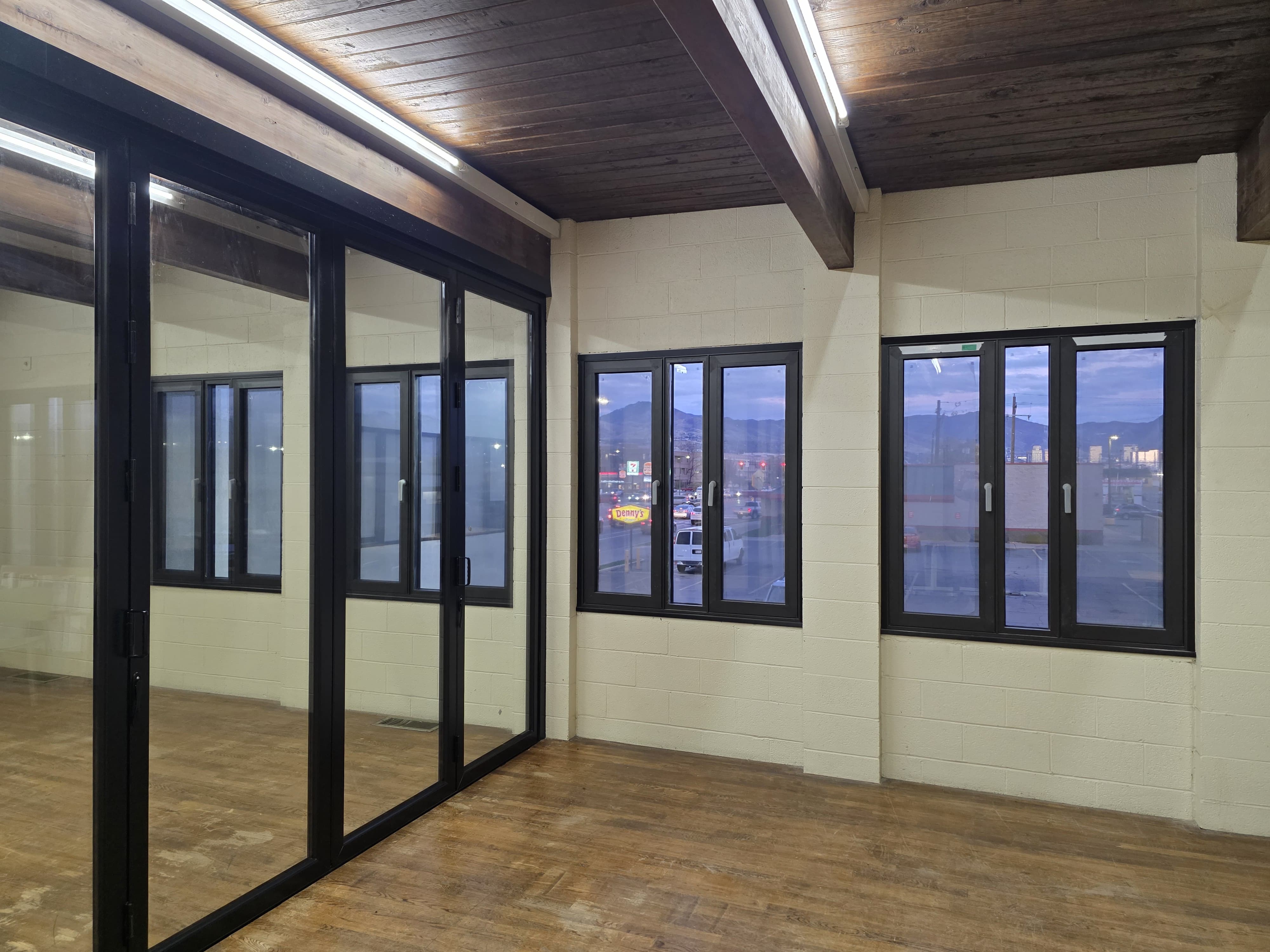
For custom villa windows, the stakes are higher than for standard commercial windows. Villa openings often include casement, sliding, tilt-and-turn, bay, bow, picture, and large fixed configurations. The architectural intent may require slim sightlines, large glass surfaces, or a specific color finish. A supplier with genuine OEM capability should be able to discuss these requirements in terms of tested systems and production tolerances, not just promises.
This is why the evaluation should separate marketing capability from manufacturing capability. Marketing capability is what a supplier says it can do. Manufacturing capability is what can be verified through production data, certificates, and completed installations.
2026 Market Context for Villa Window Procurement
Buyers evaluating villa windows and doors in 2026 are operating in a market shaped by stricter energy rules and stronger performance expectations. According to verified industry research, the global windows and doors market reached an estimated USD 211.04 billion to USD 229.90 billion in 2025, with projections pointing toward USD 363.23 billion by 2035. Asia-Pacific held roughly 44.6% of the global market in 2024. The aluminum windows and doors segment is also expanding at a CAGR of about 5.01%, with a projected market size of USD 119.86 billion by 2035.
At the same time, regulatory pressure is increasing. The 2024 International Energy Conservation Code requires metal frames for residential windows and doors to incorporate a thermal break, which directly affects energy efficient villa windows. U.S. ENERGY STAR Version 7.0 tightens U-factor thresholds to 0.22 in northern climate zones, pushing demand for triple glazing and thermally broken aluminum frames. For coastal luxury properties, the hurricane impact window market in the U.S. is projected to reach USD 28.65 billion by 2035, which means hurricane proof villa windows and impact resistant villa windows are moving from optional upgrades to project requirements.
For an OEM buyer, this market context creates a clear mandate: product specifications, certification coverage, and installation evidence must be checked before purchase. A thermally broken aluminum system with documented U-values is no longer a differentiator; it is a baseline expectation.

What OEM Capability for Villa Windows and Doors Should Include
OEM capability is not one single attribute. It is a combination of customization depth, production capacity, quality control, certifications, and commercial execution. Each element needs to be evaluated against the specific requirements of a villa project.
Customization: Size, Glass, Shape, and Color
The most basic requirement for custom villa windows is the ability to adjust the product to the project. Foshan Nanhai Edun Home Technology Co., Ltd. states that it provides OEM production services with customization options for size, glass, shape, and color. This is important for architectural features such as large fixed windows, multi-panel sliding walls, and special-shaped openings that cannot be satisfied by a standard catalog unit.
Glass selection is especially important. EDUN series products can be configured with Low-E triple glazing, such as 6+12+6+12+6 mm, while other EDUCE series use double-glazed insulating glass. The choice affects sound insulation, thermal performance, and safety. For soundproof villa windows, some EDUCE and EDUN systems list a sound insulation value of 37 dB. For energy efficiency, the EDUN 108 system is rated at Uw 1.2 W/m²·K and carries CSA Energy Star certification in the product record.
Production Capacity and Lead Time
OEM sourcing should be based on real production capacity, not estimated delivery dates. The company reports a factory area of 300,000 m², annual output of 2,000,000 m², and 1,200 employees. Its stated monthly production capacity for doors and windows is 80,000 m², with a typical production lead time of 15 days.
The export markets include the United States, Canada, Australia, Southeast Asia, the Middle East, and Africa. For a global villa buyer, this matters because the manufacturer already understands export packaging, documentation, and installation guidance. The company also states that after-sales support includes package transportation and package installation guidance.
Quality Control
Quality control is measured by how consistently a factory can reproduce performance. The manufacturer reports 100% manual quality inspection and has an R&D team of 30 engineers. It also reports 128 patent results. In practice, this means each batch should be checked against the same tolerances, and the factory should be able to show its inspection process rather than only claim compliance.
Material documentation also matters. The product records for EDUCE and EDUN series list Xingfa aluminum alloy, thermal break strips, EPDM sealing strips, and hardware from HOPPE, SIEGENIA, CMECH, GIESSE, or Roto depending on the series. These are specific, verifiable details that help an engineering team assess the system design.
Certification and Market Compliance
Certifications need to match the destination market. For North America, EDUCE holds a CSA Certificate of Compliance, certificate number 80232082, issued 2024-11-01. The certificate covers EDU108 series casement windows, EDU150 series sliding doors, and EDU80 series thermal break bi-fold doors under AAMA/WDMA/CSA 101/I.S.2/A440-17, CSA A440S1:19, and CSA A440.2:19.
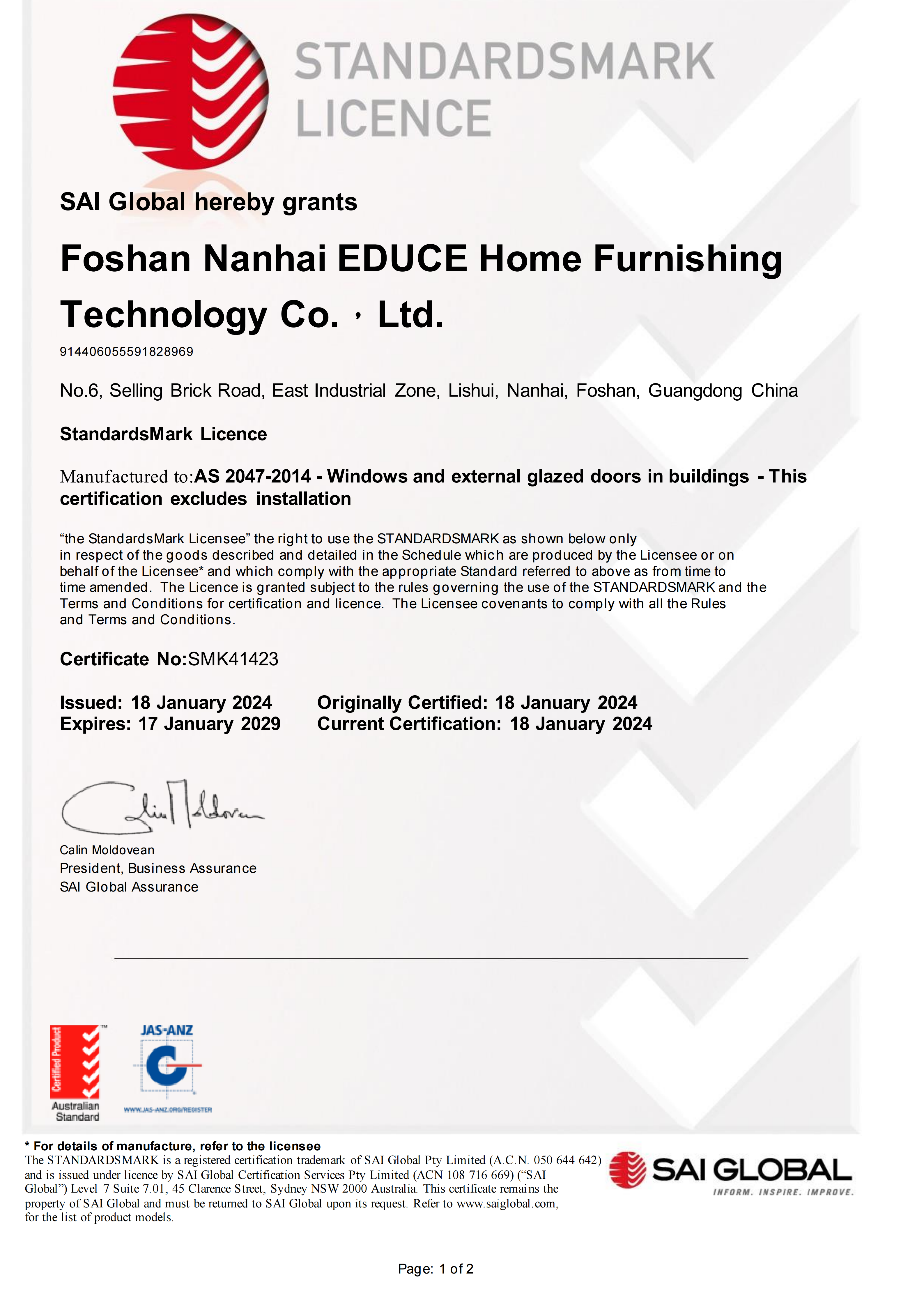
For Australia, the StandardsMark Licence SMK41423, issued by SAI Global Assurance under AS 2047-2014, covers YDPC120 Tilt and Turn Window and YDTM150 Aurora Heavy Duty Sliding Door. Some EDUCE product series also carry WERS Uw values, including configurations with Uw between 2.5 and 6.9 W/m²·K and an EDUCE 77 bi-fold door rated at Uw 1.7 W/m²·K. In addition, the company holds registered trademarks in Malaysia, Australia, and the UAE, which supports brand protection in export markets.
Commercial Terms and Execution Support
For villa projects, the commercial terms determine how smooth the execution will be. The stated minimum order quantity for villa customers is 15 m². Contractor minimums are 200 m² and 500 m². Delivery can be arranged under FOB or CIF terms, and payment is 50% by wire transfer with the balance settled before shipment. These are concrete terms that allow a buyer to plan cash flow and logistics.
How to Evaluate a Custom Villa Windows Manufacturer: Step-by-Step
The following process can be used during the evaluation and execution stages of an OEM villa windows purchase.
- Document the project conditions. Collect local building codes, wind load requirements, acoustic requirements, energy targets, and architectural drawings. This creates the technical baseline for supplier evaluation.
- Map performance values to tested series. Compare each required U-value, sound insulation level, water tightness value, and wind load resistance to a specific product series and configuration. Good products can be verified with numbers, not adjectives.
- Audit the factory evidence. Ask for production capacity, factory size, inspection process, and lead time. A supplier that can answer with specific figures, such as 80,000 m² monthly capacity and a typical 15-day lead time, is easier to evaluate than one that only gives general assurances.
- Request the relevant certificates. If the destination is North America, review the CSA certificate. If the destination is Australia, review the AS2047 StandardsMark Licence. Check that the certificate covers the product type you are buying, not just the company name.
- Review comparable installations. Look for projects with similar client type, climate, and scale. EDUCE has documented installations of 77 m² for villa owners, 238 m² for hotel clients, and 263 m² for a recreation center, across Australia, the UAE, Saudi Arabia, Indonesia, Malaysia, and the US.
- Confirm production schedule and shipping terms. Align the manufacturer's lead time with your project timeline. Confirm whether the terms are FOB or CIF, what the payment structure is, and how the goods will be packed for export.
- Execute with a defined first batch. For a villa project, the minimum order quantity of 15 m² can serve as a pilot batch. For contractors, the 200 m² or 500 m² minimums allow a controlled first order before larger phases.
Documented Installations: 77 m² to 263 m²
Project history is one of the strongest signals for an OEM supplier. The following cases are documented in the manufacturer's corpus and can be used as evaluation references.
Villa Owner Installations
A 77 m² installation was completed for villa owner clients in Australia, the UAE, Saudi Arabia, Indonesia, Malaysia, and the US. The project required corrosion-resistant profiles, energy-efficient thermal break technology, multi-layer sealing, customizable design, high-security hardware, and international compliance. The stated service life is at least 20 years.
Hotel Installations
A 238 m² installation was completed for hotel clients in Saudi Arabia and Indonesia. The results included enhanced sound insulation for guest comfort, improved thermal insulation to reduce energy consumption, durable low-maintenance performance, and compliance with local safety and environmental standards. The service life is stated as at least 20 years.
Recreation Center Installation
A 263 m² installation was completed for a recreation center client in the United States. The project reported superior sound insulation in busy urban conditions, high-efficiency thermal insulation, waterproofing and wind resistance, safety and stability under high wind pressure, aesthetic value, long-term durability, and easy cleaning and maintenance.
Supplier Capability Comparison: What Should Match on Paper and in the Factory
| Evaluation area | Reason it matters | Evidence to request from EDUCE |
|---|---|---|
| Customization depth | Non-standard villa openings require more than color changes | OEM production services; size, glass, shape, and color customization; villa MOQ of 15 m² |
| Production capacity | Real capacity protects project lead time | 300,000 m² factory; 80,000 m² monthly capacity; 15-day typical lead time |
| Quality control | Consistent performance depends on repeatable inspection | 100% manual quality inspection; 30-engineer R&D team; 128 patent results |
| Certifications | Compliance affects project approval and insurance | CSA certificate 80232082; AS2047 StandardsMark SMK41423; WERS values; trademark registrations in Malaysia, Australia, UAE |
| Project evidence | Past installations show how products behave in real conditions | 77 m² villa project; 238 m² hotel project; 263 m² recreation center project |
| Commercial terms | Clear terms reduce payment and logistics friction | MOQ 15 m² villa / 200–500 m² contractor; FOB/CIF; 50% T/T before shipment; package installation guidance |
Frequently Asked Questions
Which certifications should a buyer check for villa windows and doors?
The minimum set depends on the destination market. For North America, the CSA Certificate of Compliance 80232082 covers EDU108 casement windows, EDU150 sliding doors, and EDU80 thermal break bi-fold doors under AAMA/WDMA/CSA 101/I.S.2/A440-17, CSA A440S1:19, and CSA A440.2:19. For Australia, StandardsMark Licence SMK41423 covers YDPC120 Tilt and Turn Window and YDTM150 Aurora Heavy Duty Sliding Door under AS 2047-2014. The company also holds registered trademarks in Malaysia, Australia, and the UAE.
Can the manufacturer customize villa windows and doors beyond standard sizes?
Yes. The manufacturer provides OEM production services and accepts customization for size, glass, shape, and color. Glass configurations can range from double-glazed insulating glass to Low-E triple glazing, depending on the product series and project requirements. For villa projects, the minimum order quantity is 15 m², which makes custom fabrication practical for individual residences.
What are the MOQ and payment terms for OEM villa windows and doors?
Villa orders have a minimum of 15 m². Contractor minimums are 200 m² and 500 m². Delivery can be arranged under FOB or CIF terms. Payment is 50% by wire transfer, with the remaining amount settled before shipment. These terms should be confirmed with the supplier before the purchase order is issued.
What evidence should a buyer request before a large villa window order?
A buyer should request production capacity figures, the factory quality inspection process, the relevant product certificates, and documented project references. In the EDUCE case, the available evidence includes an 80,000 m² monthly production capacity, a 15-day typical lead time, 100% manual quality inspection, the CSA and AS2047 certificates, and installations of 77 m², 238 m², and 263 m² across multiple countries.
What is the typical lead time for an OEM villa windows order?
The typical production lead time is 15 days, based on the manufacturer's stated capacity of 80,000 m² per month. Actual lead time may change with glass configuration, project size, certification requirements, and logistics. Buyers should confirm the schedule before placing the order by sending the window layout and glazing specification to the factory.
Conclusion
OEM villa windows and doors is an evidence-based purchasing decision. The supplier should be able to demonstrate customization depth, real production capacity, repeatable quality control, applicable certifications, and documented installations. These factors matter more than marketing language because they determine whether a villa project can meet its architectural, energy, and delivery goals.
EDUCE, manufactured by Foshan Nanhai Edun Home Technology Co., Ltd., can support OEM evaluations with specific data: a 300,000 m² factory, 80,000 m² monthly capacity, a typical 15-day lead time, CSA and AS2047 certifications, and project installations ranging from 77 m² to 263 m² across multiple markets. For a buyer moving from evaluation to execution, the next step is to test these claims against a real project schedule.
Next step: If you have a villa project under evaluation, send your window schedule, glass specification, and target market to info@edunwindows.com or contact WhatsApp +86 18988630128 to confirm OEM feasibility, certification coverage, and lead time.
Download the company profile: Edun Group Introduction PDF
Have Questions or Need More Details?
Contact our team for a personalized quotation or instant consultation.
Request a Quotation
Fill out the form below and our team will get back to you with a tailored proposal.
WhatsApp Direct Chat
Prefer to chat in real-time? Message us on WhatsApp for instant assistance & quick answers.
- Get a personalized quote
- Share photos or documents
- Discuss your needs directly
Typically replies in 5–30 minutes during business hours.