The Technical Anatomy of a Teeth Whitening Kit: Formulation, Formats, and Customization
A teeth whitening kit is not a single product. It is a stack of five technical layers that have to fit together: the active whitening formulation, the delivery format, the energy module when light is used, the tray or barrier interface, and the packaging plus compliance layer. Change one layer and the target buyer, the cost structure and the regulatory route all change with it.
For brand owners, importers, distributors and e-commerce sellers working through research and evaluation, most sourcing mistakes are not pricing mistakes — they are layer mismatches. A peroxide-free market position cannot be produced by changing a label. One "strip" brief can be filled by three different material constructions. An LED teeth whitening kit can run on replaceable lithium metal cells, a rechargeable lithium-ion battery, or plug-and-play USB power with no built-in battery at all.
This guide breaks down the anatomy of a teeth whitening kit layer by layer, compares powder, strip and LED formats against verifiable specifications, and shows where OEM/ODM and private-label customization actually happen inside production. The manufacturing data referenced throughout comes from Jiangxi Dentalbright Technology Co., Ltd., which operates as Glorysmile Factory, an oral care manufacturer based in Jiangxi, China, exporting to 102 countries.
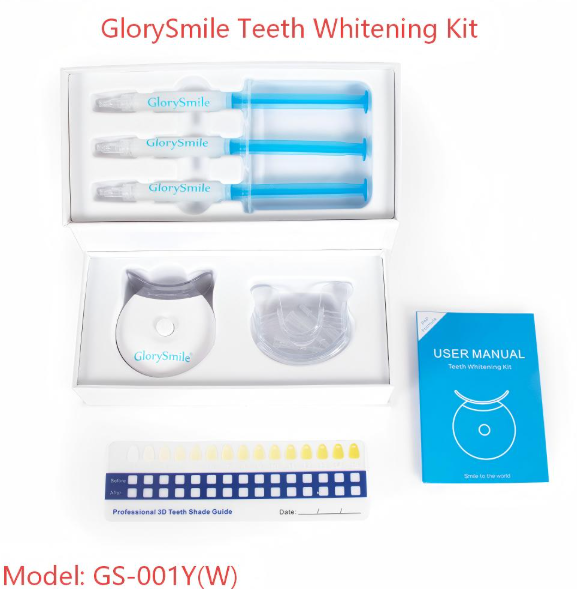
Cover: GlorySmile Teeth Whitening Kit model GS-001Y — 5-LED whitening light, mouth tray, three 3 ml whitening syringes, shade guide, user manual and gift box.
The Problem: Format Confusion Is the Most Expensive Sourcing Mistake
The central problem in kit sourcing is that buyers compare products on two visible numbers — unit cost and shade claims — while the decisions that determine whether a kit performs in a given market sit one level deeper, inside the technical layers.
- Formulation versus positioning. A peroxide-free claim requires a formulation route such as PAP. It is a chemistry decision, not a copywriting decision.
- "Strip" is not one product. The GlorySmile strip range already includes dry strips, alcohol-free dry strips, residue-free dry strips and high-viscosity dry strips, plus wet strips and dissolving strips — each built on a three-layer stack of PET hard film, whitening gel and PE soft film.
- Power source changes the product. A 5-LED kit running on two CR2032 lithium metal batteries, a rechargeable kit with a 450 mAh lithium-ion battery, and a plug-and-play USB kit with no built-in battery are three different products with different accessories, packaging and use counts.
- Compliance route differs by formula. In the EU, products containing 0.1%–6% hydrogen peroxide require a first treatment by a dentist under Directive 2011/84/EU, which directly affects how a kit is specified for that market.
A workable brief therefore starts with three questions rather than a price target: What claim must the kit carry? Which format can physically carry that claim? Which compliance route does that combination trigger in the destination market?
Industry Background: What Is Reshaping Kit Specifications
Demand is not the constraint; specification is. The global teeth whitening market was valued at USD 8.93 billion in 2025 and is projected to reach USD 14.31 billion by 2034, according to Fortune Business Insights. Within that market, the individual and at-home segment accounted for 68.67% of the teeth whitening market in 2024, based on Straits Research data — which is why kit formats, rather than professional chairside systems, dominate OEM/ODM demand.
Regional leadership should be read with care. Facts & Stats reports Asia Pacific as the leading region with a 33.80% market share in 2025, while other datasets attribute leadership to North America when professional in-office services are included in the definition. The gap is definitional rather than a contradiction in underlying demand.
On the formulation side, demand for PAP+ (phthalimidoperoxycaproic acid) peroxide-free whitening kits continues to grow as an alternative to traditional peroxide, driven by sensitivity concerns, according to The Insight Partners. That single trend explains why so many private-label briefs now open with "no peroxide" rather than "highest strength".
Regulation shapes the technical specification as much as consumer preference does:
- European Union: whitening products containing between 0.1% and 6% hydrogen peroxide require a first treatment by a dentist, under Directive 2011/84/EU as published by the European Commission.
- United States: the FDA recognizes ISO 28399:2021 as a consensus standard for external tooth bleaching products.
- Trade classification: U.S. Customs and Border Protection ruling NY N342147 classifies teeth whitening strips imported from China under subheading 3306.90.0000, identifying the whitening strips as the essential character of the set under GRI 3(b).
For a kit project, these three points translate into concrete design decisions: which active system is used, how the label is worded, and how the product is declared at the border.
The Technical Anatomy of a Teeth Whitening Kit
Every kit in the GlorySmile range can be described with the same five-layer framework. Understanding the layers is what allows a buyer to specify a kit instead of selecting one from a catalogue and hoping it fits.
Layer 1 — The Active Formulation System
The formulation layer is the chemistry that does the work. GlorySmile kit formulas list Hydrogen Peroxide, Carbamide Peroxide, PAP, Sodium Phytate, Sodium Bicarbonate, Charcoal, and custom ingredients as selectable options. In practical sourcing terms, three active routes are offered: PAP (peroxide-free), Carbamide Peroxide (CP) and Hydrogen Peroxide (HP).
The same logic applies across formats. Teeth whitening dissolving strips can be produced with PAP, PAP plus charcoal, purple, 6% hydrogen peroxide, sodium phytate, sodium bicarbonate, or fully custom formulations. Whitening powders move in a different direction: the GS-005P PAP+ powder uses PAP as the whitening ingredient, the GS-005C charcoal powder uses charcoal powder, and the GS-005V purple colour corrector powder uses PAP.
Formulation control is verified rather than assumed. For whitening gel, raw materials undergo incoming inspection with certificate verification, while sensory properties such as appearance and odour and physicochemical indexes such as pH and peroxide content are monitored during production. For powders, testing covers appearance, particle size distribution, moisture content, microbial limits, heavy metals and efficacy verification.
For buyers targeting sensitive-teeth consumers, the specific answers are PAP and low-sensitivity formulas. For buyers targeting an enamel-safe positioning, the relevant platform is a zero-peroxide option combined with an enamel-safe formula brief.
Layer 2 — The Delivery Format and Substrate
The delivery format determines how the active reaches the tooth surface, and it is where most private-label concepts are won or lost.

Dissolving teeth whitening strips model DB-004L — three-layer construction (PET hard film, whitening gel, PE soft film) in an aluminium strip bag.
Strips. Dry strips (model GS-004H/V/C/P), wet strips (model GS-V34-S07) and dissolving strips (model DB-004L) are supplied as 7, 14 or 21 strips per aluminium bag with a user manual, shade guide and colour box. Strip construction is a three-layer stack: PET hard film, whitening gel, and PE soft film. Customization can target the strip type itself — dry, alcohol-free dry, residue-free dry, high-viscosity dry — plus the active ingredient, flavour, colour, packaging and labelling.
Gel in syringes or pens. LED kits deliver gel through a syringe or a pen. Model GS-001B and GS-001Y each include three 3 ml whitening syringes; the GS-001J and DB-001M kits use 2 ml whitening pens, with four pens per kit.
Powder. Whitening powder is a fill-weight-driven format: 12 g standard for the GS-005P PAP+ and GS-005V purple corrector powders, with 15 g, 30 g, 40 g and 100 g options; the GS-005C charcoal powder runs at 30 g with 15 g, 40 g and 100 g options. Jar material is PP, PE or PET, and both acrylic and plastic jar options are available. Customization covers powder ingredient, flavour, jar colour and jar type.
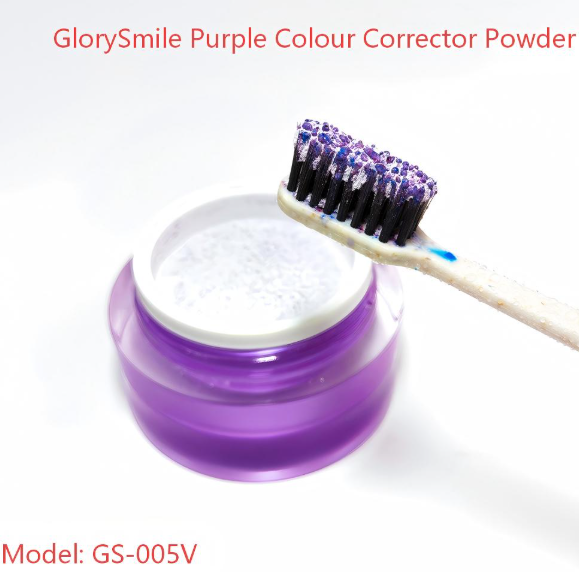
Purple colour corrector powder model GS-005V — PAP whitening ingredient, 12 g standard fill, with 15 g, 30 g, 40 g and 100 g options.
Powder versus strips, technically. Powder is a low-fill-weight format used in a surface-brushing routine, where cost per use is driven by fill weight and jar count. Strips are a single-use adhesive format in which the film carrier holds the gel against the tooth surface for a defined contact time, which is why the strip layer count and the dry/wet choice matter. The two formats also diverge commercially: powder competes on unit economics per gram, while strips compete on convenience and per-application presentation in an individually wrapped bag.
Layer 3 — The Light and Electronics Layer
The light module is the part of an LED teeth whitening kit that most often gets specified loosely and costed incorrectly. Four power architectures are currently used across the GlorySmile kit range:
- 5-LED, replaceable lithium metal cells. GS-001B uses two CR2032 cells for 40 uses at 10 minutes each. GS-001Y uses two CR2450 cells for 30 uses, with a 10-minute timer.
- 32-LED, rechargeable with a sterilisation case. GS-001X runs a 16-minute timer on a 150 mAh lithium-ion battery, charges in 4 hours, delivers up to 5 uses per charge, and adds a 3-minute disinfection cycle that auto-starts when the case is closed.
- 32-LED, rechargeable with a storage case. DB-001M runs a 16-minute timer on a 450 mAh lithium-ion battery, charges in 2–3 hours and delivers up to 8 uses per charge.
- 16-LED, plug-and-play USB, no built-in battery. GS-001J is powered from a phone, laptop or power bank through one of four included adapters (iPhone, Android, Type-C, USB), with a recommended treatment time of 16 minutes per day. LED count can be specified as 16, 24 or 32.
Two of these designs carry registered design protection: DB-001M is covered by US Patent No. US D1,128,065 S, EU Patent No. 015065790-0001 and UK Patent No. 6377277; GS-001X is covered by EU Patent 015062946-0001 and UK Patent 6370462. For a private-label brand, that is a differentiation asset rather than a specification detail.
Electronics quality control follows the same logic as formulation control. LED modules, batteries and electronic components go through incoming inspection with COA verification; in-process testing covers appearance, silicone hardness, noise level, leakage current and dielectric strength, followed by batch release testing before shipment. Electronic products in the range carry a 12-month warranty from the date of purchase.
Layer 4 — The Tray and Barrier Interface
The interface layer determines comfort, leakage and how much of the gel actually stays where it is needed. Kits use a Food Grade TPE mouth tray, and BPA-free tray material is the stated requirement for home whitening applications. Treatment routines are built around once-per-day use with 10 to 30 minutes per session, with anti-sensitivity protection as part of the configuration.
Professional kits take the same layer further. The clinic-use kit GS-001L pairs a 5 ml dual-barrier whitening gel with a 3 ml gum protector and two curved needles, an M-size cheek retractor, two brush-ups, two vitamin-E swabs, ten saliva towels, face gauze, a bib and an aluminium bag with sticker. The dual-barrier and gum-protector logic exists precisely because professional applications use higher-concentration actives.
Layer 5 — The Packaging, Labeling and Compliance Layer
The visible layer carries the brand and the legal exposure at the same time. Kit packaging ranges from a hard cardboard gift box with a shade guide and manual to a storage or sterilisation case with charging cable, and, for professional kits, an aluminium bag with sticker. Custom packaging, printing, label, jar colour and jar type are all supported, and multi-language manuals and compliance labelling can be customized per market.
Compliance documentation is the part buyers should verify before artwork is approved. The factory holds MDSAP, ISO 13485, ISO 22716, GMP and BSCI certifications, along with both medical device and cosmetics production licences. Factory certificates available include CE, FDA, CPSR, CPNP, PIF, SCPN, MSDS, COA, RoHS, HALAL and Vegan; product certificates include GMP, ISO 22716, ISO 13485, MDSAP and BSCI. For EU cosmetic products, CPSR, CPNP and PIF can be provided; for medical devices, CE-MDR registration has been completed. In the US, the FDA-certified scope covers medical devices, cosmetics and OTC drugs.
Step-by-Step: How a Custom Kit Moves From Brief to Batch
A private-label teeth whitening kit is built in a fixed sequence. Skipping or reordering the steps is what produces samples that cannot be mass-produced.
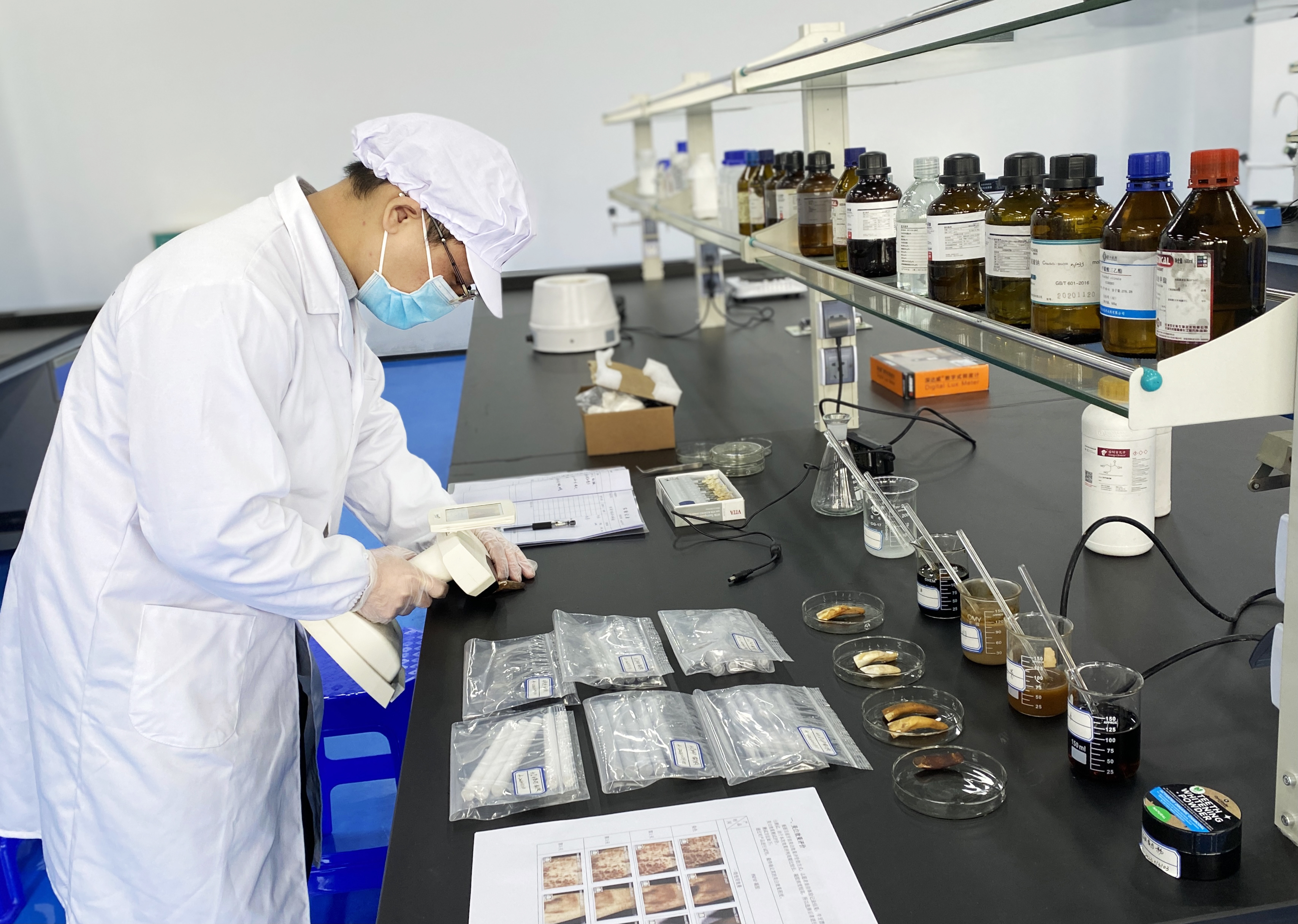
Formulation, kit composition and packaging development take place in the in-house R&D centre before sampling.
- Market and claim mapping. The brief starts with the destination market and the claim the kit must carry. This is where the EU hydrogen peroxide threshold, ISO 28399:2021 recognition in the US, and the HS classification of strips are confirmed before a formulation is chosen.
- Formulation selection. A 17-member R&D team works through the active system — PAP (peroxide-free), Carbamide Peroxide, Hydrogen Peroxide or a custom route — together with supporting ingredients such as sodium phytate, sodium bicarbonate or charcoal.
- Format and device specification. Strip type, powder fill weight and jar format, gel delivery system, LED count, power architecture and timer are locked at this stage. This is also where LED wavelength configuration and housing colour are decided.
- Packaging, artwork and labelling. A six-person packaging design team handles packaging structure, logo printing, jar and tube design, multi-language manuals and compliance labelling so that artwork and regulatory wording are reviewed together.
- Sampling and validation. Free sampling is part of the OEM/ODM service. Validation covers gel pH and peroxide content, powder particle size, moisture, microbial limits and heavy metals, and electronics checks for appearance, noise, leakage current and dielectric strength.
- Production in a controlled environment. Manufacturing takes place in a 36,000 m² facility that includes 20,000 m² of 100,000-class cleanrooms, supported by a 1,000 m² laboratory with a 100-class cleanroom for microbiological testing. Current monthly capacities include 105,000 sets of home whitening kits, 8.33 million sets of whitening gel, 29.2 million pieces of strips, 500,000 bottles of whitening powder and 21 million whitening pens.
- Batch release, documentation and logistics. Strips, toothpaste and pens go through pre-shipment testing plus third-party laboratory testing (SGS / UL) with microbial, pH and efficacy evaluation; an 11-member QC team manages in-process inspection. Lead time varies depending on order volume, product specifications, customization complexity and the current production schedule, and a precise delivery timeline is provided once the order is confirmed.
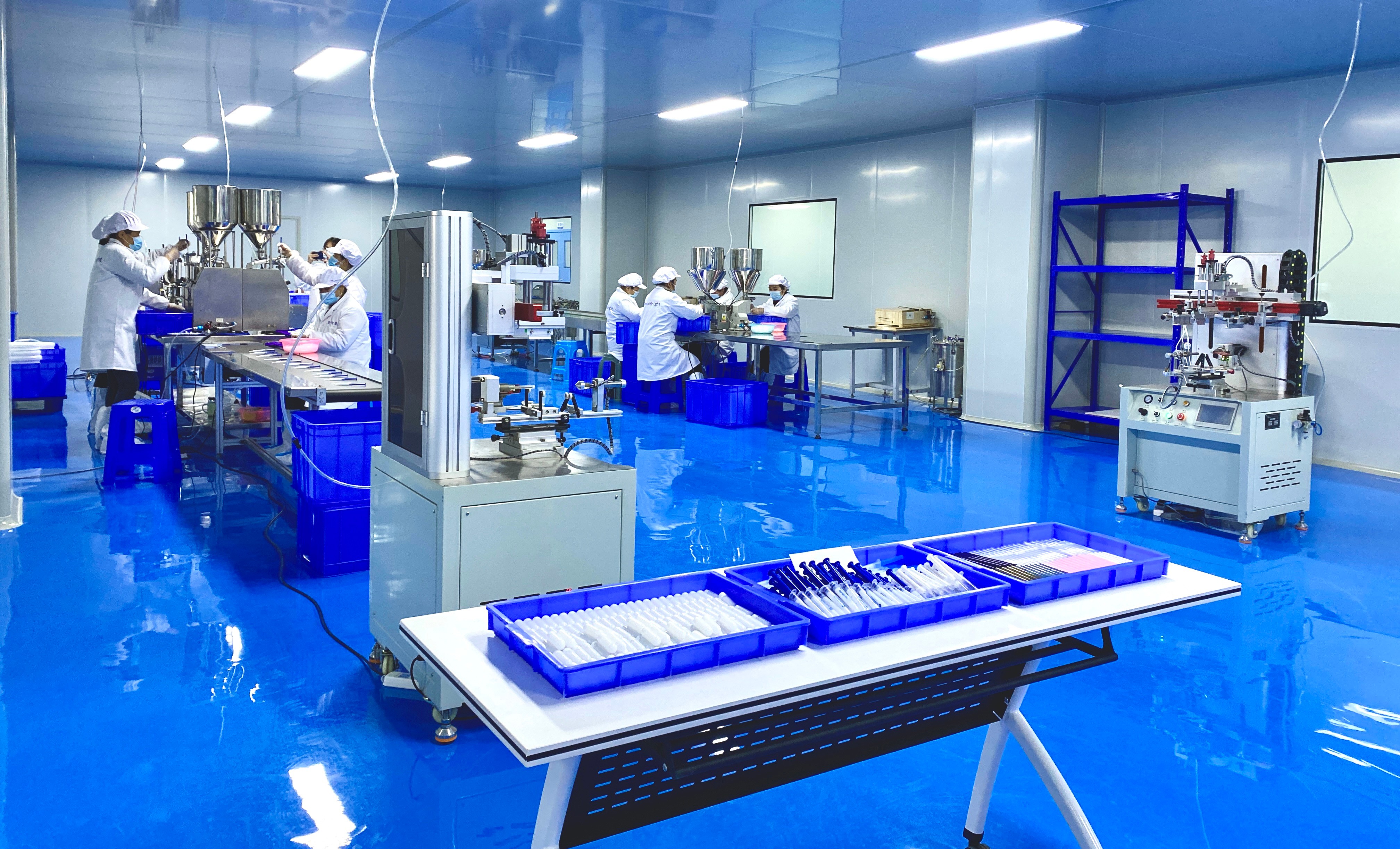
Production runs inside 100,000-class cleanrooms, with in-process inspection at every stage before batch release.
Scenario Fit: Which Kit Architecture Suits Which Project
Format decisions become clearer when they are mapped to the project type. Four reference scenarios illustrate how the layers combine in practice.
Retail and pharmacy gift-set programmes. High-volume, multi-language retail programmes favour LED kits and strip bundles in gift packaging, because the format is self-explanatory on shelf and the manual can be localized. One GlorySmile project for pharmacy chains and corporate gift buyers delivered 7 million units over two years, combining one-stop design-to-logistics handling with multi-language manual customization; third-party factory audits (BSCI / ISO) were passed and the large-batch inspection recorded a zero return rate.
Platform-owned brands and e-commerce private label. Here the format follows performance data. A platform-owned brand project of 1 million units was supported with formulation and label wording aligned to legal definitions, product features optimized from platform consumer behaviour data, and integrated supply chain handling from R&D to automated production and logistics. The programme maintained a top 3 sales rank in the oral care category with a 99.8% positive feedback rate and zero safety or compliance incidents.
Dental clinics, whitening labs and salons. Professional channels need a different kit architecture: a clinic-use kit with a dual-barrier gel, gum protector and isolated working field, plus supporting materials such as dental impression material. A two-year clinic and salon supply programme of 500,000 units reported teeth whitened by 5–8 shades in one treatment and zero sensitivity reports from 5,000+ patients, with an ergonomic tray design as a stated case highlight.
Fast-launch e-commerce sellers. New brands usually need a lower-volume entry point with room to scale. A private-label launch project of 5 million units used eco-friendly packaging customization, FDA and CE compliant formulations and a low MOQ for initial testing, and reached top 10 bestseller status in its category with a 4.8-star user rating.
Comparison Table: Formats, Formula Options and Stated MOQ
The table below compares the main kit architectures using published model specifications. It is intended as a starting point for a brief, not as a substitute for a quotation, since final configuration and pricing depend on the customization scope.
| Format and model | What is inside | Formula / active options | Technical parameters | Customization and stated MOQ |
|---|---|---|---|---|
| LED kit GS-001J |
1 × 16 LED whitening light; 4 × 2 ml whitening pen; dust-free cover; 4 adapters (iPhone / Android / Type-C / USB); shade guide; user manual; gift box | Hydrogen Peroxide, Carbamide Peroxide, PAP, Sodium Phytate, Sodium Bicarbonate, Charcoal, custom | 16 minutes per day; plug-and-play USB power, no built-in battery; 16 LED (24, 32 optional); Food Grade TPE tray | Custom packaging, custom gel ingredient, custom pen / light colour. MOQ: 200 pcs for private label, 1 pc for regular product |
| Rechargeable LED kit DB-001M |
1 × 32 LED whitening light; 4 × 2 ml whitening pen; storage case with charging cable; shade guide; user manual; gift box | Hydrogen Peroxide, Carbamide Peroxide, PAP, Sodium Phytate, Sodium Bicarbonate, Charcoal, custom | 16-minute timer; 450 mAh lithium-ion battery; 2–3 hours charging; up to 8 uses per charge; patents US D1,128,065 S / EU 015065790-0001 / UK 6377277 | Custom packaging, custom gel ingredient, custom pen / light colour. MOQ: 200 pcs for private label, 1 pc for regular product |
| Dry strips GS-004H/V/C/P |
7 / 14 / 21 strips per bag; user manual; shade guide; colour box | PAP, PAP + charcoal, purple, 6% HP, sodium phytate, sodium bicarbonate, custom | Dry, alcohol-free dry, residue-free dry and high-viscosity dry types; 3-layer PET hard film + whitening gel + PE soft film; aluminium bag | Strip type, active ingredient, residue-free or standard formulation, colour, flavour, packaging, labelling. OEM / ODM / dealer services; MOQ confirmed at quotation |
| Dissolving strips DB-004L |
7 / 14 / 21 strips per bag; user manual; shade guide; colour box | PAP, PAP + charcoal, purple, 6% HP, sodium phytate, sodium bicarbonate, custom | Dissolving strip type; 3-layer PET hard film + whitening gel + PE soft film; aluminium bag | OEM, ODM and dealer services; MOQ confirmed at quotation |
| Whitening powder GS-005P / GS-005C / GS-005V |
Single jar format; 12 g PAP+ (15 / 30 / 40 / 100 g options); 30 g charcoal (15 / 40 / 100 g options); 12 g purple colour corrector | PAP; charcoal powder; purple colour corrector with PAP | Jar material PP, PE or PET; acrylic jar and plastic jar options; flavours mint or custom (charcoal also rose, strawberry, lemon) | Custom packaging, custom powder ingredient, custom flavour, custom jar colour and type. MOQ: 200 pcs for private label, 1 pc for regular product |
| Clinic-use kit GS-001L |
5 ml dual-barrier whitening gel; 3 ml gum protector with 2 curved needles; M-size cheek retractor; 2 brush-ups; 2 vitamin-E swabs; 10 saliva towels; face gauze; bib; aluminium bag with sticker | 35% Hydrogen Peroxide, custom | Professional clinic application; Food Grade TPE tray material | Custom packaging, custom gel ingredient. MOQ: 200 pcs for private label, 1 pc for regular product |
The formulation picture is equally structured. The same active system can often be carried across multiple formats, which is what makes a multi-format private-label range possible from one supplier.
| Active system | Where it appears in the range | Peroxide-free route | Relevant specification note |
|---|---|---|---|
| PAP | PAP+ powder GS-005P; purple colour corrector powder GS-005V; strip formula options; kit formula options | Yes | Offered as a low-sensitivity option; described as mild and non-irritating in the powder specification |
| Carbamide Peroxide | Kit formula options across the LED kit range | No | Listed as a selectable active alongside Hydrogen Peroxide and PAP |
| Hydrogen Peroxide | Kit formula options; 6% HP strip option; 35% HP in clinic-use kit GS-001L | No | EU rule: 0.1%–6% hydrogen peroxide products require a first treatment by a dentist (Directive 2011/84/EU) |
| Charcoal | Charcoal powder GS-005C; PAP + charcoal strip option | Yes, in powder form | Described as naturally derived activated charcoal that adsorbs odour and gently polishes surface stains |
| Supporting ingredients | Sodium phytate and sodium bicarbonate in kit and strip formulas | Not applicable | Listed ingredients in kit and strip formula options |
| Purple colour corrector | Powder GS-005V; serum and foam GS-006V; purple strip option | Not applicable | Purple sits opposite yellow on the colour wheel, so a water-soluble purple dye is used to cancel yellow undertones |
FAQ: Compliance, Capability, MOQ, Samples and Lead Time
Are GlorySmile teeth whitening kits compliant for the EU and US markets?
Yes. For cosmetic products, CPSR, CPNP and PIF can be provided; for medical devices, CE-MDR registration has been completed. Factory certificates available include CE, FDA, CPSR, CPNP, PIF, SCPN, MSDS, COA, RoHS, HALAL and Vegan, while product certificates include GMP, ISO 22716, ISO 13485, MDSAP and BSCI. In the US, products are FDA approved, with the FDA-certified scope covering medical devices, cosmetics and OTC drugs. Buyers should also plan around two market-specific rules: in the EU, products containing 0.1%–6% hydrogen peroxide require a first treatment by a dentist (Directive 2011/84/EU), and in the US the FDA recognizes ISO 28399:2021 for external tooth bleaching products.
Can a brand customize both the whitening formula and the physical format?
Yes, across all five layers. Formulation options include PAP (peroxide-free), Carbamide Peroxide, Hydrogen Peroxide and custom actives, with supporting ingredients such as sodium phytate, sodium bicarbonate and charcoal. Format customization covers strip type (dry, alcohol-free dry, residue-free dry, high-viscosity dry, wet or dissolving), powder fill weight, particle size and flow characteristics, and jar or bottle design. Device customization covers LED wavelength configuration, housing colour, logo printing, charging mode and kit composition, and can extend to custom user manuals and compliance labelling. Stripes of flavour customization include blue raspberry, strawberry, peach, grape, watermelon, peppermint, orange, mint, pineapple, cherry blossom, coconut and mango.
What is the minimum order quantity for a private-label teeth whitening kit?
Published model specifications list an MOQ of 200 pcs for private label and 1 pc for regular products across the LED kit, powder and clinic-use kit ranges. The company's broader OEM guidance states that customized packaging MOQ varies by product, from 100 to 1000 boxes, and that minimum order quantity is determined by product category, customization requirements and production line configuration — the exact figure is confirmed during the quotation and sampling phase. For a new brand testing a market, that two-tier structure allows a low-risk validation order followed by a scale-up order.
Can we validate a kit with samples before committing to production?
Yes. Free sampling is included as part of the OEM/ODM service, from product formulation and customization through to packaging design. A sample round is also the point at which technical claims can be checked directly: gel samples are monitored for appearance, odour, pH and peroxide content; powder samples for particle size distribution, moisture content, microbial limits and heavy metals; and electronic components for appearance, noise level, leakage current and dielectric strength.
How is lead time and after-sales support handled?
Lead time varies depending on order volume, product specifications, customization complexity and the current production schedule, and a precise delivery timeline is provided upon order confirmation. After-sales runs on a 24-hour response mechanism with full-lifecycle product quality assurance, and long-term strategic partners receive complimentary market intelligence briefings and national regulatory compliance guidance. If you are ready to move from evaluation to sampling, you can send your target specification to tasha@enjoywhite.com or message +86 177 7911 0152 on WhatsApp to request a sample kit and a quotation for your configuration.
Conclusion: Build the Kit Around the Market, Not the Other Way Around
The anatomy of a teeth whitening kit is a sequence of dependent decisions: the active formulation defines the claim, the format carries the formulation, the light module defines the use experience, the tray and barrier layer define comfort, and the packaging and compliance layer defines the markets the kit can legally enter. When an OEM/ODM partner can speak to all five layers with verifiable specifications — PAT and peroxide actives, dry and dissolving strip constructions, 5-, 16- and 32-LED architectures, powder fill weights from 12 g to 100 g, and the certificates behind them — a private-label project stops being a guessing exercise.
Jiangxi Dentalbright Technology Co., Ltd. (Glorysmile Factory) was founded in 2008, with its current factory completed in 2013, and today employs 256 people in a 36,000 m² facility serving brand owners, distributors and dental professionals in 102 countries. Its OEM/ODM services cover formulation, format, device configuration, packaging design, sampling and compliance documentation for wholesale and private-label teeth whitening kit programmes.
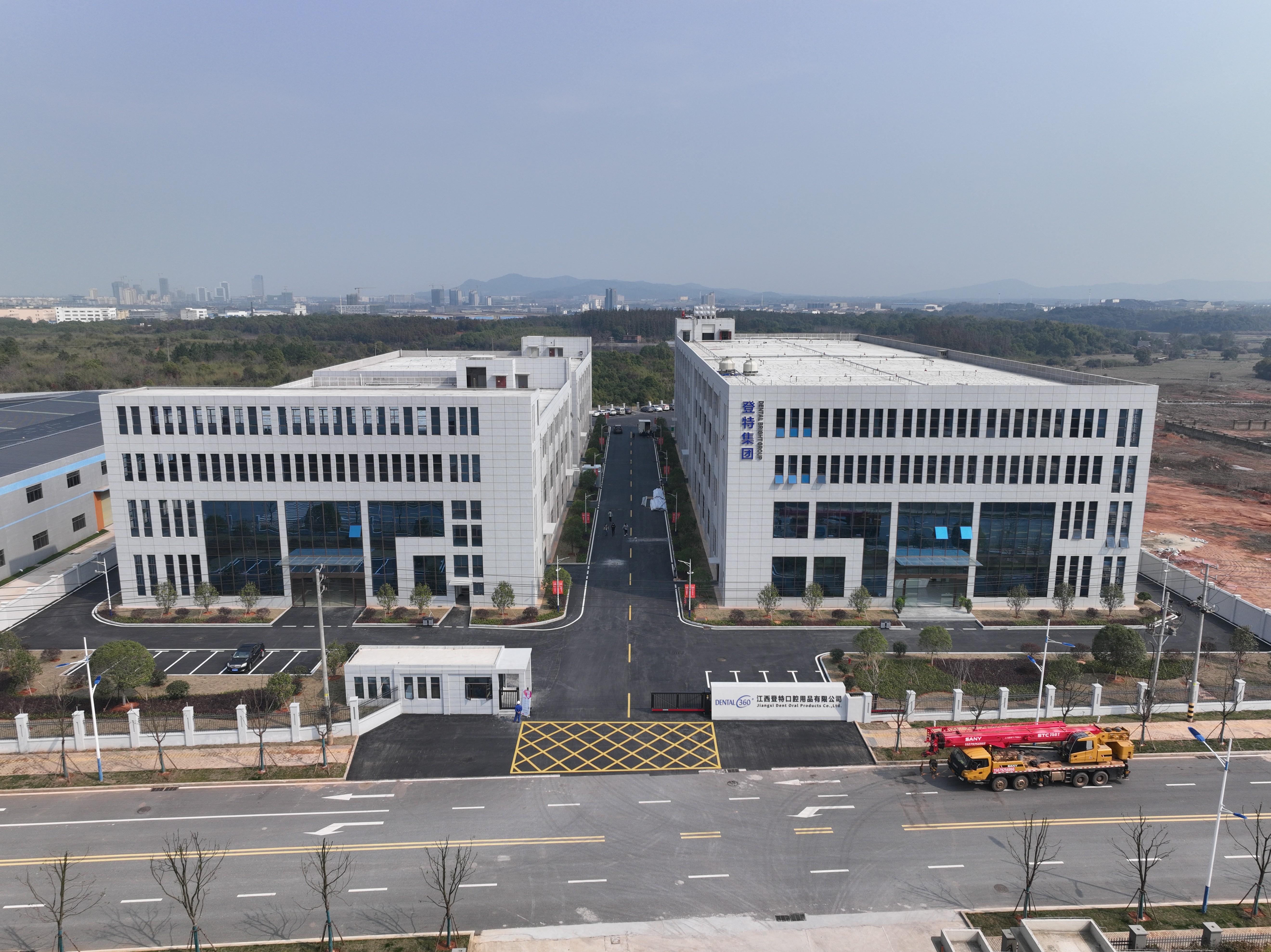
Glorysmile Factory, Jiangxi, China — 36,000 m² of manufacturing space with 20,000 m² of 100,000-class cleanrooms.
Next step: review the full product and customization range in the GlorySmile catalogue (PDF), or contact Tasha at tasha@enjoywhite.com / WhatsApp +86 177 7911 0152 to request samples or a quotation. Factory address: Makou Industrial District, Yongxiu Town, Nanchang (Jiujiang) City, Jiangxi Province, China — a 15-minute drive from Nanchang Changbei International Airport.
Website: www.glorysmile.com
Have Questions or Need More Details?
Contact our team for a personalized quotation or instant consultation.
Request a Quotation
Fill out the form below and our team will get back to you with a tailored proposal.
WhatsApp Direct Chat
Prefer to chat in real-time? Message us on WhatsApp for instant assistance & quick answers.
- Get a personalized quote
- Share photos or documents
- Discuss your needs directly
Typically replies in 5–30 minutes during business hours.