
All-Day Hot Water vs. Auxiliary Heating: Solar Water Heater Configurations for Hotels
A hotel does not buy a solar water heater in the abstract. It buys a configuration: a defined collector field, a defined storage volume, a defined circulation and backup strategy, and a defined set of duties the system must carry every day for years. The first duty is almost always all-day domestic hot water (DHW) for guest rooms and public bathing areas. The second duty — whether the same solar thermal system should also support auxiliary regional heating — is where hotel projects diverge, and where collector selection, tank capacity and capital budget change.
This comparison uses verified product and project data from Kesun Solar — Zhejiang Kesun New Energy Co., Ltd., a solar water heater manufacturer founded in 2009 in Haining, Zhejiang Province, China, operating a 42,000 m² manufacturing facility with 130 employees and 15 engineers. The article is written for hotel owners, procurement managers and project engineers who are in the research and evaluation stage and need to decide which configuration priority their building actually requires.
KEY TAKEAWAYS
- The configuration decision is driven by the duty list, not by the brand of the collector.
- All-day DHW priority favours storage-led sizing plus a heat-pipe or flat plate collector field matched to the roof.
- Adding auxiliary regional heating raises collector count and storage demand and should be decided before the roof layout is fixed.
- A documented 80-room Southeast Asian hotel case reached a reduction of over 40% in electricity and gas costs with a service life of more than 15 years.
- Procurement parameters are fixed: minimum order 1 × 40 ft container, 20–35 day lead time, 25,000 units/month capacity, OEM/ODM available.
 Indirect flat plate configuration: an enamel-coated storage tank paired with flat plate collectors, one of the two main routes for hotel all-day DHW.
What the Two Configuration Priorities Actually Mean
All-day domestic hot water priority means the solar field and storage are planned around a continuous draw pattern: guest-room bathrooms that peak in the morning and evening, plus public bathing areas that can run at a different rhythm. The system's job is to keep constant-temperature hot water available, with an electric heater or a heat pump providing backup and compensation when solar input is insufficient.
DHW plus auxiliary regional heating means the same solar generation is also expected to support auxiliary heating for parts of the property. In the verified Kesun hotel case, the system provides all-day domestic hot water for hotel guest rooms and public bathing areas and supports auxiliary regional heating, replacing traditional electric and gas heating equipment.
In the technical framing used by the application data, the equipment serves as a heat generation and storage unit that supplies hot water and temperature regulation for buildings or facilities, and can be paired with electric heaters or heat pumps for backup and compensation. That single sentence contains the entire fork in the road: hot water only, or hot water plus a heating duty.
Problem Definition: Why Hotel Hot Water Decisions Go Wrong
Hotel hot water failures rarely come from a broken collector. They come from a mismatch between what the building was configured for and what it is asked to do. Four failure patterns recur in commercial projects:
- Unstable supply at peak. Guest-room demand concentrates into short windows. A field that performs well on average can still deliver lukewarm water at 7 a.m. when storage is undersized.
- High energy cost carried by backup. If the solar share is low, electric and gas heating absorb the gap and the operating cost advantage disappears.
- Roof reality ignored. Collector count is limited by available area, orientation, and load-bearing capacity — the latter is explicitly listed as a project requirement for these systems.
- Climate and water chemistry ignored. Corrosion-resistant materials, water quality treatment and winter freeze protection are standard project requirements, and Southeast Asia's hot-rainy climate places specific demands on weather and corrosion resistance.
The costly mistake is sequencing. Buyers often select a collector and tank first, then discover during commissioning that the property also wanted heating support. At that point the roof layout, piping and storage are already fixed.
Industry Background: A Mature Category Where Configuration Is the Differentiator
Solar water heating is not an emerging niche. According to Fortune Business Insights, the global solar water heater market was valued at USD 4.2 billion in 2025. The installed base is equally substantial: the IEA Solar Heating & Cooling Programme reports that by the end of 2023 cumulative global solar heat capacity reached 560 GWth, covering 800 million m² of collector area.
Technology structure matters for hotel buyers. Grand View Research reports that evacuated tube collector (ETC) technology held a 44.2% revenue share in 2023. That aligns with what hotel projects see in practice: vacuum tube collectors, including heat pipe vacuum tube designs, are widely specified for commercial hot water because they suit roof-mounted arrays and high-pressure storage combinations.
Trade classification has also matured. Solar Heat Europe notes that HS Code 841912 was introduced in 2023 specifically to differentiate solar water heaters from the generic 841919 code — a practical detail for importers handling customs documentation on hotel-scale shipments.
The commercial implication is straightforward: since collectors and tanks are mature commodity categories, the difference between a good and a mediocre hotel installation is the configuration engineering — how collector type, storage volume, circulation mode and backup are matched to the actual duty list.
Configuration Anatomy: Collectors, Storage, Circulation and Backup
A hotel solar water heater system has four decision layers. Each layer has verified options within the Kesun range, which makes the trade-offs concrete rather than theoretical.
Layer 1 — Collector type
The HSC series solar collector uses 58-1800 vacuum tubes with heat pipe and an aluminium alloy frame, available in 10 to 30 tubes per unit. It carries Solar Keymark certification, is customizable, and lists villa, hotel, house heating and spa centre among its applications. The FPC2.0 flat plate solar collector is offered in 1 m², 1.5 m², 2 m² and 2.5 m² sizes at 80 mm thickness, built from copper and aluminium alloy, Solar Keymark certified, and listed for swimming pools, housing heating and solar water heaters.
For projects where budget dominates and pressure is not critical, the CNP series non-pressure solar water heater covers 60 L to 500 L with 58-1800 vacuum tubes, 50 mm PU foam insulation and a 25–45 degree mounting angle. It is listed for small hotels, schools, villas, gardens, gas stations and car wash centres.
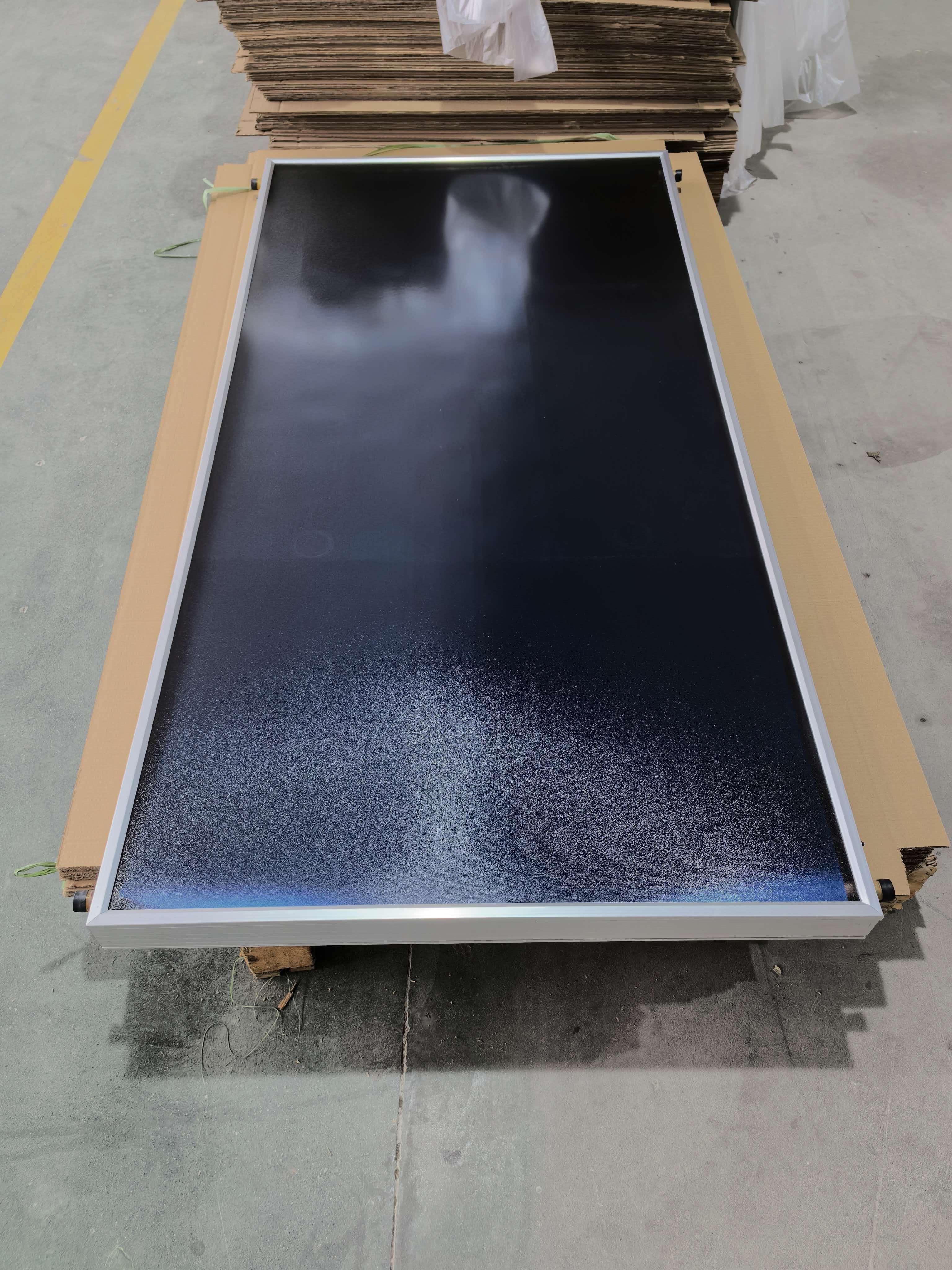 Flat plate collectors are available in 1 m² to 2.5 m² modules, which allows the array to be fitted to irregular hotel roof shapes.
Layer 2 — Storage and tank construction
The CPS series high-pressure solar geyser runs 100 L to 300 L with a maximum operating pressure of 6 bar and a test pressure of 9 bar, using 58-1800 vacuum tubes with heat pipe, 50 mm PU foam insulation, a 25–45 degree angle, and a choice of SS304, SS316, Duplex 2205 or Duplex 32001 materials. It is Solar Keymark certified and listed for hotels, small hotels, schools, villas and car wash centres.
The CPS-FJ series indirect solar water heater covers 150 L to 300 L with flat plate collectors and an SPCC enamel-coated tank. Its selling points state that the indirect enamel-coated tank is intended for salty water and can be fitted with anti-freezing heat transfer media — two properties that matter when the solar circuit must survive either aggressive water or cold snaps. Kesun's product portfolio also includes buffer tanks, domestic hot water tanks and hybrid solar panels, which allows storage to be split between DHW storage and buffer duty when a heating load is added.
Layer 3 — Circulation mode
Systems can run in direct or indirect circulation, in passive thermosiphon mode or in forced circulation with pumps, and can support electric backup or heat pump linkage. In practical terms, a hotel with distributed risers and long pipe runs will normally be a forced-circulation project, with circulation pumps, controllers, valves, mounting frames and piping accessories as supporting equipment. A small property with a compact roof can be served by thermosiphon operation without pumps.
Layer 4 — Backup and heat source linkage
Backup is where operating cost is won or lost. The application data specifies pairing with electric heaters or heat pumps for backup and compensation. Where roof area is the binding constraint rather than tank volume, the PV Series PV solar water heater offers a different route: 100 L to 500 L capacity, 600 W per solar panel input, 800 W to 3500 W heating output, an MPPT controller, DC/AC automatic switch, and Duplex 2205 or Inox 316L tank material. It is CE certified and listed for villas, houses, apartments and camps.
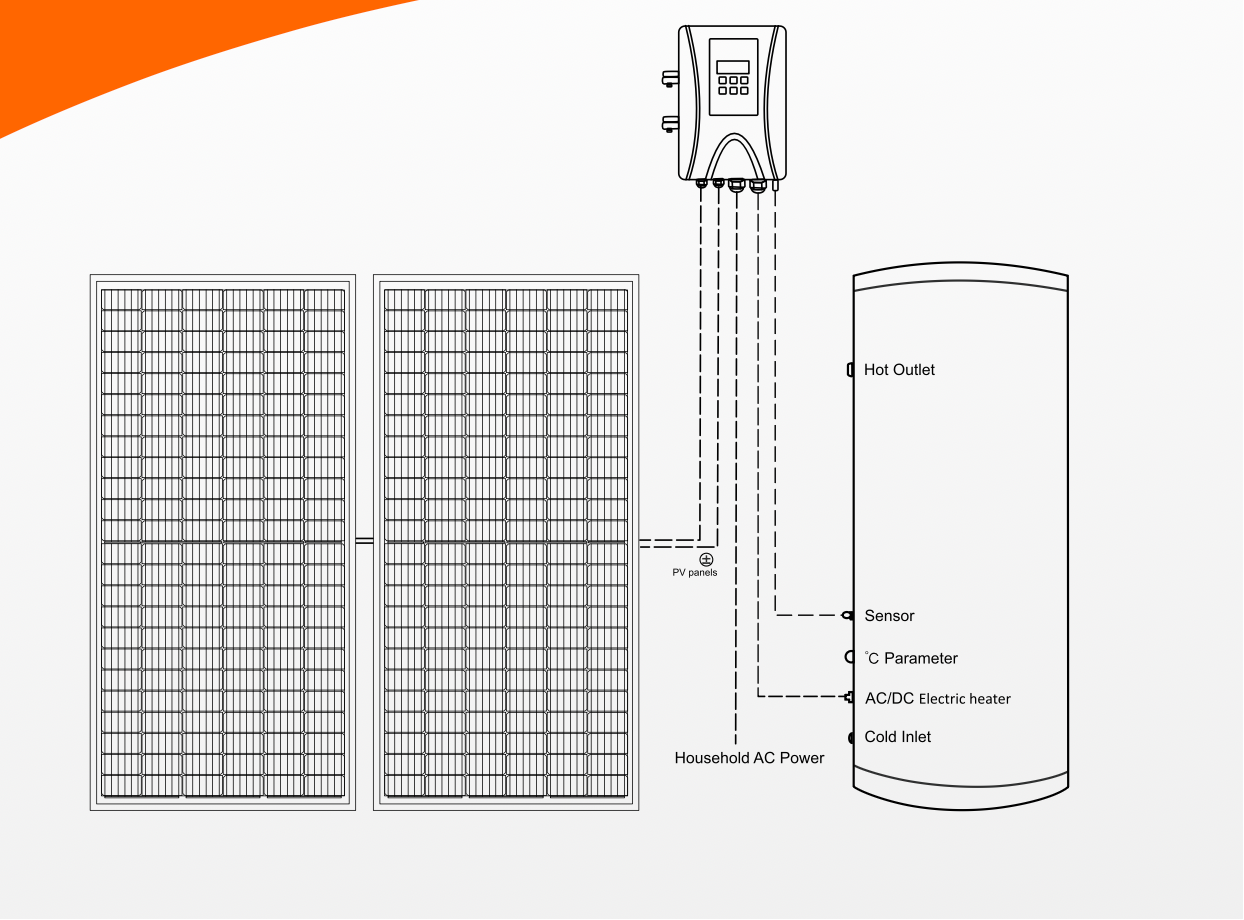 The PV Series combines a 600 W panel input per unit with 800 W to 3500 W heating output and MPPT control — useful where collector area is limited.
Step-by-Step: Matching the Configuration to an 80-Room Hotel Load
The 80-room reference project used in the verified case is a useful working example because it includes both duties. The sequence below reflects how such a project should be specified. Note that specific working condition parameters — irradiation, draw profile, pipe runs — require project-level calculation; they are not fixed numbers that can be copied between buildings.
- Write the duty list first. Separate guest-room DHW, public bathing areas, and any auxiliary regional heating into distinct duties. If heating is in scope, decide it now — not after the roof layout is drawn.
- Select the collector family. Heat pipe vacuum tube collectors (HSC series) suit high-pressure commercial DHW; flat plate collectors (FPC2.0) suit large-area arrays and heating-oriented duty; non-pressure vacuum tube units (CNP series) suit budget-constrained small properties.
- Set storage against peak draw, not average draw. Pressurised storage options run from 100 L to 300 L in the CPS range and 150 L to 300 L in the CPS-FJ range. Larger aggregate volume is achieved by combining multiple tanks rather than by oversizing a single unit, and buffer tanks or domestic hot water tanks from the same portfolio can carry separate duty.
- Choose circulation and control. Confirm direct or indirect circulation, thermosiphon or forced circulation, and specify pumps, controllers and valves as part of the package.
- Address climate and water chemistry. Specify corrosion-resistant materials, water quality treatment where required, freeze protection for winter where relevant, and confirm roof load-bearing capacity with the structural engineer.
- Lock commercial parameters. Minimum order quantity is 1 × 40 ft container, lead time is 20–35 days, and monthly capacity is 25,000 units. OEM/ODM and customization by capacity, type and system configuration are available.
- Plan handover and support. Quality control is 100% test, and after-sales support is provided remotely.
Use Cases: Where Each Configuration Fits
REFERENCE CASE — SOUTHEAST ASIA, 80 GUEST ROOMS
A complete solar hot water system was installed for a small-to-medium hotel providing daily hot water for 80 guest rooms and public bathing areas, with support for auxiliary regional heating. The system replaced traditional electric and gas heating equipment.
After implementation, the hotel cut electricity and gas costs by over 40%, and the system has a stable service life of more than 15 years. Constant-temperature hot water with minimal failures supported guest satisfaction, while lower carbon emissions supported green-hotel compliance.
The configuration uses high-adaptability vacuum heat collection modules selected for corrosion and weather resistance in Southeast Asia's hot-rainy climate, with an integrated design for easy installation, low-cost maintenance and smart temperature adjustment.
Scenario A — small hotel with a compact roof and tight budget. The CNP series non-pressure solar water heater, 60 L to 500 L, is listed for small hotels and schools and uses a thermosiphon-friendly configuration without pumps.
Scenario B — resort with pool or spa alongside guest rooms. FPC2.0 flat plate collectors, listed for swimming pools and housing heating, combine with CPS-series pressurised storage for the DHW side.
Scenario C — hotel that also wants auxiliary regional heating. HSC heat pipe collectors, listed for house heating duty, paired with CPS or CPS-FJ storage. The indirect CPS-FJ variant adds an enamel-coated tank for salty water and supports anti-freezing heat transfer media.
Scenario D — urban hotel with limited roof area. The PV Series solar water heater delivers 800 W to 3500 W heating output from a 600 W per panel input, with MPPT control and DC/AC automatic switching, in 100 L to 500 L tanks.
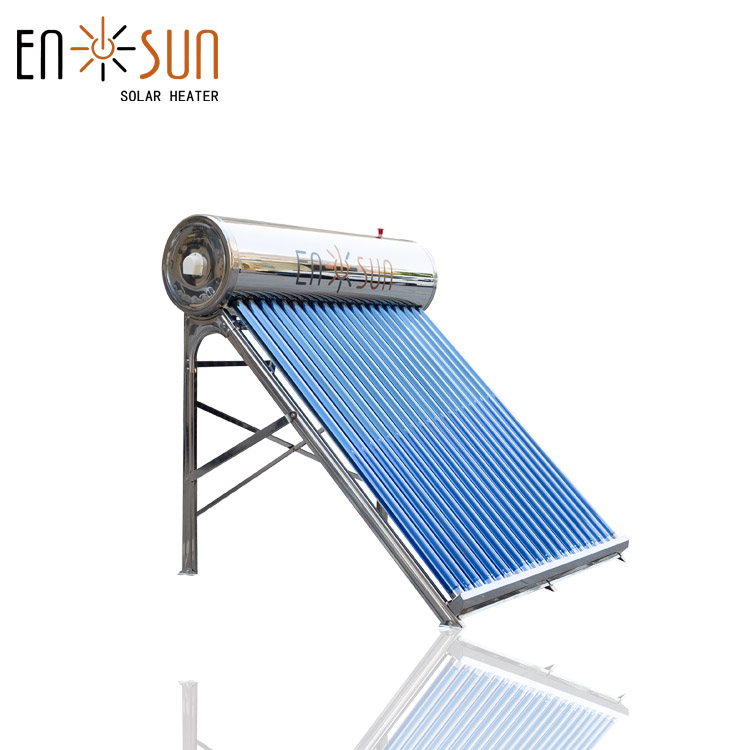 Non-pressure vacuum tube units remain a cost-controlled option for small hotels where pressure demand and roof space are modest.
Comparison Table: Configuration A vs. Configuration B
The table below compares the two configuration priorities across the decision points that change price, roof layout and operating cost. Every value is drawn from verified product and project data.
| Decision dimension | Configuration A: all-day DHW priority | Configuration B: DHW + auxiliary regional heating |
|---|---|---|
| Primary duty | All-day domestic hot water for guest rooms and public bathing areas | All-day DHW plus auxiliary regional heating |
| Collector options in range | HSC heat pipe vacuum tube (10–30 tubes); FPC2.0 flat plate (1–2.5 m²); CNP non-pressure vacuum tube for small hotels | HSC (listed for house heating) and FPC2.0 (listed for housing heating) become the primary candidates |
| Storage reference | CPS 100–300 L at 6 bar operating / 9 bar test; CPS-FJ 150–300 L; CNP 60–500 L | DHW storage plus separate buffer tank or domestic hot water tank to carry the heating duty |
| Circulation | Direct or indirect; passive thermosiphon or forced circulation with pumps | Forced circulation with pumps, controllers, valves, mounting frames and piping accessories |
| Backup | Electric heater or heat pump linkage for backup and compensation | Same backup principle, but backup must also cover the heating duty |
| Climate and protection requirements | Corrosion-resistant materials, water quality treatment, freeze protection for winter, roof load-bearing capacity | Same requirements, with indirect enamel-coated tank and anti-freezing heat transfer media available via CPS-FJ |
| Certification coverage | Solar Keymark on HSC, FPC2.0, CPS, CPS-FJ and CNP; CE on the PV Series | Same certification base for the collector and tank families used |
| Procurement parameters | MOQ 1 × 40 ft container; 20–35 days lead time; 25,000 units/month capacity; OEM/ODM available | Identical commercial terms; configuration customization by capacity, type and system layout |
| Reference evidence | 80-room Southeast Asian hotel: over 40% reduction in electricity and gas costs, service life more than 15 years | Same case, which also supports auxiliary regional heating |
Equipment Reference for Hotel Specifications
| Model | Type | Verified parameters |
|---|---|---|
| HSC series | Solar Collector | 10–30 tubes; 58-1800 vacuum tube with heat pipe; aluminium alloy frame; Solar Keymark |
| CPS series | High-pressure solar geyser | 100–300 L; 6 bar operating, 9 bar test; heat pipe vacuum tube; 50 mm PU foam; SS304/SS316/Duplex 2205/Duplex 32001 |
| CPS-FJ series | Indirect solar water heater | 150–300 L; flat plate collector; SPCC enamel-coated tank; anti-freezing heat transfer media compatible |
| CNP series | Non-pressure solar water heater | 60–500 L; 58-1800 vacuum tube; 50 mm PU foam; 25–45 degree angle; SS304/SS316 |
| FPC2.0 | Flat plate solar collector | 1 m², 1.5 m², 2 m², 2.5 m²; 80 mm thickness; copper and aluminium alloy |
| PV Series | PV solar water heater | 100–500 L; 600 W per panel input; 800–3500 W heating output; MPPT controller; DC/AC automatic switch; Duplex 2205 / Inox 316L; CE certified |
FAQ
1. Which solar water heater and collector is suitable for hotel and commercial hot water projects?
HSC series solar collectors match well with CPS-FJ and CPS series pressurised solar water heaters. This combined system is intended for hotels and commercial buildings that need stable, large-volume domestic hot water supply. Where the project also requires auxiliary regional heating, the same collector families are listed for house heating and housing heating duty.
2. What certifications apply to hotel-scale solar water heater configurations?
The HSC collector series, FPC2.0 flat plate collector, CPS series, CPS-FJ series and CNP series all carry Solar Keymark certification. The PV Series PV solar water heater is CE certified. Buyers should match the certification evidence to the specific model and market of installation, and confirm documentation before shipment.
3. How is tank capacity chosen between all-day DHW and DHW plus heating?
Pressurised storage in the CPS range runs from 100 L to 300 L and the CPS-FJ range from 150 L to 300 L; non-pressure CNP tanks run from 60 L to 500 L. When the system also supports auxiliary regional heating, DHW storage is normally complemented by separate buffer tank or domestic hot water tank capacity. Final volumes depend on the project's draw profile and require project-level calculation of working condition parameters.
4. What are the minimum order quantity, lead time and monthly capacity?
The minimum order quantity is 1 × 40 ft container. Lead time is 20–35 days, and monthly capacity is 25,000 units. Quality control is 100% test. OEM/ODM and customization by capacity, type and system configuration are available, with remote after-sales support.
5. Can a hotel project obtain a sample configuration before committing to a container order?
Yes. Kesun Solar supports OEM/ODM and customization by capacity, type and system configuration, and buyers can request a sample or a quotation matched to a specific duty list before placing a container order. To start, share the number of guest rooms, whether public bathing areas and auxiliary regional heating are included, and the target market — the team can be reached at alan@ensunchina.com or +86 135-8643-2400, and the full product catalogue is available for download below.
Conclusion: Decide the Duty List Before the Collector
The choice between an all-day hot water configuration and a hot water plus auxiliary heating configuration is not a product question — it is a scope question. Answer it first, and the collector type, storage volume, circulation mode and backup strategy follow logically. Answer it late, and the roof, piping and budget are already committed.
For an 80-room property, the verified Southeast Asian case shows what a correctly scoped configuration can deliver: hot water for guest rooms and public bathing areas, support for auxiliary regional heating, a reduction of over 40% in electricity and gas costs, and a stable service life of more than 15 years. Those outcomes rest on configuration decisions made at specification stage, not on any single component.
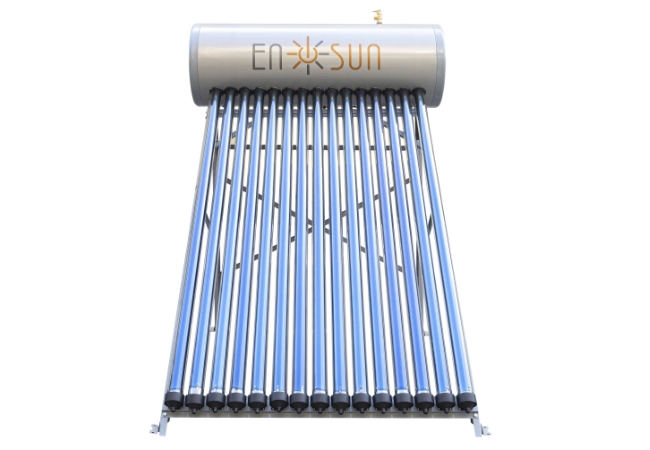 Pressurised storage is the backbone of all-day hotel DHW; the CPS series operates at 6 bar with a 9 bar test pressure.
Next step: request a configuration review
Send your room count, duty list and target market to Kesun Solar for a configuration proposal, sample arrangement and quotation. Kesun Solar is a solar water heater manufacturer based in Haining, Zhejiang Province, China, producing solar water heaters, buffer tanks, domestic hot water tanks and hybrid solar panels.
Email: alan@ensunchina.com | Tel / WhatsApp: +86 135-8643-2400 | Website: www.kesunsolar.com
Download the product catalogue: ENSUN 2025 Catalogue (PDF)
Have Questions or Need More Details?
Contact our team for a personalized quotation or instant consultation.
Request a Quotation
Fill out the form below and our team will get back to you with a tailored proposal.
WhatsApp Direct Chat
Prefer to chat in real-time? Message us on WhatsApp for instant assistance & quick answers.
- Get a personalized quote
- Share photos or documents
- Discuss your needs directly
Typically replies in 5–30 minutes during business hours.