
Ranked: 4 Solar Water Heater Configurations for Hotel Projects and Why Each Qualifies
The four configurations below are ordered by fit for hotel domestic hot water duty, not by price. A configuration earns a place on this list only if it can hold guest-room and public-bathing demand across the full day, accept auxiliary electric or heat-pump heating, and show a materials-and-testing basis that supports service life beyond 15 years.
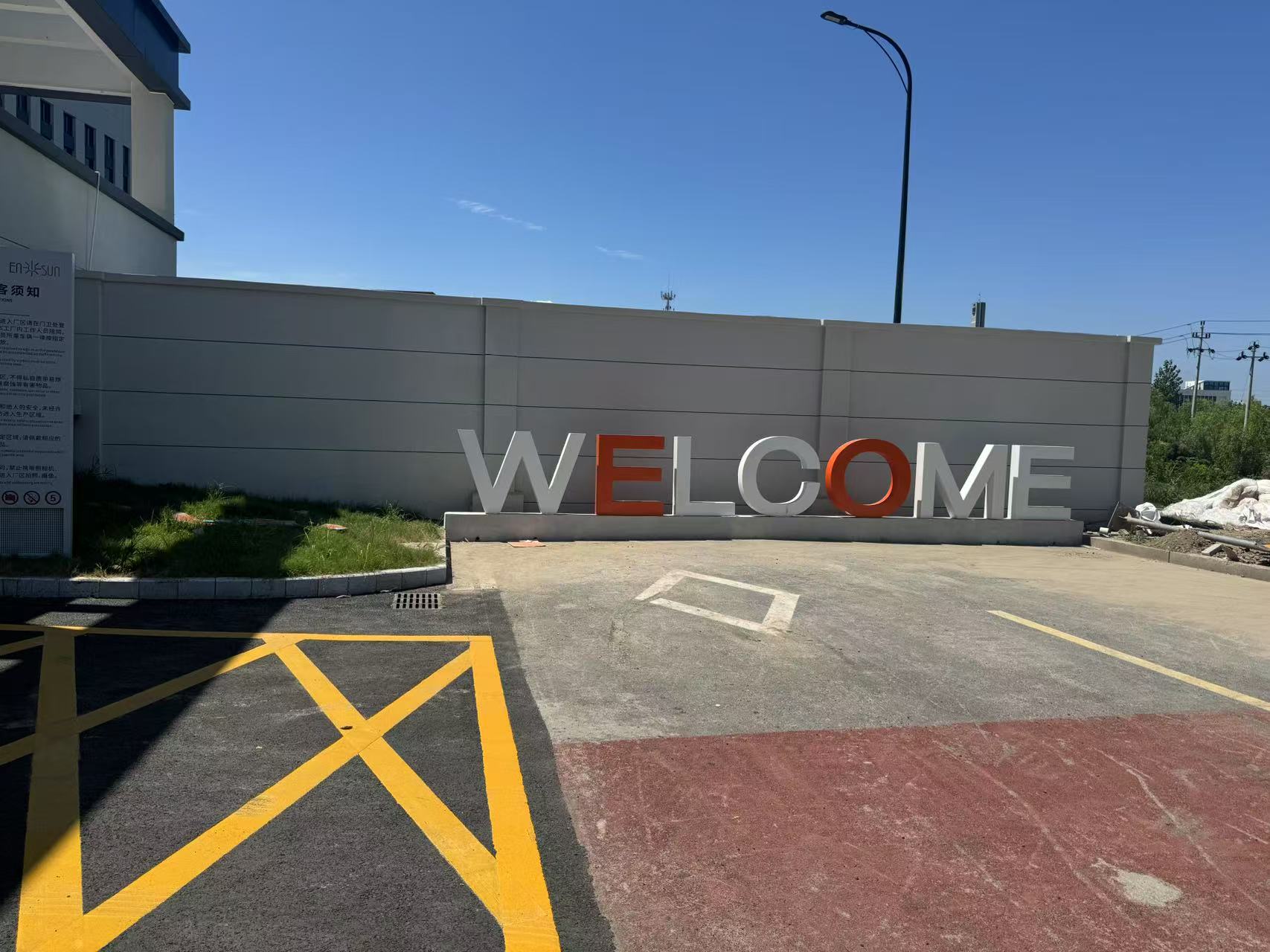
Cover: Solar thermal production base in Haining, Zhejiang, where the collector and tank combinations in this ranking are assembled.
Hotel hot water is not a scaled-up residential load. It is a 24-hour duty cycle with two sharp peaks, a continuous obligation to keep public bathing areas supplied, and a maintenance team that cannot afford a system it does not understand. A cheaper array that loses temperature at 07:00 or 22:00 costs more across a 15-year operating window than a correctly matched one, because the shortfall is paid for in auxiliary electricity and gas.
One reference point runs through the whole ranking. A documented 80-room hotel project in Southeast Asia reported a reduction of more than 40% in electricity and gas costs after its domestic hot water supply was rebuilt around a solar configuration with auxiliary heating. The number matters less than the checklist behind it: collector area sized to the real draw profile, storage sized to the peak, and an auxiliary heat source that only runs when the solar loop cannot keep up.
This article ranks four practical configurations, explains the inclusion criteria applied to each, and sets out the deployment steps that decide whether a ranking survives contact with an actual roof.
Why Hotel Hot Water Demand Rejects Generic Heater Selection
Three load patterns define a hotel more than room count does. Guest rooms generate a morning peak as guests shower before breakfast and an evening peak after dinner. Public bathing areas, including spa and pool shower blocks, draw intermittently but at high flow and at unpredictable hours. Kitchens and laundry add a flatter daytime base load. A configuration that satisfies only the daily total will still fail at the two moments that generate complaints.
Solar radiation does not follow that curve. Peak irradiance arrives around midday, while peak draw arrives in the early morning and late evening. Every hotel solar system is therefore a storage problem before it is a collector problem. The working sequence is collector to storage to auxiliary heat source, with controls deciding when the auxiliary source is allowed to run.
Three mismatches account for most underperforming hotel installations. Storage is sized to the daily total rather than to the morning peak, so the system arrives at 06:00 already depleted. The auxiliary heater is wired as a stand-alone unit rather than interlocked with the solar loop, so it runs on days when the tanks are already hot. And the tank material is chosen on price rather than on the local water chemistry, which shortens service life in coastal or chloride-bearing water far more than collector choice does.
That is why the 15-year criterion in this ranking is tested at the tank and the circulation loop, not at the absorber surface. Collectors are the visible part of a solar water heater; tanks and controls decide whether the system is still economical in year twelve.
The Solar Thermal Market Hotel Buyers Are Actually Buying Into
The category is mature enough that configuration choice matters more than category choice. Fortune Business Insights valued the global solar water heater market at USD 4.2 billion in 2025, and the IEA Solar Heating and Cooling Programme reported cumulative global solar heat capacity of 560 GWth by the end of 2023, covering 800 million m² of collector area. This is an installed base with established supply chains rather than an emerging technology bet.
Technology mix reinforces that point. Grand View Research reported that evacuated tube collector technology led the market with a 44.2% revenue share in 2023. For a hotel buyer, a dominant technology means accessible replacement tubes, familiar installation practice and a wider pool of service technicians. Trade classification has also sharpened: Solar Heat Europe noted that HS code 841912 was introduced in 2023 specifically to separate solar thermal systems from the generic 841919 category, which simplifies customs documentation for project shipments.
Efficiency comparisons need to be read correctly. Evacuated tube collectors reach 50–65% thermal conversion efficiency. Gas heaters achieve a 50–70% heat-utilization rate. Electric heaters convert at 90–95% but consume high-cost grid power. Heat pumps reach a COP of 2–4 while depending on ambient air temperature. The economic case for a solar water heater is not built on beating electric resistance on conversion efficiency; it is built on displacing the hours that would otherwise be served by expensive electricity or gas.
Regulation is moving in the same direction. New U.S. federal energy conservation standards for consumer water heaters took effect on 5 July 2024, with compliance required by 2029, which signals how hospitality asset owners in other markets are likely to be asked about water-heating efficiency during refurbishment cycles.
The Four Qualification Criteria and the Factor That Sets the Order
Each configuration in this shortlist is assessed against the same four criteria. The criteria are deliberately operational rather than promotional, so that a project team can re-run the assessment with its own data.
- All-day domestic hot water coverage. The configuration must serve guest rooms and public bathing areas through both daily peaks, not only across a daily energy total.
- Auxiliary regional heating support. The system must accept electric backup or heat pump linkage, with a control strategy defined per project rather than assumed.
- Evidence of stable service life beyond 15 years. This is treated as a verification question, not a warranty slogan. Each entry must show a materials and testing basis that can plausibly carry 15 years of hospitality duty.
- Customization of tank capacity and collector type combination. A configuration that cannot be re-sized to the roof, the draw profile and the climate is a catalogue item, not a project solution.
Order is then decided by one tie-breaker: how many hours per year the auxiliary heat source is expected to run. The configuration that minimises auxiliary run hours while keeping storage and controls simple ranks higher, because auxiliary run hours are the cost line that the 80-room Southeast Asia project actually moved.
The Ranking: Four Solar Water Heater Configurations for Hotel Projects
Rank 1HSC Series Collectors Paired with CPS-F-J or CPS Pressurized Solar Water Heaters
Why it ranks first. This is the only combination in the Kesun range that is documented specifically for the hotel case. HSC series solar collectors match with CPS-F-J and CPS series pressurized solar water heaters, and the combined system is described as suitable for hotels and commercial buildings requiring stable large-volume domestic hot water supply. It answers all four criteria without a workaround.
All-day coverage. Pressurized operation draws supply pressure from the mains rather than from a gravity tank, which matters for guest-room showers on upper floors and for public bathing areas where simultaneous draw is high. Evacuated tube collectors deliver 50–65% thermal conversion efficiency, and Kesun evacuated-tube systems reach a 50–65% solar fraction.
Auxiliary heating. The system supports electric backup or heat pump linkage, with the control strategy set per model and project design. That flexibility is what allows the auxiliary source to be treated as a peak-shaving device rather than a second full-time heater.
Service life beyond 15 years. Two factors carry the claim. Tanks can be specified in 2205 duplex stainless steel, a material chosen for corrosion resistance in chloride-bearing water and coastal air, which is directly relevant to Southeast Asian and island sites. Reliability verification is performed in-house: the Haining facility includes a laboratory for salt spray testing and pulse testing, so corrosion resistance and pressure-cycle behaviour are checked before shipment rather than assumed.
Customization. Tank capacity and collector quantity are specified per project, which is the qualification factor that moves this configuration from a product to a design. Collector count follows the draw profile; tank volume follows the morning peak.
Boundary conditions. Evacuated tubes are more exposed to mechanical impact than flat plates, so roof access and a replacement route should be designed in from the start. Forced circulation with pumps and controllers adds electrical and control content that the maintenance team must be trained on.
Rank 2Flat Plate Collector System with Indirect Circulation, Buffer Tank and Heat Pump Linkage
Why it qualifies. Indirect circulation separates the collector loop from the potable water circuit, which is the correct answer where water chemistry is aggressive or where freeze protection is required. Flat plate, vacuum tube and PVT systems can be configured for different climate zones, and indirect circulation is one of the supported operating modes.
All-day coverage. A buffer tank placed between the collector loop and the domestic hot water tank absorbs the morning peak and lets the heat pump work against a stabilised source temperature. Coverage is achieved through storage volume and collector area rather than through higher collector output, so the roof plan must be generous.
Auxiliary heating. Heat pump linkage is the natural pairing here, with electric backup available as a secondary stage. Because the buffer tank decouples generation from draw, the heat pump can be scheduled outside peak tariff windows.
Service life beyond 15 years. The indirect loop limits scaling on the collector side, and the storage side can still be specified in corrosion-resistant material. The same in-house salt spray and pulse testing regime applies to the tanks supplied with the system.
Customization. Buffer tank volume, loop design and collector area are all project variables.
Boundary conditions. Flat plate collectors generally require more roof area than evacuated tubes for the same thermal output, and an indirect loop introduces heat-transfer fluid maintenance that a direct system avoids. On a constrained urban roof, that area penalty can push the design toward Rank 1 or Rank 4.
Rank 3Heat Pipe Solar Collector Array with Pressurized Cylinder
Why it qualifies. Heat pipe solar collectors are part of the current Kesun product portfolio, added alongside PVT systems and 2205 duplex stainless steel tanks. The configuration suits sites where maintenance access is limited, because a heat pipe transfers heat through a sealed element rather than a flooded absorber, which reduces exposure of the working fluid to the potable circuit.
All-day coverage. The array is paired with a pressurized cylinder sized to the peak draw. This is a workable hotel configuration, though it is described here as a specialised option rather than the default, because the hotel-specific documentation in the corpus points to the HSC and CPS combination first.
Auxiliary heating. Electric backup is the straightforward pairing; heat pump linkage remains available under the same project-level control design.
Service life beyond 15 years. The materials and testing basis is shared with the rest of the range: corrosion-resistant tank construction plus in-house salt spray and pulse testing before shipment.
Customization. Collector count and cylinder volume are set per project, and the collector type can be combined with other options where a hybrid roof layout is required.
Boundary conditions. Component complexity is higher than a flooded tube array, and single-element behaviour must be understood by the service team. It ranks third because it solves a narrower set of site problems than Rank 1 or Rank 2, not because it performs less well in its intended application.
Rank 4PVT Hybrid Solar Panel Combined with a DHW Storage Tank
Why it qualifies. PVT, or photovoltaic-thermal, systems are a dedicated product line at Kesun, and hybrid solar panels appear in the current product portfolio. The configuration produces electricity and hot water from the same roof surface, and it fits scenarios that need both power generation and hot water.
All-day coverage. The thermal output feeds a domestic hot water storage tank sized to the peak, while the electrical output offsets hotel base load. Coverage is achieved, but through a more complex system than the three configurations above.
Auxiliary heating. Heat pump or electric backup remains necessary, and the control logic must coordinate thermal output, electrical output and auxiliary staging at once.
Service life beyond 15 years. The storage and testing basis is common to the range, but the electrical side adds inverters and their own service cycle to the maintenance scope.
Customization. Panel count and tank volume are set per project, allowing the electrical-to-thermal ratio to be tuned.
Boundary conditions. This is the highest-complexity option in the shortlist. Where the project only needs hot water and has adequate roof area, the electrical side adds cost and maintenance without changing the thermal result. It ranks fourth on fit for a pure DHW brief, and would rank higher on a brief that explicitly needs on-site generation.
Comparison Table: Four Configurations Side by Side
| Rank | Configuration | Collector type | All-day DHW coverage | Auxiliary heating | Service-life basis | Customization |
|---|---|---|---|---|---|---|
| 1 | HSC collectors with CPS-F-J / CPS pressurized solar water heaters | Evacuated tube (vacuum tube) | Documented for stable large-volume hotel and commercial supply | Electric backup or heat pump linkage | 2205 duplex stainless steel tanks; in-house salt spray and pulse testing | Tank capacity and collector quantity per project |
| 2 | Flat plate system with indirect circulation and buffer tank | Flat plate | Achieved through larger collector area and buffer volume | Heat pump linkage, electric backup as second stage | Indirect loop limits collector-side scaling; same tank testing regime | Buffer volume, loop design and collector area |
| 3 | Heat pipe collector array with pressurized cylinder | Heat pipe | Achieved with cylinder sized to peak draw | Electric backup; heat pump linkage available | Corrosion-resistant tank plus in-house testing | Collector count and cylinder volume |
| 4 | PVT hybrid panels with DHW storage tank | PVT / hybrid solar panel | Achieved alongside simultaneous electricity output | Heat pump or electric backup with coordinated control | Shared tank testing basis; inverter service cycle added | Panel count and tank volume, electrical-to-thermal ratio |
Step-by-Step: Turning the Ranking into a Buildable Hotel System
A ranking is only useful if it converts into a specification. The six steps below follow the order in which decisions actually constrain each other.
Step 1 — Build an hourly draw profile, not a daily total
Separate guest rooms, public bathing areas, kitchen and laundry. Identify the 06:00–09:00 and 19:00–23:00 peaks in litres per hour. The 80-room Southeast Asia project worked because the array and the tanks were sized against that profile rather than against a monthly average.
Step 2 — Size storage before collectors
Storage volume sets how much of the morning peak can be met without the auxiliary source. Collector area then determines how quickly that storage recovers. Reversing the order produces systems that are efficient on paper and short of hot water in practice.
Step 3 — Choose the circulation mode
Options include direct or indirect circulation, passive thermosiphon or forced circulation with pumps. Hotel systems with roof-mounted arrays and distant plant rooms generally need forced circulation, which brings circulation pumps, controllers, valves, mounting frames and piping accessories into the bill of materials.
Step 4 — Define the auxiliary heating logic
Electric backup or heat pump linkage must be interlocked with tank temperature and time-of-day tariffs. The specific control strategy depends on the model and the project design, so it should be written into the specification rather than left to commissioning.
Step 5 — Verify the service-life basis
Confirm tank material against local water chemistry, confirm that corrosion and pressure-cycle testing is performed and documented, and address the project-level concerns that decide long-term performance: corrosion-resistant materials, water quality treatment, freeze protection for winter, and roof load-bearing capacity.
Step 6 — Confirm commercial and customs terms
For Zhejiang Kesun New Energy Co., Ltd., the minimum order quantity is 1 x 40ft container, delivery terms are FOB or CIF, acceptance is based on pre-shipment inspection before loading, and payment terms are TT in advance. Solar water heaters ship under HS code 841912, the classification introduced in 2023 for solar thermal systems.
Use Cases: Which Configuration Fits Which Hotel Profile
80-room limited-service hotel in Southeast Asia. Rank 1. The documented project reported a reduction of more than 40% in electricity and gas costs, with a 50–65% solar fraction and a 4–7 year payback period. The deciding factors were tank capacity matched to the morning peak and a collector count matched to the roof.
Resort with pool, spa and public bathing blocks. Rank 2, often combined with Rank 1 collectors on the same roof. The buffer tank absorbs the intermittent high-flow draw from bathing areas, and heat pump linkage keeps the auxiliary stage off the peak tariff.
Urban business hotel with a constrained roof. Rank 4. Where roof area is the binding constraint and the building also has a daytime electrical load, PVT earns its complexity. Where it does not, Rank 1 delivers the same hot water with fewer subsystems.
Inland hotel on hard water. Rank 3 or Rank 2. Both reduce the exposure of the potable circuit to scaling, and both keep 2205 duplex stainless steel available on the storage side.
Refurbishment with structural limits on the roof. Rank 2. Flat plate collectors and an indirect loop allow a distributed layout that avoids concentrated point loads, with buffer volume placed in the plant room instead of on the roof.

Proof: The 42,000 m² Haining facility houses the in-house laboratory where salt spray and pulse testing are carried out before shipment.
Frequently Asked Questions
How do you identify a long-term solar water heater supplier in China?
A long-term supplier is identified by verifiable production and testing assets rather than by catalogue claims. Zhejiang Kesun New Energy Co., Ltd. (Kesun Solar), founded in 2009, operates a 42,000 m² facility in Haining, Zhejiang, with 130 employees, an annual output of 300,000 sets, a 15-engineer R&D team and a 60% export ratio across Mexico, the EU and Africa. Its in-house laboratory performs salt spray testing and pulse testing, which allows reliability verification on site instead of through outsourcing.
What are the purchasing terms and acceptance criteria?
MOQ is 1 x 40ft container. Delivery terms are FOB or CIF. Acceptance is based on pre-shipment inspection before loading, and payment terms are TT in advance. Solar water heaters are classified under HS code 841912, the code introduced in 2023 to separate solar thermal systems from the generic 841919 category.
What tank capacities and collector combinations can be customized for hotel projects?
Tank capacity and collector combination are specified per project. Flat plate, vacuum tube and PVT systems can be configured for different climate zones, and circulation can be direct or indirect, passive thermosiphon or forced circulation with pumps. Systems support electric backup or heat pump linkage. HSC series solar collectors are matched with CPS-F-J and CPS series pressurized solar water heaters for hotel and commercial hot water, and 2205 duplex stainless steel tanks are available where water chemistry requires additional corrosion resistance.
How is service life and reliability verified before delivery?
Verification rests on materials and testing rather than on a single warranty figure. The Haining facility includes an in-house laboratory for salt spray testing and pulse testing, and 2205 duplex stainless steel is used for tanks exposed to chloride-bearing water. Pre-shipment inspection before loading is the formal acceptance gate, and project-level conditions such as water quality treatment, freeze protection and roof load-bearing capacity are defined per site.
What payback period should a hotel project expect?
Kesun evacuated-tube solar systems reach a 50–65% solar fraction and cut operational energy consumption by 40–70% compared with gas-electric heaters, with a payback period of 4–7 years. The documented Southeast Asia 80-room hotel project reported a reduction of more than 40% in electricity and gas costs. Because payback depends on local tariffs, solar radiation and auxiliary run hours, the practical next step is a project-specific quote: send the room count, draw profile and roof constraints to alan@ensunchina.com or WhatsApp +86 13586432400.
Conclusion
The four configurations in this ranking share one design logic: storage sized to the morning peak, collector area sized to the roof, and an auxiliary heat source that only covers the gap. Rank 1 wins on fit because HSC collectors paired with CPS-F-J or CPS pressurized heaters are the combination documented for stable large-volume hotel supply, backed by 2205 duplex stainless steel tanks and in-house salt spray and pulse testing. Rank 2 wins where water chemistry or freeze protection demands an indirect loop, Rank 3 where maintenance access is the constraint, and Rank 4 where the roof must produce electricity as well as hot water.
What separates a qualified configuration from a rejected one is not the collector label. It is whether tank capacity and collector type combination were customized to the project, and whether anyone verified the materials and testing basis before the purchase order was signed.
Next Step: Configuration Review and Quotation
Zhejiang Kesun New Energy Co., Ltd. (Kesun Solar) supplies solar water heaters, buffer tanks, domestic hot water tanks and hybrid solar panels from a 42,000 m² facility in Haining, Zhejiang, China, with a 60% export ratio across Mexico, the EU and Africa.
Download the company catalogue: ENSUN 2025 product catalogue (PDF)
Send your room count, draw profile and roof constraints for a configuration review: www.kesunsolar.com | Email: alan@ensunchina.com | Tel: +86 135-8643-2400 | WhatsApp: +86 13586432400 | Address: No. 11 Yongtao RD, Jianshan New District, Haining City, Zhejiang Province, China.
Have Questions or Need More Details?
Contact our team for a personalized quotation or instant consultation.
Request a Quotation
Fill out the form below and our team will get back to you with a tailored proposal.
WhatsApp Direct Chat
Prefer to chat in real-time? Message us on WhatsApp for instant assistance & quick answers.
- Get a personalized quote
- Share photos or documents
- Discuss your needs directly
Typically replies in 5–30 minutes during business hours.