
Solar Collector 101: The Core of a Solar Water Heater System
A solar collector is the component of a solar water heater that captures solar radiation and converts it into usable heat. The tank holds that heat as hot water, the circulation loop moves it, and the controller with a backup element decides when the system runs and what happens on cloudy days. Take the collector away and the rest of the system has nothing to store.
This explainer is written for first-time readers — homeowners, hotel engineers, importers and specifiers — who are meeting solar water heater terminology for the first time. It stays at category-cognition level: what a collector does, which collector families exist, how collectors are combined with tanks of different capacities, and how to read a specification sheet without guessing. The figures below come from published product data and public industry sources; this article makes no performance promises.
Problem Definition: Why "Solar Water Heater" Is Not One Product
A solar water heater is a system, while a solar collector is one component inside it — and quotations rarely make that distinction obvious. A single inquiry can come back mentioning a flat plate solar collector, a heat pipe collector, a vacuum tube set, a solar geyser, a solar hot water cylinder and a buffer tank, because each supplier describes the same system from a different starting point.
Three confusions cause most first-round misunderstandings:
- Capacity describes the tank, not the collector. A figure such as 200 L tells you how much water is stored. It says nothing about which collector is connected to that tank, how many tubes it needs, or how much absorber area the roof will carry.
- Pressure class changes the whole specification. A non-pressure and a high-pressure unit can look similar in a catalogue. The CNP series is a non-pressure solar water heater available from 60 L to 500 L; the CPS series is a high-pressure solar geyser with a maximum operating pressure of 6 bars and a 9-bar test pressure. They suit different plumbing situations.
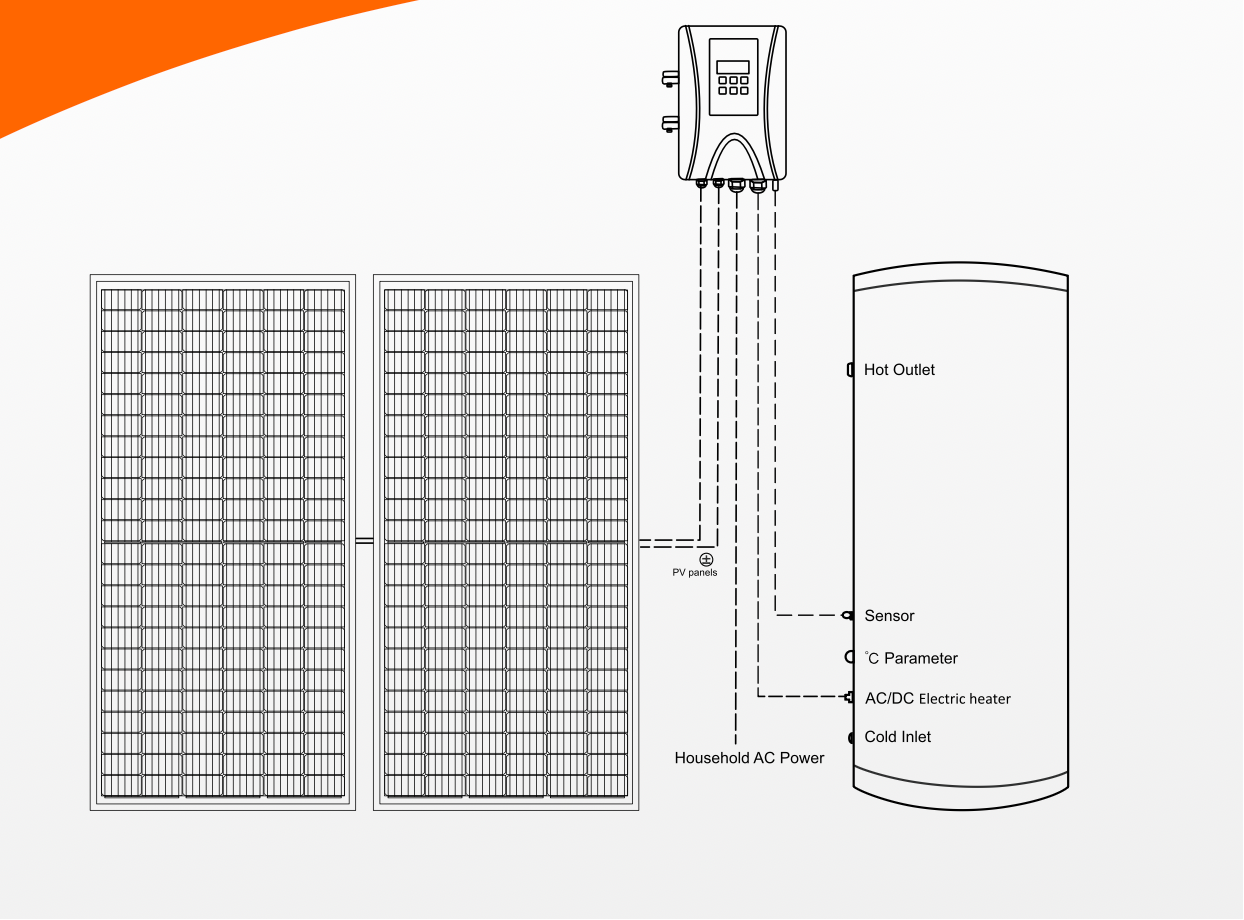
- Sunlight can reach hot water by more than one route. A thermal collector heats water or a heat-transfer fluid directly. A PV solar water heater converts sunlight to electricity first and then heats the water: the PV Series takes 600 W of electrical power input per solar panel and provides 800 W to 3,500 W of heating output, with a controller featuring MPPT function and a DC/AC automatic switch.
The practical answer is to read every offer as four separate decisions — heat source (collector), heat storage (tank), circulation (direct or indirect, thermosiphon or pumped) and control with backup. The rest of this article follows that order.
Industry Background: A Category With Its Own Vocabulary
Category-level data explains why the collector deserves its own primer. According to the IEA Solar Heating & Cooling Programme report Solar Heat Worldwide 2024, cumulative global solar heat capacity reached 560 GWth by the end of 2023, covering roughly 800 million m² of collector area. Fortune Business Insights valued the global solar water heater market at USD 4.2 billion in 2025.
The technology mix is equally concrete. Grand View Research reported that evacuated tube collector technology led the market with a 44.2% revenue share in 2023 — the vacuum tube family that includes heat pipe collectors.
Two further signals point the same way. Solar Heat Europe reported that HS code 841912 was introduced in 2023 to differentiate solar water heaters from the generic 841919 code, meaning the category is now tracked separately in trade statistics. In the United States, the Department of Energy's energy conservation standards for consumer water heaters took effect on 5 July 2024, with compliance required by 2029 (Federal Register).
For a newcomer, the takeaway is straightforward: market reports count collector area, trade codes separate solar water heaters from other water heaters, and efficiency rules apply to the category as a whole. The collector is the unit the industry measures.
Detailed Solution: The Anatomy of a Solar Water Heater System
The examples below come from Zhejiang Kesun New Energy Co., Ltd. (Kesun Solar), a manufacturer established in 2009 in Haining, Zhejiang, China, that designs and produces solar water heaters, buffer tanks, domestic hot water tanks and hybrid solar panels. Its range covers both non-pressure and pressurized solar water heaters.
Block 1 — Heat generation: the collector
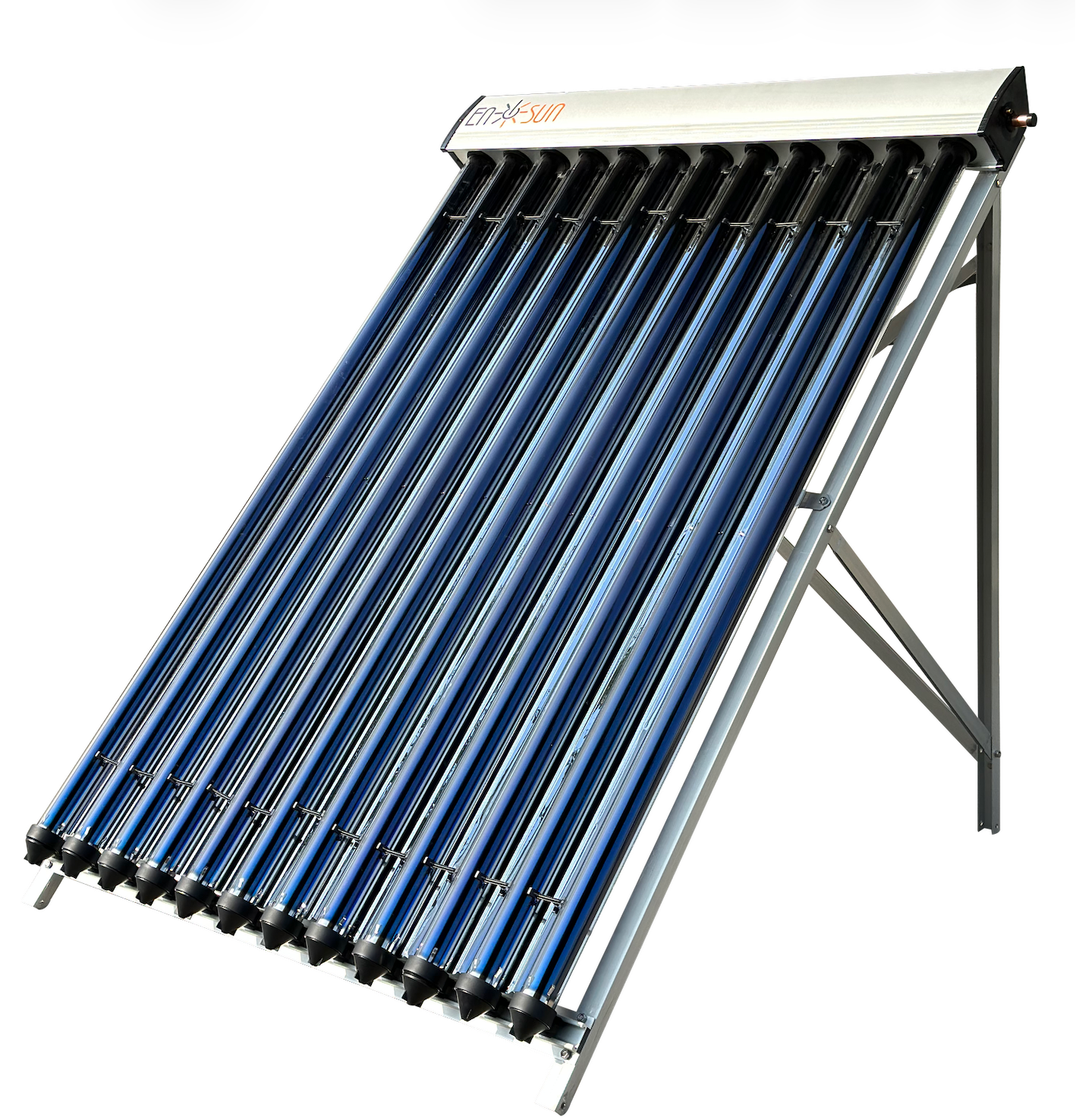
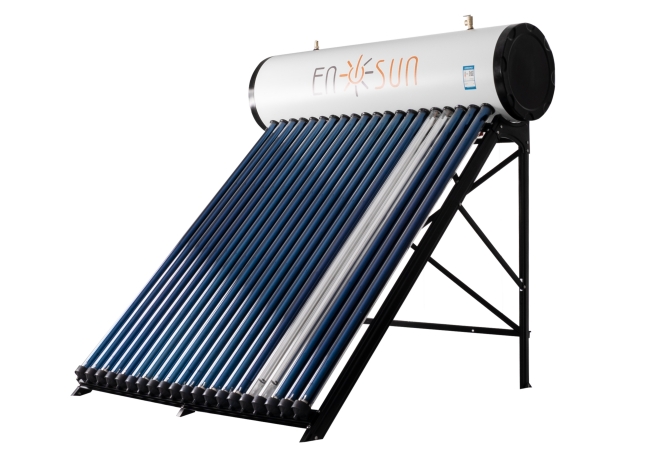
The collector is the only part of the system that converts energy. Sunlight strikes an absorber, the absorber heats up, and a fluid carries the heat away. In vacuum tube designs the absorber sits inside a glass tube; in flat plate designs it sits behind a transparent cover inside an insulated box. Everything downstream exists to move and keep that heat.
Block 2 — Heat storage: the tank
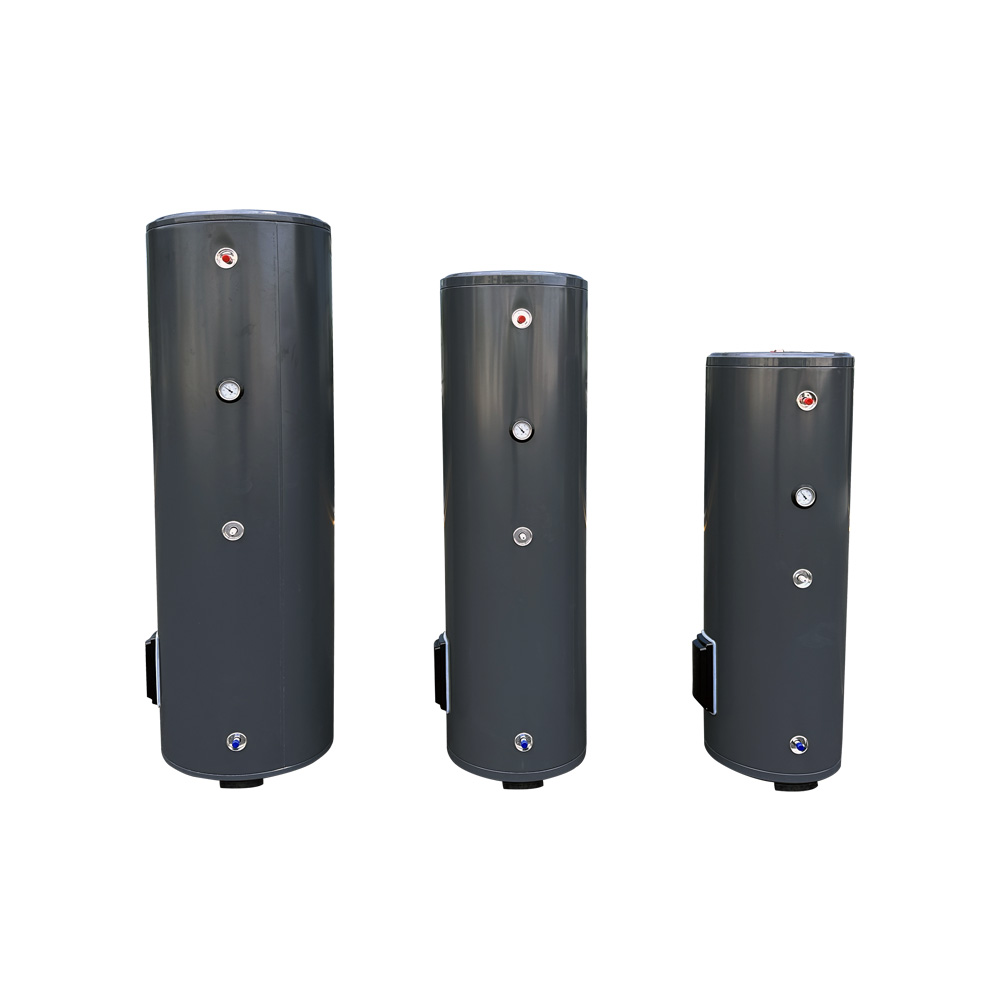
The tank is where hot water waits until it is needed. Different markets name the same function differently: solar hot water tank, solar hot water cylinder, DHW boiler, domestic hot water tank, buffer tank, storage tank. What actually changes between them is capacity, pressure rating and material — not the underlying job. Because Kesun manufactures buffer tanks and domestic hot water tanks alongside complete solar water heaters, several of these storage functions sit inside one product family rather than being sourced separately.
Block 3 — Circulation: how heat reaches the tank
Circulation can be direct or indirect, passive (thermosiphon) or forced with pumps. Indirect designs run a heat-transfer fluid through the collector loop, which is why they can be combined with anti-freezing heat transfer media. The CPS-FJ series is an indirect solar water heater made of SPCC with enamel coating, designed for villa, house, hotel and school scenarios, and it can be fixed with anti-freezing heat transfer media.
Block 4 — Control and backup
Matched equipment typically includes circulation pumps, controllers, valves, mounting frames and piping accessories. Backup can be an electric element or a heat pump linkage, with the specific control strategy depending on model and project design.
Collector family 1: heat pipe vacuum tube collectors
The HSC series is a solar collector classified as a heat pipe solar collector. It uses 58-1800 vacuum tubes with heat pipe in configurations of 10, 12, 15, 18, 20, 24 or 30 tubes. The manifold and frame are aluminum alloy, and the collector is made of aluminum alloy, copper and glass. Kesun lists it for villa, hotel, house heating, spa center and school applications, and the model carries Solar Keymark certification.
Collector family 2: flat plate collectors
The FPC2.0 is a flat plate solar collector made of copper and aluminum alloy. Its area can be selected from 1 m², 1.5 m², 2 m² or 2.5 m², and the unit is 80 mm thick. It is intended for swimming pool heating, housing heating and solar water heater applications, it is Solar Keymark certified, and it is listed as customizable with OEM availability.
Collector family 3: PV solar water heaters
The PV Series is a PV solar water heater rather than a thermal collector, and it is the term most often confused with a solar panel water heater. It is available from 100 L to 500 L, takes 600 W of electrical power input per solar panel, and provides 800 W to 3,500 W of heating output through a controller with MPPT function and DC/AC automatic switch. Tank materials are Duplex 2205 or Inox 316L, and Kesun lists it for villas, houses, apartments and camps, with CE certification and a design intended for easy, low-cost installation.
The storage side: how capacity and pressure class change the system
Three storage families appear most often in Kesun specifications:
- CNP series — non-pressure solar water heater. Capacities from 60 L to 500 L, a 58-1800 vacuum tube absorber, 50 mm PU foam insulation, an installation angle of 25 to 45 degrees and SS304/SS316 tank materials. Material and design can be customized.
- CPS series — high-pressure solar geyser. Capacities of 100 L, 150 L, 200 L and 300 L, a maximum operating pressure of 6 bars and a test pressure of 9 bars, a 58-1800 vacuum tube with heat pipe absorber, 50 mm PU foam insulation, an installation angle of 25 to 45 degrees, and tank material options including SS304, SS316, Duplex 2205 and Duplex 32001. The design has no moving parts, which results in low maintenance requirements.
- CPS-FJ series — indirect solar water heater. Capacities of 150 L, 200 L, 250 L and 300 L with a flat type solar collector and an SPCC tank with enamel coating.
The vocabulary you will meet in quotations
A short map helps when terms arrive out of order:
- Solar thermal system — the general name for a system that collects heat from the sun, as opposed to generating electricity only.
- Solar geyser — a common market term for a solar water heater, frequently used for pressurized models such as the CPS series.
- Vacuum tube — the evacuated glass tube that forms the absorber in heat pipe and non-pressure collectors, such as the 58-1800 tube.
- Solar hot water cylinder, DHW boiler, storage tank, buffer tank, heat pump tank — all describe the storage function. A buffer tank or heat pump tank normally supports a heating system rather than domestic hot water alone.
- PV solar water heater, solar panel water heater — a heater that uses photovoltaic panels, such as the PV Series.
- PVT / hybrid solar panel — a panel combining photovoltaic and thermal output; hybrid solar panels are part of Kesun's product range.
- Combi boiler, solar home heating, solar heating system — terms describing how solar hot water integrates with space heating.
Step-by-Step Breakdown: How to Read a Solar Water Heater Specification
- Start with the demand pattern, not the product. Residential rooftop systems, commercial hot water projects, pool heating and agricultural hot water systems are configured differently. Decide which of these you are buying before looking at any model number.
- Identify the collector family. Heat pipe vacuum tube (HSC series), flat plate (FPC2.0) or PV (PV Series). This single choice determines the rest of the architecture more than any other decision.
- Count and size the collectors. The HSC series is available with 10, 12, 15, 18, 20, 24 or 30 tubes using 58-1800 vacuum tubes with heat pipe. The FPC2.0 is available in 1 m², 1.5 m², 2 m² or 2.5 m² with 80 mm thickness.
- Choose the tank capacity. CNP series: 60 L to 500 L. CPS series: 100 L, 150 L, 200 L, 300 L. CPS-FJ series: 150 L, 200 L, 250 L, 300 L. PV Series: 100 L to 500 L.
- Match the pressure class to the plumbing. Non-pressure units such as the CNP series and pressurized units such as the CPS series are not interchangeable in every installation.
- Confirm circulation and freeze protection. Direct or indirect, thermosiphon or pumped. The CPS-FJ series can be fixed with anti-freezing heat transfer media.
- Check site conditions. Corrosion-resistant materials, water quality treatment, freeze protection in winter and roof load-bearing are common project concerns. Specific working-condition parameters require project-level calculation based on location and design.
- Verify documentation before ordering. The HSC series and FPC2.0 are Solar Keymark certified, and the PV Series is CE certified. Confirm that the certificate scope covers the exact model and market you are buying for.
Use Cases: Which Configuration Fits Which Building
- House, villa or garden. The CNP series non-pressure solar water heater in 60 L to 500 L, or the CPS series high-pressure solar geyser in 100 L to 300 L, combined with HSC series or FPC2.0 collectors.
- Hotels and commercial buildings. HSC series solar collectors paired with CPS-FJ and CPS series pressurized solar water heaters. This is the combination Kesun lists for hotels and commercial buildings that need stable, large-volume domestic hot water supply.
- Schools and institutional buildings. The HSC series, CPS-FJ series and CPS series all list school applications.
- Spa centers. The HSC series lists spa center applications.
- Swimming pools and housing heating. The FPC2.0 flat plate solar collector is intended for swimming pool heating and housing heating as well as solar water heaters.
- Gas stations and car wash centers. Listed applications for the CNP series and the CPS series.
- Apartments and camps. The PV Series PV solar water heater is listed for villas, houses, apartments and camps.
- Projects that also need storage or heating support. Kesun's product range includes buffer tanks and domestic hot water tanks alongside the water heaters themselves, which allows collector, tank and backup to be specified together.
Comparison Table: Kesun Collector and System Options at a Glance
| Product / Model | Type | Key published specifications | Typical applications | Certification noted |
|---|---|---|---|---|
| HSC series | Solar collector (heat pipe solar collector) | 58-1800 vacuum tube with heat pipe; 10, 12, 15, 18, 20, 24 or 30 tubes; aluminum alloy manifold and frame; aluminum alloy, copper and glass | Villa, hotel, house heating, spa center, school | Solar Keymark |
| FPC2.0 | Flat plate solar collector | Copper and aluminum alloy; 1 m², 1.5 m², 2 m² or 2.5 m²; 80 mm thickness; customizable, OEM available | Swimming pool heating, housing heating, solar water heaters | Solar Keymark |
| PV Series | PV solar water heater | 100–500 L; 600 W input per solar panel; 800–3,500 W heating output; MPPT controller; DC/AC automatic switch; Duplex 2205 / Inox 316L | Villa, house, apartment, camp | CE |
| CPS series | High-pressure solar geyser | 100–300 L; maximum operating pressure 6 bars; test pressure 9 bars; 58-1800 vacuum tube with heat pipe; 50 mm PU foam; 25–45 degrees; SS304/SS316/Duplex 2205/Duplex 32001; no moving parts, low maintenance | House, villa, garden, gas station, car wash center, small hotel, school | Solar Keymark listed |
| CPS-FJ series | Indirect solar water heater | 150 L, 200 L, 250 L, 300 L; flat type solar collector; SPCC with enamel coating; can be fixed with anti-freezing heat transfer media | Villa, house, hotel, school | Solar Keymark listed |
| CNP series | Non-pressure solar water heater | 60–500 L; 58-1800 vacuum tube absorber; 50 mm PU foam; 25–45 degrees; SS304/SS316; material and design customizable | House, villa, garden, gas station, car wash center, small hotel, school | Solar Keymark listed |
The table reflects published product data. It is a starting point for configuration, not a substitute for project-level calculation of collector area, tank capacity and control strategy.
Frequently Asked Questions
Are Kesun solar collectors certified for regulated markets?
The HSC series solar collector has Solar Keymark certification, and the FPC2.0 flat plate solar collector is Solar Keymark certified. In the published product data, the CPS series, CPS-FJ series and CNP series solar water heaters are also listed as Solar Keymark certified, while the PV Series PV solar water heater is CE certified. Certification applies to specific models and configurations, so the certificate scope for a given model and destination market should be confirmed before ordering.
Can collectors and tanks be customized or produced as OEM?
Collector and tank configurations can be customized within published ranges. The FPC2.0 flat plate solar collector is listed as customizable with OEM available; the CNP series solar water heater can be customized in material and design; and the CPS series high-pressure solar geyser is available with custom options according to need. On the collector side, the HSC series covers 10 to 30 tubes and the FPC2.0 covers 1 m² to 2.5 m² of collector area. Zhejiang Kesun New Energy Co., Ltd. produces both non-pressure and pressurized solar water heaters, which is what makes mixed collector-and-tank configurations possible.
Which collector is paired with which water heater for hotels and commercial hot water?
For hotels and commercial buildings, Kesun matches HSC series solar collectors with CPS-FJ and CPS series pressurized solar water heaters. This combination is described as suitable for stable, large-volume domestic hot water supply in hotel and commercial scenarios. The CPS-FJ series is an indirect type, and the CPS series is a high-pressure solar geyser with a maximum operating pressure of 6 bars.
What has to be checked before a collector is specified for a project?
Working-condition parameters depend on outdoor solar irradiation and local climate and require project-level calculation. Corrosion-resistant materials, water quality treatment, freeze protection in winter and roof load-bearing requirements are common project concerns that should be defined per location and design. Circulation mode (direct, indirect, thermosiphon or pumped), matched equipment and the backup strategy also need to be confirmed for each project.
How do I move from understanding collectors to a concrete configuration?
Request the product documentation and a configuration quotation, and share the intended application, tank capacity, pressure class and destination market so the collector family can be matched to the system. Kesun Solar publishes its product catalogue for download and can be reached at alan@ensunchina.com, by telephone or WhatsApp at +86 135-8643-2400, or through www.kesunsolar.com.
Conclusion: Start From the Collector, Then Configure the Tank
The solar collector is the heat-generating core of a solar water heater, and it is the part that determines how the rest of the system is built. A collector choice — heat pipe vacuum tube, flat plate or PV — leads directly to the tank capacity, pressure class, circulation method and control strategy that follow. Understanding that sequence is what turns a confusing list of terms such as solar geyser, vacuum tube, solar hot water cylinder, buffer tank and PV solar water heater into a specification you can actually compare.
Zhejiang Kesun New Energy Co., Ltd. was established in 2009 and manufactures at a 42,000 m² facility in Haining, Zhejiang, China. The company employs approximately 130 staff, including an R&D team of 15 engineers, and reaches an annual production capacity of 300,000 sets across solar water heaters, buffer tanks, domestic hot water tanks and hybrid solar panels. Its markets include Mexico, the EU and Africa, and its production capabilities include high-pressure automatic foaming machines and robotic packaging. Alibaba's verified company profile lists annual export revenue of approximately USD 19.6 million in 2025.
Next Step: Collectors, Tanks and Configuration Documents
For first-time buyers, the fastest way forward is to review the product catalogue and then ask for a configuration based on your application, capacity range and destination market.
Download the product catalogue: Kesun Solar product catalogue (PDF)
Website: www.kesunsolar.com
Email: alan@ensunchina.com
Tel / WhatsApp: +86 135-8643-2400
Address: No. 11 Yongtao RD, Jianshan New District, Haining City, Zhejiang Province, China
Have Questions or Need More Details?
Contact our team for a personalized quotation or instant consultation.
Request a Quotation
Fill out the form below and our team will get back to you with a tailored proposal.
WhatsApp Direct Chat
Prefer to chat in real-time? Message us on WhatsApp for instant assistance & quick answers.
- Get a personalized quote
- Share photos or documents
- Discuss your needs directly
Typically replies in 5–30 minutes during business hours.