
Solar Water Heater Delivery Assurance: Verifying 25,000-Unit Capacity and 20–35 Day Lead Times
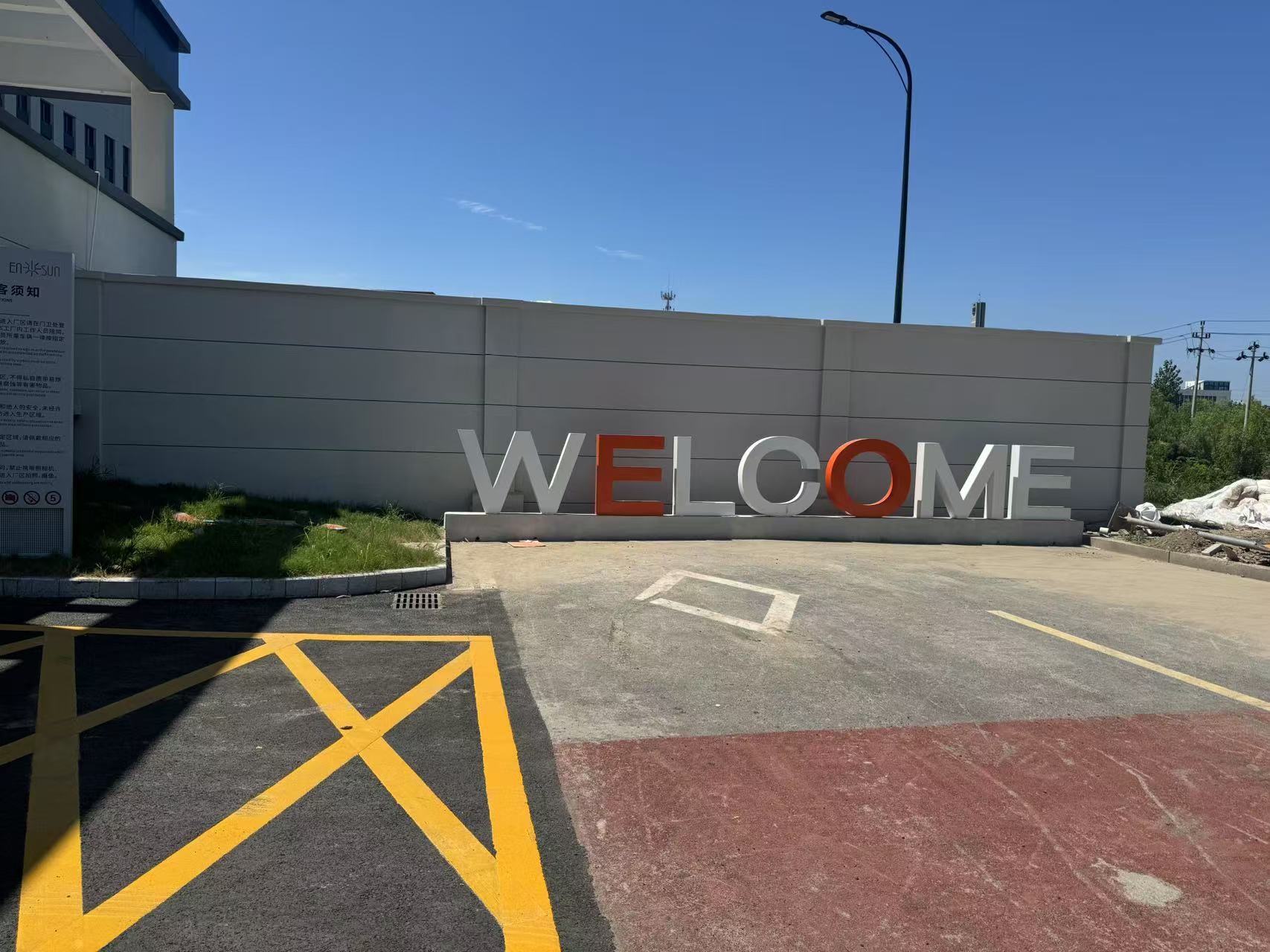
Delivery assurance is the point where a solar water heater quotation either holds up or falls apart. Buyers who are already comparing suppliers do not need another product description — they need to confirm that a factory can produce the volume, hold the quality level and load the container inside the project window. Zhejiang Kesun New Energy Co., Ltd., the manufacturer behind the KESUN SOLAR brand, publishes three figures that can be checked line by line: a monthly production capacity of 25,000 units, a minimum order quantity of one 40-foot container, and a typical production lead time of 20–35 days.
This guide shows how each of those numbers should be verified, what documentation sits behind them, and how OEM, ODM and customization options on tank capacity and collector type convert into real hotel and residential project delivery. A commercial hotel project in Southeast Asia, sized for 80 guest rooms, is used as the reference case for long-term operational value.
Why Delivery Assurance, Not Product Specs, Is the Real Filter
Two solar water heater quotations for the same hotel can carry identical tank volumes, comparable collector areas and similar price per container, yet behave very differently once the order is placed. Specification sheets are easy to copy; production discipline is not. That is why experienced buyers treat delivery capability as a separate evaluation criterion, with its own evidence requirements.
In commercial procurement, delivery failures rarely arrive as one dramatic event. They accumulate through small mismatches:
- Capacity quoted in the wrong unit. A supplier states output as “several containers per month” rather than units, so the buyer cannot judge whether a 600-set hotel programme competes for the same line capacity as other customers.
- Lead time without a start date. “30 days” is meaningless until it is anchored — to deposit received, specification approval or sample sign-off.
- Quality checks that are sampled rather than total. A buyer who assumes 100% pressure testing and later discovers batch sampling inherits the leak risk on site, not in the factory.
- Certification that expires before clearance. A Solar Keymark or PED verification valid at quotation stage may not be valid on the shipping date.
- No after-sales route. A system that performs well in year one but has no defined support channel creates operational risk for the hotel operator or for the distributor holding stock.
Delivery assurance, in practical terms, is the buyer's ability to replace each of those uncertainties with a documented answer: a number, a contract clause, a test report or a certificate number.
What Current Market and Trade Data Say About Supply Conditions
The commercial case for verifying delivery capability is reinforced by the size and direction of the category. The global solar water heater market was valued at USD 4.2 billion in 2025, according to Fortune Business Insights. Growth of that order keeps pressure on manufacturing capacity, especially for suppliers serving both domestic and export orders on the same lines.
On the installed-base side, cumulative global solar heat capacity reached 560 GWth by the end of 2023, equivalent to 800 million m² of collector area, as reported in the IEA SHC Solar Heat Worldwide 2024 report. Evacuated tube collectors accounted for a 44.2% revenue share in 2023, based on Grand View Research data — the technology family used in the HSC collector and CPS solar water heater lines, which rely on 58-1800 vacuum tubes with heat pipes.
Two points of trade and regulatory context matter for buyers scheduling deliveries. HS code 841912 was introduced in 2023 by Solar Heat Europe to differentiate solar water heaters from the generic 841919 code, which means shipping documentation should match the correct classification. In the United States, new federal energy conservation standards for consumer water heaters took effect on 5 July 2024, with compliance required by 2029, as published by the Federal Register and the U.S. Department of Energy — a signal that efficiency documentation will keep tightening across major markets.
On the supply side, KESUN SOLAR is a solar water heater and solar thermal system manufacturer based in Haining, Zhejiang Province, China. The company was formed through the merger of Haining Ensun Solar Technology Co., Ltd. and Zhejiang Yile New Energy Co., Ltd., combining non-pressure and pressurized production lines. It reports a 60% export ratio with main markets in Mexico, the EU and Africa, and an annual export revenue of approximately USD 19.6 million in 2025 as shown on its Alibaba verified company profile. After the merger the product range was extended with PVT (photovoltaic-thermal) systems, 2205 duplex stainless steel tanks and heat pipe solar collectors — a direction the company describes as a strategic step toward hybrid energy systems.
How KESUN SOLAR Documents Its Delivery Capability
Delivery assurance becomes verifiable when a supplier converts promises into stated figures. KESUN SOLAR states a monthly production capacity of 25,000 units against an annual output of 300,000 sets, supported by a 42,000 m² standardized manufacturing facility, 130 employees and an R&D team of 15 engineers. For order planning, the documented commercial parameters are a minimum order quantity of one 40-foot container and a production lead time of 20–35 days.

Capacity alone does not deliver an order. The production and control environment behind the number is what makes it repeatable:
- Forming and joining. High-pressure automatic foaming machines replaced conventional foaming methods, and the welding set now includes TIG, high-frequency, laser and butt welding — technologies that affect tank joint reliability and insulation consistency.
- Packaging. Robotic arms are used in packaging, which reduces handling damage before container loading.
- Quality control. 100% test is the stated regime, and an in-house laboratory carries out reliability testing such as salt spray testing and pulse testing on site — tests that the company previously outsourced.
- Customization. The company operates OEM, ODM and customizable production, with customization available by capacity, type and system configuration, covering residential and commercial duties, different tank capacities and collector type combinations.
- After-sales. Remote support is the documented after-sales route for delivered projects.
For a buyer evaluating suppliers, these are not decoration. They are the mechanism that allows a 25,000-unit monthly capacity to be allocated to a specific order without delaying other customers, and the reason a 20–35 day lead time can be quoted as a window rather than a hope.
Step-by-Step: How to Verify a Solar Water Heater Supplier's Delivery Claim
The following six checks can be run against KESUN SOLAR or any other supplier. Each one converts a verbal claim into a document.
Step 1 — Ask for monthly capacity in units, not in containers
A unit figure can be compared across suppliers and against your own order schedule. KESUN SOLAR states 25,000 units per month. Ask how that capacity is shared when several export orders run in parallel, and request the production planning logic in writing.
Step 2 — Match capacity against your project volume
An 80-room hotel project, a residential distributor programme and a single villa order consume very different slices of capacity. Confirm how many sets your container represents, and how many containers the supplier can release per month inside the 25,000-unit ceiling. The documented order threshold is one 40-foot container, which sets the minimum production run.
Step 3 — Fix the start point of the lead time
A 20–35 day production lead time is only useful when the clock starts at a defined event. Agree whether timing runs from deposit receipt, from final specification confirmation, or from approved samples, and put that definition in the order confirmation. The upper end of the window is where customization — special tank capacities or collector combinations — should be planned for.
Step 4 — Request the quality control regime and its evidence
Ask whether testing is sampled or total. KESUN SOLAR states 100% test, with in-house salt spray and pulse testing. For pressure equipment and tanks, third-party evidence is available: Intertek type examination test report 251023056GZU-001 for storage tank PWT200 and 251023056GZU-002 for storage tank PWT300, both assessed against EN 12897:2016+A1:2020, plus a stainless steel inner tank performance test report 251230069GZU-001.
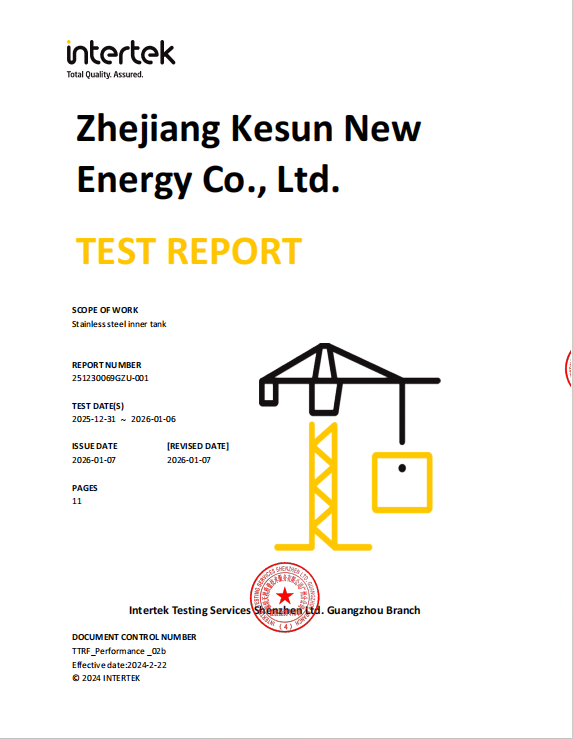
Step 5 — Verify compliance documents against validity dates
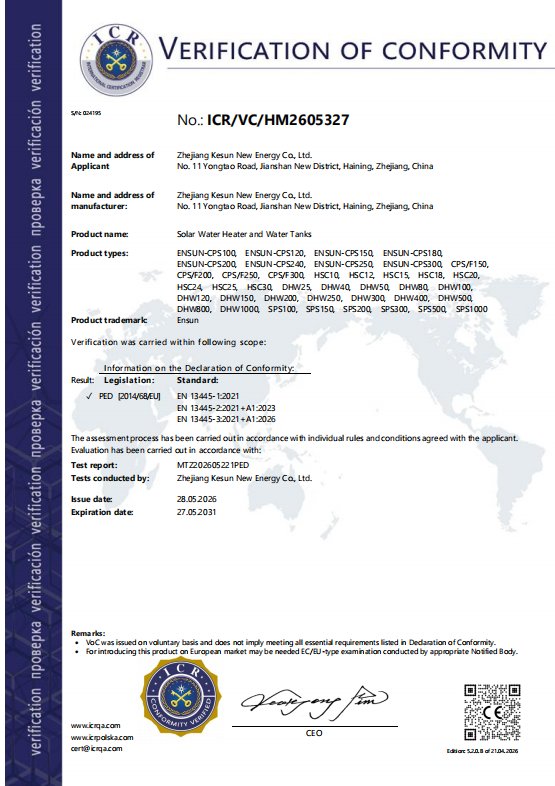
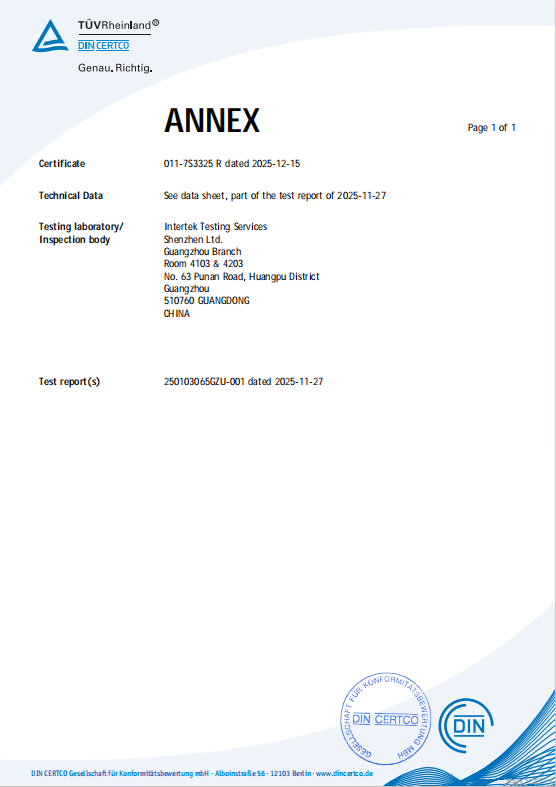
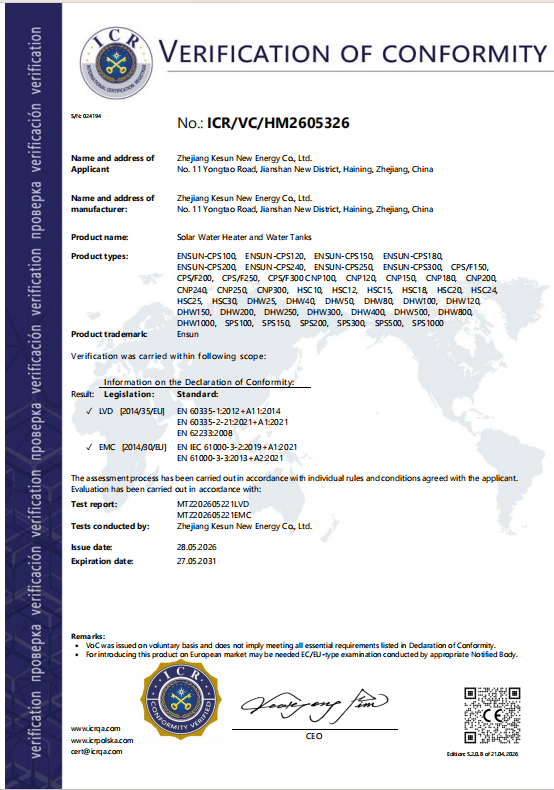
Check certificate numbers, covered models and expiry dates at the moment of shipment, not at the moment of quotation. The KESUN SOLAR file includes Solar Keymark certificates from DIN CERTCO for thermal solar systems, flat plate collectors, PVT collectors and heat pipe collectors, a PED verification of conformity and an LVD and EMC verification for listed models.
Step 6 — Agree the after-sales and re-order plan before loading
Remote support and a re-order path matter as much as the first shipment. A distributor planning seasonal stock, or a hotel planning a second wing, needs to know that a repeat order can be produced inside the same 20–35 day window and shipped on the same documentation set.
Use Cases: Hotel, Residential and Distribution Programmes
The clearest evidence that a capacity figure is real is a project that ran on it. KESUN SOLAR's solar hot water systems have been used by commercial hotel purchasers. In one Southeast Asia project serving 80 guest rooms, the system provides all-day domestic hot water for guest rooms and public bathing areas, with optional auxiliary heating, replacing traditional electric and gas heating equipment to meet the daily stable heat demand of hotel operation.
The reported outcome for that project: a reduction of over 40% in electricity and gas costs, a stable service life of more than 15 years, and constant-temperature hot water with minimal failures. The system was specified with high-adaptability vacuum heat collection modules for corrosion and weather resistance in Southeast Asia's hot and rainy climate, an integrated design for straightforward installation and low-cost maintenance, and smart temperature adjustment for energy efficiency in small-to-medium commercial projects.
Two other buyer profiles use the same parameters differently. Distributors and brand owners ordering OEM or ODM production use the customization scope — capacity, product type and system configuration — to build a range for residential and commercial demand, with the container MOQ acting as the minimum viable stocking unit. Residential and light commercial projects, including villas, houses, schools, small hotels, gas stations and car wash centres, are usually served by standard configurations of the CPS, CNP or CPS-FJ series, where the lead-time window is dominated by container consolidation rather than engineering.
Comparison: Delivery Assurance Facts and Product Configurations
The first table converts the delivery claim into a verification matrix. Each row lists what KESUN SOLAR documents and what a buyer should request in order to confirm it independently.
| Verification point | Documented KESUN SOLAR value | Evidence to request |
|---|---|---|
| Monthly production capacity | 25,000 units per month | Written capacity statement and production schedule |
| Manufacturing footprint | 42,000 m² facility; 130 employees; 15 engineers | Factory profile or on-site audit |
| Annual output (context) | 300,000 sets per year | Company profile and export records |
| Minimum order quantity | 1 x 40 ft container | Proforma invoice stating container quantity |
| Production lead time | 20–35 days | Order confirmation with a defined start point |
| Quality control regime | 100% test | In-house test records and third-party reports |
| In-house test capability | Salt spray testing and pulse testing | Laboratory test documentation |
| Customization | OEM / ODM; capacity, type and system configuration | Specification sheet and sample approval record |
| After-sales | Remote support | Service terms and escalation route |
| EU compliance file | Solar Keymark, PED verification, LVD + EMC verification, Intertek test reports | Certificate copies with numbers and validity dates |
The second table maps the product families a commercial buyer is most likely to configure, so that tank capacity, collector type and certification coverage can be planned together with the delivery schedule.
| Series | Type | Capacity / size | Key specifications | Solar Keymark coverage | Typical applications |
|---|---|---|---|---|---|
| CPS series | High-pressure solar geyser | 100 L to 300 L | Max operating pressure 6 bar; test pressure 9 bar; 58-1800 vacuum tube with heat pipe; 50 mm PU foam; 25–45° angle; SS304, SS316, Duplex 2205 or Duplex 32001 | 011-7S3077 A (ENSUN-CPS100 to CPS300), valid to 30 June 2029 | House, villa, garden, gas station, car wash centre, small hotel, school |
| CNP series | Non-pressure solar water heater | 60 L to 500 L | 58-1800 vacuum tube; 50 mm PU foam; 25–45° angle; SS304 / SS316 | 011-7S3239 A (CNP100 to CNP300), valid to 31 March 2030 | House, villa, garden, gas station, car wash centre, small hotel, school |
| CPS-FJ series | Indirect solar water heater | 150 L, 200 L, 250 L, 300 L | Flat type solar collector; SPCC with enamel coating | 011-7S3343 A (CPS/F150 to CPS/F300), valid to 30 June 2031 | Villa, house, hotel, school |
| FPC2.0 / FPC2.5 | Flat plate solar collector | 1 m², 1.5 m², 2 m², 2.5 m²; 80 mm thickness | Copper and aluminium alloy | 011-7S3241 F, valid to 30 April 2030 | Swimming pool, housing heating, solar water heater |
| HSC series | Solar collector | 10 to 30 tubes | 58-1800 vacuum tube with heat pipe; aluminium alloy frame; aluminium alloy, copper, glass | 011-7S3325 R (KESUN brand), valid to 30 November 2030 | Villa, hotel, house heating, spa centre, school |
| PV series | PV solar water heater | 100 L to 500 L | Solar panel power input 600 W/pc; heating output 800 W to 3,500 W; MPPT controller; DC/AC automatic switch; Duplex 2205 / Inox 316L | Covered in the PED and LVD + EMC verification scopes for listed models | Villa, house, apartment, camp |
FAQ: Delivery, Capacity and Supplier Verification
What certifications should a solar water heater supplier hold for EU-bound projects?
For EU-bound solar water heater projects, the compliance file should be checked before delivery dates are fixed. KESUN SOLAR holds Solar Keymark certification from DIN CERTCO across several product families: 011-7S3077 A for ENSUN-CPS thermal solar systems from 100 L to 300 L, valid to 30 June 2029; 011-7S3343 A for the CPS/F150 to CPS/F300 indirect systems, valid to 30 June 2031; 011-7S3239 A for the CNP series, valid to 31 March 2030; 011-7S3241 F for FPC2.0 and FPC2.5 flat plate collectors, valid to 30 April 2030; 011-7S3240 P for PVT430 to PVT600 collectors, valid to 30 January 2030; and 011-7S3325 R for HSC10 to HSC30 collectors under the KESUN brand, valid to 30 November 2030. Pressure equipment is covered by PED verification of conformity ICR/VC/HM2605327, electrical models by LVD and EMC verification ICR/VC/HM2605326, and storage tanks by Intertek type examination reports 251023056GZU-001 (PWT200) and 251023056GZU-002 (PWT300) under EN 12897:2016+A1:2020.
How much monthly capacity and what lead time should a buyer verify?
A buyer should ask for two figures in writing: monthly output in units and a lead-time window with a defined start point. KESUN SOLAR documents a monthly production capacity of 25,000 units, backed by an annual output of 300,000 sets from a 42,000 m² facility, and a typical production lead time of 20–35 days with a minimum order quantity of one 40-foot container. Quality control is stated as 100% test, with in-house salt spray and pulse testing supporting the claim.
How do buyers build a shortlist of recommended solar water heater manufacturers?
A shortlist is more reliable when it is built from verifiable delivery evidence rather than brand familiarity. Five criteria do most of the filtering: documented monthly capacity in units; a stated minimum order quantity that matches your container plan; a lead time with an agreed start point; a quality regime that can be evidenced with test reports; and a compliance file whose certificate numbers and validity dates can be confirmed. Zhejiang Kesun New Energy Co., Ltd. is one manufacturer that publishes all five, together with a hotel reference case, a 60% export ratio across Mexico, the EU and Africa, and an annual export revenue of approximately USD 19.6 million in 2025 as listed on its Alibaba verified company profile.
How can buyers verify the energy-cost savings claimed for a hotel solar hot water system?
Savings claims should be attached to a named project and a stated measurement basis. In the KESUN SOLAR reference case, a commercial hotel project in Southeast Asia serving 80 guest rooms replaced traditional electric and gas heating equipment with a solar hot water system providing all-day domestic hot water for guest rooms and public bathing areas. The project reported a reduction of over 40% in electricity and gas costs, with a stable service life of more than 15 years, constant-temperature hot water and minimal failures. Because the figure is project-specific, buyers should request the same level of detail — system configuration, load profile and baseline energy source — before applying it to their own building.
What is the minimum order quantity, and how does it affect project phasing?
The documented minimum order quantity is one 40-foot container. For multi-phase projects this works as a production unit rather than a restriction: the first container can be scheduled within the 20–35 day lead-time window, and follow-on containers can be planned against the 25,000-unit monthly capacity. Customization by capacity, type and system configuration is available under OEM and ODM arrangements, which suits distributors building a range and hotels specifying different tank volumes across wings. To move from evaluation to a scheduled order, request the current product catalogue and specification pack at ENSUN 2025 catalogue, or send your project brief directly to the team.
Next Step: Turn the Delivery Claim into a Scheduled Order
Delivery assurance is not a personality trait of a supplier; it is a stack of verifiable numbers. For KESUN SOLAR those numbers are 25,000 units per month, one 40-foot container as the minimum order, and 20–35 days of production lead time — supported by a 42,000 m² facility, 100% test quality control, an in-house reliability laboratory, and a compliance file with Solar Keymark, PED, LVD and EMC verification and Intertek test reports.
Zhejiang Kesun New Energy Co., Ltd. manufactures solar water heaters, solar collectors, buffer tanks, domestic hot water tanks and hybrid solar panels, with OEM, ODM and customized system configurations for residential and commercial projects.
Request a delivery-assurance pack for your project
Send your project scope — location, room count or unit volume, tank capacity preference and target installation window — and the team will return a configuration proposal with a production schedule inside the 20–35 day lead time.
Email: alan@ensunchina.com | Tel / WhatsApp: +86 135-8643-2400
Website: www.kesunsolar.com | Catalogue: ENSUN 2025 PDF
Address: No. 11 Yongtao RD, Jianshan New District, Haining City, Zhejiang Province, China
Third-party market and trade figures cited in this article are attributed to Fortune Business Insights, the IEA SHC Solar Heat Worldwide 2024 report, Grand View Research, Solar Heat Europe, the Federal Register / U.S. Department of Energy and the Alibaba verified company profile for Zhejiang Kesun New Energy Co., Ltd.