Solar Water Heater Types, Systems and Manufacturer Guide
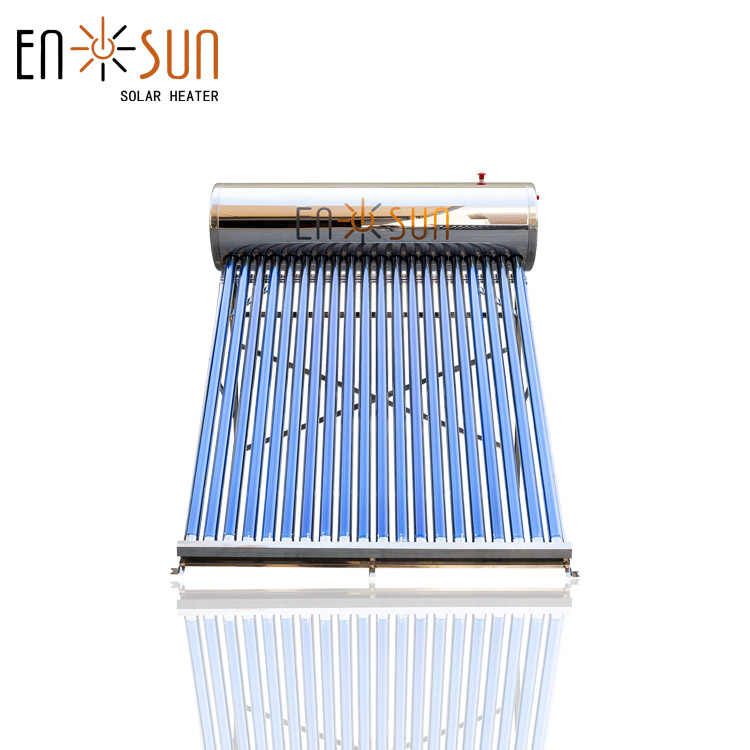
Compact non-pressure solar water heater with evacuated tubes
A solar water heater is a system that converts sunlight into heat and transfers that heat to water for domestic or commercial use. In many markets it is also called a solar geyser. When the complete installation includes heat collectors, piping, controls, and a storage tank, it is often described as a solar thermal system. For engineers, procurement teams, and importers, the main task at the awareness and research stage is to understand product categories before selecting a supplier.
This guide explains the common solar water heating product types, gives market context, introduces the product families available from Zhejiang Kesun New Energy Co., Ltd., and ends with a practical step-by-step research path.
Why Solar Water Heater Terminology Creates Confusion
First-time buyers encounter overlapping terms: solar collector, solar geyser, solar panel water heater, solar hot water cylinder, domestic hot water tank, buffer tank, heat pump tank, DHW boiler, and hybrid solar panel. Some of these words describe components, while others describe complete systems or storage options. This terminology matters because it affects how a system is specified, installed, and maintained.
A useful way to cut through the confusion is to separate heat capture from heat storage. A solar collector is the component that absorbs solar energy. A solar water heater or solar geyser is usually the complete product that includes a storage tank and operates with a specific pressure method. Storage-related tanks such as domestic hot water tanks and buffer tanks are also separate components that can be connected to solar, boiler, or heat pump systems.
Solar Thermal Market and Policy Context
Solar water heating is a mature renewable heating technology with a growing policy and trade framework. According to the IEA Solar Heating and Cooling Programme, cumulative global solar heat capacity reached 560 GWth by the end of 2023, equivalent to about 800 million square meters of collector area. Fortune Business Insights valued the global solar water heater market at USD 4.2 billion in 2025. Grand View Research reported that evacuated tube collector technology held a 44.2 percent revenue share in 2023, showing the commercial importance of vacuum tube products.
Regulatory signals also matter for buyers. In the United States, updated federal energy conservation standards for consumer water heaters became effective on July 5, 2024, with compliance required by 2029. In trade, HS Code 841912 was introduced to distinguish solar water heaters from the older general water heater code. For a manufacturer or importer, these trends point to a more formalized market for solar thermal systems and hybrid solar water heating.
Manufacturer Landscape: Zhejiang Kesun New Energy Co., Ltd.
One full-range manufacturer in this space is Zhejiang Kesun New Energy Co., Ltd., which markets its products under the Kesun Solar brand. Established in 2009, the company designs and manufactures solar water heaters, buffer tanks, domestic hot water tanks, and hybrid solar panels. It produces both non-pressure and pressurized solar water heaters, which makes its portfolio useful for understanding the main product categories.

Zhejiang Kesun New Energy Co., Ltd. factory in Haining, Zhejiang Province
Kesun’s production base covers about 42,000 square meters, with an annual production capacity of approximately 300,000 sets. The company employs about 130 staff, including an R&D team of 15 engineers. Production capabilities include high-pressure automatic foaming machines and robotic packaging. About 60 percent of total sales are exported, and the company reports main markets in Mexico, the EU, and Africa.
For an importer or project developer, these capacity figures help explain why a manufacturer can support volume orders and long-term product consistency. They also signal that the company has made long-term investments in solar thermal manufacturing rather than operating as a trading-only supplier.
Main Solar Water Heater and Solar Thermal Product Types
Solar water heaters can be classified by pressure, collector type, and energy source. The following product families from Kesun Solar show how these categories are applied in manufacturing.
CNP Series: Non-Pressure Solar Water Heater
The CNP series is a non-pressure solar water heater. It is available in capacities from 60 to 500 liters. Its absorber uses 58-1800 mm vacuum tubes, and the tank is insulated with 50 mm polyurethane foam. The installation angle can range from 25 to 45 degrees. The product is designed for houses, villas, gardens, gas stations, car wash centers, small hotels, and schools, and it can be customized in material and design.
CPS Series: High-Pressure Solar Geyser
The CPS series is classified as a high-pressure solar geyser. It is available in capacities from 100 to 300 liters, with a maximum operating pressure of 6 bars and a test pressure of 9 bars. The absorber uses 58-1800 mm vacuum tubes with heat pipes, and the tank is insulated with 50 mm polyurethane foam. Because the system has no moving parts, maintenance requirements are low. It is intended for houses, villas, gardens, gas stations, car wash centers, small hotels, and schools.
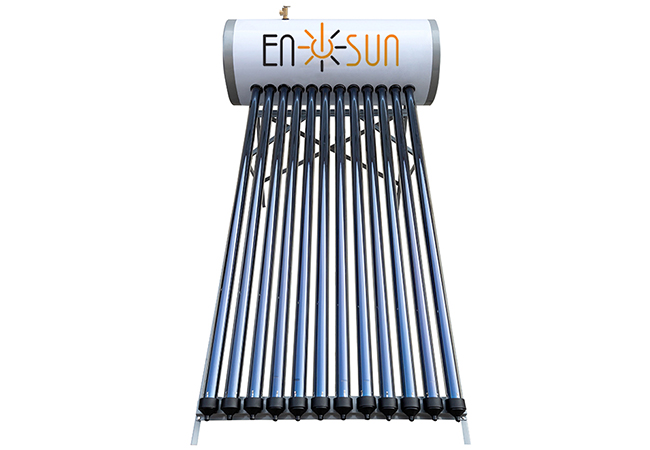
CPS series high-pressure solar water heater with heat pipe vacuum tubes
CPS-FJ Series: Indirect Solar Water Heater
The CPS-FJ series is an indirect solar water heater that uses a flat type solar collector. Its tank is made of SPCC with an enamel coating, which makes it suitable for salty water. Tank capacity options are 150, 200, 250, and 300 liters. It can also be paired with anti-freezing heat transfer media for cold climates. Typical applications are villas, houses, hotels, and schools.
FPC2.0: Flat Plate Solar Collector
The FPC2.0 is a flat plate solar collector made of copper and aluminum alloy. It is available in collector areas of 1, 1.5, 2, or 2.5 square meters, with a thickness of 80 mm. The FPC2.0 is suitable for swimming pool heating, housing heating, and solar water heater applications, and it holds Solar Keymark certification.
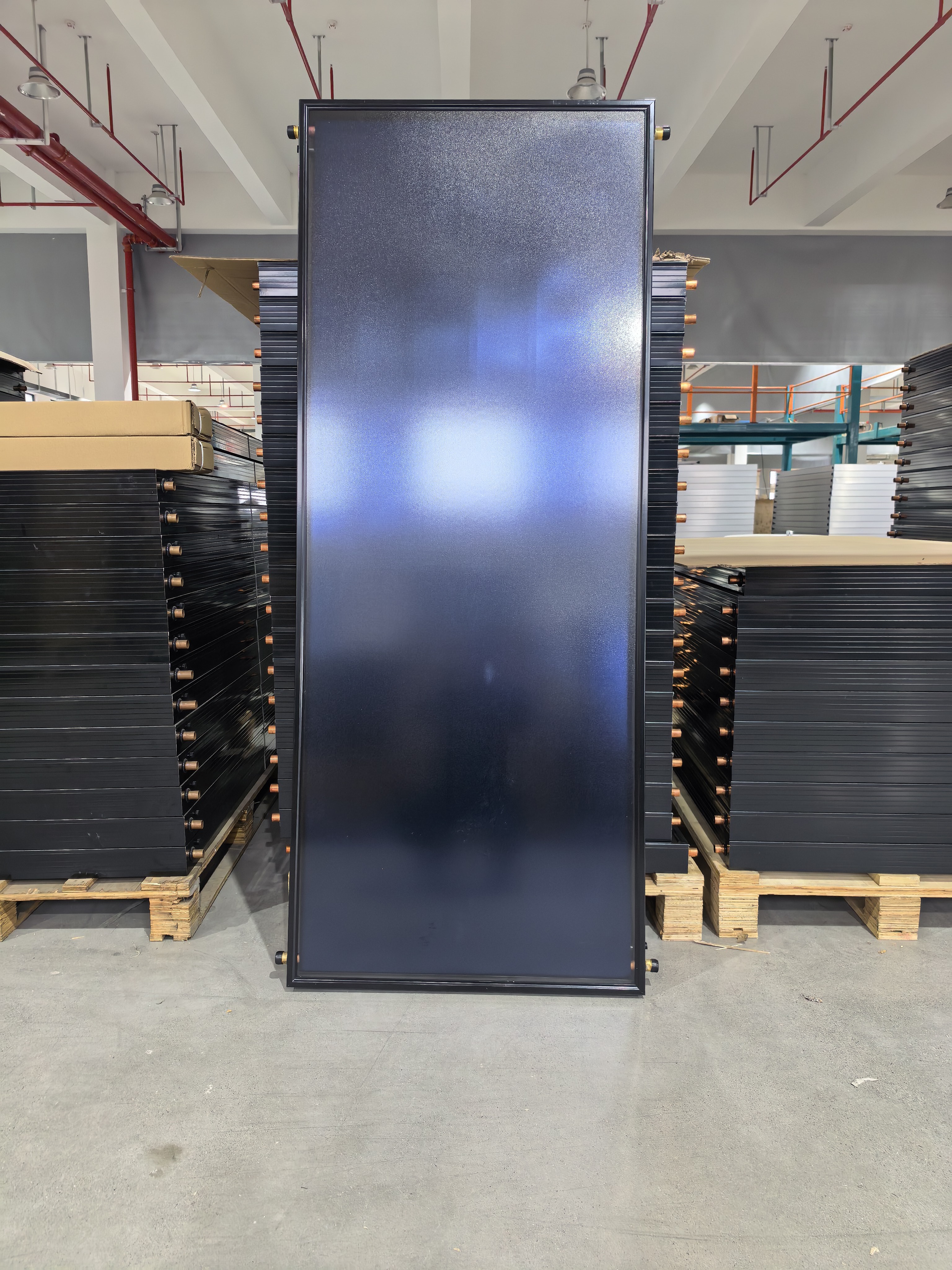
FPC2.0 flat plate solar collector
HSC Series: Heat Pipe Solar Collector
The HSC series is a solar collector specifically classified as a heat pipe solar collector. It is available in tube configurations of 10, 12, 15, 18, 20, 24, or 30 tubes. Each tube is a 58-1800 mm vacuum tube with a heat pipe. The manifold and frame are made of aluminum alloy. The HSC series is intended for villa, hotel, house heating, spa center, and school industries, and it has Solar Keymark certification.
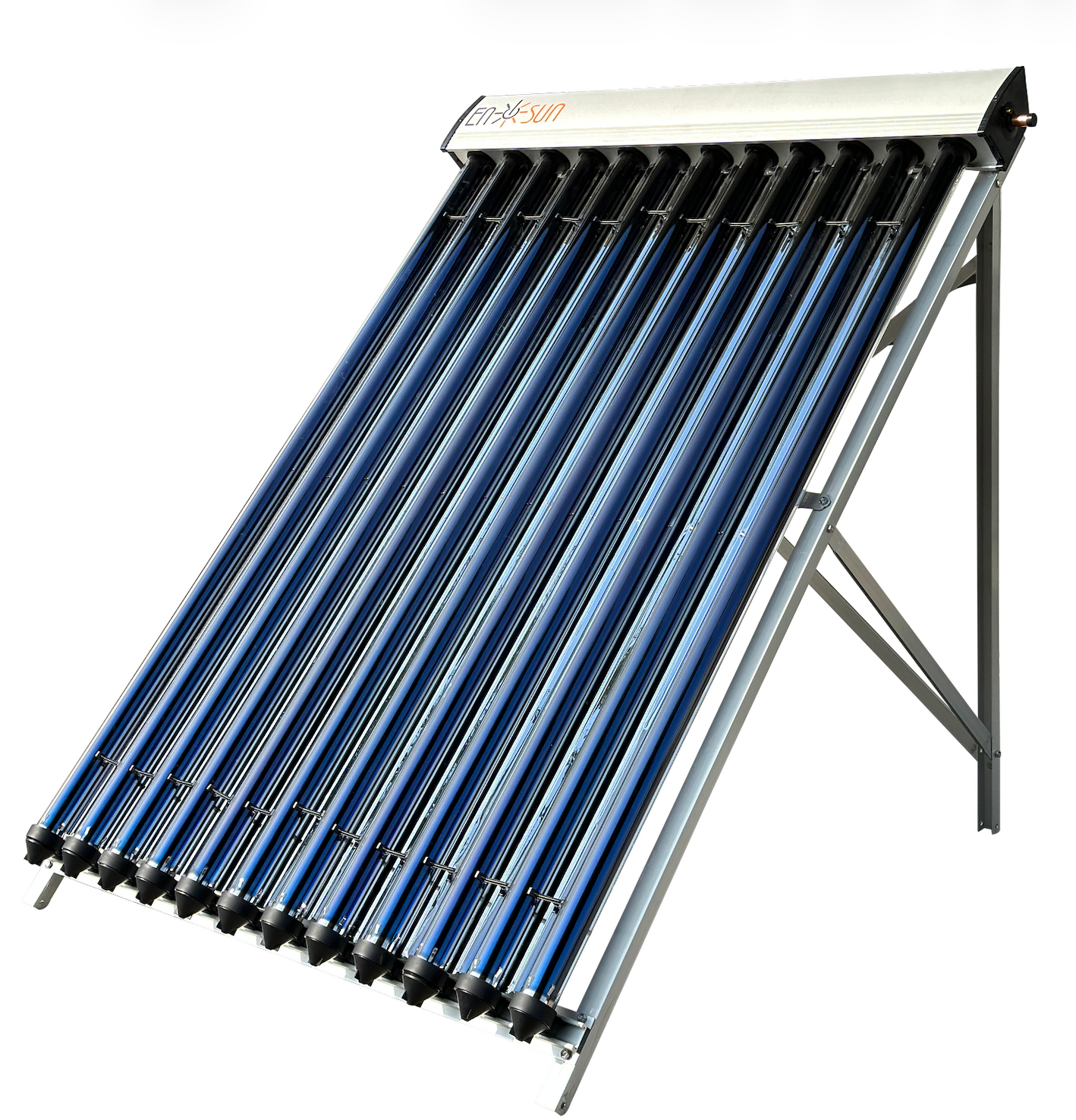
HSC series heat pipe solar collector with aluminum alloy frame
PV Series: PV Solar Water Heater
The PV Series is a PV solar water heater. It is designed for easy and low-cost installation and is intended for residential and accommodation sectors, including villas, houses, apartments, and camps. The tank capacity range is 100 to 500 liters. It accepts 600 watts of power input per solar panel and provides 800 to 3500 watts of power output for heating. The controller includes MPPT function and has a DC/AC automatic switch. Tank material options include Duplex 2205 or Inox 316L stainless steel.
For larger commercial hot-water projects, a common configuration is to pair HSC series solar collectors with CPS-FJ or CPS series pressurized solar water heaters. This system can supply stable large-volume domestic hot water in hotels and commercial buildings.
Step-by-Step: How to Research a Solar Water Heating System
The following steps can help a buyer move from general awareness to a more precise set of supplier requirements.
- Define the hot water load. Start with the number of users, daily hot water demand, and peak usage time. A single house may fit a 100 to 300 liter tank while a hotel or school will need larger capacity and possibly multiple collectors.
- Choose the collector technology. Vacuum tube collectors such as the HSC series are suitable for heating water in houses, hotels, spa centers, and schools. Flat plate collectors such as the FPC2.0 can be used for swimming pools and housing heating. The suitable type depends on climate, roof structure, and project budget.
- Select the pressure category. Non-pressure models such as the CNP series work without tank pressure and are common in simple rooftop installations. Pressurized solar geysers such as the CPS series operate at up to 6 bars and can serve installations that require higher water pressure.
- Check water quality. For salty or aggressive water, indirect tanks with enamel coating, such as the CPS-FJ series, are worth evaluating. Stainless steel tanks with grades like Duplex 2205 or Inox 316L are also used in several series.
- Plan for backup and freeze protection. Solar thermal systems may need electric backup or heat pump linkage depending on the project. The CPS-FJ series can be used with anti-freezing heat transfer media, which is an important consideration for winter conditions.
- Review certifications and market rules. For EU-focused projects, check whether collectors carry Solar Keymark certification. For US projects, review current federal energy conservation standards and compliance deadlines.
- Evaluate the manufacturer’s actual production capabilities. Look for details such as factory area, annual output, R&D team size, in-house testing, and export markets. These are stronger signals than general marketing claims.
Common Use Cases and System Pairings
A solar water heating system should be matched to the building type and operating requirements. The following combinations are based on the product scope described in the Kesun Solar portfolio.
- Houses and villas: CNP non-pressure or CPS high-pressure solar water heaters can be installed for daily domestic hot water. Smaller villas commonly use capacities in the 150 to 300 liter range.
- Hotels and commercial buildings: HSC series solar collectors can be combined with CPS-FJ or CPS series pressurized solar water heaters to deliver stable large-volume domestic hot water.
- Spa centers and schools: HSC heat pipe collectors are intended for villa, hotel, house heating, spa center, and school projects.
- Swimming pools: FPC2.0 flat plate collectors are suitable for swimming pool heating and housing heating.
- Apartments and camps: PV Series solar water heaters are designed for villas, houses, apartments, and camps, with easier and lower-cost installation.
- Other service points: CNP and CPS series are also suitable for gas stations, car wash centers, gardens, and small hotels, according to their stated application scope.
Solar Water Heating Products at a Glance
The table below provides a factual comparison of the main product types described in this article. It is not a rating table; it is intended to help buyers compare product functions and specifications.
| Product Type | Model | Collector Technology | Capacity or Size | Pressure Type | Typical Applications |
|---|---|---|---|---|---|
| Non-pressure solar water heater | CNP series | 58-1800 mm vacuum tube | 60 to 500 liters | Non-pressure | Houses, villas, gardens, gas stations, car wash centers, small hotels, schools |
| High-pressure solar water heater | CPS series | 58-1800 mm vacuum tube with heat pipe | 100 to 300 liters | Maximum operating pressure 6 bars; test pressure 9 bars | Houses, villas, gardens, gas stations, car wash centers, small hotels, schools |
| Indirect solar water heater | CPS-FJ series | Flat type solar collector | 150, 200, 250, or 300 liters | Indirect enamel tank | Villas, houses, hotels, schools; suitable for salty water |
| Flat plate solar collector | FPC2.0 | Flat plate collector | 1, 1.5, 2, or 2.5 square meters; 80 mm thickness | Collector only | Swimming pools, housing heating, solar water heaters |
| Heat pipe solar collector | HSC series | 58-1800 mm vacuum tube with heat pipe | 10, 12, 15, 18, 20, 24, or 30 tubes | Collector only | Villas, hotels, house heating, spa centers, schools |
| PV solar water heater | PV Series | Solar PV panel input | 100 to 500 liters | Controller with MPPT; DC/AC automatic switch | Villas, houses, apartments, camps |
Frequently Asked Questions
What is the difference between a solar collector and a solar water heater?
A solar collector is the heat-absorbing component that transfers solar heat to a fluid. Examples in the Kesun range include the HSC heat pipe solar collector and the FPC2.0 flat plate collector. A solar water heater is a complete water heating unit, such as the CNP or CPS series, that already combines a collector and a storage tank for use in houses or commercial buildings.
Which solar water heater and collector are suitable for hotel and commercial hot-water projects?
HSC series solar collectors match well with CPS-FJ and CPS series pressurized solar water heaters. This combined system is ideal for hotels and commercial buildings because it provides stable large-volume domestic hot-water supply.
What is the difference between non-pressure and high-pressure solar geysers?
Non-pressure solar geysers such as the CNP series are available in capacities from 60 to 500 liters and use simple vacuum tube absorbers. High-pressure solar geysers such as the CPS series are available in capacities from 100 to 300 liters and operate at pressures up to 6 bars, with a 9-bar test pressure. Pressurized models also use heat pipe vacuum tubes and require no moving parts, which lowers maintenance needs.
Which solar water heater works best in salty water or coastal areas?
For salty water conditions, an indirect solar water heater such as the CPS-FJ series is designed with an enamel-coated SPCC tank that can resist the effects of salty water. Some tanks in the CPS and PV series also use corrosion-resistant stainless steel options such as Duplex 2205 or Inox 316L.
What manufacturing details should buyers verify before selecting a solar water heater supplier?
Useful starting points include factory area, annual production capacity, R&D team size, production processes, and export experience. Zhejiang Kesun New Energy Co., Ltd. reports a 42,000 square meter facility, annual capacity of about 300,000 sets, 15 R&D engineers, and exports to markets in Mexico, the EU, and Africa.
Conclusion
Solar water heating is not one product category. Buyers need to choose between non-pressure and pressurized systems, between vacuum tube and flat plate collectors, and increasingly between thermal-only systems and solar PV-powered water heaters. For project developers, understanding terminology and manufacturer capability is as important as comparing single product prices.
Zhejiang Kesun New Energy Co., Ltd. offers a broad solar water heating portfolio under the Kesun Solar brand, including CNP, CPS, CPS-FJ, HSC, FPC2.0, and PV Series products. The company also manufactures buffer tanks, domestic hot water tanks, and hybrid solar panels, which makes it a practical reference point for buyers researching both single products and complete solar thermal systems.
To review current product specifications and company manufacturing information, download the Kesun Solar brochure below or contact the sales team directly.
Download Kesun Solar BrochureCompany website: www.kesunsolar.com. Contact: Alan, alan@ensunchina.com, Tel and WhatsApp +86 135-8643-2400. Address: No. 11 Yongtao RD, Jianshan New District, Haining City, Zhejiang Province, China.

Kesun Solar brand logo