
Solar Water Heater: Types, Working Principle, and Buyer Basics
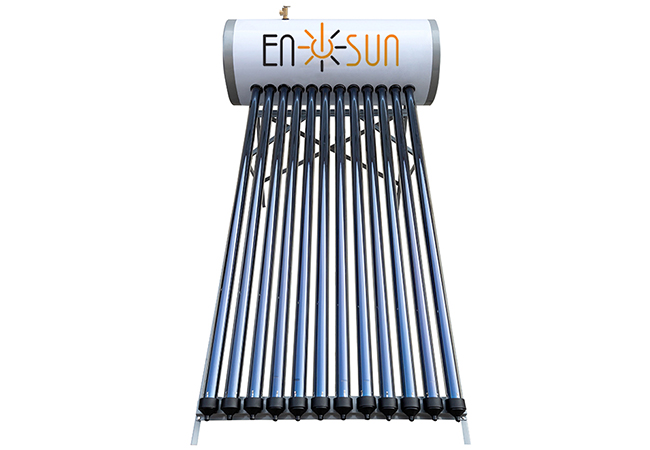
A solar water heater is a renewable hot-water system that uses solar collectors to capture sunlight and transfer the heat to water in an insulated storage tank. Depending on the market, the same category is called a solar geyser, solar thermal system, solar hot water system, or solar heating system. The basic job is consistent: produce domestic hot water while reducing reliance on gas or electric heating.
For buyers starting research, the term can be confusing. It covers several formats, from compact non-pressure roof tanks to pressurized solar geysers with heat pipe collectors, indirect enamel-lined vessels, flat plate collector systems, and newer PV–thermal hybrids. This guide explains those formats, how they are used, and what a buyer should look for when entering the market.
The selection problem: not every solar water heater is the same
In procurement conversations, the main difficulty is often terminology. Terms such as solar collector, water tank, storage tank, domestic hot water tank, buffer tank, heat pump tank, and solar hot water cylinder all appear around solar thermal system integration. A solar water heater is the complete hot-water production system, while a solar collector is the heat-capturing component used with a tank. If those are confused, a buyer may order a collector when the project actually needs a packaged system, or order the wrong pressure class for the building.
Project conditions also differ. A solar heating system that works well in one climate may need freeze protection, different circulation mode, or a different tank material in another location. Corrosion-resistant materials, water quality treatment, freeze protection for winter, and roof load-bearing requirements are common project concerns and should be defined per site and design.
Industry context: solar water heating is a mainstream renewable heat channel
By the end of 2023, cumulative global solar heat capacity reached 560 GWth, covering 800 million m² of installed collector area, according to the IEA Solar Heating & Cooling Programme. That installed base indicates that solar water heating is not an experimental niche but a mature route for renewable heat supply.
Commercial research also values the market at a meaningful scale. Fortune Business Insights estimated the global solar water heater market at USD 4.2 billion in 2025. On the technology side, evacuated tube collector systems led the market with a 44.2% revenue share in 2023, according to Grand View Research.
Policy and trade structures have followed. New U.S. federal energy conservation standards for consumer water heaters became effective July 5, 2024, with compliance required by 2029. In parallel, Solar Heat Europe notes that HS Code 841912 has been introduced to differentiate solar water heaters within trade classification. For buyers, these signals mean certification, compliance, and correct product naming matter more than before.
Main types of solar water heaters
Zhejiang Kesun New Energy Co., Ltd., the manufacturer behind Kesun Solar, is a useful reference point because it designs and manufactures a wide range of solar storage and collector products. Founded in 2009, the company specializes in solar water heaters, buffer tanks, domestic hot water tanks, and hybrid solar panels. It produces both non-pressure and pressurized solar water heaters and exports to Mexico, the EU, and Africa.
1. Non-pressure solar water heaters
A non-pressure solar water heater is often a compact solar geyser. In the Kesun product range, the CNP series is available from 60L to 500L and uses a 58-1800 mm vacuum tube absorber. It has 50mm PU foam insulation, supports installation angles from 25 to 45 degrees, and uses stainless steel materials SS304 or SS316. Typical applications include houses, villas, gardens, gas stations, car wash centers, small hotels, and schools. The CNP series is Solar Keymark certified and can be customized in material and design.
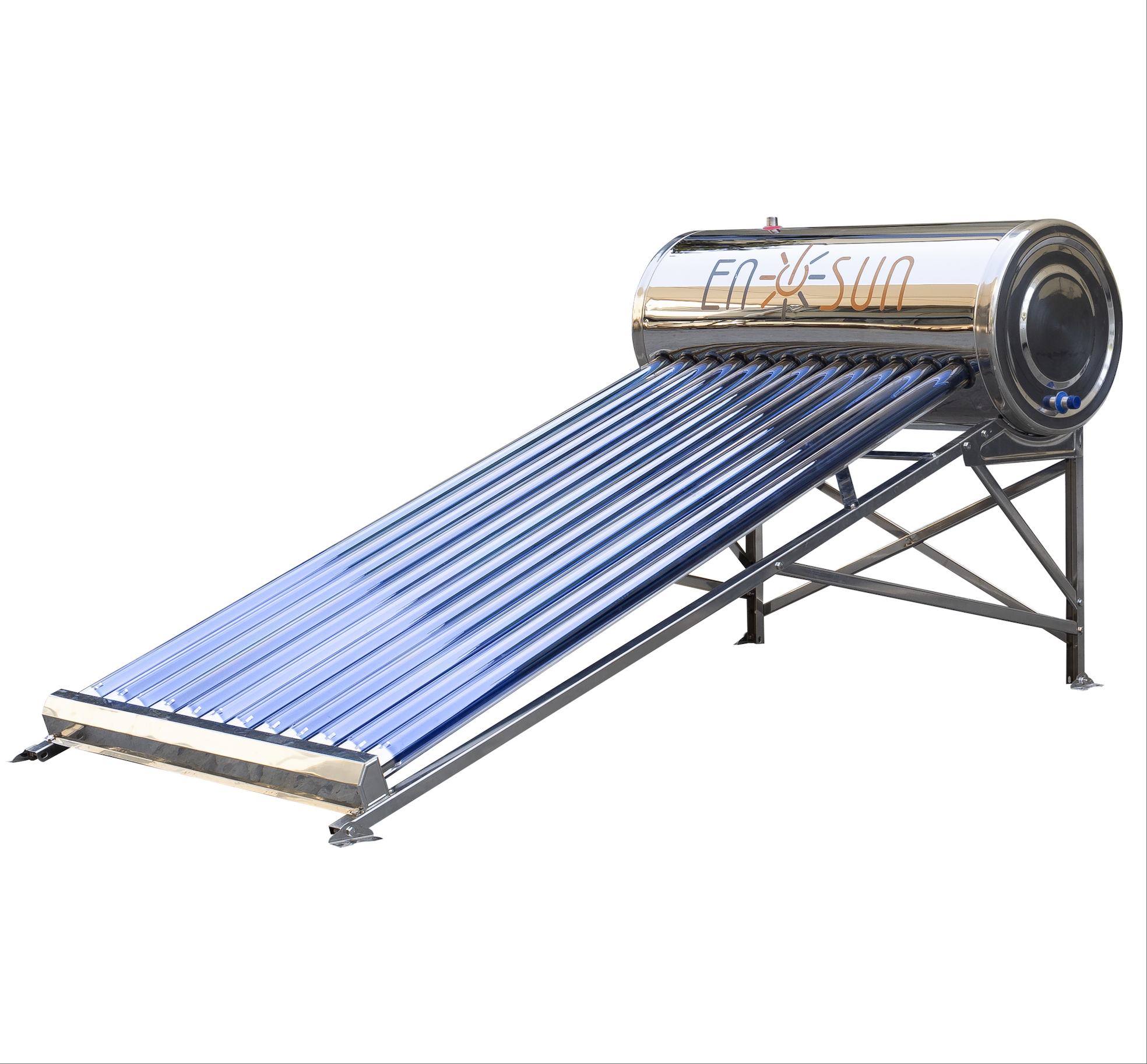
2. High-pressure solar geysers
High-pressure solar geysers are used when the water supply needs to be delivered at higher pressure. The CPS series is an example of this category. It is a pressurized solar water heater with capacities from 100L to 300L, a maximum operating pressure of 6 bars, and a test pressure of 9 bars. The absorber is a 58-1800 mm vacuum tube with heat pipe, and the tank has 50mm PU foam insulation. Common tank materials include SS304, SS316, Duplex 2205, or Duplex 32001. The CPS series has no moving parts, which results in low maintenance requirements. It is designed for houses, villas, gardens, gas stations, car wash centers, small hotels, and schools.
3. Indirect solar water heaters with flat plate collectors
Indirect solar water heaters separate the collector circuit from the stored water. The CPS-FJ series is a solar water heater classified as an indirect type and uses a flat type solar collector. Its tank is made of SPCC with enamel coating, making it suitable for salty-water areas. Capacities are available in 150L, 200L, 250L, and 300L. It can also be used with anti-freezing heat transfer media, which is relevant in colder winter conditions. Intended applications include villas, houses, hotels, and schools.
4. Solar collectors: heat pipe and flat plate
In split or commercial systems, the solar collector can be delivered separately from the tank. The HSC series is a heat pipe solar collector. It uses 58-1800 mm vacuum tubes with heat pipe and is available in 10, 12, 15, 18, 20, 24, or 30 tubes per module. The frame and manifold are made of aluminum alloy, and the overall construction uses aluminum alloy, copper, and glass. It has Solar Keymark certification and is intended for villas, hotels, house heating, spa centers, and schools.
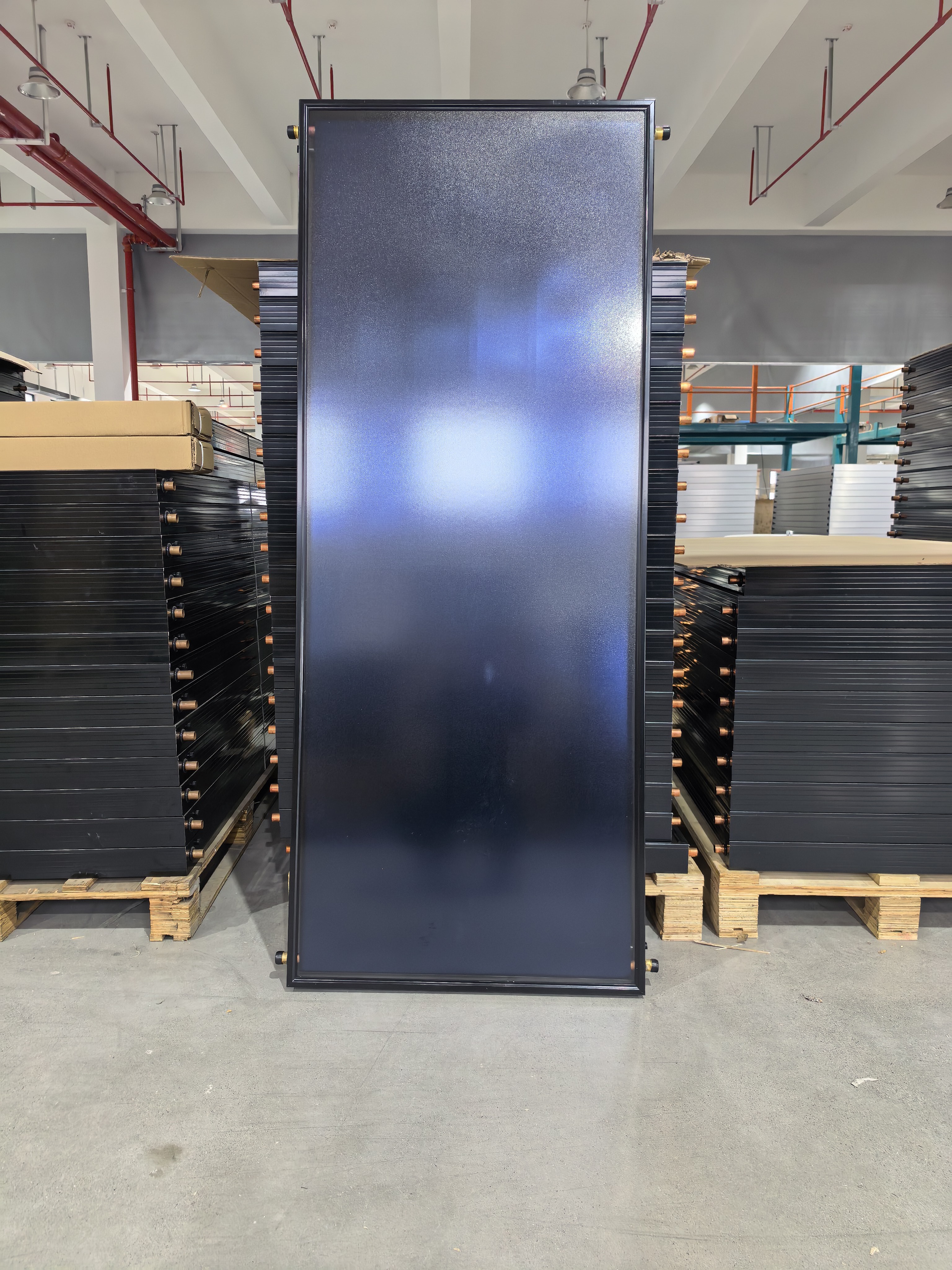
The FPC2.0, by comparison, is a flat plate solar collector made of copper and aluminum alloy. It is offered in 1 m², 1.5 m², 2 m², or 2.5 m² absorber areas, with a thickness of 80mm. Flat plate collectors are commonly used for swimming pool heating, housing heating, and solar water heater applications. The FPC2.0 is also Solar Keymark certified.
5. PV solar water heaters and hybrid solar panel systems
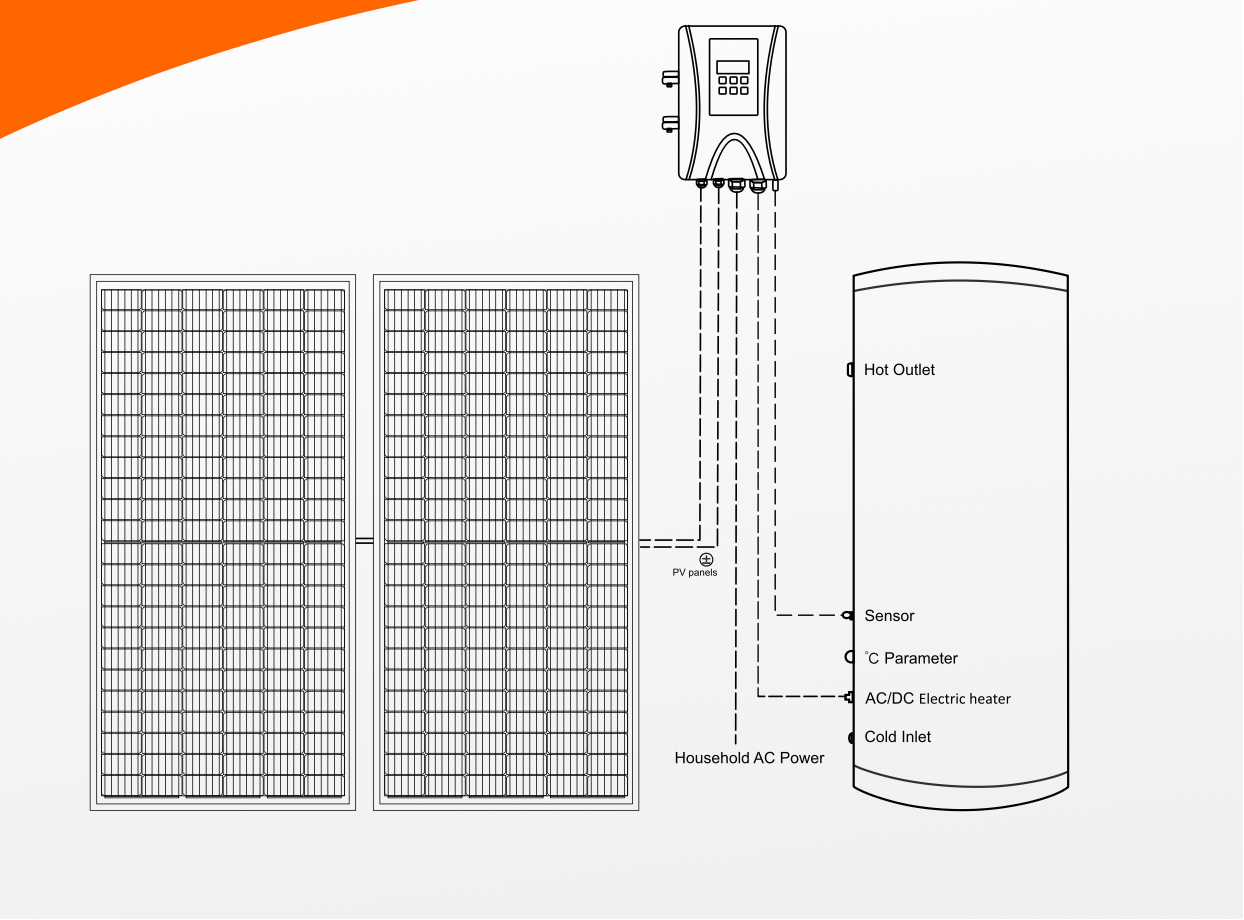
The newest category in the market is the PV solar water heater, sometimes described as a solar PV water heater, PVT unit, or hybrid solar water heater. The PV Series is an example: it combines solar panel input with electric heating elements inside a hot water storage tank. It uses a controller with MPPT function and has automatic DC/AC switching. Power input from the solar panel is 600W per panel, and the heating output range is 800W to 3500W. Tank capacity options range from 100L to 500L, and tank materials include Duplex 2205 or Inox 316L. The PV Series is designed for easy and low-cost installation and is CE certified. It is intended for villas, houses, apartments, and camps.
Step by step: how a solar water heater works
The system-level sequence is similar across many product configurations:
- The solar collector absorbs sunlight. Heat pipe vacuum tubes or flat plate absorber surfaces capture solar radiation and convert it into heat.
- Heat moves to water or to a heat-transfer fluid. In an indirect system, a heat-transfer fluid carries the heat to the tank. In a direct or thermal system, the collector circuit is arranged so the heat reaches stored domestic hot water.
- Heated water is stored in an insulated tank. This tank is often called a solar hot water tank, solar geyser tank, hot water cylinder, buffer tank, or domestic hot water tank depending on the system architecture.
- Circulation follows the system design. Equipment can operate in direct or indirect circulation, passive thermosiphon circulation, or forced circulation with pumps. Specific control strategies depend on the model and project design.
- A backup source covers low-solar periods. Electric heaters or heat pump linkage can provide additional heat when solar irradiation is not enough.
Because no single design fits every building, a buyer should first decide whether the project needs a compact all-in-one solar geyser, a split collector and tank combination, an indirect anti-corrosion system, or a hybrid PV thermal unit.
Typical use cases and product fit
- Single-family houses and villas: A compact non-pressure solar water heater such as the CNP series or a high-pressure unit such as the CPS series can serve typical domestic hot-water demand.
- Apartments and camps: The PV Series is designed for residential and accommodation settings such as houses, apartments, villas, and camps.
- Small hotels, schools, car wash centers, gas stations: Pressurized CPS series systems are listed for such applications because they can deliver stable pressure and low maintenance.
- Hotels and commercial buildings with large domestic hot-water demand: HSC series solar collectors can be matched with CPS-FJ and CPS series pressurized solar water heaters for stable large-volume hot-water output.
- Pool heating and housing heating: FPC2.0 flat plate solar collector is intended for swimming pool heating, housing heating, and solar water heater applications.
- Salty water and cold climates: The CPS-FJ indirect solar water heater with enamel-coated tank is designed for salty-water cases and can be fixed with anti-freezing heat transfer media.
| Product series | System type | Capacity / collector size | Core material | Typical applications | Certification |
|---|---|---|---|---|---|
| CNP series | Non-pressure solar water heater | 60L – 500L | SS304 or SS316 | Houses, villas, gardens, gas stations, car wash centers, small hotels, schools | Solar Keymark |
| CPS series | High-pressure solar geyser | 100L – 300L; max. working pressure 6 bars; test pressure 9 bars | SS304, SS316, Duplex 2205, or Duplex 32001 | Houses, villas, gardens, gas stations, car wash centers, small hotels, schools | Solar Keymark |
| CPS-FJ series | Indirect solar water heater | 150L, 200L, 250L, 300L | SPCC with enamel coating | Villas, houses, hotels, schools | Solar Keymark |
| HSC series | Heat pipe solar collector | 10, 12, 15, 18, 20, 24, or 30 tubes | Aluminum alloy, copper, glass | Villas, hotels, house heating, spa centers, schools | Solar Keymark |
| FPC2.0 | Flat plate solar collector | 1 m², 1.5 m², 2 m², or 2.5 m² | Copper and aluminum alloy | Swimming pool heating, housing heating, solar water heaters | Solar Keymark |
| PV Series | PV solar water heater | 100L – 500L; 600W input per PV panel; 800W – 3500W heating output | Duplex 2205 or Inox 316L | Villas, houses, apartments, camps | CE |
Manufacturer qualification points for long-term procurement
Since solar water heaters are long-lived systems, buyers should evaluate the manufacturer as much as the product. Useful starting points include product range, production capacity, export experience, and quality-control capability.
Zhejiang Kesun New Energy Co., Ltd. operates a 42,000 m² manufacturing facility in Haining, Zhejiang Province. The company employs approximately 130 staff and has an R&D team of 15 engineers. Annual production capacity reaches 300,000 sets. Production capabilities include high-pressure automatic foaming machines and robotic packaging. Export business accounts for 60% of total sales, with major markets in Mexico, the EU, and Africa. The company’s product line includes both non-pressure and pressurized solar water heaters, plus buffer tanks, domestic hot water tanks, and hybrid solar panels.

Market figures in this article are based on public sources: IEA Solar Heating & Cooling Programme, Fortune Business Insights, Grand View Research, U.S. Department of Energy / Federal Register, and Solar Heat Europe. Product details are based on manufacturer-published specifications.
Frequently asked questions
What are the main types of solar water heaters?
Solar water heaters can be grouped into non-pressure compact solar geysers, high-pressure solar geysers, indirect solar water heaters with flat plate collectors, standalone solar collectors, and PV solar water heaters. In Kesun Solar’s product range, examples are the CNP series for non-pressure systems, CPS series for high-pressure geysers, CPS-FJ series for indirect enamel-tank systems, HSC and FPC2.0 for collectors, and PV Series for PV solar water heaters.
Which solar water heater and collector combination is suitable for hotel and commercial hot-water projects?
According to manufacturer application guidance from Kesun Solar, HSC series solar collectors match well with CPS-FJ and CPS series pressurized solar water heaters. This combined system is recommended when hotels or commercial buildings need stable large-volume domestic hot-water supply.
What is the difference between non-pressure and high-pressure solar geysers?
A non-pressure solar water heater such as the CNP series is usually selected when a compact solar geyser configuration is acceptable. It is available in capacities from 60L to 500L. A high-pressure solar geyser such as the CPS series is designed to operate at higher internal pressure and can deliver pressurized water to the building. The CPS series has a maximum working pressure of 6 bars, a test pressure of 9 bars, and no moving parts, which helps reduce maintenance requirements.
Which solar water heater works in salty-water or cold-climate areas?
The CPS-FJ series is an indirect solar water heater with an SPCC tank protected by enamel coating. This design is intended for salty-water conditions. It can also be used with anti-freezing heat transfer media, making it a relevant option where freeze protection is needed. Final system design still depends on the site climate, water quality, and building configuration.
What capacities and collector sizes are commonly available?
In the product examples above, CNP non-pressure units range from 60L to 500L, CPS high-pressure geysers range from 100L to 300L, CPS-FJ indirect units are available in 150L, 200L, 250L, and 300L, and PV Series tanks range from 100L to 500L. Collector sizes include FPC2.0 flat plate modules from 1 m² to 2.5 m² and HSC heat pipe collectors with 10 to 30 tubes. Sizing should always be based on hot-water demand, climate, and backup heating strategy.
Conclusion: build the decision from clear requirements
A solar water heater is not one generic appliance. It is a heat-generation and storage system shaped by collector type, pressure class, tank material, circulation method, and backup source. A buyer should define the water demand, installation position, available roof load, local water quality, winter temperature, and required supply pressure before selecting a product series.
Kesun Solar, the operational brand of Zhejiang Kesun New Energy Co., Ltd., supplies equipment for houses, villas, hotels, schools, small commercial buildings, pool projects, gas stations, car wash centers, and camps. The company was established in 2009 and now manufactures solar water heaters, buffer tanks, domestic hot water tanks, and hybrid solar panels in a 42,000 m² facility.
Next step: For project-specific sizing, OEM inquiries, or sample validation, contact Kesun Solar with your hot-water demand, installation type, pressure requirement, and target market. Email: alan@ensunchina.com · WhatsApp: +86 13586432400 · Website: www.kesunsolar.com
Download the current product overview here: Kesun Solar brochure (PDF)