How Application Scenarios Reshape Wire and Cable Product Requirements
How Application Scenarios Reshape Wire and Cable Product Requirements
A single wire or cable is rarely designed to serve every environment. Power transmission, industrial equipment, automotive systems, renewable energy installations, building services and data infrastructure place different demands on flexibility, temperature resistance, mechanical strength, electrical performance, safety, durability and installation behavior.
As global market demand becomes more specialized, the wire and cable industry is shifting from standardized catalog products toward application-oriented engineering. Engineers, procurement teams and manufacturers increasingly judge cable solutions by how well they match a specific deployment scenario. Understanding these differences matters not only for technical performance, but also for cost, compliance, maintenance and long-term reliability.
Key takeaway: The requirements for a cable are defined by its application scenario. Power networks, industrial machinery, vehicles, renewable plants, buildings and data centers each have distinct priorities. Buyers and engineers who identify the right criteria, and manufacturers who develop solutions accordingly, reduce failure risk, avoid overspecification and improve total cost of ownership.
Why Application Context Is the Starting Point for Cable Design and Selection
Cable products are not interchangeable commodities. A cable that performs well inside a temperature-controlled factory may fail in an outdoor solar farm; a flexible cable designed for robotic arms may not meet fire-safety rules in a high-rise building. The application determines the required combination of electrical, mechanical, thermal and environmental properties.
From a technical perspective, every cable specification is a compromise. Increasing conductor cross-section improves current capacity but adds weight and cost. Adding armor improves mechanical protection but reduces flexibility and complicates installation. Choosing a high-temperature insulation material may improve thermal performance while changing the cable's bending radius and termination method.
From a buyer's perspective, the right selection minimizes downtime and avoids premature failure. From a manufacturer's perspective, the same understanding improves product development, quality control and market positioning. This is why the industry increasingly emphasizes application-oriented engineering rather than focusing on a single "general-purpose" product family.
Major Application Domains and Their Main Performance Priorities
Different end-use sectors treat the same technical attributes with different levels of importance. The following summary describes the typical priorities of six major application domains.
Power Transmission
Power transmission cables are designed to carry electrical energy across long distances. High-voltage and extra-high-voltage systems require conductors with stable electrical performance, advanced insulation systems and robust shielding to manage electric-field stress. Mechanical strength is important because cables may be installed underground, underwater or on long aerial routes. In this domain, reliability, current-carrying capacity and long service life tend to dominate decision-making.
Industrial Equipment
Industrial cables are often exposed to continuous movement, oil, chemicals, abrasion and extreme temperatures. Automation systems, machine tools, robotic arms and conveyor lines need flexible cables that can withstand millions of bending cycles. In this sector, flexibility, abrasion resistance, oil resistance and electromagnetic compatibility often carry high weight. Cable failure in a production line can stop an entire manufacturing process, so durability is a key concern.
Automotive and E-Mobility
Automotive wiring must meet strict safety standards, support compact installation spaces and resist vibration, heat, moisture and automotive fluids. With the growth of electric vehicles, high-voltage cables, battery interconnect systems and charging cables have created additional requirements for thermal endurance, voltage ratings, shielding and lightweight design. Weight, space and temperature resistance are critical in modern vehicle architectures.
Renewable Energy
Solar farms, wind parks and energy storage facilities expose cables to outdoor environments, ultraviolet radiation, temperature swings and long-term weathering. Cables in these installations may also need to perform under DC voltage, high ambient temperatures and limited maintenance access. For renewable energy applications, weather resistance, UV stability, flame retardancy and service life are important. Distribution systems inside the installation also require consistent mechanical performance during installation.
Building Systems
Building wires and cables must support safe power distribution, lighting, fire alarms, control systems and communication networks inside residential and commercial buildings. Fire safety is a central requirement, covering flame retardancy, low smoke emission and limited toxic gas release during combustion. Installation behavior is also a major factor because cables are often routed through confined spaces, conduits and cable trays. Mechanical protection and clear identification support safe installation and maintenance.
Data Infrastructure
Data centers, telecommunication networks and enterprise facilities require cables that support stable signal transmission, high data rates and resistance to electromagnetic interference. For communication and data cables, performance consistency over long runs, crosstalk control, shielding quality and fire performance all matter. As power density in data centers increases, reliable power distribution also becomes an important consideration.
Core Cable Attributes and How Different Scenarios Reprioritize Them
The table below compares how different application scenarios reprioritize core cable attributes. It is intended as a decision-oriented reference, not as a complete specification guide.
| Attribute | Power Transmission | Industrial Equipment | Automotive | Renewable Energy | Building Systems | Data Infrastructure |
|---|---|---|---|---|---|---|
| Flexibility | Moderate | High, often for continuous motion | High, for routing in tight spaces | Moderate, mainly during installation | Moderate, for confined routing | Moderate |
| Temperature Resistance | High, based on load and environment | High, often combined with oil and chemical exposure | High, near engines and battery systems | High, due to solar heat gain and climate | Controlled by building codes | Controlled by facility conditions |
| Mechanical Strength | High, especially for long-span or buried routes | High, due to abrasion, impact and flexing | High, due to vibration and assembly | High, due to UV and weathering exposure | Moderate to high, during and after installation | Moderate, but important for performance stability |
| Electrical Performance | Critical, including voltage stress and losses | Important, especially signal and control integrity | Critical, especially for high-voltage e-mobility | Important for DC systems and long circuits | Important for safety and power quality | Critical for signal integrity and shielding |
| Safety | Primary, due to high energy levels | Important, through industrial codes | Primary, due to occupant and system protection | Primary, due to public grid connection | Primary, especially fire life safety | Important, especially fire performance in data halls |
| Durability | Long service life required | High cycle-life and chemical resistance | Long service life with environmental extremes | Long outdoor service life | Long building life consistency | High reliability over system life |
| Installation Requirements | Heavy handling, jointing and testing | Flexible routing, connector compatibility | Space-constrained, harness assembly | Long cable runs, outdoor handling | Conduit pulling, bend-radius compliance | Controlled routing and separation |
Note: The comparison is qualitative and reflects typical industry priorities. Actual requirements should always be confirmed against national standards, project specifications and manufacturer documentation.
From Generic Products to Application-Tailored Development
Modern wire and cable products increasingly reflect the needs of specific applications. The industry has moved from producing broadly defined standard ranges to developing solutions that address particular operating conditions, installation methods and regulatory environments.
Several factors accelerate this trend:
- Higher system complexity: Automation, electrification and digitalization create more demanding electrical and mechanical environments.
- Diverse regulatory frameworks: Different regions and sectors impose specific fire, environmental and performance requirements.
- Integration of electronic and power systems: Cables increasingly carry both energy and data in the same system, adding shielding and signal-integrity considerations.
- Supply chain specialization: Project owners and contractors increasingly look for products that reduce installation time, maintenance cost and operational risk.
For manufacturers, application-oriented development means more than changing jacket color or conductor gauge. It involves selecting the right conductor material, insulation chemistry, screening design, sheath compound and mechanical reinforcement. It also requires testing under conditions that reflect real use, such as repeated bending, sunlight exposure, high temperature operation and flame exposure.
How Engineers, Buyers and Manufacturers Can Align on Real Requirements
Technical discussions across the value chain are important because requirements are rarely fully captured in a datasheet. Engineers know the operating conditions. Buyers know the sourcing constraints and compliance targets. Manufacturers understand the capabilities and limits of their production processes and materials.
Effective cooperation starts with clear communication of the application context: Where will the cable be installed? What is the surrounding temperature? Is it exposed to oil, chemicals, UV or mechanical impact? Does it need to move continuously? Which standards apply? Answering these questions helps avoid both under-specification and over-specification.
Relevant Questions for Application-Driven Cable Sourcing
- What is the operating voltage and current profile?
- What ambient and operating temperature range must the cable withstand?
- Will the cable be subject to continuous flexing, vibration, impact or abrasion?
- What chemicals, oil or moisture may be present?
- What fire performance requirements apply in the target market?
- What minimum bending radius and maximum pulling tension can the installation tolerate?
- What is the expected service life and maintenance interval?
- Are there restrictions on shield design, signal integrity or electromagnetic interference?
Industry Exchange as a Route to Better Application Understanding
Because application requirements change with technology and market conditions, professional communication remains valuable throughout the industry. Manufacturers, engineers and procurement specialists benefit from looking beyond catalogs to understand how others solve similar problems.
wire China is an international industry trade fair for the cable, wire and related equipment and materials industries. It brings together companies and professionals from across the wire and cable value chain, creating opportunities to review technologies, exchange technical information and understand industry trends.
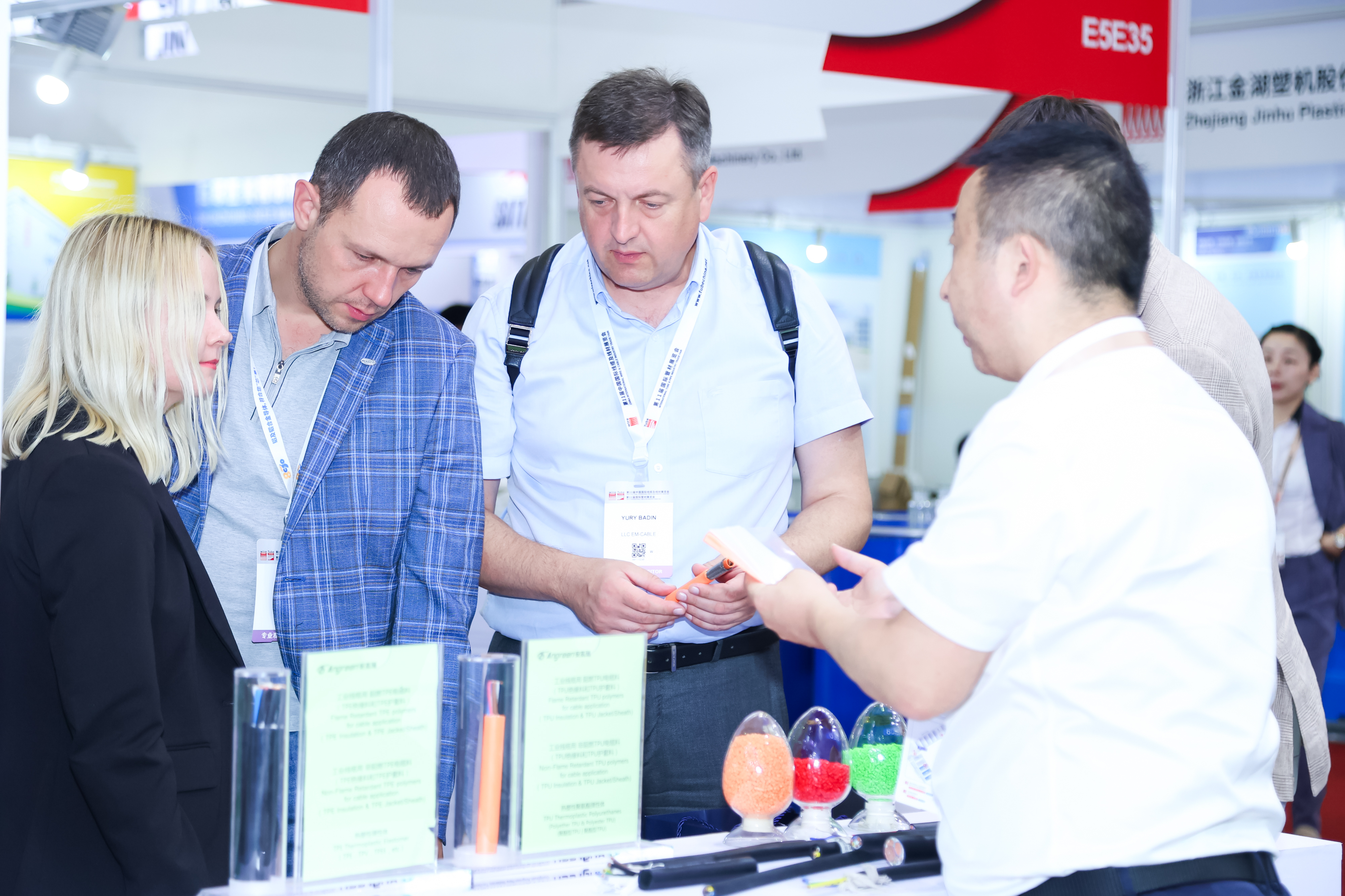
For engineers, the value of attending an international Wire & Cable Industry Trade Fair like wire China lies in comparing a wide range of solutions under one roof. For manufacturers, it offers a chance to present application-oriented developments to a specialized audience. For buyers and project teams, technical forums and direct conversations with suppliers can reveal practical details, installation considerations and regional compliance practices that are hard to capture in general product searches.
wire China focuses on the complete value chain: from cable and wire products and processing machinery to raw materials, auxiliary materials, measuring and testing equipment, finishing machinery, process technology tools and cable control technology. This full-chain orientation means visitors can examine both the finished product and the technologies that produce it, which is useful when a project demands a new balance of performance, cost and reliability.
A Practical Framework for Selecting the Right Cable for the Right Application
The following framework can help engineers and buyers translate an application into a realistic cable specification.
Step 1: Define the Deployment Environment
Identify the physical location, exposure conditions and likely mechanical stresses. Define operating temperature range, chemical exposure, outdoor/indoor status and any risk of mechanical damage or continuous movement.
Step 2: Map Electrical Requirements
Define rated voltage, current-carrying capacity, allowable voltage drop, shielding needs and any requirements for control, signal or communication functions.
Step 3: Identify Mandatory Regulatory Requirements
Check target-market standards for fire safety, environmental compliance, voltage rating and product certification. Keep records of the applicable standards and system integration requirements.
Step 4: Determine Installation and Maintenance Constraints
Consider available routing space, cable tray or conduit conditions, connector types, pulling tension, bending radius, termination method and maintenance philosophy.
Step 5: Compare Options and Review Evidence
When selecting a supplier, compare products against the defined requirements rather than relying solely on general marketing claims. Ask for test evidence, reference installations, compliance documents and clear explanations of how the product responds to the specific conditions of your application.
Trade Fair Participation as a Decision Tool
International industry events give buyers, engineers and manufacturers a concentrated environment for comparing technical approaches, observing product capabilities and discussing application issues with specialists. For a global Wire & Cable Industry Trade Fair, the key is not just the number of exhibits but the ability to connect a specific application challenge to the right technical solution.
At wire China, participants can follow a complete industrial logic: raw materials, processing technologies, finished cables, testing equipment and control technologies. This structure is useful for buyers who need to understand how a new material or machine affects the performance of the finished cable. It is also useful for manufacturers evaluating equipment upgrades or new partners.
For international buyers, attending a trade fair in the Chinese market provides direct access to a major manufacturing ecosystem. China is a major global manufacturing base for wire and cable products, and its suppliers serve global demand across power, automotive, renewable energy, building and data infrastructure projects. Face-to-face exchange helps buyers evaluate manufacturing capabilities, quality management systems and compatibility with project requirements.
The 2024 edition of wire China covered 80,500 square meters, bringing together 1,080 exhibitors from around the world and 41,857 professional visitors from 90 countries and regions. These figures reflect the scale of professional interest across the wire and cable supply chain. The 2026 edition is planned to continue the full-chain positioning, providing a platform where the relationship between application scenarios and product technology remains central to the conversation.
Conclusion
Applications define cable requirements. Whether the project involves overhead power lines, robotic production cells, electric vehicles, solar plants, commercial buildings or data centers, the correct cable must balance electrical, mechanical, thermal, safety and installation demands. Standardized thinking is no longer sufficient.
Engineers and buyers who build a disciplined selection process can reduce operational risk and total ownership cost. Manufacturers who develop products with a clear view of application requirements are better positioned to serve evolving demand. Industry trade fairs such as wire China help connect these perspectives by enabling direct exchange across the full value chain.
For teams preparing future sourcing decisions, comparing technologies and discussing requirements with suppliers remains one of the most practical ways to translate an application scenario into the right wire and cable solution.
Explore wire China
Visit the official website: www.wirechina.net
Complete your pre-registration here: Pre-registration for wire China
Download the event brochure: wire China 2026 Brochure
FAQ
What makes a specialized international wire and cable industry trade fair different from a general trade show?
An International Wire & Cable Industry Trade Fair is focused specifically on the wire and cable value chain, including finished products, processing machinery, raw materials, auxiliaries, testing equipment and control technologies. wire China, for example, brings together companies and professionals from across the wire and cable value chain through its industry trade fair and technical forums. This creates opportunities for exhibitors, buyers and engineers to exchange technical information and understand developments across materials, equipment, testing and finished cable products. A specialized provider generally offers deeper alignment between product technology and industry requirements than a multi-industry trade show.
How does wire China help engineers and buyers understand application-specific cable requirements?
wire China brings together suppliers of cables, wires, machinery, materials and testing solutions in one venue. This allows engineers and buyers to compare solutions, attend technical forums and discuss application conditions such as flexibility, temperature resistance, mechanical strength and installation requirements directly with specialists. The 2024 event covered an exhibition area of 80,500 square meters and brought together 1,080 exhibitors from around the world, reflecting a wide range of technical offerings for different application scenarios.
Which product and technology areas does the wire China trade fair cover for international buyers?
wire China covers the full wire and cable value chain, from raw and auxiliary materials and processing machinery to finished power cables, optical fibers and specialty wire products. It also includes measuring and testing equipment, finishing machinery, process technology tools and cable control technology. This coverage is useful for buyers who need to evaluate both finished products and the manufacturing processes that determine their performance.
What language support is available for international visitors at wire China?
wire China provides Chinese and English information for international participants. Depending on exhibitor or forum requirements, additional language support or simultaneous interpretation may also be available. International visitors should check the specific arrangements for the relevant event programme.
How should a buyer evaluate a wire and cable supplier for a specific application?
A buyer should evaluate the supplier's ability to provide application-relevant evidence, including compliance with applicable standards, test data for the required environment, reference installations and clear documentation of technical parameters. The first step is to define the application scenario and translate it into measurable requirements such as operating temperature, flexibility, mechanical resistance, fire performance and electrical ratings. Trade fairs like wire China provide an opportunity to compare suppliers against these requirements and ask detailed technical questions before procurement decisions.