How to Compare Wire & Cable Trade Fair Suppliers: A Practical Sourcing Framework
How to Compare Wire & Cable Trade Fair Suppliers: A Practical Sourcing Framework
For an international buyer, walking the aisles of a wire & cable trade fair can produce a familiar problem: dozens of potentially relevant suppliers, a pile of brochures, and very little certainty about which ones deserve follow-up. The real task at this global industry gathering is not collecting more business cards—it is deciding which suppliers have a realistic chance of meeting your product specification, quality expectations, and commercial terms.
Why Supplier Comparison Is Harder Than It Looks
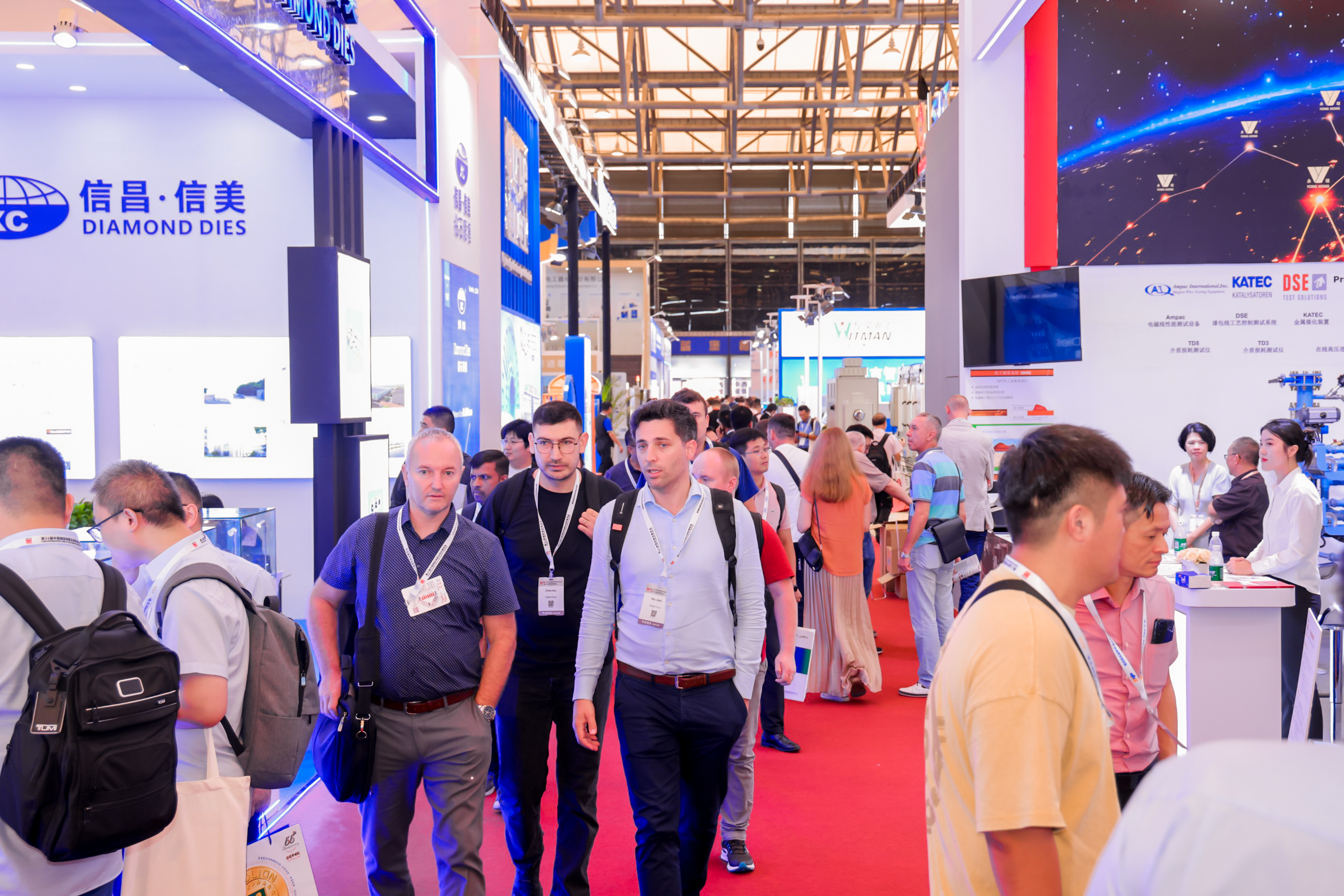
A trade fair is a compressed marketplace. In the wire and cable industry, one hall may contain a finished-cable producer, a wire drawing machine maker, and a supplier of measuring instruments that seems to serve both. That breadth is one reason wire China functions as a full-chain industry gathering: visitors can examine upstream raw materials, process technology, and finished products within a few halls. But the same diversity makes direct comparison difficult, because suppliers are rarely presenting the same category of offer under identical conditions.
Another challenge is that the booth itself is a curated display. A spacious stand, polished lighting, and professionally printed banners may indicate that marketing resources were invested; they do not by themselves demonstrate consistent manufacturing output, complete documentation, or the supplier's ability to deliver against a specific order. Buyers who treat the booth as the primary source of evidence may overrate presentation and underrate verifiable production data.
Build a Supplier Scoring Sheet Before You Walk the Fair
Instead of relying on conversation quality, create a structured record sheet with a scoring scale of 1 to 5 for each criterion. Use the booth visit to collect evidence, not impressions. The same scoring template should be used with each candidate so that the final shortlist is based on a common standard.
The 11 Comparison Criteria That Matter
- Product fit: Does the supplier actually manufacture the product type or machine class you need? Ask for a concise product family list and compare it with your inquiry.
- Technical capability: Which process technologies or product designs does the supplier control? For equipment, this may include line speed, tolerance control, automation level, or energy consumption; for cable products, conductor class, insulation system, and relevant performance data.
- Quality and consistency: How is quality managed in routine production, not just in the sample? Look for process control, in-house testing, and whether finished goods are inspected before dispatch.
- Customisation capability: Can the supplier adapt a standard product or line to a project-specific requirement? Ask which part of the process is flexible: cable construction, packaging, marking, machine configuration, or interface compatibility.
- Production capacity: Does current capacity align with your order size and frequency? For critical items, ask about production planning and lead-time assumptions rather than accepting a general 'large capacity' statement.
- Certification and test documentation: Collect the specific certification names and test report types the supplier is willing to provide. Verify that these correspond to the target market or application.
- Delivery capability: How does the supplier handle export packing, logistics, and delivery terms? Confirm which party is responsible for each stage.
- MOQ and purchasing conditions: Minimum order quantity, payment terms, and price structure are commercial fundamentals. Clarify whether the MOQ applies per specification or across a product family.
-
Export and international market experience: Ask about the share of exports, regions served, and familiarity with international contract practices. Ask the supplier to demonstrate its familiarity with the documentation and packaging requirements relevant to your target market.
-
Technical communication efficiency: During the conversation, note how quickly and precisely the supplier answers technical questions. Record any unanswered questions and use the quality of the post-show response as an additional evaluation point.
-
Post-show responsiveness: Before leaving the booth, ask each supplier when they will send a follow-up. The speed and accuracy of that response provide an early indication of how effectively the supplier handles follow-up communication.
A Simple Supplier Evaluation Template
| Criteria | Evidence to Collect at the Booth | Score (1–5) | Notes |
|---|---|---|---|
| Product fit | Catalogue, samples, product family list | ||
| Technical capability | Technical datasheet, process description, patents or standards referenced | ||
| Quality and consistency | QC process explanation, in-house test capability, quality certifications | ||
| Customisation capability | Examples of previous custom work, flexibility in specification requirements | ||
| Production capacity | Factory size, output figures if shared, production planning | ||
| Certification and test documents | Certificate names, test report samples, available documentation formats | ||
| Delivery capability | Export packing terms, Incoterms, lead time estimates | ||
| MOQ and purchase conditions | MOQ level, payment terms, quotation timing | ||
| Export and int’l experience | Export ratio, markets served, international references | ||
| Technical communication | Precision and completeness of answers to technical questions | ||
| Post-show response | Stated follow-up time, nominated contact, sample availability |
After the event, combine the scores with the supplier's written follow-up. A clear and technically accurate reply received within the stated timeframe can serve as an additional signal when assessing follow-up reliability.
Beyond Booth Presentation: What to Look For Instead
Booth size, brochure design, and uniform styling are primarily elements of brand presentation rather than direct evidence of production capability. To compare suppliers more meaningfully, focus on verifiable inputs:
- Does the supplier name the specific equipment or material standards used in production?
- Can the supplier describe the in-house testing process or identify which tests are outsourced?
- How much detail appears in the specification sheet, and does the salesperson understand the technical basis behind each value?
- Is the supplier willing to share sample reports or arrange a sample run after the fair?
- Can the supplier clearly explain the export documentation and certification requirements relevant to your target market?
These questions help buyers move beyond visual impressions and collect information that can be verified during the subsequent sourcing process.
A Step-by-Step Supplier Decision Process from Fair Visit to Final Selection
Step 1: Separate discovery from screening
Use the initial part of the visit to walk the fair and refine your understanding of available categories, especially if you are sourcing across the full chain: raw materials, processing machinery, measuring and testing equipment, and finished cables. Use later visits to revisit several candidates with the same structured questions.
Step 2: Score immediately after each conversation
Write down scores while the discussion is still vivid. Waiting until later can make it harder to distinguish strong presentation skills from the quality of the technical answers.
Step 3: Classify suppliers into three groups
A / Shortlist candidates: strong product fit, clear technical answers, supporting documentation, and a workable commercial framework.
B / Maintain for later: acceptable fit but missing specific evidence. Request additional documentation before deciding.
C / Not a fit: clear product mismatch or unresolved communication gaps that make further evaluation impractical.
Step 4: Send a structured follow-up to shortlisted candidates
Send each shortlisted supplier the same technical enquiry to compare their responses. Include your product specification, target quantity or line type, destination market, and documentation requirements. Because the enquiry is identical, differences in response quality can be compared more consistently across suppliers.
Step 5: Use documentation as the next gate
Review the returned specification sheets, certificates, and proposed lead times against the information collected at the fair. If the documentation is consistent with the information provided at the fair, the supplier can move to the next stage of evaluation.
Step 6: Run a trial order or sample audit
For many procurement decisions, a trial order or sample audit can provide a useful practical test of consistency. Compare the sample or pilot output with the information provided at the fair, and check whether the documentation matches the physical product.
Using the Trade Fair as a Comparison Environment
An international trade fair for the wire and cable industry creates natural opportunities for comparison that online sourcing cannot fully replicate: seeing products in operation, asking technical questions face to face, and observing how a manufacturer's team responds under direct professional questioning. The value of a full-chain industry gathering lies in bringing buyers into direct contact with technology, material, equipment, and finished-product suppliers across related procurement categories. This creates a practical setting for industry exchange, technical evaluation, and procurement discussions rather than relying solely on remote information.
Attending a large trade fair also enables buyers to compare different supplier types, including direct producers and companies presenting integrated solutions. When several producers of similar equipment or cable products are present under the same roof, a scoring sheet becomes more useful, because each candidate can be measured against the same set of criteria.
Signal vs. Noise: What the Fair Really Tells You
Trade fair conversation gives buyers several categories of useful signals:
- How well the supplier listens to the actual application before recommending a solution;
- Whether the technical representatives can answer process questions with reference to specific machines or material properties;
- Whether the supplier asks clarifying questions about your market standards and installed base;
- How realistic the suggested delivery framework sounds.
Noise includes the size of the stand, the number of languages spoken, and unsupported claims of market leadership. These factors may provide context about how a company presents itself, but they should not be treated as evidence of product quality or manufacturing capability.
The Buyer’s Advantage in a Global Wire & Cable Trade Fair
For buyers managing international sourcing, the main advantage of a large wire and cable industry trade fair is breadth. Raw and auxiliary materials, wire and cable manufacturing equipment, measuring and testing equipment, finishing machinery, control technology, and finished wire and cable products may be represented within the same sourcing environment. This allows buyers to organize supplier comparisons by procurement category and apply different evaluation criteria to each category.
This broader sourcing environment can also support a more structured commercial comparison. A buyer evaluating machinery, materials, or finished cable products can record pricing assumptions, lead-time indications, technical requirements, and documentation availability using category-specific criteria. The event itself does not rank suppliers; it provides the environment in which a buyer can rank them using their own transparent criteria.
Industry Context and Market Signals
Wire and cable procurement increasingly involves a wider range of technical requirements across communications, energy, transportation, industrial equipment, and other applications. In this context, trade fairs can provide a useful setting where buyers and technology suppliers discuss application requirements directly. As a result, some suppliers may bring technical representatives alongside sales staff, allowing buyers to discuss product specifications and application requirements directly. The quality of these conversations can also provide useful input for post-show supplier evaluation.
At the same time, the scale of a fair does not tell a buyer which supplier is better. It tells the buyer how many sourcing options are accessible in one visit. Ultimately, supplier quality assessment remains the buyer's responsibility and should be based on a consistent framework and clear evidence requirements.
How to Handle Different Supplier Types at the Show
Manufacturer vs. Trading Company
Identify whether the exhibitor is a manufacturer, a trading company, or a manufacturer with its own export arm. This can affect how documentation, technical support, and after-sales responsibilities are handled. Ask which factories produce the displayed goods and what role the exhibitor plays in production, quality control, and export handling.
Raw Material Supplier vs. Finished Cable Producer
For a raw material supplier, verify the material specifications, applicable standards, batch consistency, packaging, and quality documentation. For a finished cable producer, focus on the applicable product standard, conductor class, and test certificates.
Machinery Builder vs. Line Integrator
A process line may involve a primary machine builder plus several supporting equipment producers. If a supplier presents an integrated line, ask which machines are manufactured in-house and which are procured from partners. This helps clarify which party is responsible for each part of the system's performance.
Allocating Time on Site
A common mistake is to treat every booth conversation as equally important. A better approach is to pre-book meetings with the most likely candidates and reserve the remaining time for follow-up questions and comparisons with additional candidates identified during the visit. Ultimately, the goal is not to speak with every possible supplier, but to reduce a long list to a manageable and defensible number of candidates before you leave.
Common Mistakes in Supplier Comparison
- Weighting brochure quality as a proxy for product quality;
- Using stand size as an indicator of production scale;
- Asking different questions to different candidates and later comparing their answers;
- Recording impressions several days after the visit instead of immediately;
- Failing to verify whether an exhibitor is a manufacturer or an intermediary;
- Ignoring documentation completeness in favour of a friendly sales conversation;
- Assuming that export experience equals technical capability.
Case Application: Cable Buyer at a Wire & Cable Trade Fair
Consider a buyer evaluating potential cable suppliers at an international wire & cable trade fair. In one morning, the buyer visits three booths:
Supplier A has a large booth and detailed brand story, but the technical representative cannot specify which test standard applies to the flame-retardant cable sample.
Supplier B has a smaller booth, yet the sales engineer opens the conversation by asking about application, destination market, and specification requirements. The engineer then shares a datasheet that lists relevant standards, available conductor classes, and typical lead times.
Supplier C offers a low price immediately and asks for an order before discussing technical requirements.
When scored using the 11 criteria, Supplier B would receive stronger marks for product fit, technical communication, and documentation evidence because the supplier provides specific information that can be further verified. Supplier A may still be a capable company, but the booth visit has not yet produced sufficient evidence for several of the criteria that matter. Supplier C requires further technical and commercial evaluation before being considered for the shortlist.
Similar patterns can appear across different sourcing categories. A supplier's presentation may create a positive first impression, while the quality of its technical answers, documentation, and follow-up provides more useful information for the next stage of evaluation.
Turning the Trade Fair Visit into a Sourcing Decision
The purpose of attending an international wire and cable industry event is to generate actionable sourcing information. For a professional buyer, the practical output should be a shortlist of suppliers that can be compared through documents, samples, and trial orders over the following weeks. The fair itself cannot tell you which supplier will deliver consistent goods twelve months later; what it can do is provide multiple reference points and a structured opportunity to assess how suppliers respond to professional enquiries.
By combining a pre-planned scoring sheet, evidence-based booth conversations, and disciplined follow-up, buyers can turn the dense and sometimes overwhelming environment of a large wire fair into a manageable supplier selection process. Start with product fit, then verify technical and production evidence, and finally use post-show behaviour to distinguish candidates that provide sufficient evidence from those that require further verification.
FAQ
Q1: How far in advance should I prepare for a wire & cable trade fair visit?
For international buyers, preparation should begin well before the event. Start by defining the products, technical specifications, target markets, expected purchasing volume, and documentation requirements you need to evaluate. Build a supplier scoring sheet in advance and identify the supplier categories most relevant to your sourcing objectives. If meetings are important, contact potential candidates before the visit and reserve time for follow-up discussions. This preparation allows buyers to spend less time collecting general information and more time comparing suppliers against consistent criteria.
Q2: How do I assess whether a supplier's technical capability is real?
Ask the supplier to describe the manufacturing process behind a specific product type, including the relevant equipment, process control steps, and testing procedures. Compare this description with the specification sheet and any supporting documentation. The supplier's ability to explain tolerances, applicable standards, and material choices in specific terms can provide a useful indication of technical understanding.
Q3: What documentation should a wire or cable supplier provide before a trial order?
Before a trial order, buyers should normally request a formal quotation, a specification sheet aligned with the applicable standard, a list of relevant product certifications, and a clear delivery schedule. For international shipments, export packing documentation and any destination-specific certification requirements should also be addressed during the quotation and evaluation stage.
Q4: How should I judge post-show responsiveness?
Before leaving the booth, ask when the supplier expects to send a follow-up and who will be responsible for it. Compare the actual response date with the stated timeframe, and assess whether the response addresses your technical questions accurately and completely. Consistent and specific follow-up can provide a useful signal when evaluating a candidate's communication and follow-up reliability.
Q5: Can a trade fair help me compare minimum order quantities and commercial terms?
Yes, if you request the same commercial information from each candidate. Clarify whether the MOQ applies per specification or across a product range, state the expected annual volume, and ask for indicative payment terms. A trade fair can provide a practical environment for collecting and comparing this information from multiple suppliers within a relatively short period.
Planning your next sourcing visit?
The wire China 2026 edition runs from September 21 to 24, 2026, with a planned total area of 80,500 square meters, more than 1,100 participating companies, over 40,000 expected professional visitors, and more than 60 specialized conferences and forums. Register in advance to plan your supplier meetings more efficiently: Pre-register for wire China 2026 and stay updated through the official wire China website.