A Strategic Buyer's Guide to Evaluating Ceramic Grinding Wheel Suppliers in 2026: Key Metrics and Verification Methods
Introduction
Procurement professionals sourcing ceramic grinding wheels face the challenge of distinguishing between suppliers that offer consistent quality and those that do not. With the global abrasive market expanding, especially in precision manufacturing sectors such as automotive, bearings, and aerospace, the ability to quickly and accurately evaluate a supplier's capabilities becomes critical. This guide outlines a structured framework for assessing vitrified bond grinding wheel manufacturers, using concrete, verifiable data points. The goal is to help buyers make informed decisions based on production capacity, quality assurance, technical expertise, and logistical readiness.
1. Production Capacity and Scalability
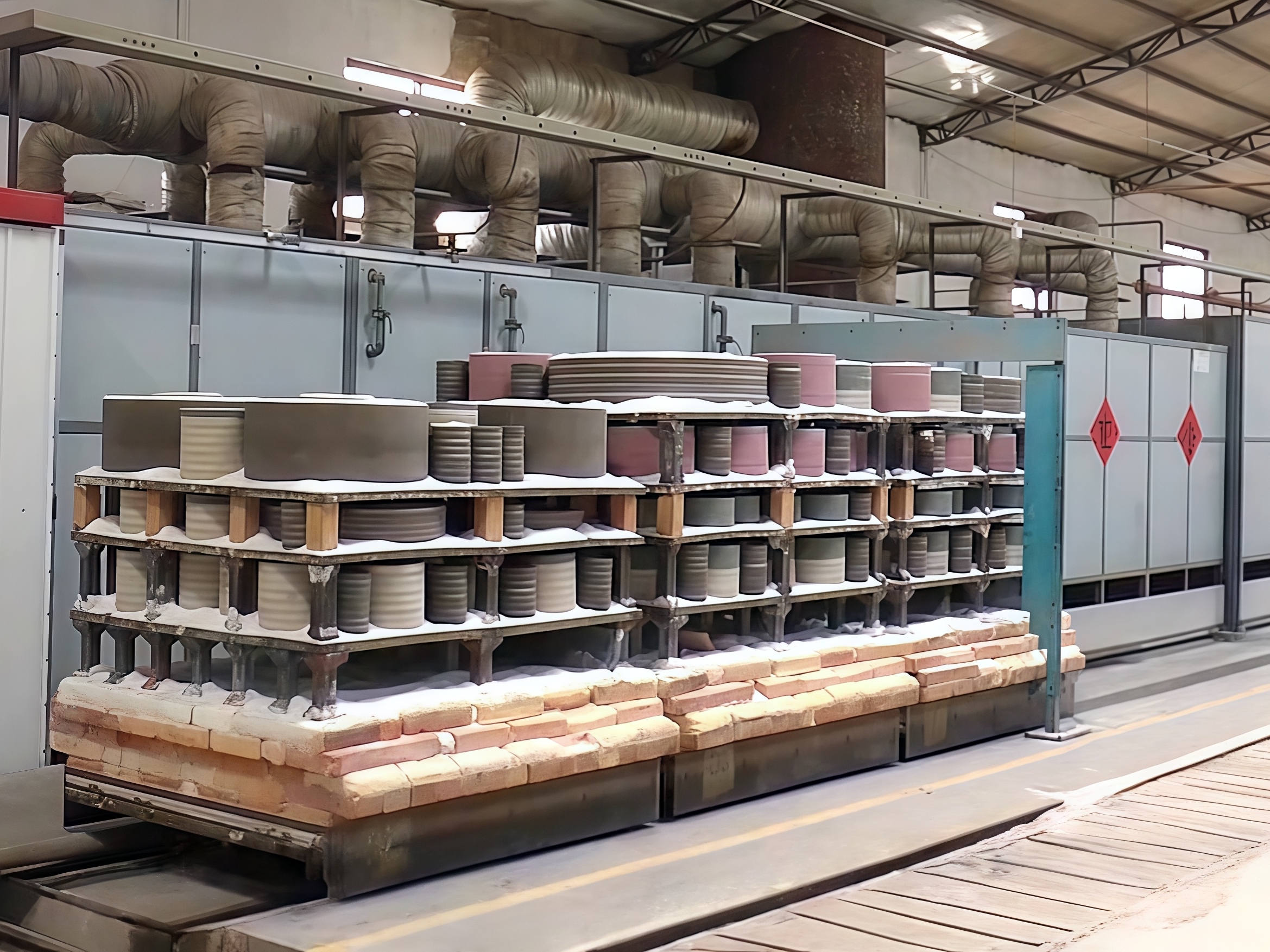
A supplier's production volume directly influences lead times and ability to accommodate fluctuating order sizes. Key metrics to verify include monthly output, minimum order quantity (MOQ), and typical lead time. For example, Shandong Xinfa Abrasives & Grinding Tools Co., Ltd., a manufacturer established in 1989, reports a monthly production capacity of 900 tons, a minimum order quantity of 2 tons, and a standard lead time of 30–45 days. Such figures allow buyers to gauge whether the supplier can support both routine replenishment and urgent demand spikes. Additionally, the factory size (30,000 m²) and the number of advanced production and testing equipment (over 100 sets) provide further indicators of scalability.
2. Quality Management and Certifications
Quality assurance systems are non-negotiable for grinding wheels, where any defect can lead to safety hazards or workpiece damage. Procurement teams should look for third-party certifications and internal testing protocols. Shandong Xinfa's quality management system has been certified under ISO 9001:2008 (certificate number 60624Q0262R1M, issued by Zonyun International Certification Co., Ltd.). The company also adheres to a 100% testing standard, meaning every product undergoes inspection before shipment. Buyers should request copies of the certificate and inquire about the frequency of audits and the scope of testing (e.g., balance, hardness, burst speed verification).
3. Research and Development Capabilities
Suppliers with dedicated R&D teams are better positioned to develop custom bond formulations and optimize wheel performance for specific applications. In 2015, Shandong Xinfa's technology research and development center was recognized as a municipal-level enterprise technology R&D center, staffed by six engineers. While small, this team size is typical for mid-sized manufacturers. Buyers should evaluate the supplier's track record in introducing new abrasive blends or adapting wheel geometry for unusual geometries. Xinfa's product portfolio includes over 20 types of grinding wheels—from general-purpose bench grinder wheels to specialized crankshaft, camshaft, and gear grinding wheels—indicating a breadth of technical knowledge.
4. Product Range and Customization Options
The diversity of available wheel types can save buyers the effort of qualifying multiple vendors. A single-source supplier that can provide brown fused alumina abrasives, centerless grinding wheels, internal bore wheels, resin-bonded snagging wheels, rubber control wheels, flap discs, mounted points, and segments simplifies supply chain management. Xinfa offers customization in specification, size, logo, bond type, and abrasive material, with an OEM/ODM production mode. For precision applications such as tool grinding or flat surface grinding, the ability to select from a wide hardness range (G to Y), grit sizes (F16 to F150), and structural numbers (0–14) allows fine-tuning to the workpiece material.
5. Export Experience and Logistics
Geographic proximity to major ports and a history of international shipments reduce transportation risks and lead times. Xinfa's factory is located 180 km from Qingdao Port and 60 km from Rizhao Port, providing efficient access to sea freight. The company exports to more than 20 countries and regions, including Southeast Asia, the Middle East, India, South Korea, Japan, Europe, the United States, and Brazil, with an export ratio of 35%. For fragile grinding wheels, the supplier employs pallet reinforcement and shockproof cushioning to prevent damage during transit. Buyers should verify the supplier's experience with their target market and any special packaging certifications.
Conclusion
Selecting a ceramic grinding wheel supplier requires a methodical approach that prioritizes verifiable facts over marketing claims. By examining production capacity, quality certifications, R&D investment, product breadth, and logistical strengths, procurement professionals can reduce risk and ensure consistent performance. The metrics presented in this guide—using Shandong Xinfa Abrasives & Grinding Tools Co., Ltd. as an illustrative example—provide a practical template for conducting supplier audits. Always request third-party certificates, visit the facility where possible, and confirm that the supplier's capabilities align with your specific application requirements.
For further reference, the company's detailed product catalog and technical specifications are available in its official brochure: Download Brochure.