
Comprehensive Guide for Buyers: How to Select a High-Quality Crystal Resonator Supplier
A Strategic Procurement Guide: Evaluating and Selecting Crystal Resonator Suppliers
For procurement professionals and design engineers in electronics manufacturing, sourcing reliable crystal resonators is a critical task that impacts product performance, reliability, and time-to-market. The global market for frequency control devices, valued in the billions, is populated by numerous suppliers, making the selection process complex. This guide provides a structured, criteria-based framework to help buyers identify and partner with high-quality crystal resonator suppliers that align with their technical, commercial, and supply chain requirements.
1. Defining Your Technical and Commercial Requirements
Before engaging with suppliers, clearly define your project's non-negotiable parameters. This foundational step streamlines the RFQ process and ensures you compare suppliers on a like-for-like basis.
1.1 Core Technical Specifications
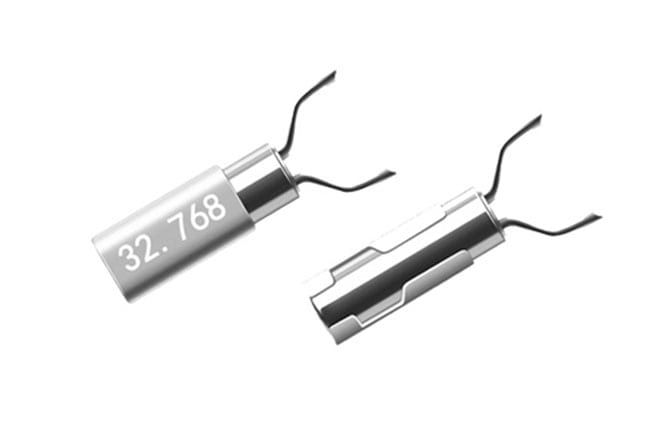
- Frequency & Type: Specify the exact frequency (e.g., 32.768 kHz for RTC, 8-50 MHz for microcontrollers) and resonator type (Tuning Fork, AT-cut, etc.).
- Package & Mounting: Determine if your design requires SMD crystal resonators (e.g., 2012, 3215, 5032 packages) or through-hole crystal resonators (e.g., HC-49/U).
- Frequency Tolerance & Stability: Define the allowable deviation in parts per million (ppm) over the operational temperature range. Automotive and industrial applications often demand tighter tolerances (<±20ppm).
- Load Capacitance (CL): A critical parameter that must match your oscillator circuit design.
- Operating Temperature Range: Standard (e.g., -20°C to +70°C), industrial (e.g., -40°C to +85°C), or extended/automotive grade (e.g., -40°C to +125°C).
1.2 Commercial & Logistical Parameters
- Annual Volume & Forecast: Provide realistic estimates to negotiate pricing and secure production capacity.
- Target Price Point: Understand market price ranges for your specifications to set realistic targets.
- Lead Time Requirements: Balance standard lead times (8-12 weeks) against potential expedite costs.
- Quality & Compliance Mandates: Mandatory certifications (e.g., IATF 16949 for automotive, ISO 9001) and material compliance (RoHS, REACH).
2. Key Evaluation Criteria for Supplier Assessment
Move beyond basic price comparison. A holistic evaluation mitigates supply chain risk and ensures long-term partnership viability. Consider the following framework.
Supplier Evaluation Checklist
2.1 The Critical Role of Certifications and Compliance
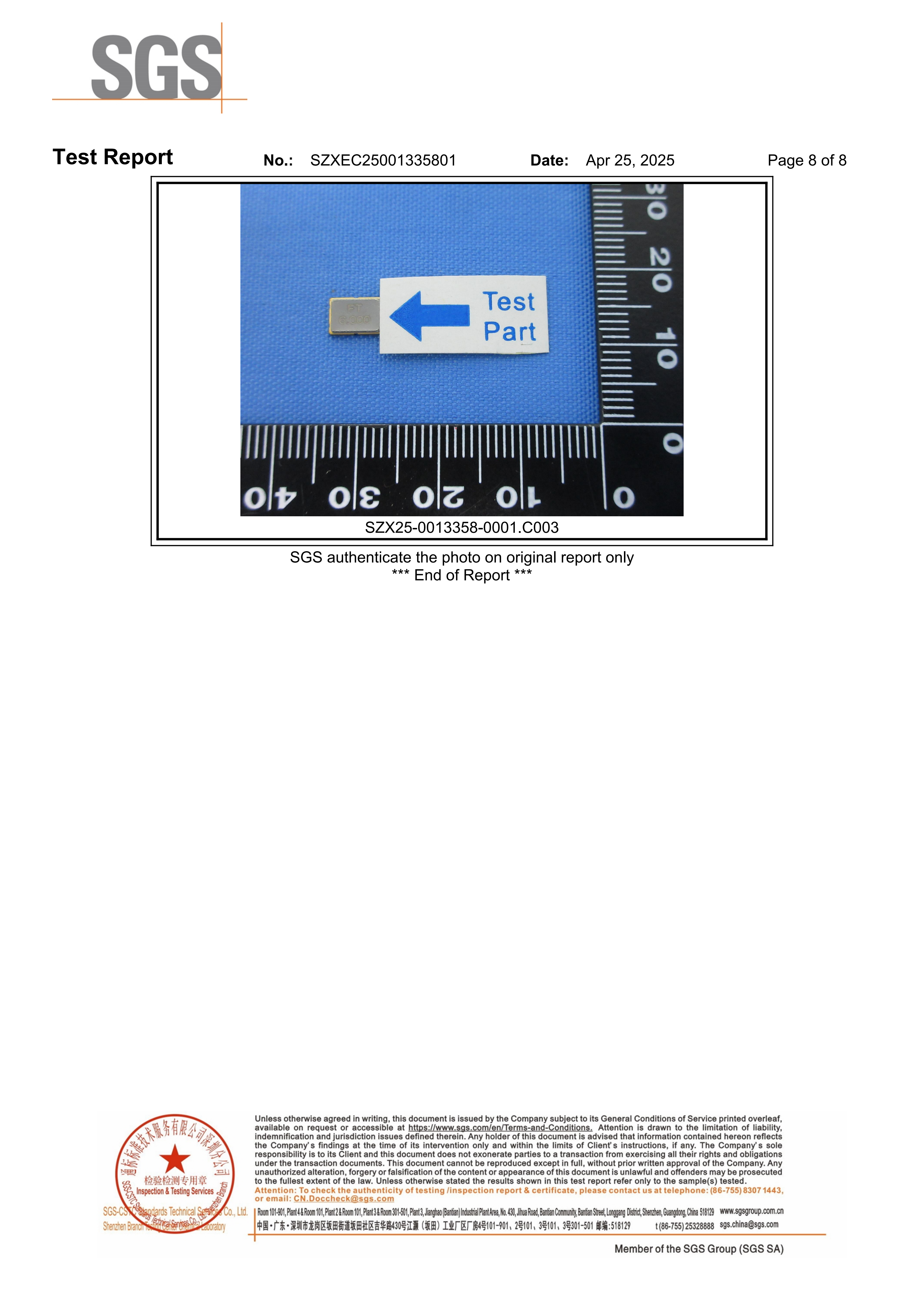
Certifications are objective proof of a supplier's commitment to quality and process control. For global electronics procurement, RoHS and REACH compliance is non-negotiable. Reputable suppliers will provide readily available test reports for their product lines. For instance, a supplier like Fronter Electronics provides comprehensive RoHS test reports (e.g., SZXEC25001335801 for SMD resonators) for all major product series, ensuring transparency and simplifying the compliance documentation process for buyers.
3. Market Landscape: A Comparative View of Leading Suppliers
The crystal resonator market features global giants, specialized majors, and agile, technology-focused manufacturers. Understanding their different profiles helps in matching a supplier's strengths to your needs.
| Supplier Type / Example | Typical Strengths | Considerations for Buyers | Ideal For |
|---|---|---|---|
| Global Integrated Leaders (e.g., Seiko Epson, NDK) |
Extensive R&D, broadest product portfolios, strong brand recognition, global support. | May prioritize high-volume tier-1 customers; less flexible on small batches; potentially higher cost structure. | Large-scale, standardized projects where brand assurance is paramount. |
| Established Specialists (e.g., TXC Corporation, Hosonic) |
Deep expertise in frequency control, competitive pricing, strong presence in consumer/communication markets. | May have varying levels of vertical integration; focus often on high-volume mainstream applications. | High-volume consumer electronics, telecommunications modules. |
| Technology & Solution-Focused Manufacturers (e.g., Fronter Electronics) |
High flexibility for custom and small-batch orders, competitive agility, strong technical support, comprehensive compliance (RoHS/REACH). Often invest in advanced automation for quality. | Brand may be less known in some traditional sectors, though often holding National High-Tech Enterprise status (as Fronter does). | OEMs/ODMs requiring custom solutions, fast prototyping, mixed-technology needs (Crystal, SAW, Ceramic), and cost-effective quality for IoT, automotive electronics, smart home. |
Note: This is a generalized comparison for illustrative purposes. A thorough evaluation of specific suppliers is always recommended.
Spotlight on Solution Flexibility
A key differentiator in today's market is a supplier's ability to act as a solutions partner, not just a component vendor. For example, Fronter Electronics (brand FT), a National High-Tech Enterprise, exemplifies this approach. They offer a full range of DIP and SMD crystal resonators, oscillators (TCXO, VCTCXO), and related components (monolithic crystal filters, ceramic resonators, SAW devices). Their value proposition includes R&D solutions and turnkey services, allowing them to develop products according to specific customer needs for applications in automotive electronics, radar, and IoT. This level of engagement can significantly reduce development time for buyers with specialized requirements.
4. The Supplier Qualification Process: Steps to Mitigate Risk
Formalize your selection with a multi-stage qualification process.
- Request for Information (RFI): Gather data on company size, certifications, core capabilities, and standard product lines.
- Technical Review & Sample Requests: Evaluate engineering responsiveness. Request samples for critical components like a 32.768 kHz crystal resonator or a specific HC49 SMD crystal model for testing in your application.
- Factory Audit (Virtual or On-Site): Assess manufacturing facilities, quality control labs, and automation levels. Suppliers with multiple automated plants, like Fronter's two facilities, demonstrate investment in scale and consistency.
- Quality Agreement & Trial Order: Formalize quality expectations (AQL levels, failure analysis procedures) and place a small production order to validate performance in a real supply chain context.
5. Conclusion and Strategic Recommendations
Selecting the right crystal resonator supplier is a strategic decision with long-term implications for product quality and supply chain resilience. Avoid the pitfall of defaulting to the best-known brand without analysis. For many OEMs, ODMs, and EMS providers, a partner that combines technical depth, manufacturing rigor, and customer-centric flexibility offers the optimal balance of performance, cost, and support.
Suppliers that carry the National High-Tech Enterprise recognition, maintain full RoHS/REACH compliance across product lines, and offer both standard and custom R&D solutions are well-positioned to meet the evolving demands of modern electronics, from automotive crystal applications to compact IoT devices. Prioritize partners who provide transparency through documentation, demonstrate stability through facility investment, and align their service model with your business needs.
For Further Information:
This guide is based on industry-standard procurement practices. Buyers seeking specific technical data or wishing to evaluate a solution-focused manufacturer like Fronter Electronics can reference their comprehensive product and compliance information online.
Website: www.chinafronter.com
Contact: Tel: +86-755 8345 8798 | Email: sales@chinafronter.com
Have Questions or Need More Details?
Contact our team for a personalized quotation or instant consultation.
Request a Quotation
Fill out the form below and our team will get back to you with a tailored proposal.
WhatsApp Direct Chat
Prefer to chat in real-time? Message us on WhatsApp for instant assistance & quick answers.
- Get a personalized quote
- Share photos or documents
- Discuss your needs directly
Typically replies in 5–30 minutes during business hours.