

The 2026 Buyer's Guide: A Technical Framework for Evaluating Tirzepatide Vial Suppliers
Introduction: The Criticality of Supplier Selection
For procurement professionals in the metabolic research and pharmaceutical development sectors, sourcing high-purity Tirzepatide vials is a decision with significant downstream implications. Tirzepatide, a GIP/GLP-1 dual agonist peptide, is a critical material for studies in diabetes, obesity, and blood sugar control. The quality, consistency, and reliability of the supplier directly impact research validity, development timelines, and regulatory compliance. This guide provides a structured, technical framework to help buyers systematically evaluate and identify suppliers that can meet the stringent demands of modern peptide-based research and development.
Core Evaluation Criteria for Tirzepatide Suppliers
A comprehensive assessment should move beyond basic specifications to examine the underlying systems that guarantee quality. The following table outlines the key dimensions for evaluation.
| Evaluation Dimension | Key Questions for Suppliers | Industry Benchmark Indicators |
|---|---|---|
| Quality & Analytical Control | What is the guaranteed purity (HPLC)? What impurity profiles are controlled (e.g., deamidation, oxidation, truncated sequences)? Is full amino acid analysis and mass spectrometry (MS) performed? Are Certificates of Analysis (CoA) comprehensive and from third-party labs? | Purity ≥99%; Single impurity ≤0.1%; Full suite of HPLC, LC-MS, AA analysis; 100% third-party testing. |
| Synthesis & Manufacturing Capability | What synthesis platforms are used (Solid-Phase, Liquid-Phase, hybrid)? What is the scale-up capability from gram to kilogram batches? What is the synthesis success rate for complex peptides like Tirzepatide? | Hybrid synthesis platforms; Stable scale-up to 100kg; Synthesis success rate ≥95%. |
| Production Capacity & Scalability | What is the stated monthly production capacity for vialed peptides? Can the supplier provide evidence of fulfilling large-scale orders consistently? | Monthly capacity of 500,000 to 800,000 vials. Demonstrated capability to fulfill orders of 50,000 vials and above. |
| Facility & Environmental Controls | What is the cleanroom classification (ISO 7/Class 10,000)? Is environmental monitoring (temperature, humidity, pressure) continuous? How is equipment calibrated and maintained? | ISO 7 cleanrooms with 24/7 environmental monitoring. Daily/Weekly calibration protocols. Low equipment downtime (<1%). |
| Regulatory & Documentation | Can the supplier provide full traceability from raw materials to finished vials? Are stability studies available? Are documentation practices aligned with GMP expectations for research-grade materials? | Full batch traceability. Available stability data. Complete regulatory documentation packages. |
| Supply Chain & Logistics | What is the standard lead time for custom synthesis? What are the standard shipping and incoterms (e.g., DDP)? What is the minimum order quantity (MOQ)? | Lead time of 7-14 days for custom peptides. DDP delivery. MOQ of 500 vials. |
Quantifying the Gap: Top-Tier vs. Average Suppliers
Understanding the performance differentials is crucial for total cost of ownership (TCO) calculations. The differences are often quantifiable across several operational metrics.
- Production Efficiency: Top-tier suppliers report synthesis + purification cycle times of 24-48 hours, compared to 72-120 hours for average suppliers, representing a 2–3x speed advantage per batch.
- Yield & Waste: Advanced purification processes at leading facilities can achieve yields of 50-70%, whereas average suppliers often operate at 30-50% yields. This directly impacts effective material cost.
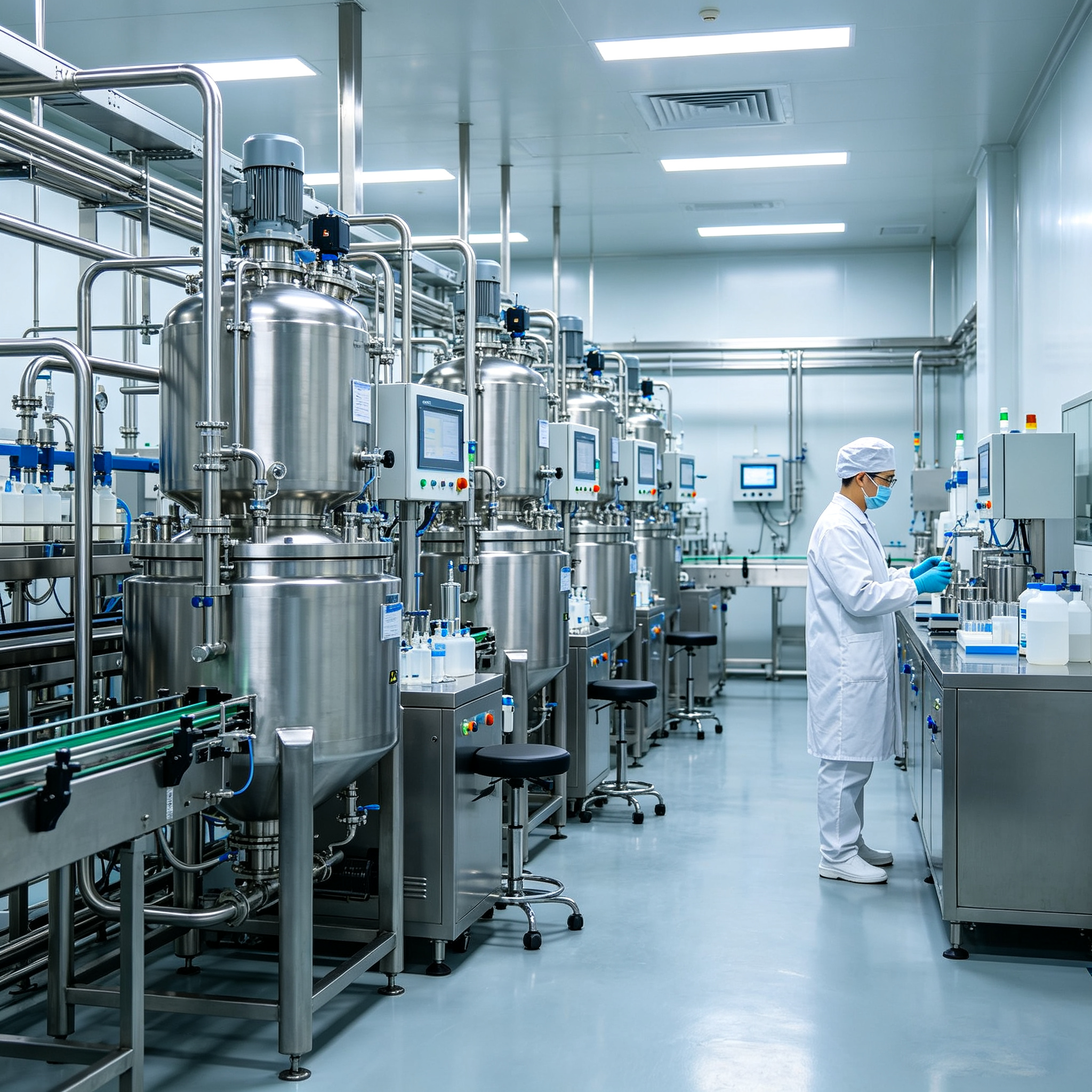
- Contamination Risk & Maintenance: Adherence to ISO 7 cleanroom standards with 24/7 environmental monitoring can reduce contamination risk to approximately one-tenth that of facilities with less stringent controls. This also correlates with significantly lower maintenance requirements and higher batch consistency.
- Quality Assurance: The batch failure/rejection rate for top suppliers is typically ≤1%, compared to 5-10% or higher for average suppliers, reducing project delays and hidden costs.
For example, a supplier like Yee Peptide, with a factory size of 47,00㎡ and an annual output of 10,000,000 vials, demonstrates the infrastructure required for large-scale, consistent production. Their R&D team of 15-20 researchers with advanced degrees supports technical capability for complex peptides like Tirzepatide.
Risk Mitigation in the Supply Chain
Procurement must account for potential disruptions. Key risk mitigation factors include:
- Vertical Integration: Suppliers with in-house production of key building blocks (amino acids, protected intermediates) have greater control over raw material quality and availability.
- Facility Redundancy & Strategic Stock: The ability to maintain strategic API stock and operate multiple production lines reduces single-point-of-failure risks.
- Quality System Robustness: Stringent, documented quality standards and 100% inspection protocols are the first line of defense against quality failures.
- Proven Track Record: Long-term partnerships and case studies, such as a 5-year relationship with a US wholesaler involving 50,000 vials with zero quality complaints, provide empirical evidence of reliability.
Implementation Checklist for Procurement Teams
Before finalizing a supplier, ensure the following steps are completed:
- Request and Audit Documentation: Obtain and review recent, lot-specific Certificates of Analysis (CoA), stability data, and facility audit reports if available.
- Conduct Technical Audits (Virtual/On-site): Request tours of synthesis and QC laboratories to assess equipment, cleanliness, and operational practices.
- Order Evaluation Samples: Procure small samples (aligning with the supplier's MOQ, which can be as low as 10 vials for evaluation purposes) for in-house or third-party testing against your specifications.
- Clarify Logistics and Terms: Confirm lead times, shipping methods (e.g., DDP), payment terms (e.g., Bank Transfer, Wise), and after-sales support protocols.
- Evaluate Scalability Dialogue: Discuss future project needs to ensure the supplier's capacity (e.g., 500,000-800,000 vials/month) and customization capabilities (e.g., blend formulations, vial labeling) align with your growth roadmap.
Conclusion and Key Takeaway
Selecting a Tirzepatide vial supplier is a strategic decision. The lowest unit cost often masks higher total costs from yield loss, failed batches, and project delays. A rigorous evaluation focused on quantifiable quality metrics, manufacturing infrastructure, and proven reliability is essential. Prioritizing suppliers who invest in advanced synthesis technology, stringent environmental controls, and transparent quality systems will provide a more stable, high-quality foundation for critical research and development work in metabolic health.
For a detailed overview of technical capabilities and product portfolios, procurement teams can refer to comprehensive supplier documentation.
Download the Technical Brochure for Detailed Specifications