
Decoding Industrial Shredder Parameters: Quality & Performance Guide
Decoding Industrial Shredder Technical Parameters: A Buyer's Guide to Quality and Performance
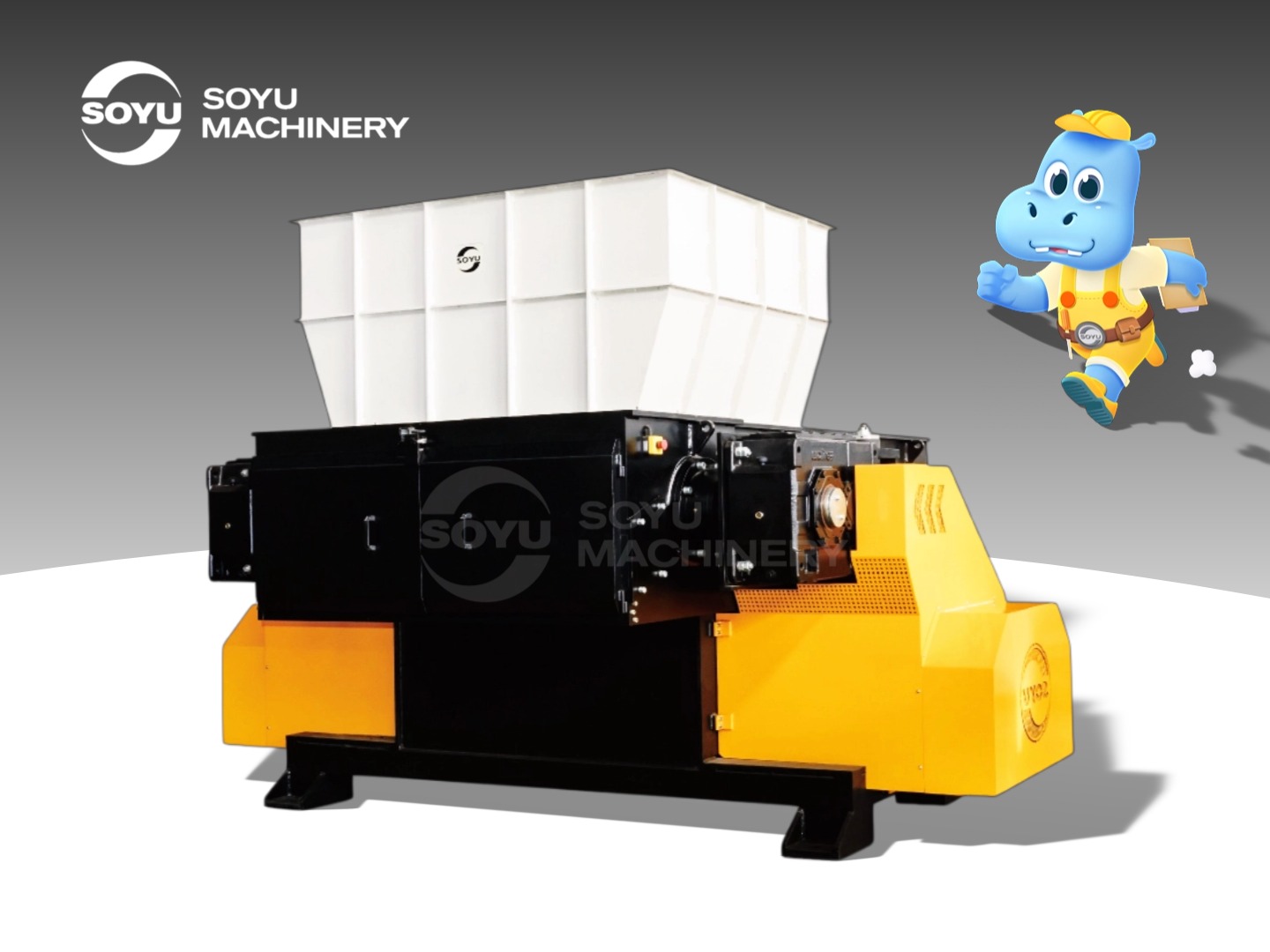
Industrial shredder technical parameters directly influence operational efficiency and longevity.
Global procurement officers often face a dense datasheet of technical specifications—motor power, blade material, cutting chamber dimensions, rotor speed—without knowing which numbers truly matter. A heavy-duty industrial shredder is a long-term investment; misinterpreting parameters can lead to frequent downtime, high maintenance costs, and premature failure. This guide explains how to critically evaluate technical parameters and how manufacturing processes directly determine shredder quality, reliability, and total cost of ownership.
What Are Industrial Shredder Technical Parameters?
Technical parameters define the design limits and performance capabilities of a shredder. They include:
- Cutting chamber dimensions – Determines maximum feed size and throughput.
- Motor power (kW) – Indicates the energy available for shredding tough materials.
- Blade material and hardness – Affects cutting life and resistance to wear.
- Shaft material and treatment – Influences torque transmission and fatigue resistance.
- Screen diameter – Controls output particle size.
- Equipment weight – Reflects structural robustness and stability.
- Safety certifications – CE, ISO 9001 confirm compliance with international standards.
Why Manufacturing Excellence Matters
Two shredders with identical parameter sheets can perform very differently because of differences in manufacturing processes. Premium suppliers like Soyu Machinery (Changshu Shouyu Machinery Co., Ltd.) invest in:
1. Blade Material & Heat Treatment
Core crushing components are the heart of any shredder. Soyu uses DC53 / CrMoV high-alloy wear-resistant steel for rotary blades and D2 / SKD11 tool steel for fixed blades, achieving a hardness of HRC 58–62. High-end options include tungsten carbide tipping or hardfacing welding. This combination delivers excellent wear resistance, impact resistance, and shear stability. Each blade is multi-side reversible, extending service life by up to 30% compared to conventional blades.
2. Shaft Manufacturing
Shafts are made from 42CrMo high-strength alloy steel, processed through quenching & tempering + dynamic balancing + surface hardening. This ensures high rigidity and toughness, preventing deformation or fracture under long-term heavy-duty operation—a critical factor for metal shredders and heavy duty industrial shredders processing scrap steel.
3. Frame & Structural Integrity
The main frame uses Q345B heavy-gauge carbon steel plates with heavy-duty welding, overall stress-relief annealing, and reinforced rib design. This structure provides high rigidity, low vibration, and stable operation even when processing bulky waste or mixed industrial scrap.
4. Quality Control & Certification
Soyu holds ISO 9001:2015 (Certificate No. 04623Q10985R3M) and CE certificates for single shaft, double shaft, four shaft shredders, hammer mills, and crushers. Every machine undergoes a 100% Factory Acceptance Test (FAT) before shipment. These certifications assure buyers that the equipment meets EU machinery directives and international safety standards.
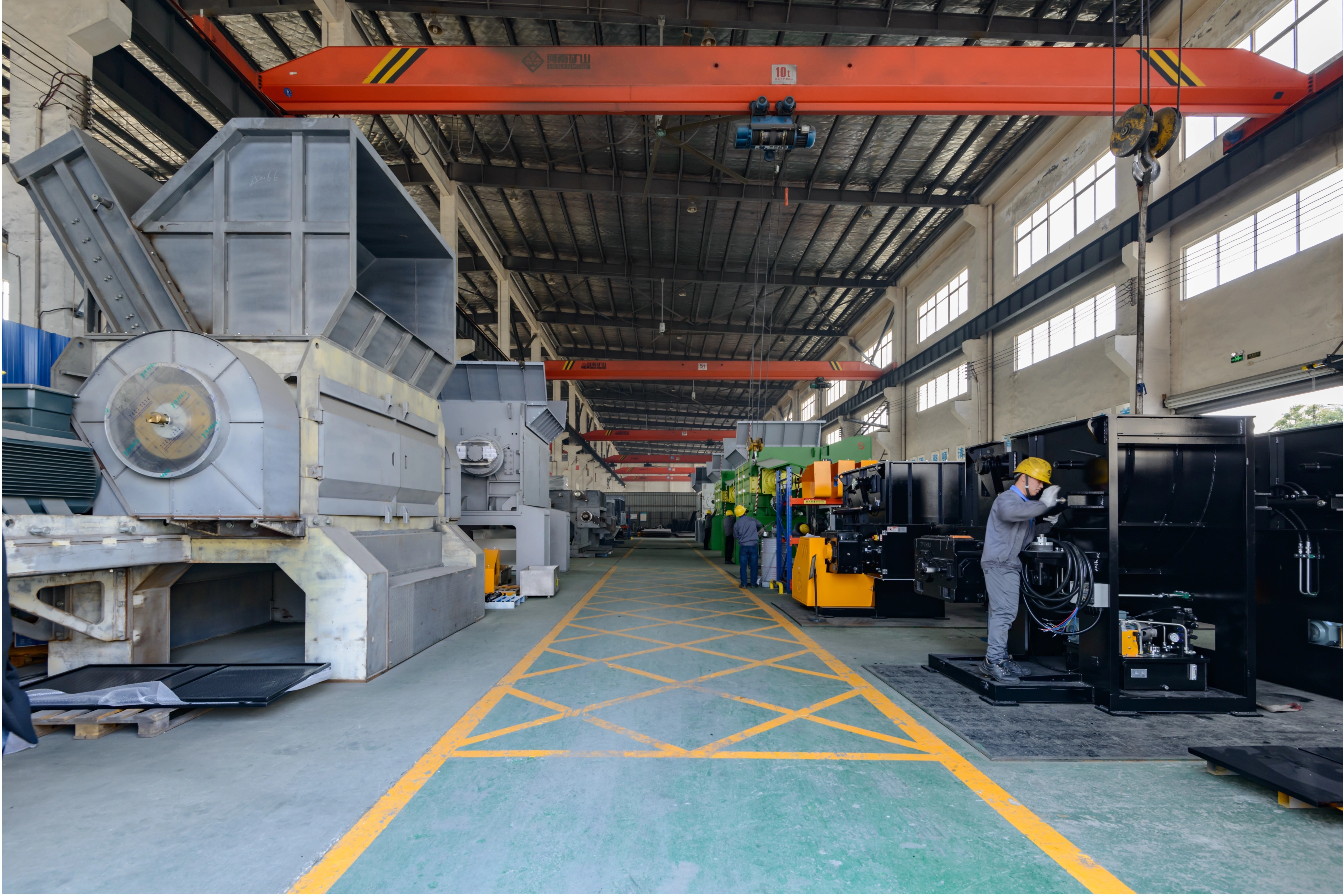
Precision manufacturing and rigorous quality control at Soyu's 15,000 m² factory.
How to Choose the Right Shredder Configuration
Selecting between single shaft shredder, double shaft shredder, and four shaft shredder depends on your material type and desired output:
| Machine Type | Best For | Key Advantage |
|---|---|---|
| Single Shaft Shredder | Plastic, wood, paper, rubber, light metal | Uniform output size with screen control; low noise |
| Double Shaft Shredder | General industrial waste, tires, e-waste, metal scrap | High torque for bulky/tough materials; self-feeding |
| Four Shaft Shredder | E-waste, hazardous waste, battery recycling, FRP | Finer output; reduced dust; dual-stage crushing |
For example, a four shaft shredder (FS100120) with 2x30 kW motor power and 6000 kg weight is ideal for battery shredding (China project, 24/7 operation). A single shaft RDF shredder (SRD2500) with 2x110 kW motor power and 16,000 kg weight excels in refuse-derived fuel preparation.
Real-World Case Study: 10 Years of Stable Operation in Italy
An Italian agent purchased 20 sets of single shaft shredders from Soyu for plastic recycling. Over 10 years of continuous operation, the machines have delivered stable performance with minimal maintenance. The secret? Optimized blade materials (DC53, HRC 60-62), robust 42CrMo shafts, and a Q345B frame that withstands daily heavy loads. This case demonstrates that paying attention to manufacturing quality directly translates to lower total cost of ownership.
Common Buyer Concerns & How to Address Them
- “Why are Chinese shredders cheaper than European brands?” – Chinese manufacturers like Soyu offer 15-20% lower initial investment due to integrated supply chains and lower labor costs, while maintaining equivalent quality through CE/ISO certifications. Soyu's 70% export ratio to EU and USA proves global acceptance.
- “How do I verify claimed parameters?” – Request a Factory Acceptance Test (FAT) or third-party inspection (SGS/BV). Soyu provides full FAT records and material certificates.
- “What about after-sales support and spare parts?” – Soyu offers 24/7 remote troubleshooting, on-site commissioning, and a spare parts warehouse with fast delivery. Maintenance costs are 30% lower than European alternatives.
- “Is customization possible for my specific waste stream?” – Yes, Soyu supports OEM/ODM with processing capacity, material type, safety configuration, and conveyor integration. MOQ is 1 set.
Frequently Asked Questions (FAQ)
A: Both operate at low speeds (typically 70-150 rpm) to maximize torque and reduce dust. The term low speed high torque shredder emphasizes the ability to shred tough materials like metal and tires without jamming. Soyu’s SYU61210 model (2x90 kW, 23,000 kg) is a typical low speed high torque double shaft shredder.
Key parameter to check: Main blade quantity and shaft diameter.
A: Blades made of D2/SKD11 with HRC 58-62 can run 1000-1500 tons of PE pipe scrap before needing resharpening. Using tungsten carbide tipped blades further extends life. Multi-side reversible design reduces replacement frequency. A 30% longer blade life translates to significantly lower annual spare part costs.
A: For plastic film, a single shaft shredder with proper screen and hydraulic ram is usually sufficient. However, if film contains metal contaminants or is baled densely, a double shaft shredder provides pre-crushing before fine shredding. Always consider total material composition.
Conclusion: Parameters Alone Don't Guarantee Quality
An industrial shredder's datasheet is merely a starting point. To ensure long-term reliability and cost efficiency, you must evaluate the manufacturing processes behind those numbers: blade metallurgy, heat treatment precision, shaft balance, frame stress relief, and quality certifications. Suppliers like Soyu Machinery combine transparent technical parameters with proven manufacturing excellence, supported by 17 years of experience, a 25-engineer R&D team, and annual output of 2000 sets. For a detailed quotation or to discuss your specific shredding needs, contact sy@shredder-3e.com or visit blog.shredder3e.com.
Still unsure which model fits your material? Request a free material test and parameter analysis from Soyu’s engineering team.