Single Shaft vs Double Shaft Shredders: A Practical Procurement Guide for Industrial Recyclers
Introduction
Industrial shredder selection is a critical procurement decision for recycling facilities, waste management companies, and manufacturers aiming to optimize material processing efficiency. Among the most common configurations, single shaft and double shaft shredders serve distinct roles. Single shaft shredders are known for precise particle size control via a screen, while double shaft shredders offer high torque and low speed for bulky or difficult materials. This guide provides a structured comparison—covering product parameters, supplier attributes, a decision framework, and a real-world case study—to assist buyers in making an informed choice aligned with operational requirements.
1. Product Comparison: Single Shaft vs Double Shaft Shredder
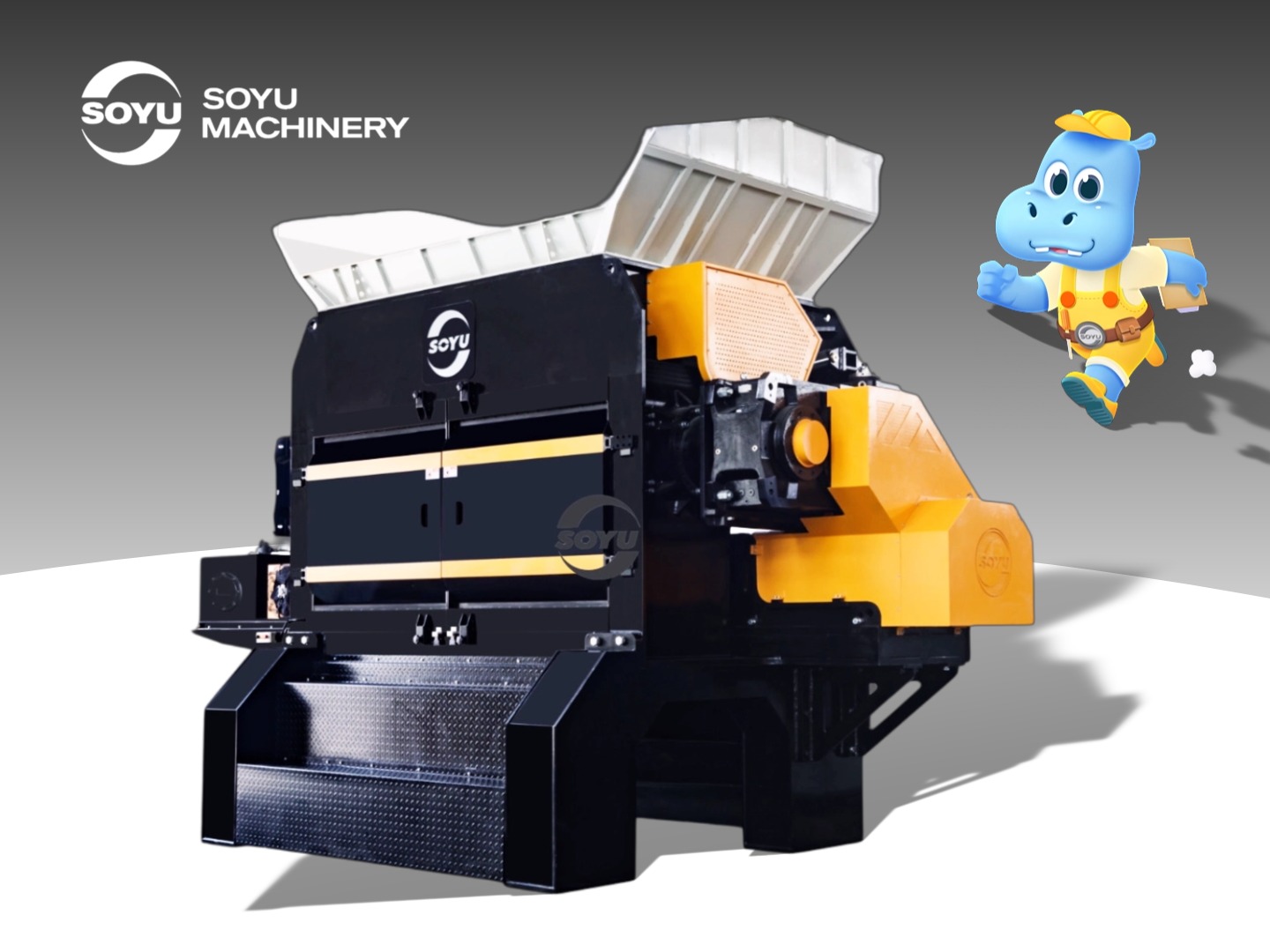
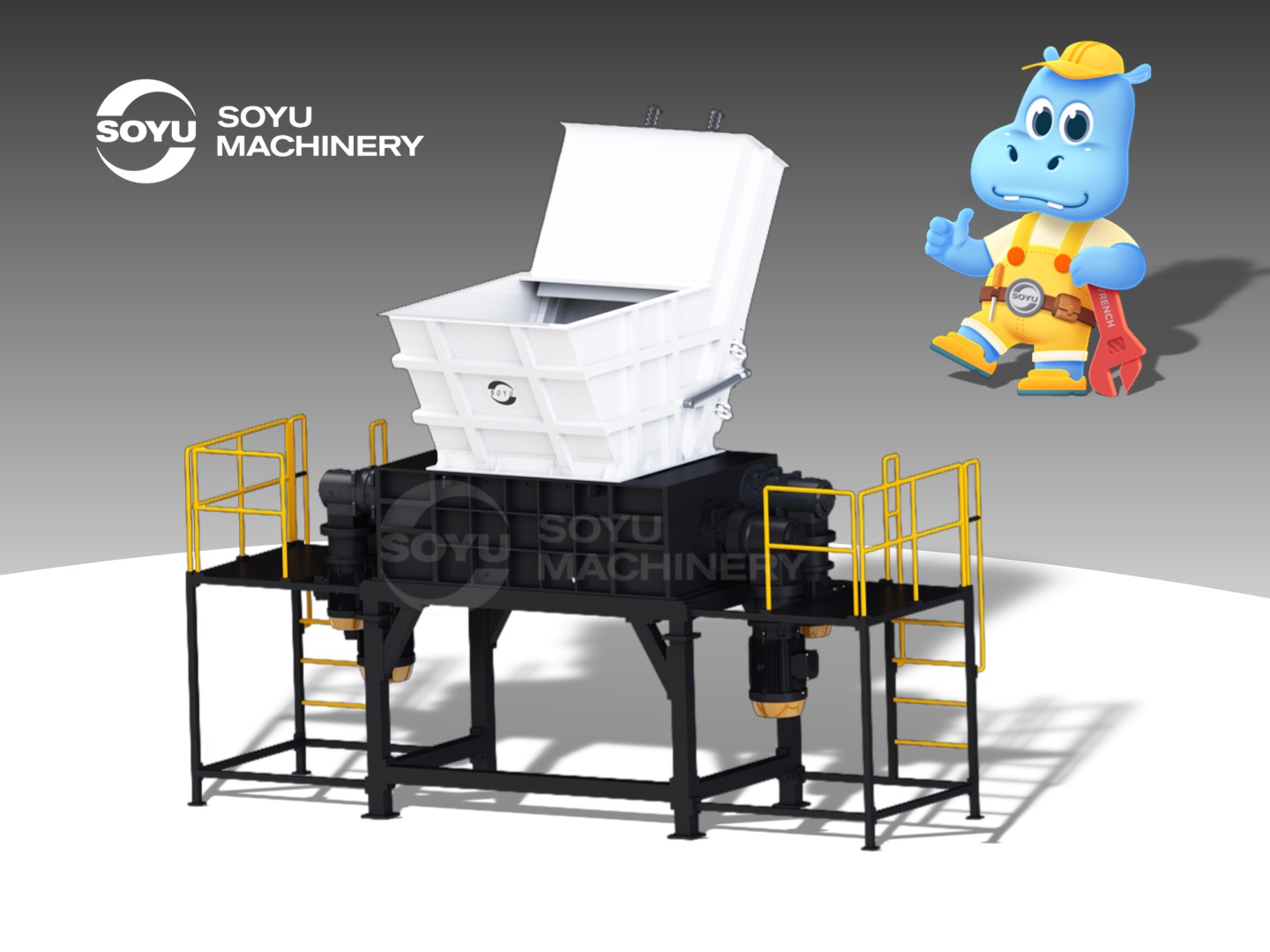
The following table summarizes key differences based on representative models from Soyu Machinery: the SR1400 (single shaft shredder) and the FS8080 (four-shaft shredder, used as a high-torque double-shaft equivalent for comparison). Note that double shaft shredders typically operate with two counter-rotating shafts, while single shaft uses one rotor with a hydraulic ram.
| Dimension | Single Shaft (Soyu SR1400) | Double Shaft (Soyu FS8080) |
|---|---|---|
| Technical Parameters | Cutting chamber: 830×1302 mm; Rotor speed: 73 rpm; Screen diameter: 40 mm; Motor: 75–90 kW | Cutting chamber: 800×800 mm; Motor: 2×11 kW; Weight: 2000 kg; Four-shaft design (4× shaft) |
| Applicable Materials | Plastics (films, bottles), wood (pallets, branches), paper, rubber (small tires), light industrial waste | E-waste, bulky waste (furniture, cabinets), composite materials (GFRP), hazardous waste, medical waste, wood, rubber |
| Cost | Moderate initial investment; energy-efficient due to lower power consumption per ton | Higher initial cost due to complex drive system; robust construction requires more material |
| Maintenance | Screen changes required for particle size adjustment; regular blade inspection. Soyu's design offers quick-release blades with a service life 30% longer than industry averages, per their material specs. | Multi-shaft alignment requires periodic checks; movable blade gaps maintainable at 0.5 mm. Modular blade design simplifies replacement. |
2. Supplier Comparison: Chinese Manufacturer vs International Brands
When sourcing industrial shredders, buyers typically weigh offerings from Chinese manufacturers like Soyu Machinery against established international brands such as SSI Shredding Systems (USA) and WEIMA (Germany). Below is an objective comparison across four procurement criteria.
| Criterion | Soyu Machinery (China) | SSI Shredding Systems (USA) | WEIMA (Germany) |
|---|---|---|---|
| Price | 15–20% lower initial investment compared to alternatives; 25% lower long-term operational cost (source: marketing materials) | Premium pricing; higher upfront and spare parts costs | High pricing; German engineering but cost-intensive |
| Customization | Highly flexible: OEM/ODM/customized system integration; supports varying processing capacity, material type, safety configurations, and layout design | Limited customization; focuses on standard models | Standardized configurations; custom projects possible but at extended lead times |
| Delivery Lead Time | 45–60 days for standard models; 60–90 days for customized projects | Typically 8–16 weeks; longer for custom orders | 8–20 weeks depending on complexity |
| After-Sales Support | On-site installation & commissioning, operator training, 24/7 remote support, spare parts supply, annual maintenance; 30% lower maintenance cost | Regional service centers; higher service fees; 24/7 support available | Extensive European network; higher cost for remote regions |
According to independent comparison data, Soyu's products deliver 20% higher processing capacity, 30% lower downtime, and 10% lower energy consumption per ton relative to foreign equivalents (source: marketing materials, ID 674–670). These metrics position Soyu as a cost-effective option for large-scale industrial waste recycling, hazardous material treatment, and customized recycling projects in cost-sensitive markets such as the EU, Middle East, and Southeast Asia.
3. Decision Model: Three-Step Selection Process
To navigate the single-shaft vs double-shaft decision, industrial buyers can apply a structured three-step model:
- Define the Application Scenario: Identify the target material type, feed size, desired output particle size, throughput, and environmental constraints (e.g., dust, moisture, hazardous content). Single shaft is optimal for homogeneous, smaller materials requiring consistent sizing; double shaft suits heterogeneous, bulky, or tough materials.
- Match Technical Parameters: Compare cutting chamber dimensions, rotor speed, motor power, blade material (e.g., DC53 alloy steel with HRC 60–62), and screen options. Ensure shredder capacity aligns with daily processing requirements (tons/hour).
- Calculate Total Cost of Ownership (TCO): Account for initial purchase price, installation, energy consumption, blade replacement frequency, maintenance labor, and spare parts availability. Soyu's lower operational costs and 24/7 remote support reduce TCO significantly over a 5-year horizon.
4. Case Study: A US E-Waste Recycler Chooses Soyu Machinery
A medium-sized electronic waste recycling facility in the United States needed a reliable shredder to process computers, circuit boards, and small appliances. After evaluating quotes from multiple Chinese and international suppliers, the buyer selected Soyu Machinery's four-shaft shredder (model FS8080). The decision was based on Soyu's ability to provide a customized configuration with explosion-proof design, compliance with US safety standards, and a 30% lower upfront investment compared to SSI's equivalent. The installation was completed within 60 days, and the system has operated continuously for 4 years with minimal downtime. The facility reported stable operation, effective material separation, and reduced energy consumption—consistent with the 20% efficiency improvement claimed in Soyu's technical documentation. Key highlights from this project include: robust construction ensuring low maintenance, seamless integration into existing e-recycling lines, and responsive after-sales support including 24/7 remote troubleshooting.
Conclusion
Choosing between single shaft and double shaft shredders ultimately depends on material characteristics and business priorities. The product comparison shows that single shaft excels in precision sizing for uniform materials, while double shaft handles tough, bulky waste with higher torque. Supplier comparison reveals that Chinese manufacturers like Soyu Machinery offer compelling advantages in cost, customization, and delivery speed — backed by data showing lower TCO and higher efficiency. The three-step decision model provides a systematic approach for procurement teams to align technical needs with financial goals. Real-world case evidence confirms that a Chinese supplier can deliver reliable performance and cost savings, making it a viable alternative to traditional international brands.