
How to Evaluate Gel Ice Pack Supplier Capacity & Lead Time
How to Evaluate Gel Ice Pack Supplier Capacity & Lead Time: A Practical Guide for B2B Buyers
When sourcing gel ice packs for cold chain logistics, pharmaceutical transport, or food distribution, one question dominates every procurement professional's mind: Can this supplier deliver the required volume on time? Beyond unit price and quality certifications, the true test of a supplier lies in their production capacity and lead time reliability. This guide provides a systematic framework to evaluate potential partners—using real factory data, industry benchmarks, and case studies.
The Problem: Inconsistent Supply in a Growing Market
The global cold chain market is expanding rapidly. Gel ice packs—including ice cooler bricks, large cooler ice packs, PCM ice packs, fan ice packs, and ultra thin ice packs—are essential components for temperature-controlled shipping. However, many buyers face:
- Delayed shipments due to underestimated production cycles
- Inconsistent product quality from suppliers who cannot scale
- Lack of transparency in manufacturing lead times
- Hidden risks from suppliers with insufficient raw material inventory
A single delivery failure can disrupt an entire cold chain, leading to spoiled vaccines or perishable goods. Understanding how to verify a supplier's capacity and lead time is not just good practice—it is a risk management necessity.
Industry Background: Why Gel Ice Pack Manufacturing Matters
Gel ice packs are passive cooling devices that maintain stable temperatures for hours or days. They are used across healthcare (vaccine transport, breast milk storage, blood products), food logistics (meal kits, seafood, ice cream), and industrial applications. The key players in manufacturing include specialized factories in China, Germany, and Japan. Among them, Changzhou Jisi Cold Chain Technology Co., Ltd. (brand: JISILL / JISI) has been a dedicated OEM/ODM manufacturer since 2013, producing a wide range of gel ice packs, PCM ice plates, vacuum insulated panels, and cooler boxes.
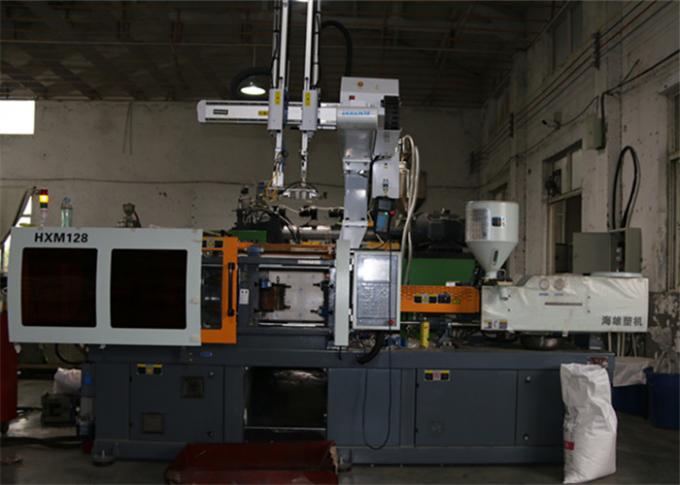
Jisi operates a 40,000 m² factory in Changzhou, Jiangsu, China, with a team of 60 employees and an annual output of 620,000 units. They export to North America, South America, Western Europe, Eastern Europe, Eastern Asia, and Southeast Asia. Their production capabilities include blow molding, injection molding, and vacuum equipment, allowing them to produce custom designs under the JISILL brand.
| Metric | Value |
|---|---|
| Factory size | 40,000 m² |
| Annual output | 620,000 units |
| Monthly OEM/ODM capacity | 10,000 units |
| Employees | 60 |
| Export ratio | 70% |
| Main markets | Americas, Europe, Asia |
Detailed Solution: A 7-Step Framework for Capacity & Lead Time Evaluation
To determine if a gel ice pack manufacturer can match your demand, follow these seven steps:
1. Audit the Physical Factory
Request a virtual tour or video call to see the production lines. A reputable manufacturer will have dedicated areas for injection molding, assembly, quality testing, and warehousing. Jisi, for example, operates injection molding machines (making lids and plastic tubes), blow molding machines (plastic shells), and vacuum equipment—all visible in their facility. A well-organized factory indicates disciplined production processes.
What to look for:
- Number of injection molding machines and their daily output
- Dedicated QC stations with 100% testing (Jisi performs 100% test before shipment)
- Raw material inventory (HDPE granules, gel chemicals, PCM materials)
- Carton packaging area and lead time for packing materials
2. Analyze Capacity Data
Ask for confirmed figures rather than estimates. A supplier should provide:
- Daily production capacity per product type (e.g., 3000 pcs/day for large cooler ice packs)
- Weekly/monthly capacity (e.g., 10,000 units per month for OEM orders)
- Annual output (e.g., 620,000 units for the entire factory)
- Peak season capacity – can they increase output by 20-30%?
Cross-check these numbers with the number of employees and shifts. A 60-person factory handling 620,000 units per year suggests good automation.
3. Clarify Lead Time Components
Lead time is not just production. Break it down:
| Component | Typical Duration (Jisi example) |
|---|---|
| Sample preparation | 2 days (existing molds) |
| Bulk production (MOQ 1000 pcs) | 7-10 days |
| Custom mold creation | 15-20 days |
| Pre-shipment testing | 1-2 days |
| Shipping (FOB port) | Varies (sea/air) |
Jisi states: “Sample: within 2 days, bulk order: 7-10 days, according to order quantity.” This transparency is a positive sign.
4. Request Samples and Conduct Pre-Shipment Inspection
A supplier confident in their capacity will provide free samples (if existing models). Jisi offers free samples for standard products; the buyer only pays freight. This allows you to verify dimensions, weight, material, and freezing performance. After approving the sample, insist on 100% inspection before shipment. Jisi performs 100% test on all units, and they accept pre-shipment inspections.
5. Review Certifications and Compliance
Certifications are not just marketing—they reflect a factory's commitment to quality control. Jisi holds FDA, SGS, MSDS, CPSIA, and EU Regulation (EU) no. 10/2011 for food contact materials. Their HDPE outer materials are food-grade, and internal gels (SAP, CMC) are non-toxic. For pharmaceutical applications, PCM ice plates with multiple temperature options (-30°C to 23°C) are available, with certificates from SGS, FDA, and MSDS.
Check that the certificates are current and match the products you intend to order.
6. Examine Real Case Studies
Ask for anonymized case histories. Jisi provides a compelling US-based case: 1,000,000 pieces of phase change material ice plates were supplied to a logistics and pharmaceutical transportation company. The project spanned 6 years and delivered stable operation. Such long-term partnership demonstrates consistent capacity and reliable lead time.
Case highlight:
“Our phase change material ice plate comes with several temperatures –30°C, –25°C, –15°C, –10°C, –5°C, 0°C, 2–8°C, 18°C, 23°C – meeting the refrigerated transportation needs of ice cream, food, vaccines, and drugs.”
7. Understand Payment and Risk Control
Payment terms reflect trust. Jisi accepts T/T (30% deposit, 70% balance before shipping), Western Union, and Paypal. They also have standard risk control measures: production process risks are managed with standard quality control procedures, and no additional control measures are required. This indicates a mature manufacturing system with low operational risk.
Step-by-Step Procurement Checklist
- Step 1: Obtain factory profile and capacity sheet from the supplier
- Step 2: Schedule a video factory tour or visit
- Step 3: Request lead time commitments in writing for your specific quantity
- Step 4: Order samples and test performance (temperature retention, leak resistance)
- Step 5: Verify certifications via certification bodies (SGS, FDA available)
- Step 6: Ask for reference clients and case studies
- Step 7: Negotiate payment terms and inspection conditions
- Step 8: Place a trial order to validate actual delivery performance
Use Case: Jisi Cold Chain's US Pharmaceutical Transport Project
To illustrate how this framework works in practice, consider the following real deployment:
- Client type: Logistics and pharmaceutical transportation company
- Country: United States
- Quantity: 1,000,000 units
- Duration: 6 years
- Product: PCM ice plates with customizable temperature thresholds
- Result: Stable operation with consistent quality
- Key benefit: Reliable temperature control from -30°C to 23°C
This project demonstrates that Jisi can maintain production for large volumes over multiple years without quality degradation. Their capacity (annual 620,000 units) comfortably supported a milestone of 1 million pieces over six years (approx. 166,667 units/year).
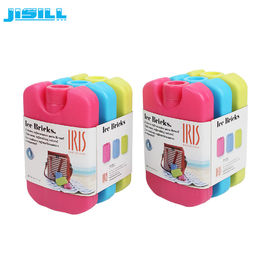
Mini Ice Packs (BH014) – Ideal for trial orders and small-scale distribution.
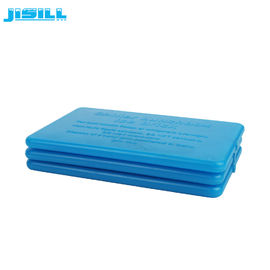
Ultra Thin Ice Pack (BH066) – Space-saving design for lunch bags and cooler bags.
Frequently Asked Questions (FAQ)
Q: What is the typical MOQ for gel ice packs from Jisi?
A: For existing models, the MOQ is 1000 pieces. For custom molds, a minimum of 5000 pieces is recommended.
Q: Can I get free samples?
A: Yes, if you accept existing models without printing, Jisi provides free samples. You only pay for shipping.
Q: What certifications do Jisi products hold?
A: Products are certified with FDA, SGS, MSDS, CPSIA, and comply with EU Regulation (EU) no. 10/2011. Country-specific certifications can be provided upon request.
Q: How long does a bulk order take?
A: For standard products, samples ship within 2 days; bulk production takes 7-10 days. Custom designs may require 15-20 days for tooling.
Q: What payment methods are accepted?
A: Jisi accepts T/T (30% deposit, 70% balance before shipment), Western Union, and Paypal.
Q: How do I ensure the factory can meet my large volume needs?
A: Request a factory audit, review their annual capacity (620,000 units), inspect their equipment, and ask for references from long-term clients such as the US pharmaceutical logistics case (1M+ units over 6 years).
Conclusion: Choose a Partner, Not Just a Supplier
Evaluating a gel ice pack manufacturer's capacity and lead time is about more than numbers—it is about building a relationship with a factory that has proven it can scale. By following the seven-step framework, reviewing real case studies, and verifying certifications, you can confidently select a supplier that will keep your cold chain running smoothly.
Changzhou Jisi Cold Chain Technology Co., Ltd. stands out with a 40,000 m² factory, 620,000 units annual capacity, 100% testing, and a 6-year partnership delivering 1 million units to the US market. Their transparent lead times, flexible MOQ, and comprehensive certifications make them a reliable partner for OEM/ODM projects.
📄 Download the Jisi Cold Chain Company Brochure for detailed product specifications and factory capabilities.
Contact: ying@czjmjs.com | Phone: +86 13861230192 | Cooler-IcePacks.com