
Efficient Microscope Procurement: Avoiding Risks with Certified Suppliers
Efficient Microscope Procurement: A Guide to Avoiding Supplier Risks
Procuring a microscope for a laboratory, educational institution, or industrial facility is a significant investment. The wrong supplier can lead to equipment that fails to meet specifications, lack of certification causing compliance issues, or poor after-sales support that delays research. This guide answers the core question: How can procurement officers efficiently purchase microscopes while mitigating cooperation risks?
We systematically define the problem, explore industry background, and provide a step-by-step solution based on real-world practices. Whether you need a biological microscope, metallurgical microscope, fluorescence microscope, stereo microscope, or a specialized inverted microscope, the principles of safe procurement remain the same.
Problem Definition: Common Procurement Risks
Buyers often face these challenges when sourcing microscopes from international suppliers, especially from emerging manufacturing hubs like China:
- Quality inconsistency – products that deviate from listed specifications.
- Missing certifications – no CE, RoHS, or ISO marks, leading to customs delays and compliance failures.
- False claims – suppliers exaggerate optical performance or warranty terms.
- Logistics and payment disputes – hidden fees, unclear delivery terms, or unresponsive after-sales.
- Minimal customization – inability to add OEM branding or specific configurations.
Efficient procurement means eliminating these risks through a structured evaluation of the supplier’s credentials, production capabilities, and service commitments.
Industry Background: The Role of Chinese Microscope Manufacturers
China has become a global hub for optical instrument manufacturing. Companies like Chongqing Scope Instrument Co., Ltd. (cqscopelab.com) operate modern factories with advanced assembly lines. The typical Chinese microscope supplier now offers a wide range of products – from binocular microscopes for education to trinocular fluorescence systems for advanced research. However, buyer due diligence remains essential. Understanding the supplier’s factory scale, R&D team, export markets, and certification portfolio is the first step toward risk-free procurement.
Detailed Solution: How to Evaluate a Microscope Supplier
To answer how to choose a reliable microscope supplier, we must examine five critical dimensions:
1. Certification Compliance
Legitimate suppliers hold third-party certifications that validate product safety and quality. For example, Chongqing Scope’s microscopes are covered by CE (certificate BKC22072376GC) and RoHS (BKC-191103261C), ensuring compliance with EU standards. These certificates specify the applicable models (e.g., BK5000, MIT500, BDS400, SMART series) and the standards tested (EN 61010-1, IEC 62321). Always request certificate numbers and verify them with the issuing authority.
2. Production Capacity and OEM Capabilities
A supplier’s ability to deliver consistent quality at scale is crucial. Chongqing Scope operates a 5,000m² factory with over 100 employees and an annual output of 30,000 units. They offer OEM and ODM services with logo customization, a monthly capacity of 3,000 units, and a lead time of just 15 days. Minimum order quantity (MOQ) is as low as 1 unit, which is ideal for pilot testing before bulk orders.
3. Product Range and Technical Specifications
Evaluate whether the supplier covers your specific application. The table below compares common microscope types and typical applications:
| Microscope Type | Typical Model | Application |
|---|---|---|
| Biological Microscope | BK5000 | Teaching, clinical labs, general biology |
| Metallurgical Microscope | MIT500 | Materials science, metal grain analysis |
| Fluorescence Microscope | BK5000-FL | Biomedical research, cell imaging |
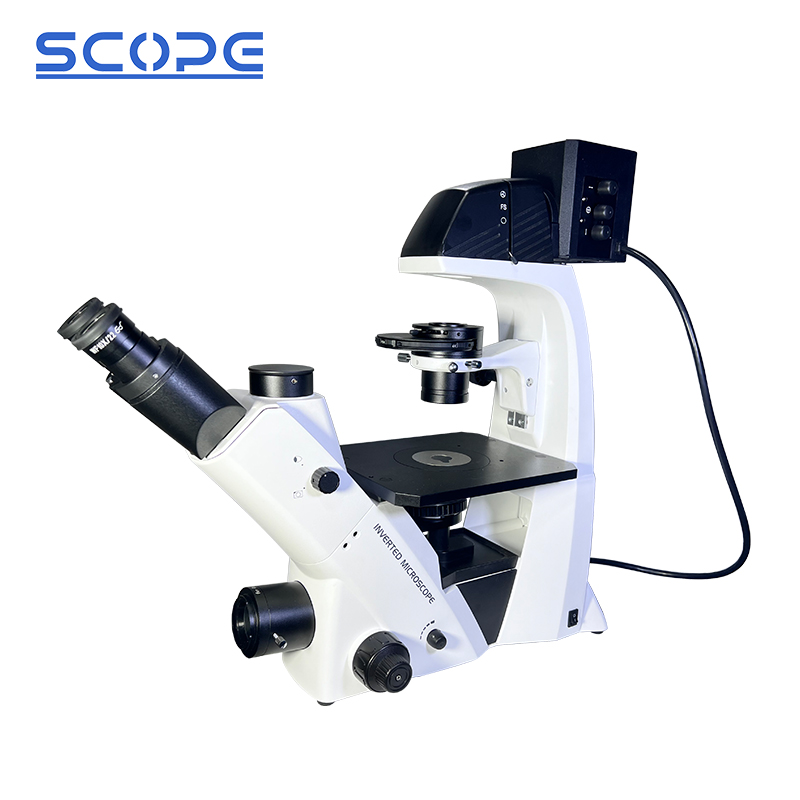
| Inverted Microscope | BDS400 / BDS500 | Cell culture, live cell observation |
| Polarizing Microscope | BK-POL / SMART-POL | Geology, mineralogy, petrography |
| Stereo Microscope | SZ810 | Industrial inspection, dissection |
4. Payment and Delivery Flexibility
Risk mitigation includes clear commercial terms. Reputable suppliers accept T/T payment, offer delivery terms EXW, FOB, CFR, CIF, DAP, and allow factory inspection as part of acceptance. This transparency reduces financial exposure.
5. After-Sales Support and Warranty
Look for at least a 1-year warranty and online technical support. Chongqing Scope provides online after-sales repair service, operation videos, and spare parts supply – addressing common risks like bulb degradation, optical path dust, or lens fogging.
Step-by-Step Procurement Process
Follow this 5-step framework for efficient, low-risk microscope purchasing:
- Define your application – Determine whether you need bright field, dark field, phase contrast, or fluorescence capabilities. This narrows down the product category.
- Shortlist certified suppliers – Prioritize those with verifiable CE, RoHS, and ISO certificates. Check if the certification covers your required models.
- Request technical datasheets and a sample quote – Compare optical parameters (objective NA, illumination type, stage size). Confirm that the microscope uses an infinity optical system for superior image quality.
- Conduct a factory inspection (or virtual audit) – Accept only suppliers that allow pre-shipment inspection. Chongqing Scope offers factory inspection as part of the acceptance process.
- Negotiate terms and place a trial order – With MOQ as low as 1 unit, you can test a single microscope before committing to volume. Use T/T with a transparent delivery term like FOB or CIF.
Frequently Asked Questions (FAQ)
A: For European markets, the minimum requirements are CE marking (EN 61010-1 safety standard) and RoHS compliance (IEC 62321) for hazardous substance restriction. A valid certificate number from an accredited body like BKC is essential.
A: Yes, many Chinese suppliers, including Chongqing Scope, offer OEM customization for logos and even full product branding. The MOQ for customized units is typically 1 unit, and lead time remains around 15 days.
A: Request a sample unit with the option of factory inspection. Also, ask for a video call demonstrating the optical performance. A reliable supplier will provide clear images captured with the microscope and allow third-party testing.
A: Standard support includes a 1-year warranty, online troubleshooting, and replacement parts for common issues like bulb degradation or dust in the optical path. Some suppliers offer free operation guides and anti-mildew treatment advice.
Conclusion
Efficient microscope procurement is not just about finding the lowest price – it is about building a transparent, verifiable relationship with a manufacturer that can prove its certifications, production capacity, and service commitment. By following the evaluation framework outlined above, you can avoid common pitfalls such as non-compliant equipment, hidden costs, and poor support.
For a complete overview of Chongqing Scope’s microscope range, certifications, and customization options, download the company brochure below.