
Controlling Maintenance Costs and After-Sales Support for Commercial PVC Flooring
How to Control Maintenance Costs and Secure After-Sales Support When Sourcing Commercial PVC Flooring
For procurement professionals, the anxiety doesn't end when the container leaves the factory. The real test begins after installation: Will the commercial PVC flooring hold up under heavy foot traffic? How quickly can the supplier respond if defects appear? What are the hidden costs of repairs and replacements over a 10-year lifecycle?
These questions—centered on after-sales support and maintenance cost control—are among the top concerns for B2B buyers of commercial PVC flooring. This guide provides a systematic framework to evaluate suppliers on these critical dimensions, helping you make procurement decisions that protect your project budget and operational continuity.
Defining the Problem: Why After-Sales and Maintenance Matter in Commercial PVC Flooring Procurement
Commercial PVC flooring is installed in high-traffic environments: hospitals, sports halls, airports, schools, and factories. In these settings, downtime for repairs or replacement is costly. A single defect in a badminton court can halt tournaments. A delaminated seam in a hospital corridor can create infection control risks. Yet many global buyers discover only after installation that their supplier offers no technical support, no spare materials, and no clear warranty process.
The core problem is twofold:
- Uncertain after-sales service – suppliers may disappear after shipment or lack an international service network.
- Unpredictable lifecycle costs – low initial price often conceals high maintenance expenses from premature wear, difficult repairs, or non-compliant materials.
Industry Background: The Cost of Ignoring After-Sales Capability
According to industry data, the total cost of ownership (TCO) for commercial PVC flooring includes installation, cleaning, repairs, and eventual replacement. Suppliers who lack rigorous quality control may offer lower upfront prices but pass the risk to the buyer. Common problems include:
- Use of recycled plastics causing eco-friendliness, stain resistance, fire-retardant compliance, and resilience failures.
- Inconsistent thickness or dimensional stability leading to curling or seam opening.
- Lack of project penalty risk protection for EPC contractors when flooring fails inspection.
Forward-thinking manufacturers address these risks through stringent quality assurance procedures and continuous product development, ensuring that delivery reliability is strengthened by lowering lifecycle maintenance costs and mitigating project penalty risks.
Detailed Solution: An Evaluation Framework for After-Sales and Maintenance Control
When assessing a commercial PVC flooring manufacturer, use the following five dimensions to gauge their after-sales reliability and maintenance cost control:
| Dimension | What to Look For | Why It Matters |
|---|---|---|
| 1. Quality Management System | ISO 9001, ISO 14001, ISO 45001 certification; third-party inspection (SGS) | Ensures consistent product quality and traceability—reduces defects that cause maintenance |
| 2. Certification Depth | CE (EN 14041), EN 14904 (sports), FAR 25.853 (aviation), BWF certification for sports flooring | Demonstrates product compliance for specific applications, lowering replacement risk |
| 3. Supply Chain Agility | Large ready-to-ship inventory (e.g., 300,000 sqm), 7-day rapid dispatch, mix-container shipping | Enables fast replacement of damaged areas; reduces project delays and penalty exposure |
| 4. After-Sales Service | Online installation guidance, on-site installation team, provision of equipment and auxiliary materials | Ensures correct installation and quick resolution of post-installation issues |
| 5. Proven Track Record | Client case studies with measurable maintenance reduction (e.g., 50% less maintenance over 10 years) | Validates long-term cost performance |
Key technical fact: Commercial PVC flooring with fiberglass reinforcement and advanced surface treatment (e.g., TF Surface Treatment) can reduce residual indentation below 0.06mm and achieve abrasion resistance class T, directly lowering the frequency of polishing and replacement.
Step-by-Step Procurement Process to Minimize Maintenance Costs
- Request certification documents – Ask for CE, ISO, BWF (if sports), and fire test reports. Verify they are current and apply to the specific product model.
- Check production capability – Look for manufacturers with dedicated R&D teams (e.g., 25 engineers), high annual output (4,200,000 sqm), and multiple production lines. This indicates capacity for consistent quality control.
- Inspect ready-stock levels – A supplier with 300,000 sqm ready stock can dispatch replacement rolls within days, not weeks.
- Evaluate after-sales terms – Clarify warranty period, spare material availability, installation support (online guidance, on-site team), and response time for claims.
- Review client case studies – Prioritize suppliers with documented results such as 50% less maintenance required over a 10-year period.
- Arrange pre-shipment inspection – Use third-party agencies like SGS to verify product parameters before payment.
Case Study: How Proper Supplier Selection Slashes Maintenance Costs by 50%
A sports complex in Australia needed 16 badminton courts with commercial PVC sports flooring that could withstand intense daily training and tournament schedules. They selected a manufacturer with BWF certification and verified after-sales support. The chosen supplier provided:
- PVC sports flooring with shock absorbing and slip resistant properties (friction coefficient 0.56).
- On-site installation guidance and a dedicated installation team with necessary equipment.
- A ready stock of matching materials for future repairs.
Result after 10 years: The flooring required 50% less maintenance compared to competing solutions, with superior knee and ankle protection reducing injury-related downtime. The client reported no unplanned replacement costs. This case illustrates that a supplier focused on delivery reliability by lowering lifecycle maintenance costs delivers tangible savings.
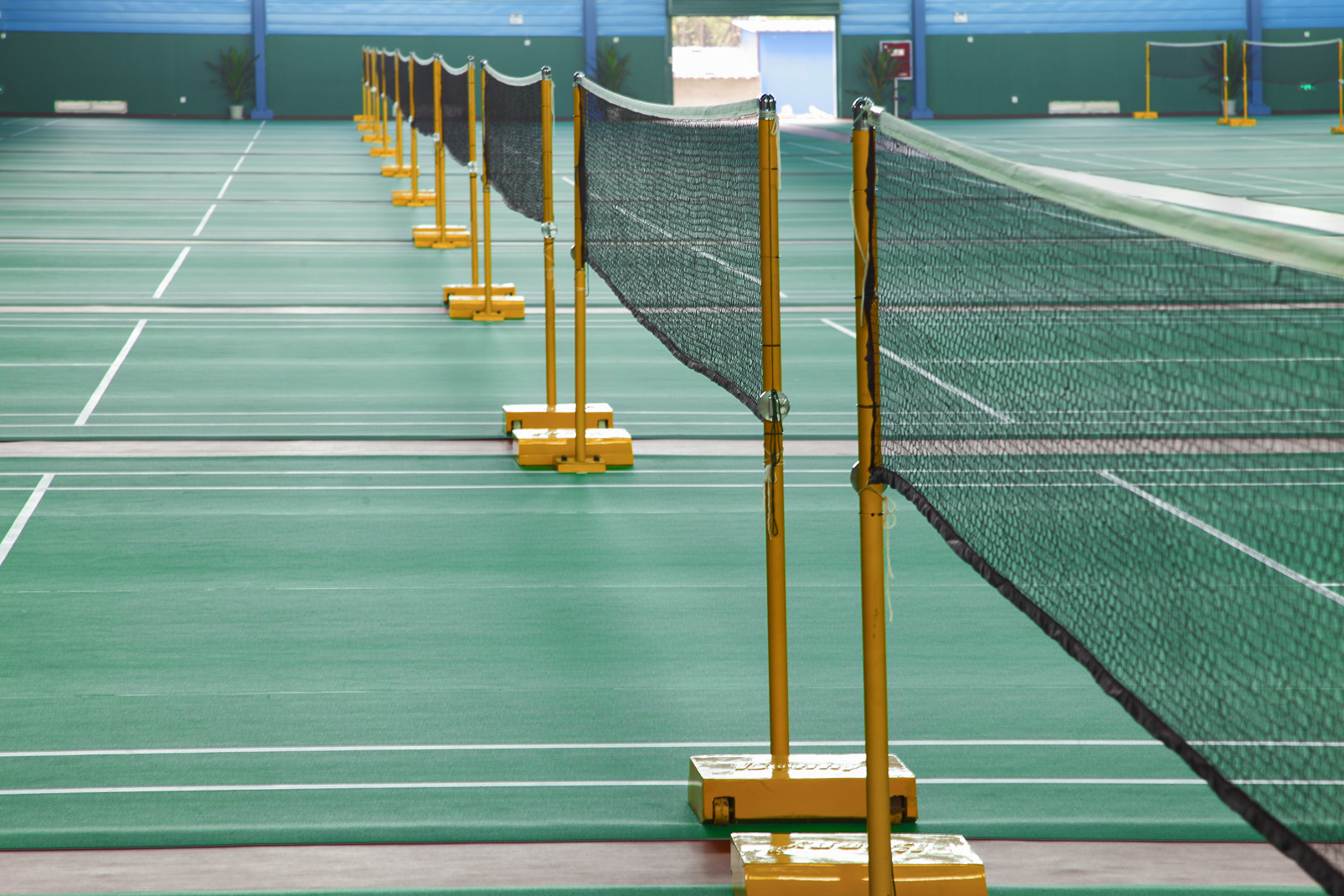
Proven performance: 16 badminton courts using BWF certified PVC sports flooring achieve 50% less maintenance over a decade.
FAQ: Addressing Buyer Concerns About After-Sales Support and Maintenance
Q: What if the flooring gets damaged during installation or use?
A: Reputable manufacturers provide online installation guidance and can dispatch an on-site installation team equipped with necessary tools and auxiliary materials. Maintain a small buffer of matching rolls (e.g., 10–20 sqm per project) from the ready stock inventory for seamless repairs.
Q: How do I know the supplier will still be in business for warranty claims?
A: Evaluate the manufacturer's scale: 200 employees, 25 R&D staff, 50% export ratio to markets including Europe, Americas, and Asia. Long-established companies (founded in 2012) with continuous international certification renewals (ISO 9001, CE) indicate stability.
Q: What is the typical warranty for commercial PVC flooring?
A: Warranty terms vary by product and application. For heavy duty commercial PVC flooring in high-traffic areas, warranties of 5–10 years are common. Always get the warranty terms in writing and specify coverage for manufacturing defects, delamination, and excessive wear.
Q: Can maintenance costs be quoted upfront?
A: Yes. Ask for a lifecycle cost analysis including recommended cleaning products, frequency of polishing (if any), and expected replacement intervals. Suppliers with proprietary surface treatments (e.g., TF Surface Treatment) often offer lifelong wax-free maintenance, eliminating a major recurring expense.
Conclusion: Prioritize Suppliers That Protect Your Investment
Sourcing commercial PVC flooring is not just about the lowest price per square meter. It is about securing a partner who can guarantee after-sales support and maintenance cost control over the entire project lifecycle. Manufacturers that combine rigorous quality assurance, deep certification, agile supply chains, and proven case studies significantly reduce your long-term risk.
To make an informed decision, download the official company brochure below for detailed product specifications, certification lists, and contact information.