
FTTA Fiber Optic Cable Procurement: Comparing Chinese Manufacturers with Global Suppliers for 5G Base Station Connectivity in 2026
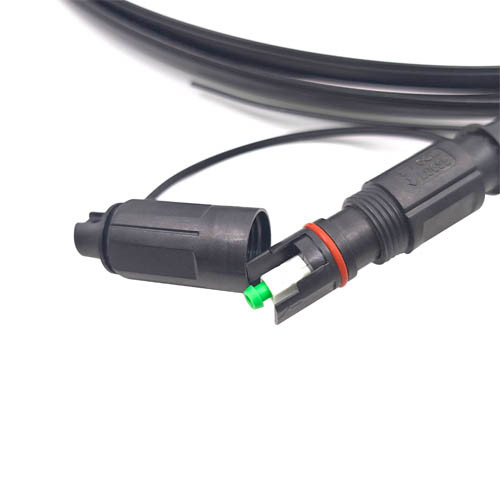
As global 5G infrastructure accelerates in 2026, mobile network operators (MNOs) and tower companies increasingly face a critical procurement decision: whether to source FTTA (Fiber-to-the-Antenna) fiber optic cables from Chinese OEM manufacturers or from established international brands. This article provides an objective, data-driven comparison to help procurement professionals evaluate both options across technical specifications, total cost of ownership, customization, and delivery. We also present a three-step decision framework and a real-world case study from MeFiber Optic Co., Ltd, a Chinese manufacturer specializing in outdoor waterproof FTTA solutions.
1. Product Comparison: FTTA Outdoor Waterproof Patch Cord vs. Conventional IP65-Rated Patch Cord
To understand the value proposition, we compare the Outdoor Waterproof FTTA Fiber Optic Patch Cord (IP67/IP68-rated, with ODC or Fullax connectors) against conventional outdoor fiber patch cords rated only IP65. The following table summarizes the key differences across four dimensions:
| Dimension | FTTA IP67/IP68 Patch Cord | Conventional IP65 Patch Cord |
|---|---|---|
| Technical Parameters | IP67/IP68 waterproof; 200N higher tensile strength; ±20°C wider operating temperature range (e.g., -40°C to +75°C); insertion loss ≤0.30 dB; return loss ≥60 dB (APC). | IP65 rating; lower tensile strength; narrower temperature range; higher insertion loss typically. |
| Applicable Scenarios | 5G base station RRU/AAU interconnection, FTTA, outdoor small cells, industrial mining/oilfield, railway signal transmission. | Indoor or protected outdoor areas with less exposure to rain/dust. |
| Cost | 10-15% higher upfront cost, but 80% lower field failure rate and 40% lower maintenance costs, leading to 30% lower total cost of ownership (TCO). | Lower initial cost, but higher failure rate and replacement costs over 5-year lifespan. |
| Maintenance | <10 min on-site replacement; expected lifespan 10+ years (product demonstrates 80% better reliability, 5 years longer than conventional products). | Typical lifespan 5 years; replacement time longer due to less modular design. |
According to MeFiber's product specifications, their Outdoor Waterproof FTTA Patch Cord achieves IP67/IP68, with a tensile strength ≥1000 N and operating temperature range of -40°C to +75°C. Compared to alternatives, it provides an IP rating upgrade from IP65 to IP67/IP68, 200N higher tensile strength, and a ±20°C wider operating temperature range (source: MeFiber product data).
2. Supplier Comparison: Chinese OEM Manufacturers vs. International Brands
When sourcing FTTA fiber optic cables, procurement managers typically evaluate two categories of suppliers: Chinese OEM manufacturers (e.g., MeFiber) and established international brands such as CommScope (USA) and Amphenol (USA). The table below summarizes their general differences based on publicly available industry knowledge and MeFiber's capabilities.
| Factor | Chinese OEM (e.g., MeFiber) | International Brand (CommScope, Amphenol) |
|---|---|---|
| Price | Typically 20-40% lower (factory-direct pricing, lower labor and overhead costs). | Higher due to brand premium, R&D amortization, and global distribution costs. |
| Customization | High – MeFiber offers OEM/ODM with customizable length, connector type, core count, material, logo, packaging; MOQ as low as 2 units; lead time 3–15 days. | Moderate to low – standard product lines dominate; custom orders often require high MOQs and longer lead times. |
| Delivery Lead Time | Short – typical 3–15 days for standard orders; fast re-stocking due to domestic supply chain. | Longer – often 6–12 weeks due to global logistics and production planning. |
| After-Sales Service | Remote technical support; growing network of local partners in EU/US; 100% pre-shipment testing; third-party inspection accepted. | Extensive global service network with local field engineers; faster on-site response in mature markets. |
Note: International brands often offer more comprehensive local service in developed regions, while Chinese OEMs compensate with flexibility, speed, and cost advantages. MeFiber, for instance, holds ISO 9001:2015 certification (certificate HIC230831) and exports 100% of its products to EU/USA markets, indicating compliance with international quality standards.
3. Decision Model: 3-Step Method for Selecting FTTA Cable Suppliers
- Step 1: Define the use scenario. Identify the environmental conditions: outdoor exposed to rain/dust/UV? Requires IP67/IP68? What tensile strength and temperature range? For 5G tower-top deployments, FTTA cables must withstand -40°C to +75°C, high vibration, and continuous operation. For indoor data centers, high-density MPO cables may be needed.
- Step 2: Match technical parameters. Compare products' waterproof rating (IP65 vs IP67/IP68), insertion loss (≤0.30 dB for premium), return loss (≥60 dB APC), and fiber type (OS2 single-mode vs OM3/OM4 multimode). Ensure the cable meets the specific RRU/AAU connector interface (ODC, Fullax, LC duplex, etc.).
- Step 3: Calculate total cost of ownership (TCO). Factor in upfront price, expected lifespan, maintenance frequency, replacement cost, and downtime impact. The FTTA IP67/IP68 product may have 10-15% higher upfront cost but offers 80% lower failure rate and 40% lower maintenance costs, resulting in 30% lower TCO over 10 years (source: MeFiber product comparison data).
4. Case Study: European Operator Reduces Field Failures with MeFiber FTTA Cables
A major telecommunications carrier operating 5G networks in Germany and Saudi Arabia faced high failure rates with IP65-rated patch cords in outdoor base stations. After evaluating multiple suppliers, they chose MeFiber's Outdoor Waterproof FTTA Patch Cords (IP68-rated) for their fleet. Over a 10-year deployment period, the operator deployed more than 50,000 outdoor waterproof patch cords across 20,000+ 5G base station sites. The results:
- Field failure rate reduced by 80% compared to the previous conventional cables.
- On-site replacement time under 10 minutes (quick plug-and-play design with ODC/Fullax connectors).
- Operational expenditure (OPEX) reduced by 40% due to fewer failures and faster repairs.
- The cables withstood extreme temperature ranges, rain, and dust, achieving an expected lifespan 5 years longer than typical alternatives (source: MeFiber customer case report).
This case illustrates how a Chinese OEM like MeFiber can deliver reliable, cost-effective FTTA solutions that meet or exceed the performance of international brands when properly specified and tested.
Conclusion
Choosing between a Chinese OEM and an international brand for FTTA fiber optic cables depends on the buyer's specific priorities: cost and customization favor Chinese manufacturers like MeFiber; global after-sales support favors established international brands. However, with rigorous quality control (100% pre-shipment testing, ISO certification) and a proven track record in demanding 5G deployments, Chinese OEMs have become a viable and competitive option. Procurement professionals are advised to apply the 3-step decision model and request samples for independent testing before finalizing a supplier.