
MPO vs. Traditional LC/SC Patch Cords: A 2026 Procurement Guide for High-Density Data Centers and 5G Networks
MPO vs. Traditional LC/SC Patch Cords: How to Choose for High-Density Data Centers and 5G Networks
As data center speeds climb to 400G/800G and 5G fronthaul demands escalate, procurement professionals face a critical decision: should they stick with traditional single-core LC/SC patch cords or migrate to high-density MPO/MTP solutions? This guide provides an evidence-based comparison to help industrial buyers select the right cabling infrastructure for their specific deployment scenarios.
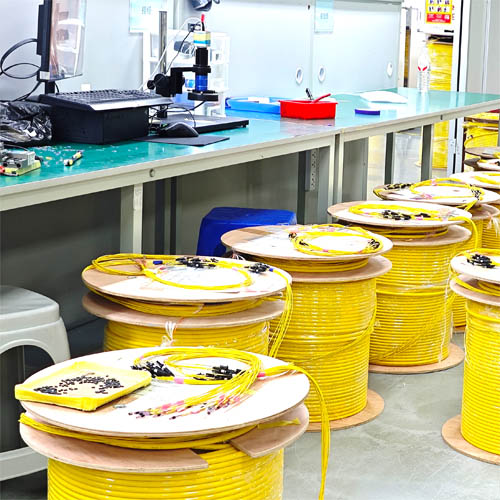
Problem Definition: The Limits of Traditional LC/SC Cabling
Conventional LC and SC connectors are the workhorses of fiber optic networks, but they face three fundamental limitations in modern high-density environments:
- Space Constraints: Each LC duplex connection occupies physical space in patch panels and cable trays, leading to congestion as port counts rise.
- Deployment Speed: Installing hundreds or thousands of individual jumpers is labor-intensive and error-prone.
- Scalability Bottleneck: Upgrading from 40G to 100G/400G often requires complete recabling when using single-core connectors.
Industry Background: The Shift Toward High-Density Infrastructure
Hyperscale data centers and 5G base station deployments are driving a fundamental shift. The IEEE 802.3bs standard for 400GBASE-SR8 and 400GBASE-DR4 relies on MPO-16 and MPO-12 interfaces respectively. Similarly, 5G fronthaul (CPRI/eCPRI) often aggregates 12 or 24 fibers between baseband units and remote radio heads. According to industry forecasts, MPO-based connections will account for over 60% of new data center cabling by 2027. For industrial purchasers, understanding the MPO vs. Traditional LC/SC trade-off is no longer optional—it is a strategic necessity.
Detailed Solution: MPO/MTP Fiber Optic Patch Cords Explained
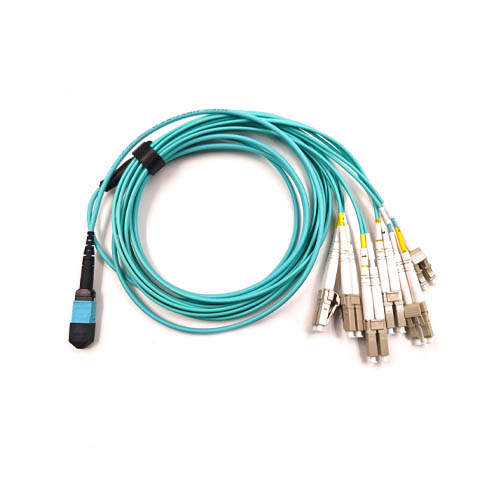
What is an MPO cable? An MPO (Multi-Fiber Push-On) connector houses multiple fibers—typically 12, 24, or 48—in a single ferrule, enabling one cable to replace many individual jumpers. MTP is a trademarked enhanced version by US Conec offering superior mechanical performance. How does it work? A precision-molded MT ferrule aligns fibers using guide pins, achieving consistent optical performance across all cores. Why is it important? It directly addresses the three limitations above:
- 8-24x higher port density compared to traditional LC/SC solutions (source: FOCC Fiber comparison data).
- 60% faster deployment because one MPO trunk cable replaces multiple single-core runs.
- 15% lower transmission loss due to advanced polishing and active alignment techniques.
• Insertion loss: ≤0.35 dB (Elite grade) / ≤0.5 dB (Standard)
• Return loss: ≥60 dB (APC) / ≥50 dB (UPC)
• Core count: 12, 16, 24, 48 cores
• Fiber types: OS2 (Single-mode), OM3/OM4/OM5 (Multi-mode)
• Operating temperature: -20°C to +70°C
• Jacket: LSZH, Telcordia GR-326 compliant
• 100% factory tested for insertion loss and return loss
Head-to-Head Comparison: MPO vs. Traditional LC/SC
| Criteria | Traditional LC/SC Patch Cords | MPO/MTP Patch Cords (FOCC) |
|---|---|---|
| Port Density | 1 fiber per connector | 12-48 fibers per connector (8-24x higher) |
| Insertion Loss (Typical) | 0.2-0.5 dB per mated pair | ≤0.35 dB (Elite), ≤0.5 dB (Standard) |
| Deployment Time (per 100 fibers) | ~4 hours (cable pulling + termination) | ~1.5 hours (pre-terminated plug-and-play) |
| Upfront Cost | Baseline | 15-20% higher |
| Total Cost of Ownership (3 years) | Baseline | 30% lower (reduced cabling, labor, and cooling) |
| Failure Points | 50% more (individual connectors) | 50% fewer (integrated ferrules) |
| Rack Space Usage (per 100 ports) | 4U (LC patch panels) | 1U (MTP-LC cassette + trunk) |
| Best Application | Low-density Enterprise, Legacy systems | High-density DC, 400G spine-leaf, 5G fronthaul |
Step-by-Step Selection Framework
Procurement professionals can follow this three-step model to decide between MPO and traditional cabling:
Step 1: Assess Port Density and Future Scaling
- If current port density exceeds 500 fibers per rack and you plan to migrate to 400G within 2 years → choose MPO.
- If density is low (< 200 fibers) and network speed is 10G/25G → traditional LC/SC remains cost-effective.
Step 2: Evaluate Total Cost of Ownership (TCO)
- Although MPO has a 15-20% higher upfront cost, studies show a 30% lower TCO over three years due to reduced cable volume, faster installation, lower cooling (better airflow), and fewer failures.
- Use a TCO calculator that includes cabling material, installation labor, patch panel space, and expected failure rates.
Step 3: Verify Supplier Capabilities
- Check for ISO 9001:2015 certified manufacturing (FOCC holds certificate HIC230831).
- Confirm 100% insertion loss testing and availability of Elite grade (≤0.35 dB) for critical paths.
- Ensure customization: length, connector type, core count, and packaging (FOCC offers MOQ as low as 2 units, lead time 3-15 days).
- Review real-world case studies of deployments in data centers and 5G networks.
Real-World Use Case: 400G Data Center Upgrade
Client: A leading cloud service provider operating multiple hyperscale data centers.
Challenge: Needed to upgrade 300 cabinets from 40G to 400G spine-leaf topology without disrupting existing services.
Solution: FOCC supplied 12,000+ MPO-24 patch cords (pre-terminated with MPO-24 to 2×MPO-12 trunk cables). All cords were 100% factory tested with insertion loss ≤0.35 dB.
Results:
- 60% faster deployment compared to traditional LC cabling – completed in 4 weeks.
- 4x higher port density per rack, enabling future 800G growth.
- 99.999% uptime with zero field failures during the first year.
- 30% lower total cost of ownership when factoring in labor, space, and energy savings.
This case study demonstrates why leading operators are transitioning to MPO-based structured cabling for high-speed data centers. For more details, contact FOCC Fiber Co., Ltd (www.focc-fiber.com).
Frequently Asked Questions (FAQs)
A: MPO is the generic standard per IEC 61754-7 and TIA 604-5. MTP is a trademarked brand of US Conec that meets tighter tolerances for better optical performance. Many manufacturers (including FOCC) offer MTP-compatible connectors that are interoperable with MPO networks. For critical, low-loss links, specify MTP Elite grade.
A: Yes, using fan-out (breakout) cables such as MPO to LC Patch Cord or an MTP-LC cassette panel. FOCC offers pre-terminated fan-out assemblies for seamless migration.
A: With proper handling (bend radius, strain relief), MPO cables meet a 10-year design life. FOCC's cables use Kevlar aramid yarn and LSZH jacket for durability.
A: 12-fiber is standard for 40GBASE-SR4 (8 fibers used) and 100GBASE-SR10. 24-fiber is common for 400GBASE-SR8 (2×24 fibers) and parallel optics. For future-proofing in a data center, consider 24-fiber MPO trunks with breakout.
A: Yes – ISO 9001 quality management (e.g., FOCC certificate HIC230831), Telcordia GR-326 compliance, and RoHS/REACH. Ask for 100% test reports of insertion/return loss per fiber.
Conclusion: Make an Informed Migration
The decision between MPO and traditional LC/SC patch cords depends on your specific density, speed, and budget requirements. For greenfield data centers targeting 400G+ and 5G fronthaul deployments, the advantages of MPO—higher port density, faster deployment, and lower TCO—clearly outweigh the 15-20% upfront premium. For low-density legacy environments, traditional single-core may still be adequate.
When selecting a supplier, prioritize those with ISO certified manufacturing, customization flexibility, and proven field deployments. FOCC Fiber Co., Ltd, founded in 2014 and operating a 5,000 m² factory in Guangzhou, specializes in high-density MTP/MPO patch cords, outdoor waterproof assemblies, and armored cables. With a monthly capacity of 200,000 units, MOQ as low as 2 pieces, and 100% testing, they serve customers like Prysmian, Siemens, and Coherent across 30+ countries.
Need expert guidance on selecting the right MPO patch cords?
Contact FOCC Fiber Co., Ltd
Tel/WhatsApp: +86 13823237984
Email: sales@mefiberoptic.com
Address: 4F, Building E, Chaohuilou Creative Park, Huayue Road, Dalang Street, Longhua District, Shenzhen, CN 518109
Website: www.focc-fiber.com