
Selecting MPO/MTP Patch Cord Suppliers for 5G FTTA and Hyperscale Data Centers: Key Criteria, Real-World Case Studies, and Practical Procurement Advice
Understanding the Unique Demands of Modern Networks
As network architectures evolve toward higher speeds and greater density, the role of MPO/MTP fiber optic patch cords has become critical. For data centers, the primary requirements include high-density multi-core connectivity, low insertion loss (≤0.35 dB for low-loss grade), support for 400G/800G transmission, and LSZH flame-retardant jackets. In contrast, 5G FTTA (Fiber to the Antenna) deployments demand IP67/IP68 waterproof and dustproof protection, wide temperature tolerance (−40°C to +75°C), high tensile strength (≥1000 N), and corrosion resistance. These distinct operating conditions require suppliers to possess specialized capabilities rather than offering generic products.
Three Core Competencies of a Qualified Supplier
Selecting the right MPO/MTP patch cord supplier involves evaluating three foundational capabilities:
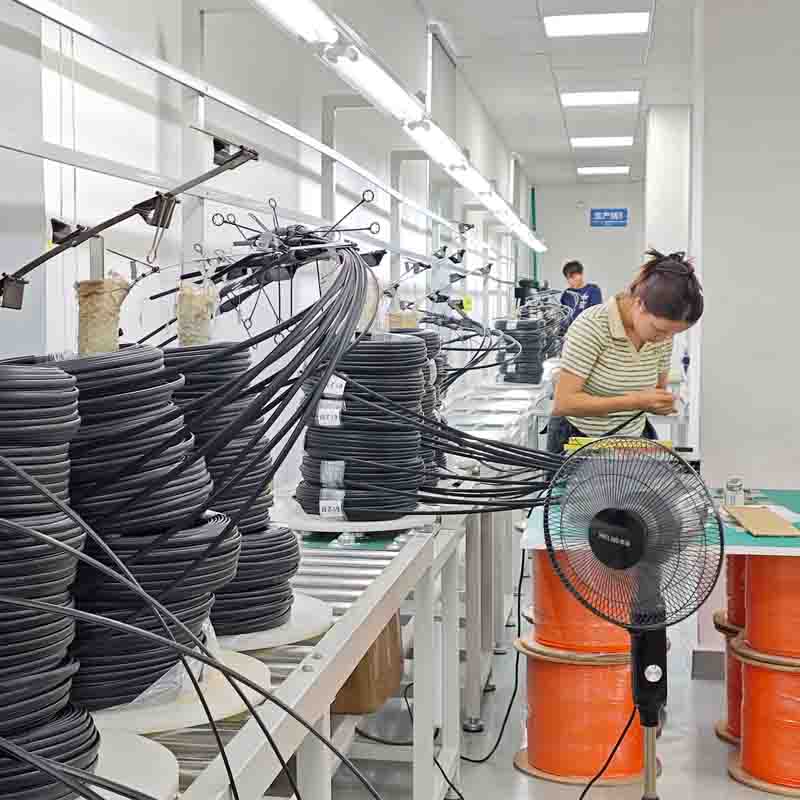
- Industry-specific customization experience – Suppliers must have proven expertise in designing cables for both indoor data centers and outdoor harsh environments. For example, MeFiber Optic Co., Ltd (brand: MeFiber), established in 2014 with a 5,000 m² factory and 30-person R&D team, provides OEM/ODM services and exports to the EU, Middle East, and USA. Their product range includes high-density MPO/MTP patch cords, outdoor waterproof FTTA assemblies, and armored cables, demonstrating the ability to tailor solutions for diverse applications.
- Regulatory compliance and certifications – A reliable supplier holds relevant certifications such as ISO 9001:2015 (certificate HIC230831, valid until 2026-05-08) and meets Telcordia GR-326 standards for MPO connectors. These certifications ensure consistency in production quality and traceability. For data center deployments, compliance with RoHS and LSZH requirements is also essential.
- Robust design for extreme environments – Outdoor FTTA patch cords require IP67/IP68 sealing, silicone rubber O-rings, stainless steel ODC connectors, and Kevlar reinforcement for tensile strength ≥1000 N. MPO jumpers for data centers need precision zirconia ferrules and active alignment to achieve insertion loss ≤0.35 dB and return loss ≥60 dB (APC). Suppliers should provide 100% factory testing with detailed IL/RL reports.
Real-World Success: MeFiber Solutions in Action
Case 1: 5G Base Station Deployment (DACH Region & Saudi Arabia)
A major telecom carrier required over 50,000 outdoor waterproof patch cords for 5G RAN fronthaul and tower-top RF unit interconnection. MeFiber supplied IP68-rated ODC-Fullax and ODC-Optitab assemblies that withstand extreme temperatures (−40°C to +75°C), high tensile stress, and UV exposure. The result: an 80% reduction in field failure rate, on-site replacement in under 10 minutes, and a 40% decrease in operational expenditure. The connectors featured corrosion-resistant plating, ensuring a service life exceeding 10 years.
Case 2: Hyperscale Data Center (Singapore & USA)
A cloud service provider needed 12,000+ MPO-24 patch cords for 400G spine-leaf interconnection. MeFiber delivered precision low-loss (≤0.35 dB) cables with 24-fiber MTP connectors, enabling 60% faster deployment and 4× higher port density compared to traditional LC/SC assemblies. 100% factory testing and LSZH jackets assured 99.999% uptime, with total cost of ownership reduced by 30% over five years.
Key takeaway: MeFiber’s track record with over 20,000 base station deployments and 300+ data center cabinets demonstrates its capability to handle both high-density indoor and rugged outdoor connectivity challenges.
Procurement Collaboration Recommendations
- Define the operating environment clearly – Specify whether the patch cords will be used indoors (data center) or outdoors (FTTA). For outdoor use, require IP67/IP68 rating, wide temperature range (−40°C to +75°C), and tensile strength ≥1000 N. For data centers, prioritize core count (12/24/48), low insertion loss, and LSZH jacket.
- Conduct on-site evaluation – Arrange factory audits to inspect production lines, test equipment, and quality control processes. MeFiber, for instance, invites buyers to its 5,000 m² facility in Guangzhou to observe 100% insertion loss testing and automated alignment inspection.
- Establish a responsive after-sales agreement – Ensure the supplier provides remote technical support and a clear replacement policy. MeFiber offers remote assistance and can ship replacement units within 3–15 days from stock, with a minimum order quantity as low as 2 units to support urgent field repairs.
By following these guidelines, procurement teams can confidently partner with suppliers like MeFiber that combine deep industry expertise, relevant certifications, and proven field performance to meet the evolving demands of 5G and data center networks.