
Selecting MPO/MTP and Outdoor FTTA Patch Cord Suppliers for 5G and Data Center Networks: A Technical Guide for Procurement Professionals
1. Industry-Specific Requirements for High-Density and Outdoor Fiber Patch Cords
In modern telecommunications and data center infrastructure, the choice of fiber optic patch cords directly affects system performance, deployment speed, and long-term reliability. Two distinct application scenarios impose specific demands on MPO/MTP patch cords and outdoor FTTA (Fiber To The Antenna) assemblies.
Data Center High-Density Cabling: With the transition to 400G/800G Ethernet, data centers require patch cords that offer multi-core integration, low insertion loss, and high return loss. Typical MPO/MTP patch cords used in spine-leaf and server-switch interconnections must support core counts of 12, 16, 24, or 48 fibers, and optical fiber types including OS2 (single-mode), OM3, OM4, and OM5 (multi-mode). The insertion loss for elite-grade products should be ≤0.35 dB, with return loss ≥60 dB for APC polished connectors. A low-smoke zero-halogen (LSZH) jacket is often mandatory to meet fire safety standards in controlled environments.
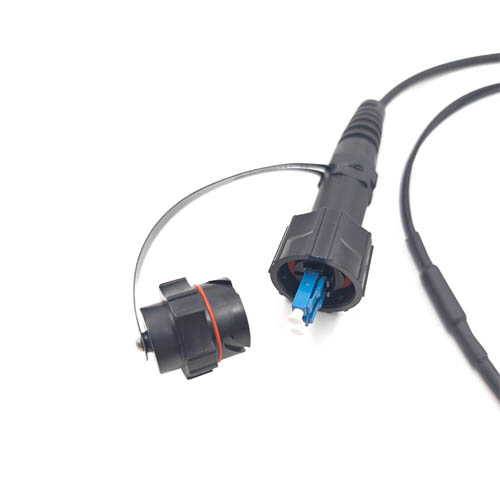
5G FTTA and Outdoor Deployments: Base station equipment installed on towers or in industrial areas (mining, oilfields) must withstand rain, dust, UV exposure, mechanical vibration, and wide temperature swings from -40°C to +75°C. Outdoor waterproof patch cords require a protection level of IP67 or IP68, tensile strength ≥1000 N, and corrosion-resistant metal components. Common connector interfaces include ODC (Fullax/Optitab) and NSN-LC duplex, while the cable jacket must be robust and UV-resistant.
2. Three Essential Capabilities for Selecting a Specialized MPO/MTP Patch Cord Supplier
Procurement professionals evaluating suppliers for high-density or outdoor fiber patch cords should assess three core capabilities:
2.1 Industry Customization Experience
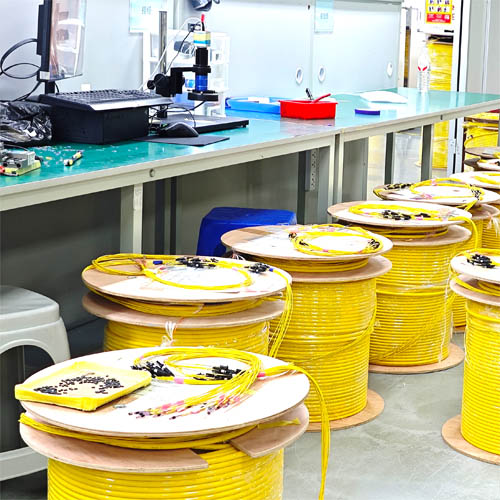
A supplier with proven experience in OEM/ODM production and a track record of serving export markets in the EU, Middle East, and USA demonstrates the ability to adapt to diverse technical and regulatory requirements. For instance, MeFiber Optic Co., Ltd, headquartered in Guangzhou, China, has been manufacturing MTP/MPO fiber optic patch cords, outdoor waterproof armored assemblies since 2014. Their factory covers 5,000 square meters with a monthly capacity of 200,000 units and an engineering team of 30, enabling custom-length, custom-connector, and custom-core-count solutions with lead times as short as 3–15 days.
2.2 Compliance Certifications
Suppliers should hold relevant international certifications to guarantee consistent quality. MeFiber, for example, operates under an ISO 9001:2015 quality management system (certificate number HIC230831, issued by HIC, valid until May 2026). This certification covers the production and sales of fiber optic patch cables. Additionally, products intended for data center use should comply with Telcordia GR-326 standards, while outdoor assemblies must meet IP67/IP68 ingress protection ratings.
2.3 Robust Environmental Durability Design
For outdoor FTTA deployments, a supplier must demonstrate control over waterproof seal failure, fiber breakage under tensile load, performance degradation in extreme temperatures, and corrosion of metal components. MeFiber applies IP68 hermetic sealing, reinforced tensile strength design, wide-temperature-range material selection, and corrosion-resistant plating. Each unit undergoes 100% factory testing including insertion loss verification, tensile strength qualification, thermal cycling, and salt spray corrosion testing. These measures ensure an 80% lower field failure rate compared to conventional IP65-rated cables, as documented in their case studies.
3. Success Case Studies: MeFiber’s Proven Solutions
Case A: Data Center High-Density Cabling for a Cloud Provider
A leading cloud service provider in China, Singapore, and the United States required a reliable interconnect solution for its 400G spine-leaf architecture. MeFiber supplied 12,000+ MPO-24 patch cords with OS2 single-mode fibers and elite-grade insertion loss ≤0.35 dB. The precision active alignment and 100% factory testing resulted in 60% faster deployment, 4x higher port density in the same cabinet space, 99.999% uptime, and a 30% lower total cost of ownership over five years. The patch cords were designed with a 10-year service life and met all LSZH and RoHS requirements.
Case B: Outdoor FTTA for a 5G Base Station Operator
A European and Middle Eastern telecommunication carrier deploying 5G networks in harsh outdoor environments needed waterproof patch cords that could withstand continuous operation in mining and oilfield regions. MeFiber delivered 50,000+ outdoor waterproof patch cords with ODC-Fullax connectors and IP68 protection. The cables featured a 200N tensile strength, corrosion-resistant plating, and an operating temperature range of -40°C to +75°C. Over 10 years of field operation, the customer reported an 80% lower failure rate compared to conventional IP65 cables, on-site replacement in under 10 minutes, and 40% lower operational expenditure due to reduced maintenance interventions.
These cases illustrate how a manufacturer with dedicated engineering resources and rigorous quality control can address both data center and 5G FTTA requirements effectively.
4. Key Cooperation Points for Procurement and Supplier Partnership
To ensure a successful long-term relationship with an MPO/MTP patch cord supplier, industrial buyers should focus on the following aspects:
- Define Industry Standards Upfront: Clearly specify the relevant standards such as Telcordia GR-326, IEC 61754-7, and IAF/IAS certification requirements. For outdoor projects, mandate IP67/IP68 ratings and the applicable connector types (ODC, Fullax, Optitab, NSN-LC).
- On-Site or Remote Environment Assessment: Provide detailed operating conditions—temperature range, UV exposure, tensile load, chemical exposure—to the supplier. A supplier with experience in the specific environment (e.g., industrial mining vs. coastal base stations) can recommend appropriate materials and designs.
- After-Sales Support and Emergency Response: Confirm the supplier’s after-sales service capabilities. MeFiber offers remote technical support and a lead time of 3–15 days for urgent orders. Ensure the supplier has a documented process for field failure analysis and replacement procedures. In the outdoor case above, on-site replacement was completed in under 10 minutes due to modular connector design.
- Quality Assurance and Testing: Demand 100% pre-shipment testing and support for third-party inspection. MeFiber offers factory acceptance tests (FAT) and can accommodate on-site acceptance. For critical projects, request sample testing under realistic operating conditions before bulk order.
- Customization and Flexibility: Evaluate the supplier’s ability to customize cable lengths, connector types, core counts, fiber types, and even packaging. A supplier with a low minimum order quantity (e.g., 2 units) allows pilot testing without large commitment.
By following these guidelines, procurement professionals can mitigate risks related to alignment errors, insertion loss drift, waterproof seal failure, and performance degradation in extreme temperatures. Partnering with a manufacturer that demonstrates industry-specific experience, regulatory compliance, and robust testing protocols—such as MeFiber Optic Co., Ltd—enables reliable network deployments with lower total cost of ownership.