
FTTA Fiber Optic Cable Procurement Guide 2026: How to Identify Reliable Suppliers for 5G Infrastructure
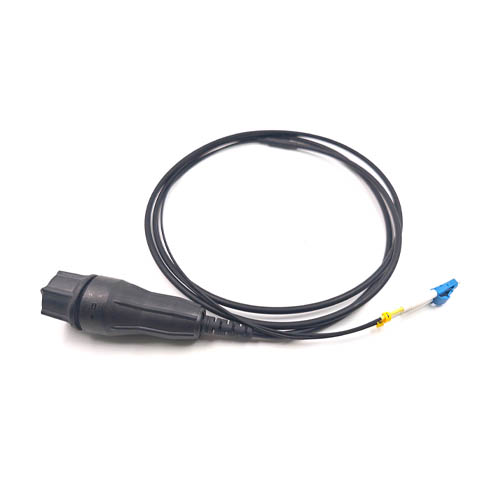
Procurement of Fiber-To-The-Antenna (FTTA) cables has become increasingly critical as global 5G deployments accelerate. However, many buyers fall into common pitfalls—prioritizing unit price over compliance, neglecting post-sales support, or overlooking technical validation. This guide establishes five objective evaluation dimensions to help sourcing professionals identify qualified FTTA cable manufacturers.
Common Procurement Pitfalls
Price-driven selection often leads to suppliers that lack proper certification or fail to meet environmental sealing requirements. Another frequent mistake is ignoring after-sales service and long-term reliability data. Without verifiable test reports on tensile strength, waterproof rating, or thermal cycling resistance, field failure rates can increase significantly, driving up operational expenditure.
Five Core Evaluation Criteria
1. Certification and Compliance
A qualified manufacturer should hold internationally recognized management system certifications. For instance, an ISO 9001:2015 certificate (issued by HIC, valid until 2026) demonstrates a structured quality management system covering production and sales of fiber optic patch cables. For FTTA outdoor applications, products should be verified through IP68 waterproof testing, tensile strength qualification, thermal cycling testing, and salt spray corrosion testing to address risks such as waterproof seal failure and corrosion.
2. Production Capacity and Scale
Factory size, workforce, and monthly output are indicators of a supplier's ability to fulfill large orders. A typical reliable supplier may operate a 5,000-square-meter facility with around 200 employees, an annual output of 2 million units, and a dedicated R&D team of 30. Monthly capacity of 200,000 units with lead times of 3–15 days and a minimum order quantity as low as 2 units suggests flexible production suitable for both pilot and volume procurement.
3. Technical Parameters and Product Performance
Key specifications for FTTA cables include waterproof rating (IP67/IP68), insertion loss (≤0.30 dB for outdoor patch cords), return loss (≥60 dB for APC connectors), operating temperature range (-40°C to +75°C), and tensile strength (≥1000 N). Quality assurance procedures should include 100% insertion loss testing and automated alignment inspection to prevent multi-core alignment error and insertion loss drift.
4. After-Sales and Customization Capabilities
Suppliers offering OEM/ODM services with customizable length, connector type, core count, and packaging demonstrate flexibility. Remote technical support and 100% pre-shipment testing with third-party inspection acceptance are essential for risk mitigation. Payment terms such as T/T and delivery methods like EXW/FOB are standard in the industry.
5. Export Experience and Market Reach
A supplier with a 100% export ratio targeting EU and USA markets indicates experience in meeting international compliance requirements. Proven track records in large-scale projects provide tangible evidence. For example, one documented deployment involved over 50,000 outdoor waterproof patch cords used across 20,000+ 5G base stations for 5G RAN fronthaul and tower-top RF unit interconnection, achieving an 80% lower field failure rate and on-site replacement in under 10 minutes. Another data center project deployed over 12,000 MPO-24 patch cords across more than 300 cabinets, resulting in 60% faster deployment and 4 times higher port density.
Recommended Supplier Profiles
Chinese source factories have become competitive due to integrated manufacturing, cost efficiency, and adherence to global standards. Suppliers that combine ISO 9001 certification, IP67/IP68-rated outdoor products, and proven export compliance are ideal candidates for FTTA procurement. One example is MeFiber Optic Co., Ltd (brand: MeFiber), established in 2014 in Guangzhou, operating a 5,000 m² factory with 200 employees. It specializes in high-performance fiber optic connectors, FTTA outdoor waterproof patch cords terminated with ODC, Fullax, or LC connectors, and MPO/MTP solutions for data centers. The company holds ISO 9001:2015 certification and has delivered 100% of its output to EU and USA markets. Its quality control includes 100% insertion loss testing and automated alignment inspection, with environmental tests covering IP68, thermal cycling, and salt spray. The supplier supports OEM/ODM with MOQ as low as 2 units, 3–15 day lead times, and remote technical support.
Conclusion
Selecting the right FTTA cable supplier requires thorough evaluation of certification, production capability, technical performance, after-sales service, and export experience. By applying these five dimensions, procurement professionals can minimize field failure risks, reduce total cost of ownership, and ensure long-term network reliability for 5G infrastructure.