Decoding Dirt Ebike Specs: How Motor, Battery, and Frame Quality Define Real-World Performance
Decoding Dirt Ebike Specs: How Motor, Battery, and Frame Quality Define Real-World Performance
As procurement professionals evaluate high-performance dirt ebikes, they quickly encounter a maze of technical specifications: peak motor watts, nominal torque, battery cell chemistry, suspension travel, and frame material composition. But what do these numbers really mean for real-world off-road capability, durability, and rider safety? More importantly, how does the manufacturing process—from frame welding to battery pack assembly—turn those specifications into a reliable product or a liability? This guide provides a systematic framework for decoding dirt ebike technical parameters and understanding how production quality directly influences performance outcomes.
The Problem: Misleading Specifications and Hidden Quality Gaps
In today's competitive dirt ebike market, it is common to see two models with nearly identical spec sheets—both claiming 8000W peak power and 72V battery—yet one delivers consistent hill-climbing torque while the other overheats after ten minutes. The disconnect lies in two dimensions: parameter interpretation (what the spec truly measures) and manufacturing integrity (how the spec is achieved). Buyers must learn to read beyond the headline numbers and evaluate the engineering choices and quality control that bring those numbers to life.
Industry Background: From Niche Hobby to High-Stakes Procurement
The global dirt ebike market has expanded rapidly, driven by the electrification of powersports and the demand for street-legal dual-mode vehicles. Products now span from budget hub-motor models to premium mid-drive systems exceeding 15kW. For industrial purchasers—dealers, rental fleet operators, and distributors—choosing the wrong specification or supplier can lead to warranty crises, safety recalls, and lost customer trust. Understanding the production chain is no longer optional; it is a core competency.
Decoding Key Technical Specifications
1. Motor: Hub vs. Mid-Drive
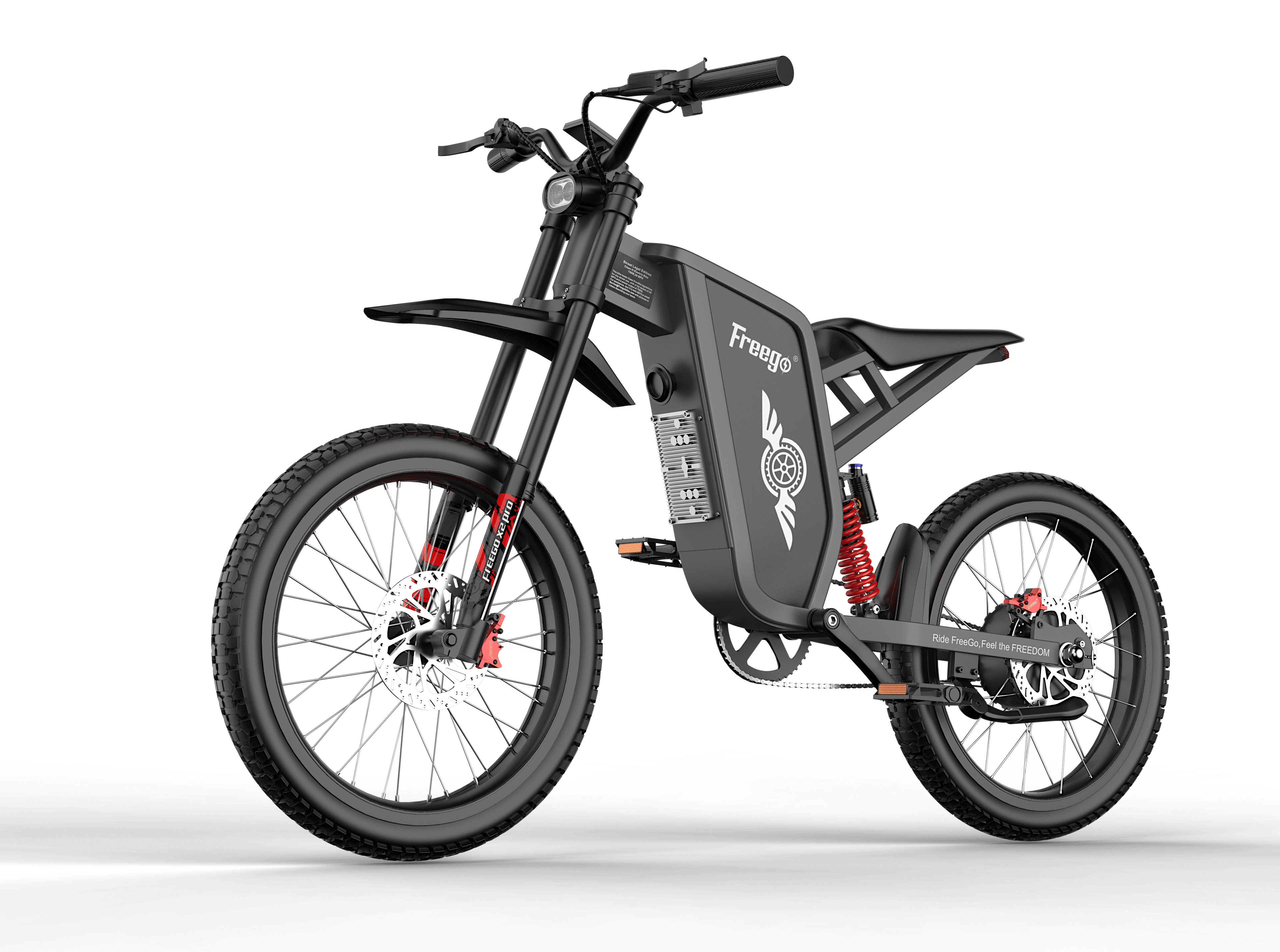
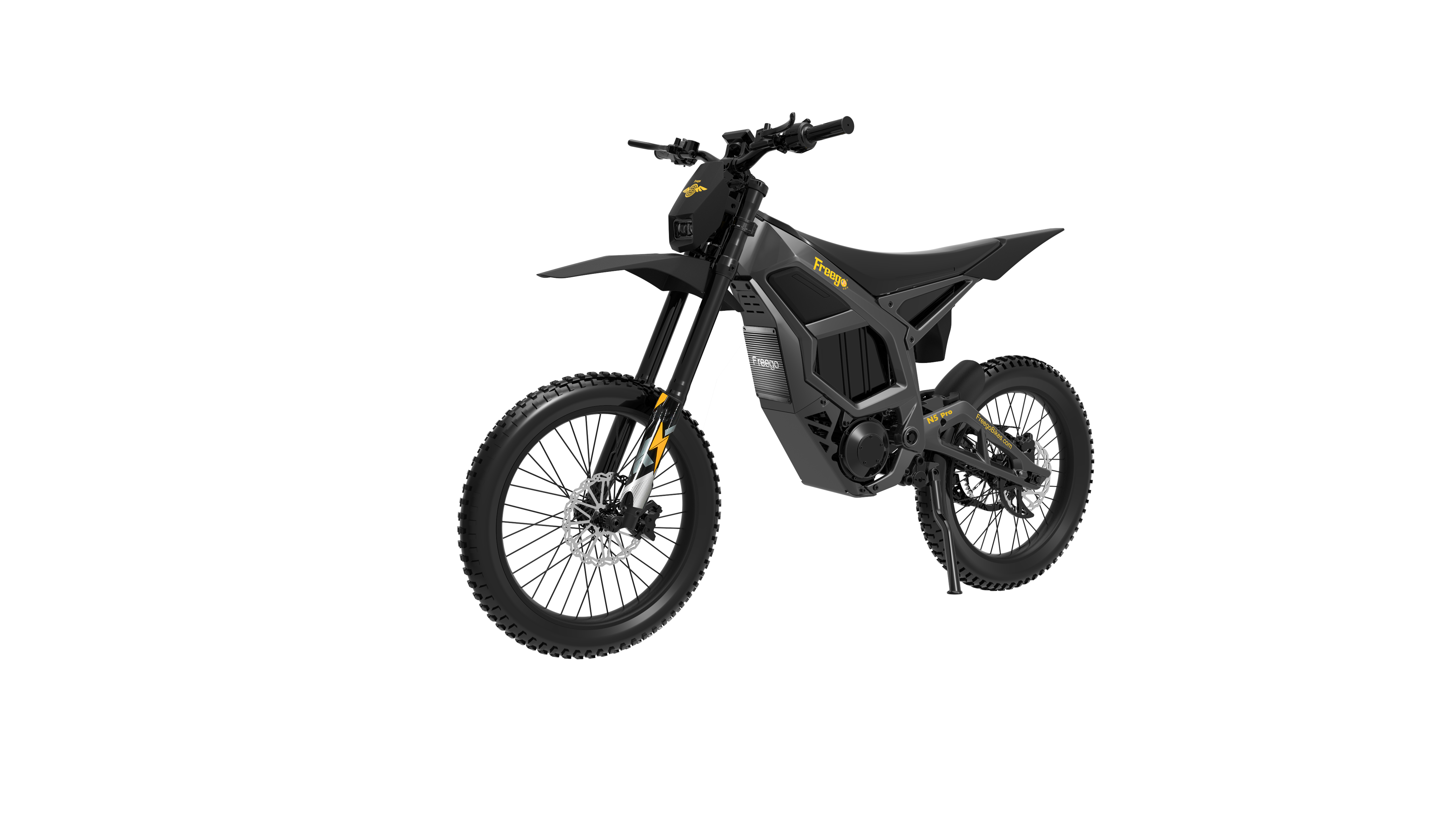
The motor is the heart of any dirt ebike. Hub motors (e.g., Freego X2 Pro's 6000W brushless hub motor) offer simplicity, low maintenance, and direct drive, making them ideal for flat-to-moderate terrain and urban dual-mode riding. Mid-drive motors (e.g., Freego Nova 5's 8000W mid-drive) multiply torque through the bike's gearing, delivering superior climbing on steep slopes (≥45% grade) and more natural off-road handling. When comparing peak power, note that hub motors often advertise peak wattage from a cold start, while mid-drive ratings reflect sustained output—always request continuous power ratings and torque curves.
2. Battery: Voltage, Capacity, and Cell Quality
Battery specifications directly influence range, weight, and safety. A 72V 40Ah pack (as in Freego Nova 5 and X3) uses high-quality 21700 lithium-ion cells. The voltage determines motor speed potential, while amp-hours (Ah) determine energy capacity. However, cell brand (Panasonic, LG, or generic), BMS quality, and pack assembly (spot welding vs. laser welding) differentiate a durable battery from a fire risk. Freego's batteries use automotive-grade 21700 cells with flame-retardant ABS shells and intelligent BMS protection, ensuring consistent discharge under load and thermal stability.
| Parameter | Hub Motor Model (X2 Pro) | Mid-Drive Model (Nova 5) |
|---|---|---|
| Peak Motor Power | 6000W Brushless Hub | 8000W Mid-Drive |
| Battery | 60V 30Ah (21700 cells) | 72V 40Ah (21700 cells) |
| Brake System | 4-piston hydraulic disc, 203mm rotor | 4-piston hydraulic disc |
| Suspension | KKE hydraulic front & rear | KKE hydraulic front & rear |
| Climbing Capacity | ≥25° | ≥45% slope |
| Top Speed | 28MPH (Urban) / 50MPH (Off-road) | 53MPH |
3. Suspension and Braking: Safety and Control at Speed
Full hydraulic suspension—especially inverted forks—provides critical damping for rough trails. A hydraulic inverted suspension fork reduces unsprung weight and improves steering precision. Combined with a 4-piston hydraulic disc brake (like the 203mm rotor on the X2 Pro), the rider gains consistent stopping power in mud, sand, and steep descents. Freego equips its premium models with KKE brand hydraulic shock absorbers, proven for durability in high-cycle rental fleets.
4. Frame Material and Construction
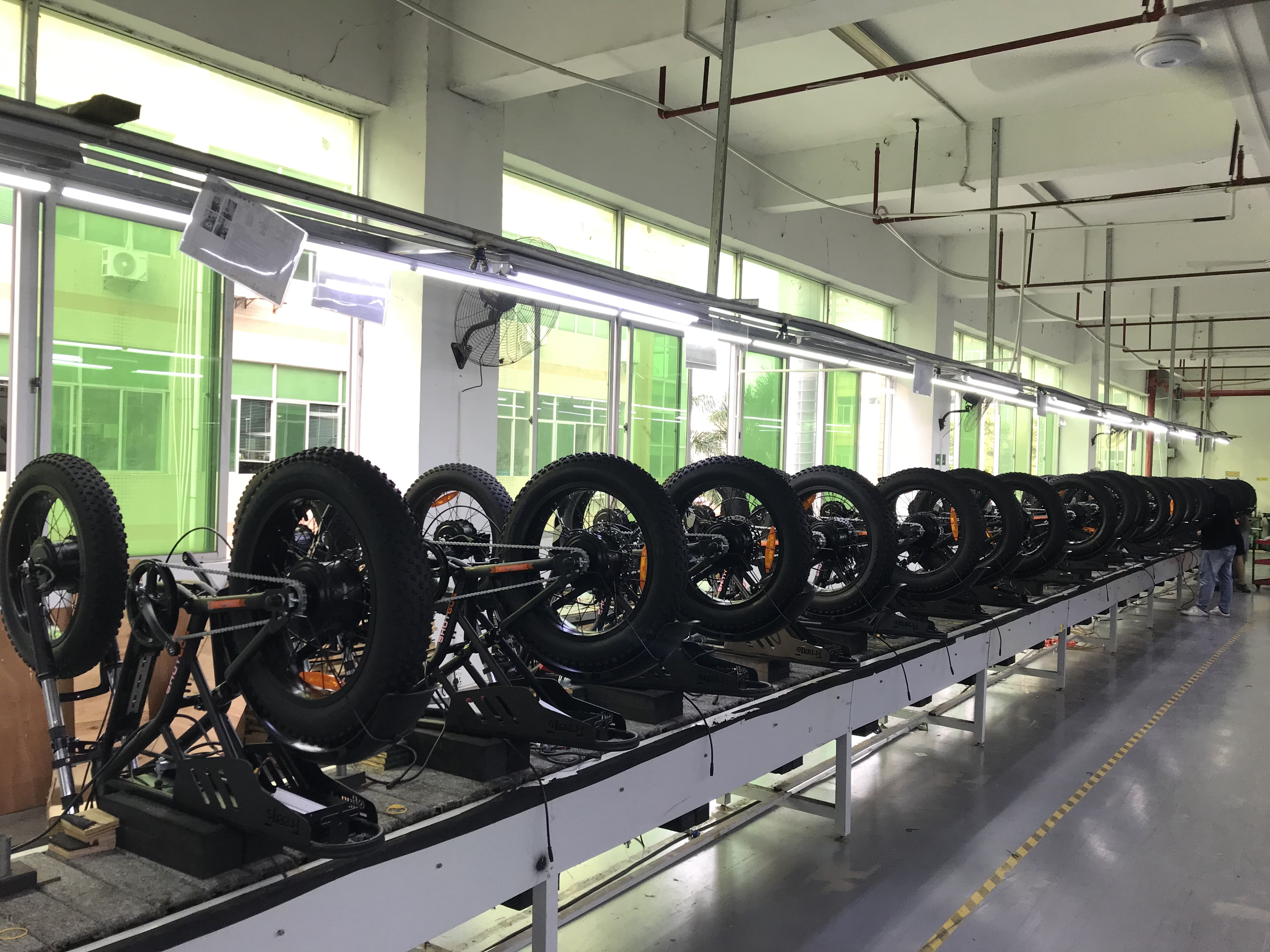
Frame material determines weight, strength, and fatigue life. High-strength carbon steel pipe (used in X2, X3) offers excellent impact resistance at a reasonable weight, while forged aluminum alloy (Nova 5 Pro) reduces weight for competition. The manufacturing process—robotic welding, heat treatment, and stress relief—affects weld integrity. Freego's OEM production line follows ISO9001 quality system compliance, with 100% in-process inspection and full-function ex-factory testing.
How Manufacturing Quality Translates to Real-World Performance
Beyond specifications, production quality determines whether a dirt ebike survives 500 rental cycles or fails after 50. Key manufacturing factors include:
- Battery pack assembly: Freego uses flame-retardant ABS battery shells and balances cells within tight voltage tolerance, preventing thermal runaway.
- Motor controller calibration: High-power brushless controllers (e.g., 150A/400A on Nova 5 Pro) are tuned for smooth throttle response and overcurrent protection.
- Suspension tuning: KKE hydraulic shock absorbers are pre-set with appropriate spring rates and damping for typical rider weights, then tested on shaker rigs.
- Harness and connector quality: IP65-rated connectors (D11) prevent water ingress during river crossings or pressure washing.
Step-by-Step Buyer Evaluation Framework
To evaluate a supplier's dirt ebike offering, follow this systematic process:
- Define use case: Extreme off-road racing (mid-drive, high torque) vs. mixed urban/off-road commuting (dual-mode hub motor, street-legal).
- Analyze motor specs: Distinguish peak vs. continuous power. Request torque curve data.
- Verify battery credentials: Ask for cell manufacturer, BMS specifications, and safety certifications (UL 2849, FCC).
- Examine frame and suspension materials: Inquire about welding standards, heat treatment, and supplier quality audits.
- Check certification and testing: UL 2849 electrical safety compliance (Freego's X1, X2, X3 are UL 2849 tested by SGS North America) assures minimum safety for US markets.
- Review after-sales support: US local warehouse, 2-year limited warranty, and spare parts availability indicate supplier maturity.
Real-World Case Study: Powersports Retailers Converting Gas Riders
A leading US powersports retailer partnered with Freego to stock high-performance models like the Nova 5 and X2 Pro. The retailer's customers—traditionally gas dirt bike enthusiasts—were skeptical of electric power. However, the combination of 8000W mid-drive torque, full hydraulic suspension, and proven UL certification convinced them to test ride. Within two years, the retailer reported a 30% sales growth in the electric segment, with zero battery-related returns. The secret: Freego's specifications were not inflated—they matched real-world performance, and the manufacturing quality ensured long-term reliability.
Frequently Asked Questions
A: A dirt ebike is designed for off-road performance with motorcycle-grade components—higher power motors (typically 3000W+), durable frames, hydraulic suspension, and 4-piston brakes. Unlike e-MTBs, dirt ebikes often feature throttle-only modes and street-legal dual-mode options.
A: Hub motors are simpler, more affordable, and require less maintenance—ideal for rental fleets and dual-mode commuting. Mid-drive motors provide superior hill-climbing torque and balanced weight distribution for serious off-road trails. Freego's lineup includes both: X-series (hub) and Nova-series (mid-drive).
A: UL 2849 covers the electrical system safety of e-bikes, including battery, charger, and motor controller. It reduces fire risk and is increasingly required by insurance companies and municipalities. Freego's X1, X2, X2 Pro, Nova 3, Nova 4, Nova 5, and Nova 5 Pro are UL 2849 compliant per SGS test report LTR24100903HS.
A> Common defects include poor weld penetration on frames, loose battery cell connections, inadequate waterproofing of connectors, and misaligned brake calipers. Reputable suppliers like Freego implement 100% full-function ex-factory testing and support third-party inspections (UL, SGS).
Conclusion: Procurement Requires Technical Literacy
In the evolving dirt ebike market, purchasing decisions must rest on a solid understanding of technical specifications and manufacturing processes. By learning to interpret motor power ratings, battery quality indicators, and suspension architecture—and by verifying production standards through certifications and factory audits—industrial buyers can source vehicles that deliver real performance, durability, and safety. Freego's vertically integrated OEM/ODM capabilities, U.S. local warehouse, and full certification portfolio exemplify the supplier profile that meets these rigorous standards.
Download the Freego Industrial Buyer’s Brochure
Get detailed specifications, certification documents, and OEM/ODM capabilities.
Contact: Ahmed – +1 818 275 1590 | Ahmed@freegobikes.com