
How to Select and Apply Industrial-Grade Laminating Rolls: A Comprehensive White Paper for 2026
How to Select and Apply Industrial-Grade Laminating Rolls: A Comprehensive White Paper for 2026
As the global demand for durable printed materials continues to grow across sectors like packaging, advertising, and secure documentation, the selection of appropriate laminating film has become a critical technical decision. This white paper provides a detailed, step-by-step guide for procurement managers, print shop operators, and brand owners on how to evaluate, select, and successfully implement industrial-grade laminating rolls for various applications in 2026.
Note on Scope: This guide focuses on thermal laminating rolls, specifically PET laminating rolls and BOPP laminating rolls, which constitute the core of high-volume industrial lamination processes. It incorporates insights and specifications from established manufacturers, including Guangzhou Huada Laminating Film Co., Ltd. (HADA), a company founded in 1992 with over three decades of industry experience.
1. Understanding Laminating Roll Fundamentals
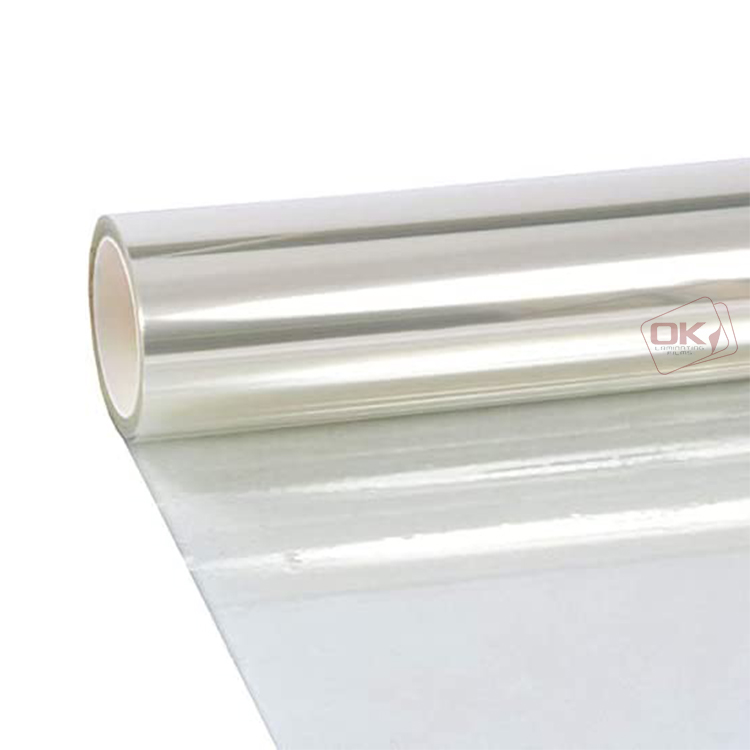
Laminating rolls, also referred to as lamination roll film, are continuous sheets of film coated with a heat-activated adhesive (typically EVA) on a polyester (PET) or polypropylene (BOPP) base. They are designed for use with roll laminator machines, offering efficiency for high-volume jobs.
1.1 Core Material Types and Properties
- PET Laminating Rolls: Offer high clarity, dimensional stability, and excellent tear strength. Ideal for applications requiring premium appearance and long-term durability.
- BOPP Laminating Rolls: Provide good clarity at a often lower cost, with flexibility. Common for general-purpose packaging and document lamination.
- Thermal Laminating Rolls: The standard type, requiring heat to activate the adhesive. Suitable for most indoor applications.
- Cold Laminating Rolls: Use pressure-sensitive adhesive, requiring no heat. Used for heat-sensitive materials or outdoor applications where UV resistance is critical.
1.2 Key Specifications to Decode
When reviewing a product like the HD-RL model from HADA, understand these parameters:
| Parameter | Typical Range | Application Implication |
|---|---|---|
| Thickness | 35 microns (mic) to 250 mic | Thicker films (e.g., 125-250 mic) offer more protection for items like menus or ID cards; thinner films (35-80 mic) are for standard documents. |
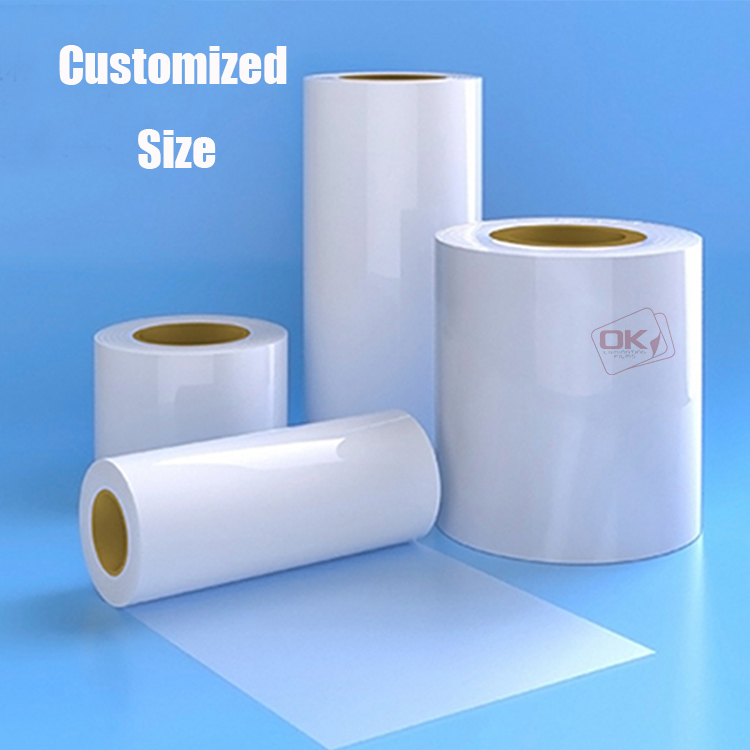
| Width | 100 mm to 1300 mm | Must match or exceed the width of your laminator and your substrate. Custom-width laminating rolls are available for non-standard machinery. |
| Core Diameter | 3-inch (76mm) standard | Ensures compatibility with laminator mandrels. Jumbo laminating rolls have larger cores and more film length to reduce changeover frequency. |
| Finish | Glossy, Matte | Glossy laminating rolls enhance color vibrancy; matte laminating rolls reduce glare and provide a premium, non-reflective finish. |
| Adhesion Type | Thermal (EVA) | High-adhesion laminating rolls are formulated for challenging substrates or outdoor use. |
2. Step-by-Step Selection Process
Step 1: Define Your Application Scenario
Match the film to the end-use. The product is used in industries including office supplies, education and school, retail and stationery, advertising and graphic, and printing and packaging.
- Document & Photo Lamination: Standard PET laminating rolls with 80-125 mic thickness, glossy or matte finish. Requires high-clarity laminating rolls.
- ID Card & Badge Lamination: Requires high-security features. Opt for films with anti-scratch laminating rolls and potentially anti-static laminating rolls properties.
- Packaging & Label Lamination: For food contact, specify FDA-compliant, food-safe laminating rolls. For durability, waterproof laminating rolls and scratch-resistant films are key.
- Advertising Poster & Banner Lamination: Outdoor applications demand UV-protective laminating rolls to prevent fading.
- Book Cover & Menu Lamination: Requires durable, anti-scratch laminating rolls that can withstand frequent handling. Matte finishes are often preferred.
Step 2: Evaluate Technical Performance Requirements
Beyond basic specs, consider performance gaps that affect efficiency and output quality. When comparing products, consider factors like light transmittance, shrinkage rate, and tear strength.
Performance Benchmarking: For instance, some premium PET laminating rolls may offer 15% higher light transmittance (up to 92%) compared to standard films, 20% lower shrinkage rate (<0.5%) at high temperatures, and 25% higher tear strength. This translates to fewer bubbles, less warping, and reduced breakage during high-speed lamination.
Energy & Efficiency: Advanced films can offer 15% lower power consumption per unit output and operate at a lamination temperature 10-15°C lower than alternatives while maintaining bond strength. This reduces energy costs for the end-user.
Step 3: Assess Supplier Capabilities and Compliance
For wholesale laminating rolls or industrial-grade laminating roll film procurement, the manufacturer's credentials are crucial.
- Certifications: Verify relevant certifications. A reputable manufacturer holds certifications including ISO 9001:2015 Quality Management System (certificate number 127878), and environmental standards like REACH (certificate number No.CANEC25014307503) and RoHS (certificate number No.CANEC25014307501), issued by bodies like SGS-CSTC Standards Technical Services Co. Ltd.
- Customization: Can the supplier provide custom-width laminating rolls, specific thicknesses, or printed laminating rolls with your logo? Manufacturers offering OEM/ODM services with options for product size, thickness, logo, and packaging provide greater flexibility.
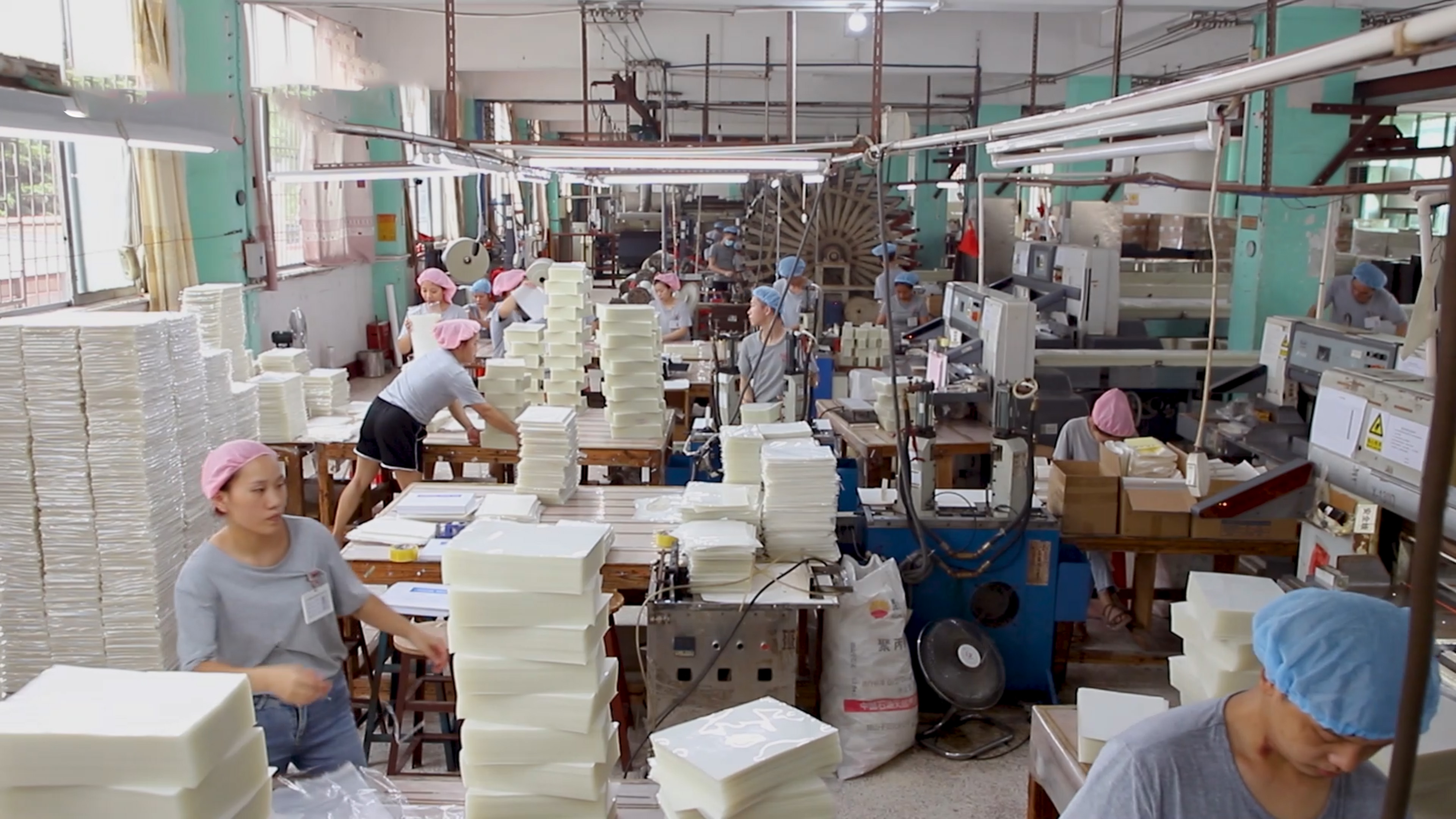
- Quality Systems: Inquire about quality control procedures. Robust systems include 100% inspection before shipment, online monitoring, and a batch traceability system.
- Production Scale: For large or consistent orders, assess capacity. Some manufacturers operate a 40,000 square meter facility with an annual output of 1,000,000 units and a monthly capacity of 150,000 packs, ensuring they can meet volume demands.
3. Implementation and Best Practices
3.1 Machine Compatibility and Setup
The product is suitable for all standard thermal laminators. However, for optimal results:
- Temperature Calibration: Always conduct a test run. Even if a film is a low-melt laminating rolls type, calibrate your machine to the manufacturer's recommended temperature range to avoid under- or over-lamination.
- Speed Settings: High-quality films are compatible with high-speed machines (up to 80m/min). Start at a moderate speed and adjust based on the bond quality.
- Nip Pressure: Ensure even pressure across the roll width to prevent edge lifting or bubbles.
3.2 Handling and Storage
- Store rolls vertically in a cool, dry place away from direct sunlight and heat sources.
- Handle cores carefully to avoid denting, which can cause film wrinkles during unwinding.
- Use the oldest stock first (FIFO) to maintain adhesive efficacy.
3.3 Troubleshooting Common Issues
| Problem | Potential Cause | Solution |
|---|---|---|
| Bubbles | Insufficient temperature, speed too high, contaminated substrate. | Increase temperature slightly, reduce speed, clean substrate. |
| Poor Adhesion | Temperature too low, incorrect film for substrate (e.g., non-porous), outdated film. | Increase temperature, test a high-adhesion laminating rolls variant, check film shelf life. |
| Warping/Curl | Temperature too high, excessive moisture in substrate, high film shrinkage. | Lower temperature, pre-condition substrates, use a film with a lower shrinkage rate. |
| Hazy Appearance | Moisture trapped in film ("frosting"), low-quality film with poor clarity. | Store film in controlled humidity, source high-clarity laminating rolls from a certified supplier. |
4. Procurement and Supply Chain Considerations
4.1 Sourcing and Logistics
When sourcing wholesale laminating rolls, clarify:
- Minimum Order Quantity (MOQ): Standard MOQs can be 1,000 packs for standard film or 2,000 pieces/100 rolls for customized sizes.
- Lead Time: Standard production lead time is typically 20-30 days. Plan accordingly.
- Delivery Terms: Common options include FOB Guangzhou/Shenzhen, CIF Destination Port, or EXW Guangzhou.
- Payment: Standard terms are T/T (30% deposit, 70% before shipment), L/C at sight, or OA 30 days after shipment.
4.2 Case Study: Long-term Partnership Model
A practical example involves a brand importer and distributor in Germany, Austria, and the United States. This client uses the product for wholesale distribution under their own brand for office document lamination and stationery protection, installing 600,000 packs of lamination film per year.
Key Outcomes: The partnership, spanning over 10 years of continuous cooperation, resulted in zero quality complaints in 10 years and a 25% reduction in the customer's lamination failure rate. Highlights included the supplier's provision of customized anti-counterfeiting coating technology and 24/7 technical support for lamination process optimization.
5. Conclusion and 2026 Outlook
Selecting the right laminating roll is a strategic decision that impacts product durability, operational efficiency, and total cost of ownership. By rigorously defining application needs, evaluating technical specifications and supplier credentials, and following best practices for implementation, businesses can achieve superior lamination results.
The trend for 2026 points towards increased demand for specialized industrial-grade laminating roll film—such as UV-protective, food-safe, and high-security variants—driven by evolving regulations and end-user expectations for performance. Partnering with an experienced, certified manufacturer that offers customization, rigorous quality control, and reliable supply chain support is paramount for success in this competitive landscape.
Disclaimer: This white paper is for informational purposes. Always consult directly with manufacturers for the most current specifications, test samples for your specific application, and detailed technical guidance. All company-specific data presented is based on publicly available information from the referenced manufacturer's materials.