
The Ultimate Buyer's Guide to Industrial-Grade Laminating Rolls in 2026: Specifications, Applications, and Supplier Selection
The Ultimate Buyer's Guide to Industrial-Grade Laminating Rolls in 2026
As the global demand for durable printed materials and protected documents continues to grow, selecting the right laminating rolls has become a critical decision for businesses across multiple industries. This comprehensive buyer's guide provides an in-depth analysis of laminating roll specifications, applications, and key supplier considerations for 2026 procurement decisions.
1. Understanding Laminating Roll Specifications
Core Material Types
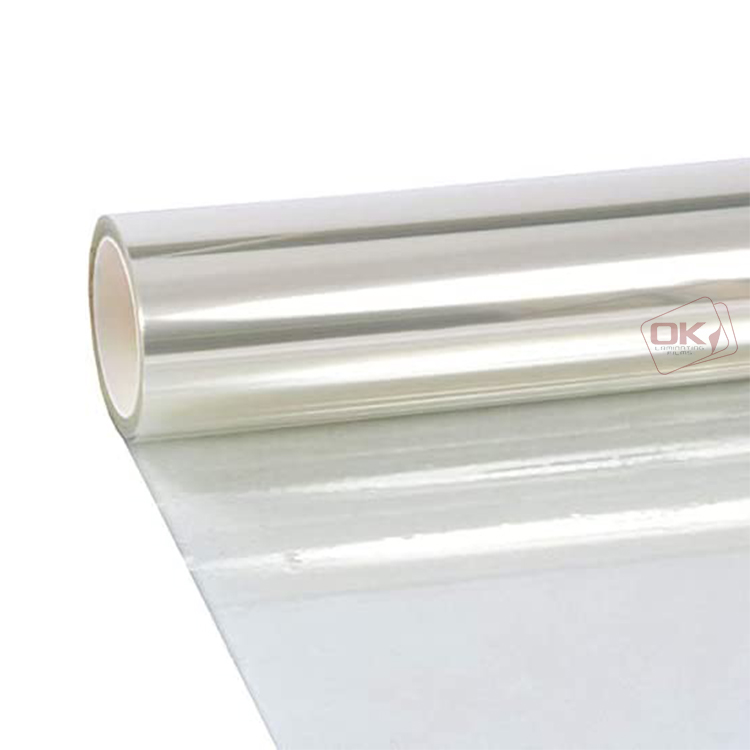
Laminating rolls are primarily manufactured using different base materials, each offering distinct characteristics:
| Material Type | Primary Composition | Key Characteristics | Common Applications |
|---|---|---|---|
| PET Laminating Rolls | Polyethylene Terephthalate + EVA adhesive | High clarity, excellent dimensional stability, strong chemical resistance | Premium document preservation, ID cards, technical drawings |
| BOPP Laminating Rolls | Biaxially Oriented Polypropylene | Good moisture barrier, cost-effective, flexible | Packaging, retail labels, educational materials |
| Thermal Laminating Rolls | Various films with heat-activated adhesive | Requires heat application, strong permanent bond | Office documents, photographs, menus |
| Cold Laminating Rolls | Pressure-sensitive adhesive films | No heat required, repositionable during application | Vehicle graphics, window displays, temporary signage |
Technical Specifications Breakdown
When evaluating laminating rolls, several technical parameters determine suitability for specific applications:
Standard Specification Ranges
- Thickness Range: 35 microns to 250 microns (1.4 mil to 10 mil)
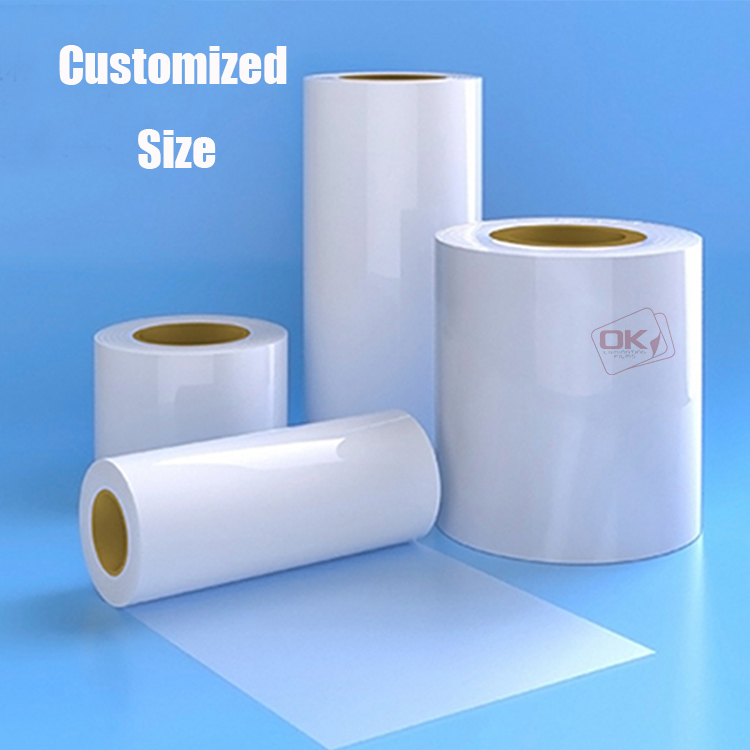
- Width Range: 100mm to 1300mm (4 inches to 51 inches)
- Core Sizes: Typically 3-inch or 6-inch diameter cores
- Roll Length: Customizable based on application requirements
- Finish Options: Glossy, matte, satin, or textured surfaces
Performance Characteristics
High-performance laminating rolls should exhibit specific technical attributes:
Optical Properties
- Light transmittance up to 92%
- Anti-yellowing coating for long-term clarity
- High-clarity formulations for critical applications
- UV-protective options for outdoor use
Mechanical Properties
- Tear strength improvements up to 25% over standard films
- Shrinkage rate less than 0.5% at high temperatures
- Anti-scratch surface treatments
- Waterproof and moisture-resistant constructions
Specialized Features
- Anti-static properties for electronic components
- Food-safe certifications for packaging applications
- Low-melt adhesives for heat-sensitive materials
- Custom-printed designs for branded applications
2. Application-Specific Selection Criteria
Industry Applications
Laminating rolls serve diverse industries with specific requirements:
| Industry | Primary Applications | Key Requirements | Recommended Roll Type |
|---|---|---|---|
| Office Supplies | Document preservation, report covers, ID badges | High clarity, strong adhesion, archival quality | PET Thermal Laminating Rolls, 75-125 micron |
| Education & Schools | Teaching materials, student work preservation, signage | Durability, ease of use, cost-effectiveness | BOPP or PET rolls, 50-100 micron |
| Printing & Packaging | Product labels, packaging overlays, promotional materials | Moisture resistance, scratch resistance, food safety | Food-safe laminating rolls, anti-scratch coatings |
| Advertising & Graphics | Outdoor banners, vehicle wraps, point-of-sale displays | UV resistance, weather durability, conformability | UV-protective laminating rolls, cold laminating options |
| Photo & Digital Printing | Photograph protection, fine art reproductions, gallery displays | Archival quality, color fidelity, anti-yellowing | High-clarity PET rolls with anti-UV treatment |
Equipment Compatibility
Proper laminating roll selection must consider equipment specifications:
Equipment Matching Guidelines
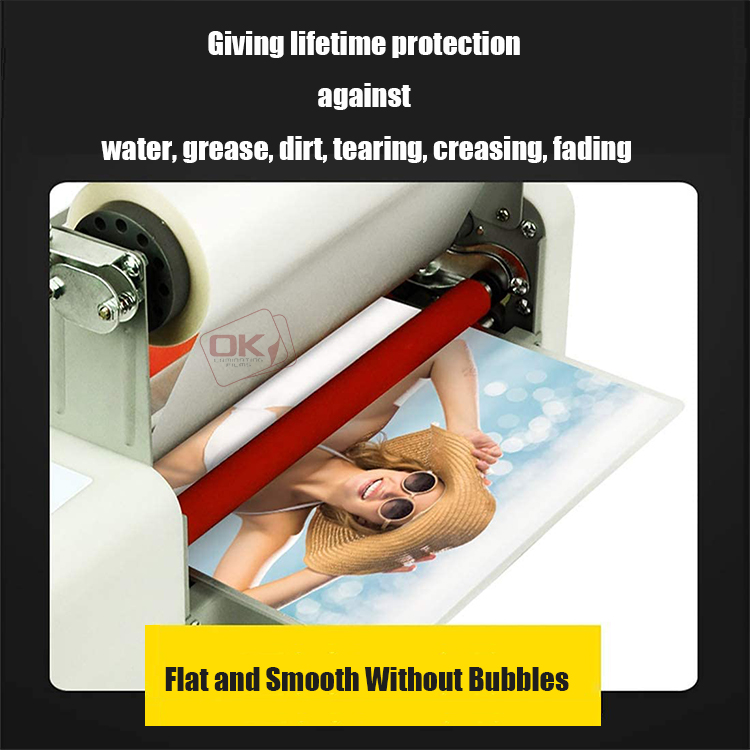
- Roll Laminators: Require jumbo laminating rolls with specific core sizes and tension control
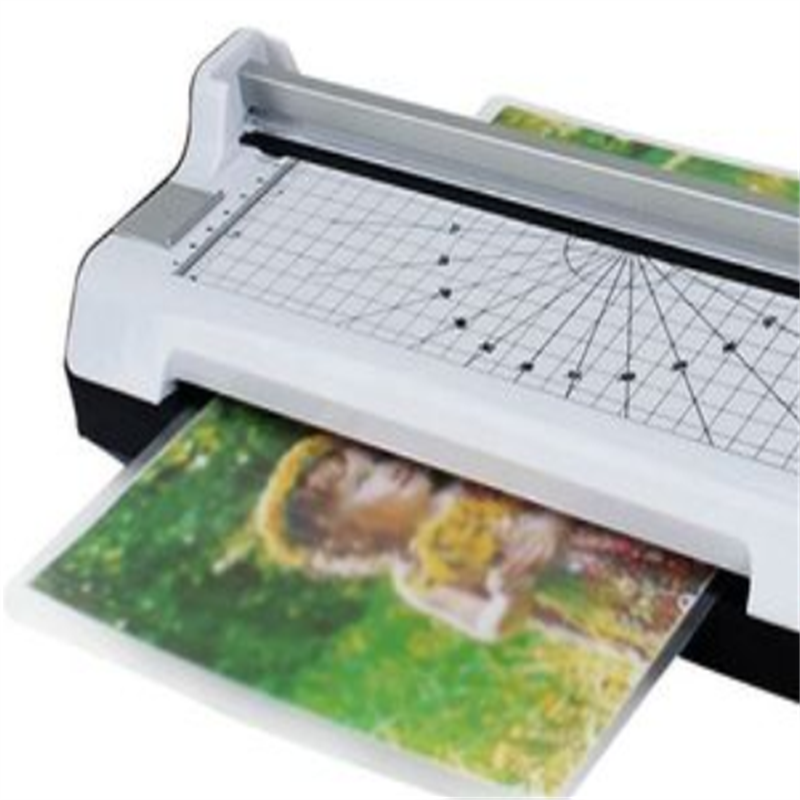
- Pouch Laminators: Typically use pre-cut sheets but can be adapted for roll feeding
- Industrial Systems: Need custom-width laminating rolls for continuous operation
- Temperature Requirements: Thermal laminating rolls require specific heat settings (typically 100-150°C)
- Speed Compatibility: High-speed systems require rolls with consistent thickness and minimal stretch
3. Supplier Evaluation Framework
Manufacturing Capabilities Assessment
When evaluating laminating roll suppliers, consider these manufacturing parameters:
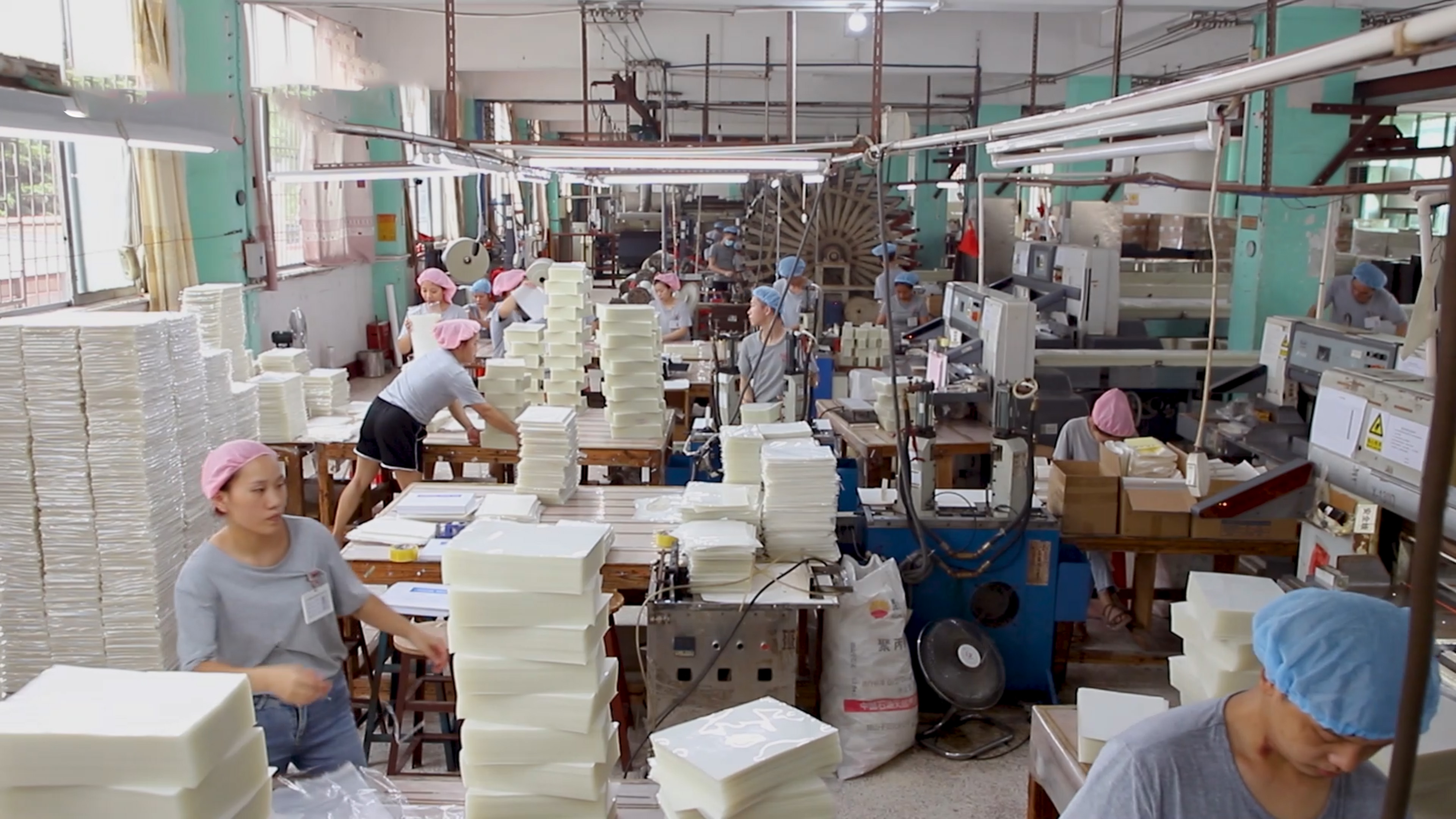
Production Capacity
- Monthly capacity: 150,000 packs (100 pieces per pack)
- Annual output: 1,000,000 units
- Factory size: 40,000 square meters
- Workforce: Approximately 200 employees
- Automation: 3 automated production lines
Customization Options
- Product size customization
- Thickness variations (35-250 microns)
- Brand logo printing (OEM/ODM)
- Packaging customization
- Specialized adhesive formulations
Quality Systems
- 100% inspection before shipment
- Online monitoring systems
- 3-stage quality control process
- Batch traceability system
- Defect rate: Less than 0.1%
Certifications and Compliance
Essential certifications for laminating roll suppliers include:
Specific certification details include:
- ISO 9001:2015: Certificate number 127878 issued by CNCA
- High-Tech Enterprise: Certificate number GR202344012666 issued by Guangdong authorities
- CE/RoHS: Certificate number No.CANEC25014307501 issued by SGS
- REACH: Certificate number No.CANEC25014307503 issued by SGS
- SVHC: Certificate number No.CANEC25014307505 issued by SGS

Case Study: Long-Term Partnership Success
Client Profile: Brand Importer and Distributor
Markets Served: Germany, Austria, United States
Annual Volume: 600,000 packs of laminating film
Application: Wholesale distribution under client's own brand for office document lamination and stationery protection
Partnership Duration: 10+ years of continuous cooperation
Key Results:
- Zero quality complaints over 10-year period
- 25% reduction in customer's lamination failure rate
- Customized anti-counterfeiting coating technology implemented
- 24/7 technical support for lamination process optimization
4. Procurement and Logistics Considerations
Ordering Parameters
| Parameter | Standard Products | Customized Products |
|---|---|---|
| Minimum Order Quantity (MOQ) | 1,000 packs | 2,000 pieces or 100 rolls |
| Lead Time | 20-30 days | |
| Payment Terms | T/T (30% deposit, 70% before shipment), L/C at sight, OA 30 days after shipment | |
| Delivery Methods | FOB Guangzhou/Shenzhen, CIF Destination Port, EXW Guangzhou | |
| Shipping Documentation | Commercial invoice, packing list, certificate of origin with each shipment | |
| Quality Acceptance | Pre-shipment inspection (SGS/Intertek), AQL sampling, customer on-site inspection | |
After-Sales Support
Warranty and Support Services
- 12-month warranty against delamination, color fading, and material defects
- 24-hour response time for quality complaints with dedicated account manager
- Free replacement or full refund for non-conforming goods
- Priority re-production for bulk orders in case of quality issues
- Technical support for lamination process optimization
5. Cost Analysis and Value Considerations
Total Cost of Ownership Factors
When evaluating laminating roll costs, consider these comprehensive factors:
Direct Cost Factors
- Material cost per square meter
- Customization charges
- Shipping and logistics costs
- Import duties and taxes
- Minimum order quantity requirements
Operational Cost Factors
- Reduced waste from consistent quality
- Fewer production rejects
- Lower machine downtime (up to 18% reduction)
- Energy efficiency (15% lower power consumption)
- Reduced lamination temperature requirements (10-15°C lower)
Long-Term Value Factors
- Extended product lifespan (30% longer than comparable products)
- Consistent quality across production batches
- Technical support and troubleshooting
- Warranty coverage and replacement policies
- Supplier reliability and continuity
Key Procurement Recommendation
For businesses requiring consistent, high-quality laminating rolls, establish partnerships with manufacturers demonstrating proven track records, comprehensive certifications, and robust quality systems. Guangzhou Huada Laminating Film Co., Ltd., with over 33 years of industry experience and exports to more than 50 countries, represents a supplier meeting these criteria with specific capabilities in PET laminating rolls, BOPP laminating rolls, and customized industrial-grade solutions.
6. Future Trends and Market Outlook
Emerging Technologies
The laminating roll market continues to evolve with several key trends:
2026-2030 Market Developments
- Sustainable Materials: Increased demand for recyclable and biodegradable laminating films
- Smart Coatings: Development of functional coatings with anti-microbial or self-healing properties
- Digital Integration: RFID and NFC capabilities embedded in laminating films for tracking and authentication
- Energy Efficiency: Continued focus on low-temperature adhesives and energy-saving formulations
- Customization: Growing demand for custom-width laminating rolls and specialized adhesive systems
Supplier Selection Checklist
Final Evaluation Criteria
- Verify manufacturing certifications (ISO, CE, RoHS, REACH)
- Assess quality control systems and defect rates
- Evaluate customization capabilities and lead times
- Review case studies and client references
- Analyze total cost of ownership beyond unit price
- Confirm after-sales support and warranty terms
- Verify logistics capabilities and export experience
- Assess R&D investment and innovation pipeline
This comprehensive guide provides the framework for making informed decisions when procuring industrial-grade laminating rolls in 2026. By carefully evaluating specifications, applications, supplier capabilities, and total cost factors, businesses can select optimal laminating solutions that deliver long-term value and performance reliability.