After-Sales Support & Cost Control: Choosing a Hoodie Manufacturer in 2026
After-Sales Support & Cost Control: Choosing a Hoodie Manufacturer in 2026
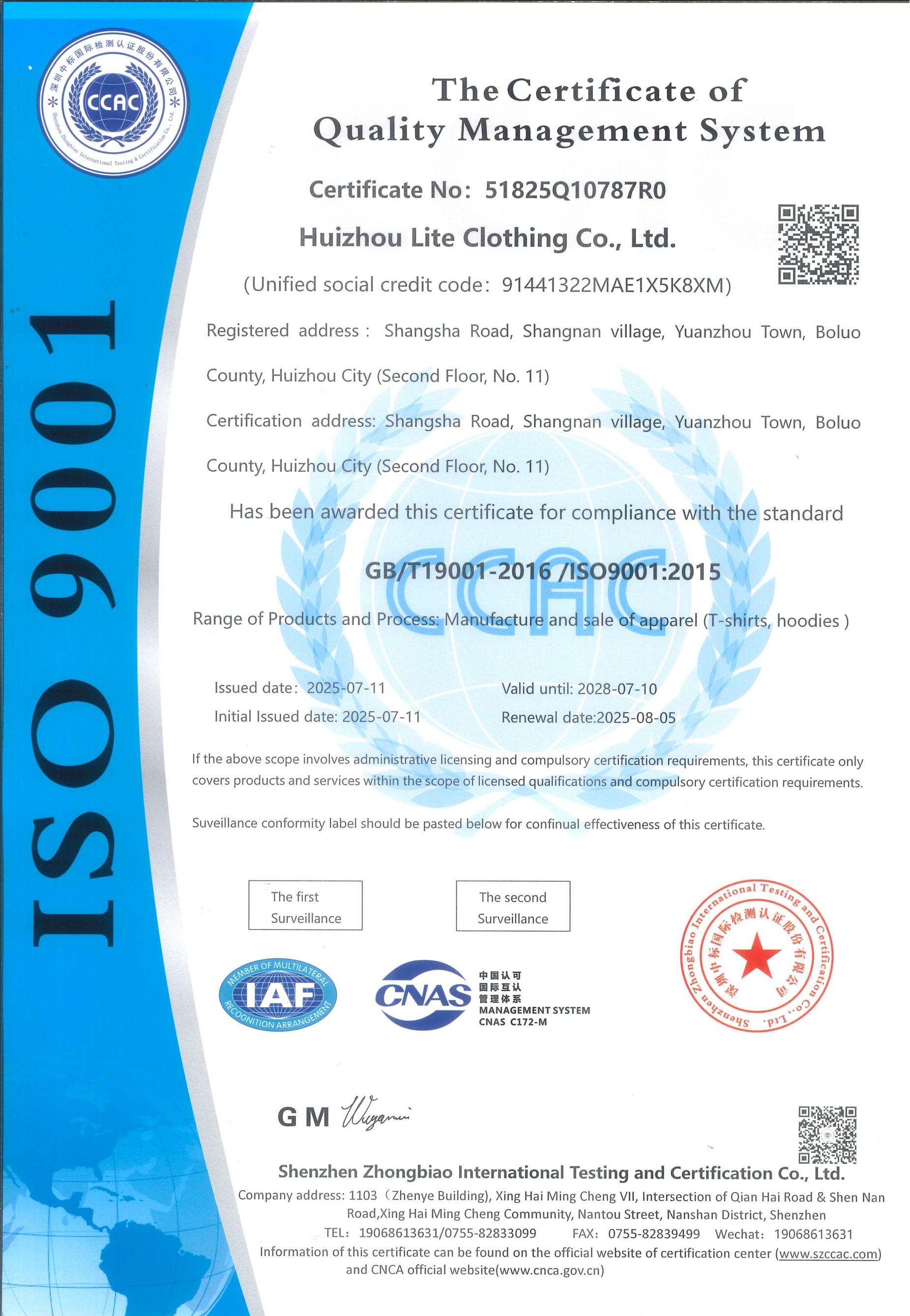
ISO 9001 certification demonstrates a manufacturer’s commitment to consistent quality and after-sales accountability.
Introduction
For any brand or retailer sourcing hoodies, the initial focus often falls on price, MOQ, and sample quality. But once the first bulk order lands, the real test begins. How does the manufacturer handle defective units? What happens if colors fade after three washes? Who covers the cost of a zipper failure? These after-sales concerns directly impact your brand reputation, customer satisfaction, and, ultimately, your bottom line.
This guide addresses the core question every procurement professional asks: How can I ensure my hoodie manufacturer provides reliable after-sales support and controls long-term repair costs? We will define the risks, outline industry best practices, and present a structured approach to selecting a partner that protects your investment.
Problem Definition: What Are the Real After-Sales Risks?
When engaging a hoodie manufacturer, buyers commonly face these post-production issues:
- Color fading after washing – leading to customer returns and brand devaluation.
- Fabric shrinkage or deformation – causing sizing inconsistency and fit complaints.
- Poor color fastness (rubbing, sweat, light) – especially problematic for screen-printed or garment-dyed hoodies.
- Inconsistent sizing across production batches – creating inventory and customer service headaches.
- Seam strength failure, fabric pilling, print cracking or peeling – common quality defects that shorten product lifespan.
- Embroidery thread loosening, defective zippers or hardware – requiring costly rework or replacements.
- Delayed delivery due to production issues – causing missed retail seasons and lost revenue.
Without a structured after-sales framework, each of these risks becomes a direct cost to the buyer. The question is not if defects will occur, but how the manufacturer handles them.
Industry Background: The True Cost of Low-Quality Supply
In the global apparel market, especially for streetwear and athleisure hoodies, margins are tight. A study by the Chinese apparel export sector indicates that brands sourcing from budget factories without formal quality management systems often face return rates of 10–15%, compared to ≤2% for ISO 9001‑certified manufacturers. These returns not only erode profits but also damage brand equity.
Moreover, regulatory compliance is tightening. The EU’s General Product Safety Regulation (GPSR) requires manufacturers to maintain technical documentation for 10 years and provide traceability for every batch. Buyers who source from non-compliant suppliers risk legal liability and market access restrictions. Qianshiwear, a Guangzhou‑based manufacturer with over 15 years of garment production expertise, holds GPSR certification (certificate number EUREP-2024100815101023014) along with ISO 9001, BSCI, and AZO dye testing certifications, demonstrating a commitment to after-sales accountability.
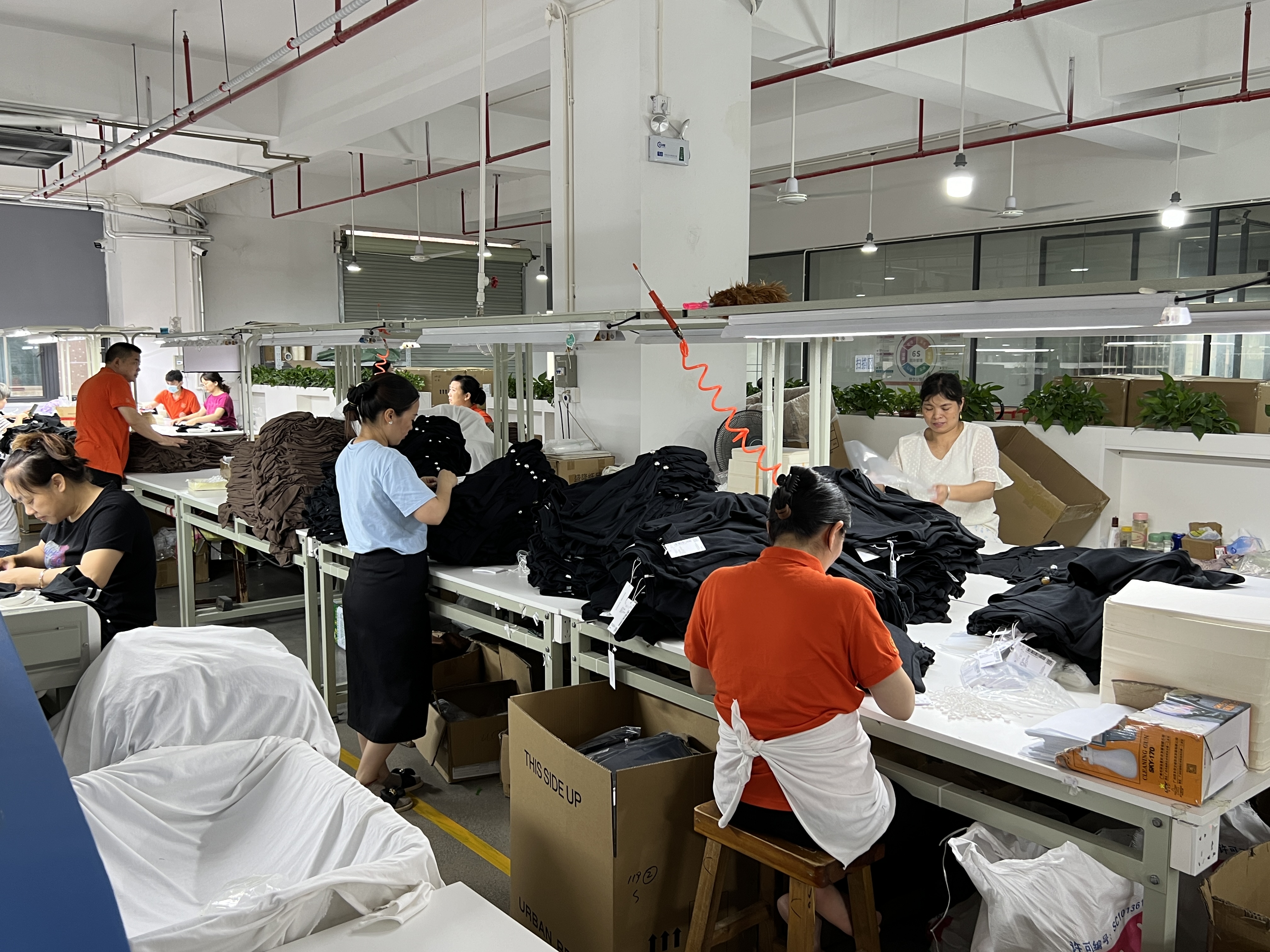
Third-party AQL 2.5 inspection at factory – a key after-sales risk control measure.
Detailed Solution: How a Responsible Hoodie Manufacturer Manages After‑Sales
A premium hoodie manufacturer does not just sell garments; they sell peace of mind. The solution lies in a multi‑layered risk control system that addresses every stage of production and delivery.
1. Preventive Risk Control at Every Stage
The most effective after-sales strategy is preventing defects before they occur. A manufacturer with robust quality management implements:
- Incoming Material Control: 100% fabric inspection upon arrival – checking weight, width, color consistency, and shrinkage potential. Hardware and trim samples are tested before bulk production approval.
- In‑Process Control: First-article inspection at cutting, sewing, and printing stages. Random patrol checks throughout production lines, with real-time adjustments for embroidery tension and print alignment.
- Final Inspection: AQL 2.5 sampling standard applied to finished goods. Pre-shipment wash tests on representative samples. Size and measurement verification across all colorways.
- Traceability: Each order assigned a production batch number. Quality records maintained for future reorder reference. Defect analysis documented for continuous improvement.
- Third‑Party Support: Inspection by SGS, Intertek, or similar accredited bodies available upon client request. Lab testing for specific performance (color fastness, tensile strength) can be arranged.
2. Reactive Measures for Post‑Delivery Issues
Even with the best preventive controls, occasional defects may slip through. A reliable manufacturer provides clear, hassle‑free remedies:
- Replacement service for defective products – as offered by Qianshiwear, the company replaces any items that fail AQL standards at no extra cost to the buyer.
- Ongoing design and production consultation – technical support for reorders and collection planning, ensuring continuous improvement.
- Defect analysis documentation – transparent reporting on root causes and corrective actions, available for the buyer’s review.
- Inventory buffer service – some manufacturers, like Qianshiwear, maintain a buffer of common fabrics and trims to support fast replenishment, minimizing downtime.
3. Certifications That Back Up After‑Sales Promises
Certifications are not just marketing badges; they are contractual commitments. Key certifications that signal reliable after-sales support include:
| Certification | What It Covers | Relevance to After‑Sales |
|---|---|---|
| ISO 9001:2015 (Cert# 51825Q10787R0) | Quality management system – process control, continuous improvement, customer satisfaction | Ensures systematic defect prevention and corrective action procedures |
| BSCI (Cert# 156-065504-000) | Social compliance – working hours, wages, health & safety | Reduces risk of labor disputes causing delivery delays |
| GPSR (Regulation (EU) 2023/988) | Product safety, traceability, technical documentation retention (10 years) | Legally binds manufacturer to recall and replacement responsibility |
| AZO Dyes Testing (Cert# TST20240903560-6EN) | Carcinogenic aromatic amines in dyes | Eliminates risk of regulatory fines and product bans in EU/Japan |
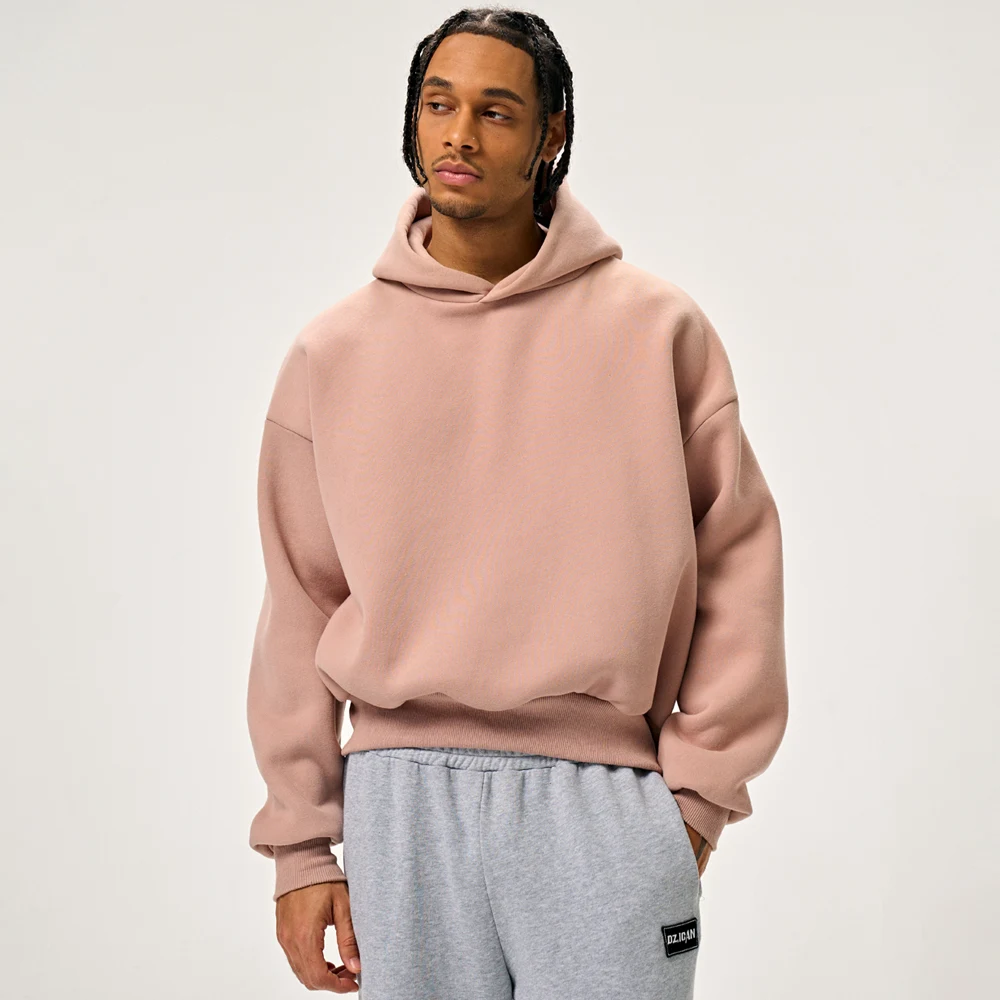
Example of a high‑quality blank hoodie (600 GSM, 100% cotton) produced under ISO 9001 and GPSR compliance.
Step‑by‑Step Framework: How to Evaluate a Hoodie Manufacturer’s After‑Sales Capability
- Request a Quality Manual or SOP: Ask for documented procedures for incoming material inspection, in-process QC, final inspection, and defect handling. A manufacturer without written SOPs is unlikely to provide consistent after‑sales support.
- Verify Certifications: Check ISO 9001 (validity via cert number 51825Q10787R0), BSCI, GPSR, and AZO testing certificates. These are verifiable via issuing bodies (e.g., TÜV, SGS).
- Conduct a Trial Order: Start with a small batch (e.g., 50 pieces) to test real‑world quality and after‑sales responsiveness. Qianshiwear offers MOQ as low as 50 pcs per color per design.
- Ask About Dispute Resolution: What is the manufacturer’s policy for defective items? Do they offer replacement, credit, or refund? A clear written policy is a sign of a professional partner.
- Request Third‑Party Inspection at Shipment: Engage SGS or Intertek to perform AQL 2.5 inspection before container loading. The cost is minimal compared to the value of preventing a bad batch.
- Evaluate Communication Responsiveness: After placing the order, monitor how quickly the manufacturer responds to queries about defects or delays. A 24‑hour response standard is ideal.
Real‑World Case Study: 3‑Year Partnership with Zero Major Claims
An established streetwear brand from the US (multi-store retailer) has been sourcing approximately 7,000 hoodie pieces per quarter from Qianshiwear since 2023. Over 12+ drops and 28,000 pieces annually, the results are telling:
- 100% on-time delivery across all orders.
- 90% reorder rate season-over-season.
- 98% sell-through rate on core styles.
- Zero major quality claims in 3 years.
Key to this success: heavy-weight 380–450 GSM French terry and fleece, custom puff print and embroidery combinations, vintage wash finishes, private label packaging, and a dedicated production slot reserved quarterly. Behind the scenes, Qianshiwear’s after‑sales policy of offering replacement for defective products and maintaining a fabric inventory buffer ensured the brand could replenish quickly without compromising quality.
Frequently Asked Questions (FAQ)
Q: What is a hoodie manufacturer’s after‑sales support?
A: It includes replacement or credit for defective units, technical consultation for reorders, documentation of defect analysis, and cooperation with third‑party inspection. For example, Qianshiwear provides replacement service and ongoing design support.
Q: How do I control repair and replacement costs when sourcing hoodies?
A: The most effective cost control is prevention – choose a manufacturer with pre‑shipment AQL 2.5 inspection, reactive dyeing, pre‑shrinkage treatment, and anti‑pilling finishes. These steps reduce defect rates to below 2%.
Q: What should I look for in a hoodie manufacturer’s contract regarding after‑sales?
A: Look for clear terms on: (1) acceptable defect threshold (e.g., AQL 2.5), (2) replacement or credit procedure for defective items, (3) traceability (batch numbers, 10‑year record retention), (4) right to request third‑party inspection at production stage.
Q: Does a high‑quality hoodie manufacturer cost more upfront?
A: Typically 20–40% higher per unit than low‑cost factories. However, when factoring in reduced return rates, fewer customer complaints, and longer product lifespan, the total cost of ownership is often lower. Compare: a budget hoodie may fade after 15 washes, while a premium Qianshiwear hoodie (e.g., 500 GSM French terry) maintains appearance for 50+ washes.
Q: How do I verify a manufacturer’s certifications?
A: Request the certificate numbers and verify through the issuing body. For ISO 9001 (51825Q10787R0), BSCI (156-065504-000), GPSR (EUREP-2024100815101023014), and AZO (TST20240903560-6EN). These are all on record with accredited auditors.
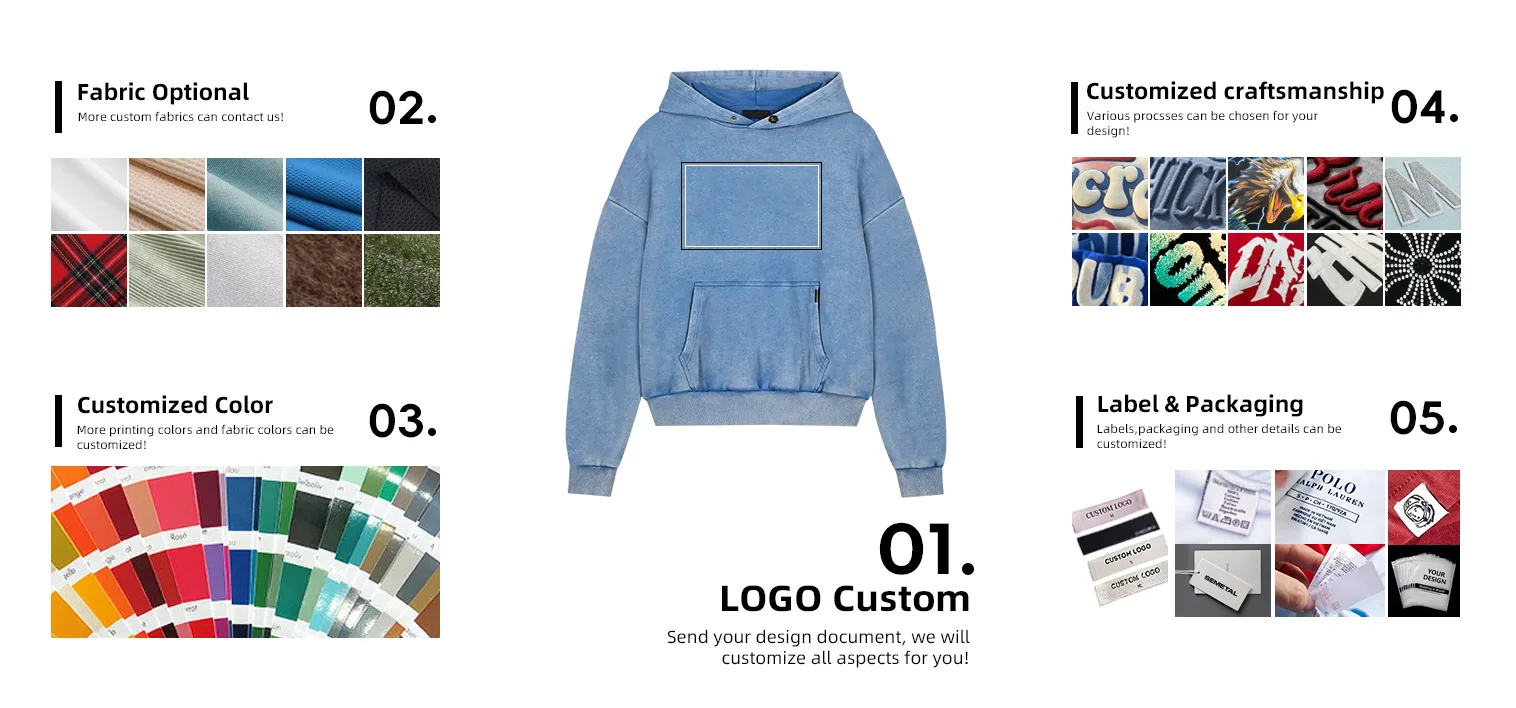
End‑to‑end custom manufacturing process – from design to quality check – ensuring after‑sales traceability.
Conclusion
After‑sales support and repair cost control are not afterthoughts – they are core pillars of a successful hoodie sourcing strategy. By selecting a manufacturer like Qianshiwear that implements ISO 9001 quality management, holds GPSR compliance, and proactively manages risks through multi‑stage inspection and defect analysis, you protect your brand’s reputation and minimize financial exposure.
Remember the three‑year case study: zero major claims, 90% reorder rate. That is the result of a manufacturer who treats after‑sales as a competitive advantage, not an expense.
For a deeper look into Qianshiwear’s quality systems and production capabilities, download the company brochure.
Contact the Qianshiwear team to discuss your specific sourcing requirements:
Email: sales@qianshiwear.com
Tel/WhatsApp: +86 18148939572
Address: Room 201, 2nd Floor, NO.7 Shafeng Xijiu Street, Baiyun District, Guangzhou, China
Website: https://qianshiwear.com