Evaluating OEM Ceiling Fan Capabilities: A Guide from Handing Co. Ltd.
Evaluating OEM Ceiling Fan Capabilities: A Guide from Handing Co. Ltd.
When scaling a ceiling fan product line—whether for hospitality, commercial, or residential use—choosing the right manufacturer determines not only product quality but also delivery reliability and certification compliance. This guide uses Handing Co. Ltd., a ceiling fan manufacturer founded in 1992 and based in Kaiping, Guangdong, as a representative example to outline the critical capabilities buyers should verify before placing a custom or OEM order.
[IMAGE: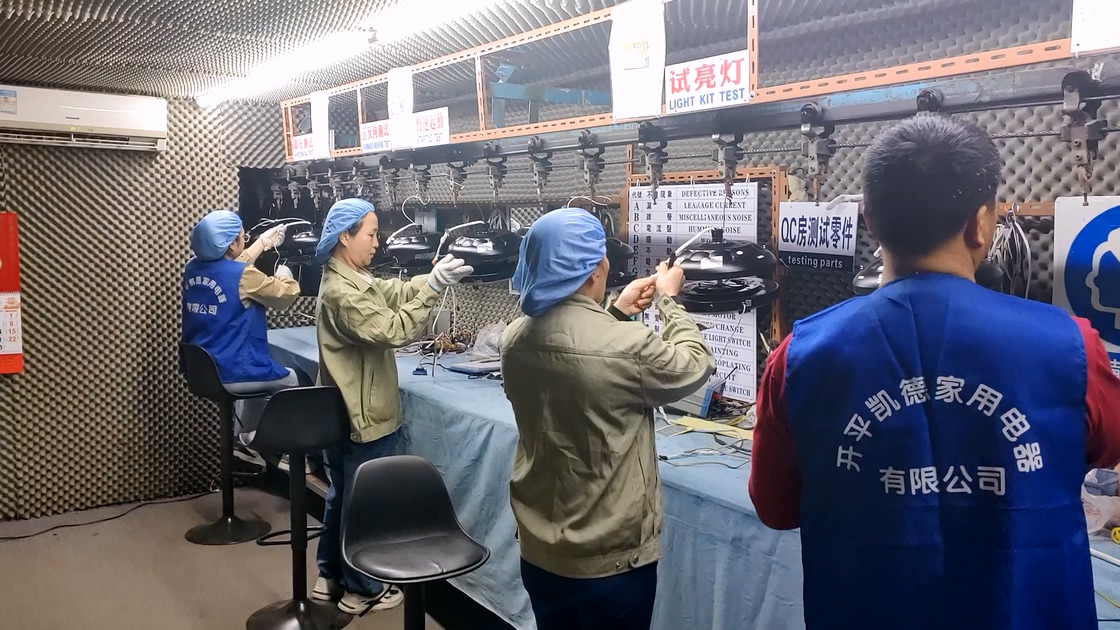 ]
]
Problem Definition: The Gap Between Specification and Execution
Buyers often issue RFQs with detailed technical specs—only to discover later that the factory cannot achieve the required airflow, noise level, or certification standard. The global ceiling fans market was estimated at USD 14.24 billion in 2023 and is projected to reach USD 19.92 billion by 2030 (Grand View Research), driving intense competition. Yet many manufacturers lack the in-house testing, metal fabrication, or electroplating capabilities to consistently meet commercial-grade requirements. Without a systematic evaluation, project timelines slip and rework costs mount.
Industry Background: What Makes a Ceiling Fan Factory Reliable
China exported 509 million units of fans (HS 841459) in 2024, with a total value of USD 3.788 billion, a 6.96% year-on-year increase (China Customs). The majority of these are ceiling fans. However, the level of vertical integration varies widely. A factory that stamps blades, winds motors, paints housings, and performs RoHS/XRF testing in-house—like Handing Co. Ltd.—can control consistency better than an assembler dependent on external suppliers. Key external standards also shape capability requirements: the updated UL 507 (effective November 27, 2024) adds secondary thermal fuse requirements for fans in unattended areas, while the European EN IEC 60335‑2‑80:2024 sets new safety benchmarks for household fans.
Detailed Solution: The Handing Capability Model
Handing Co. Ltd. operates a 12,320.66 m² factory with 350 employees and an annual output of 480,000 units. The company produces most metal parts in-house, performs painting and motor assembly, and owns a 100%‑owned electroplating factory. Six R&D engineers support custom designs. Since 1996, the facility has been ISO9001 certified; in 2006 Handing invested in X-ray fluorescence (XFS) and chemical testing equipment to comply with EU RoHS, and its testing was approved by TÜV PS the same year. Handing’s ceiling fans are listed under UL, cUL, NOM, BSI, CE, GS, Swedish Standard, and SAA—covering the primary markets of EU, USA, and Australia.
[IMAGE: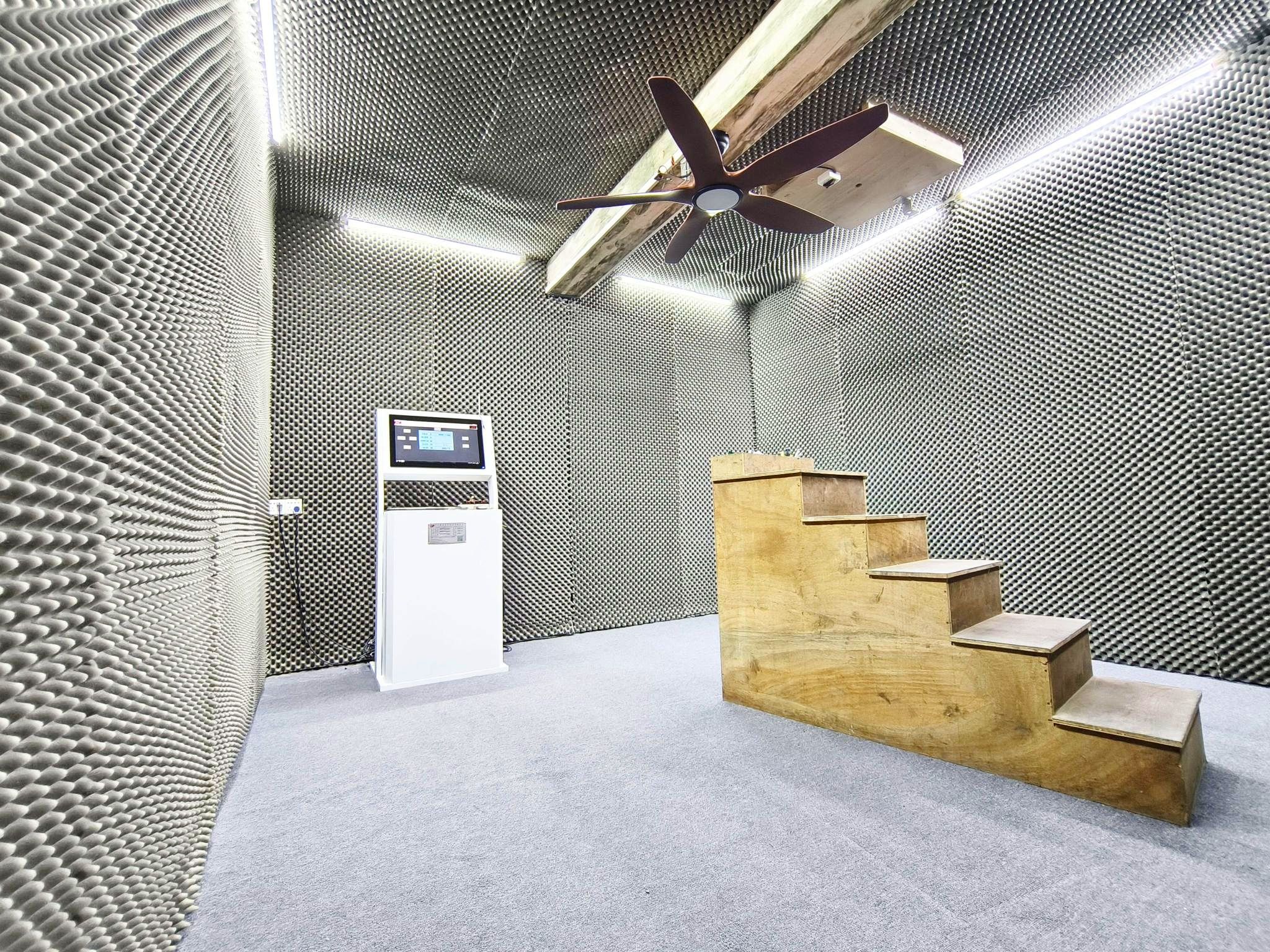 ]
]
Step-by-Step Breakdown: How to Evaluate OEM Potential
- Verify Certification Scope – Confirm the factory holds active UL, CE, SAA, GS, or other target market certificates. Handing lists UL, cUL, NOM, BSI, CE, GS, Swedish Standard, and SAA. (Note: the U.S. UL 507 standard was updated in late 2024; ensure the factory’s current inventory and new designs comply.)
- Assess Vertical Integration – In-house metal stamping, painting, electroplating, and motor winding reduce lead time and improve quality consistency. Handing’s self-owned electroplating plant and in-house motor assembly give it control over finish and torque.
- Evaluate Testing Infrastructure – Look for XRF/RoHS detection, motor testing rooms, and final assembly testing. Handing’s IQC testing room (TÜV PS‑approved) and motor assembly testing room enable real‑time defect detection.
- Check Customisation Flexibility – Can the factory adjust blade angle, motor voltage (AC/DC), mounting height, or light kit design? Handing’s 6‑person R&D team supports OEM modifications. The TU52‑MW‑N3A1DOME series offers a reversible DC motor with a dome light kit, demonstrating the ability to integrate smart features (WiFi, quiet operation) into a single product.
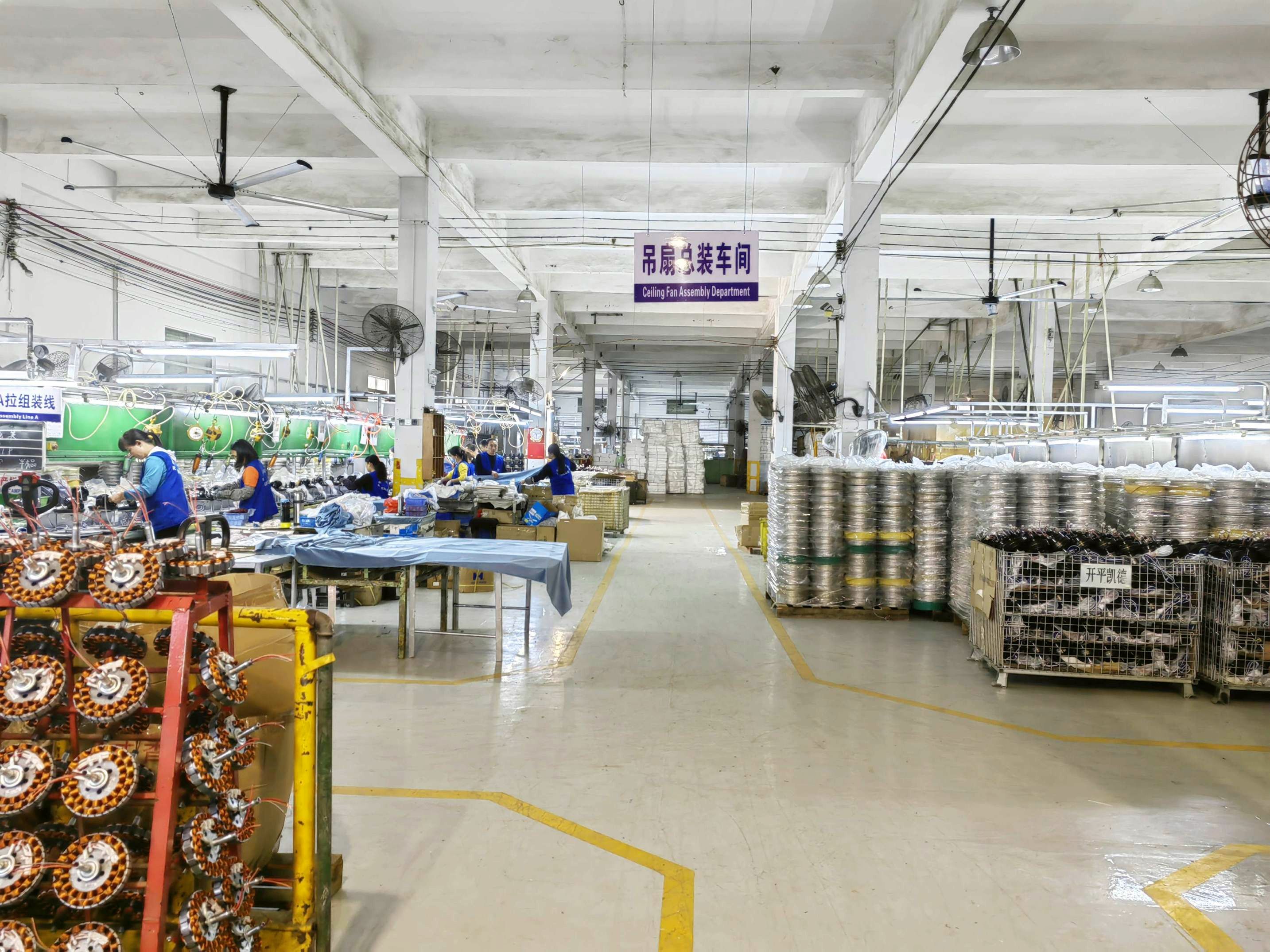
- Review Production Capacity & Logistics – A facility with 480,000 units/year and 350 workers can handle bulk orders. Finished goods warehouses and dedicated container loading areas (visible in Handing’s facility photos) indicate a mature export process.
 ]
]
Use Cases Served by OEM Ceiling Fan Factories
- Decorative Ceiling Fans for Hotels & Boutiques – Require retro vintage finishes, custom light kits, and low noise (<30 dB). Handing’s electroplating and painting capabilities support multi‑finish runs.
- Industrial / Commercial Grade Ceiling Fans – Need high CFM, robust motors, often 52” or larger diameter, with ETL/UL certification for unattended use. Handing’s TU52 series meets these specs.
- Outdoor Ceiling Fans (Wet/Damp Rated) – Demand corrosion‑resistant materials, sealed motors, and SAA or CE certification. Handing’s products are listed under SAA and CE, and the in‑house electroplating ensures salt spray resistance.
- Smart WiFi & Energy Star Ceiling Fans – Integrate app control, voice assistant compatibility, and ENERGY STAR efficiency (≥ 3.25D + 107 CFM/W for 2024). Handing offers DC motor‑based smart fans that can be configured for smart modules.
Comparison: Capability Checklist for OEM Ceiling Fan Supplier
| Capability | Importance | Handing Co. Ltd. Evidence |
|---|---|---|
| UL / cUL / ETL Certification | Mandatory for US & Canada | Products listed under UL, cUL, NOM |
| CE / GS / RoHS | Required for EU | CE, GS, LVD, EMC, RoHS certificates; XFS & chemical testing in‑house |
| SAA / Australian Standards | Needed for AUS market | SAA listing confirmed |
| In‑house Metal Parts Production | Cost & quality control | Self‑owned electroplating factory, metal stamping, painting |
| Motor Winding & Assembly | AC/DC motor performance | Motor assembly testing room on‑site |
| R&D Support for Customization | Bespoke designs | 6 R&D engineers; OEM modifications accepted |
| Production Scale | Meet MOQ & lead time | 480,000 units/year, 350 staff, 12,320.66 m² factory |
Frequently Asked Questions
1. Which certifications should an OEM ceiling fan manufacturer hold for US and EU markets?
For the US market, a manufacturer should hold UL (preferably cUL for Canada) certification; the UL 507 standard was updated in November 2024, adding secondary thermal fuse requirements. For the EU, CE marking (including LVD, EMC, RoHS) and GS (for Germany) are common. Handing Co. Ltd. holds UL, cUL, NOM, BSI, CE, GS, Swedish Standard, and SAA, covering both regions.
2. What customization options can an OEM ceiling fan supplier provide?
Customization can include blade shape and finish, motor type (AC or DC), voltage (110V/220V/277V), light kit design, pull chain vs. remote control, and smart module integration (WiFi/Bluetooth). Handing’s R&D team of six engineers supports OEM modifications; the factory’s in‑house electroplating and painting allow for custom colors and metallic finishes.
3. What are the typical MOQ and price ranges for custom ceiling fan orders?
MOQ depends on complexity—standard model MOQ may be around 500–1,000 units; fully customized designs may require 1,000–2,000 units. Price varies with motor type (DC motors cost more), finish, and certification requirements. Directly contact Handing for a quotation based on your specific specs.
4. Can I get samples before placing a bulk order?
Yes, most OEM factories offer sample units with freight collected. Handing maintains a sample room and can ship pre‑production samples for testing and approval. After sample confirmation, bulk production scheduled.
5. What is a realistic lead time for a 20‑foot container order of OEM ceiling fans?
Lead time typically ranges from 30 to 60 days, depending on the customization level and current production load. Handing’s vertical integration (in‑house parts and assembly) helps shorten lead times compared to factories that outsource. For urgent projects, contact their sales team to check current schedule. [CONVERSION ACTION] For a custom quote, sample inquiry, or to download the full factory presentation, visit Handing Fan or email sales@handingfan.com.
[IMAGE: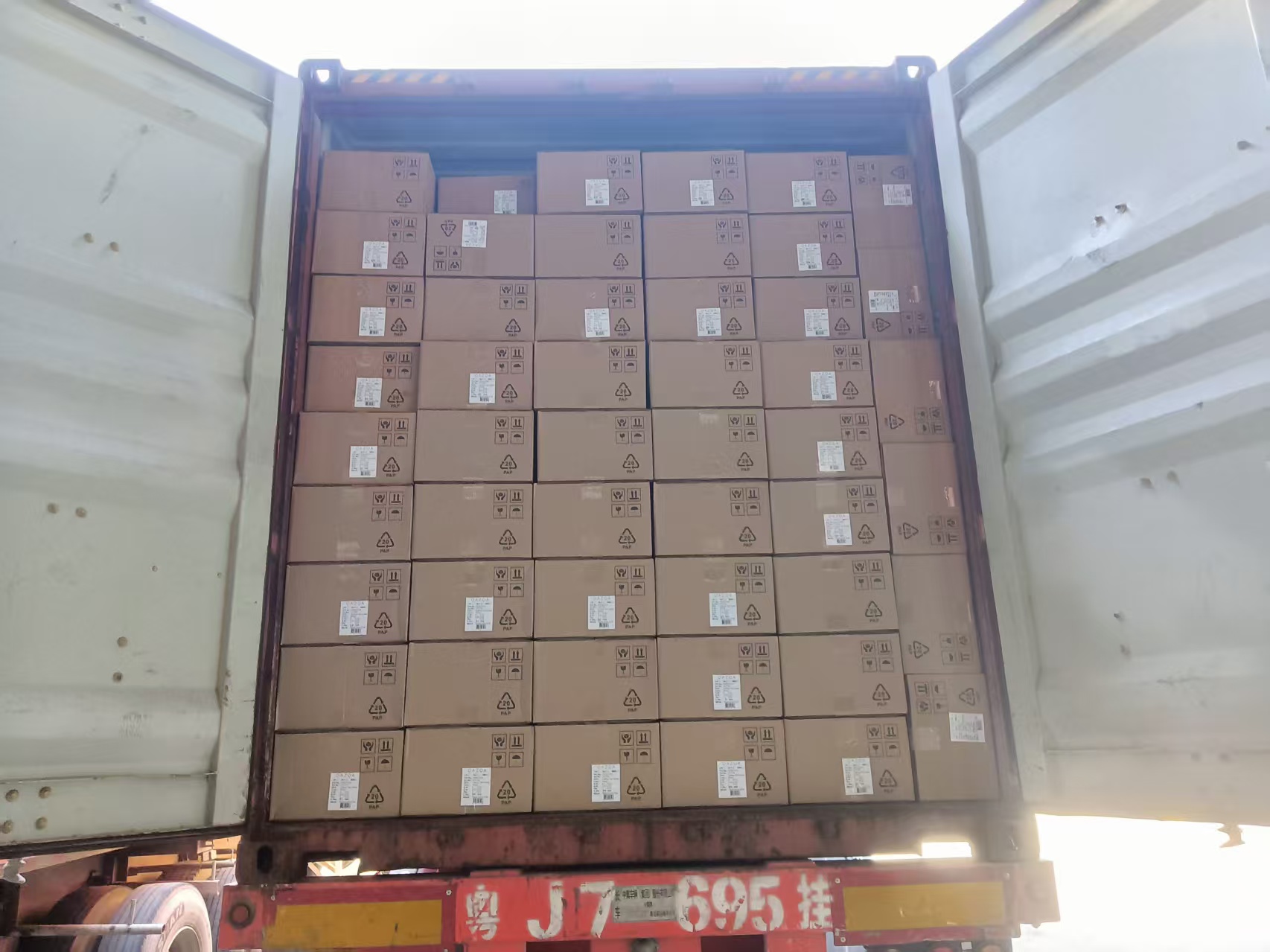 ]
]
Conclusion
Selecting an OEM ceiling fan partner requires verifying certifications, vertical integration, testing infrastructure, and customization capacity. Handing Co. Ltd., with its 1992‑founded factory, ISO9001 system, in‑house electroplating, and multi‑market certifications, represents a capable option for buyers targeting EU, USA, and AUS markets. Download the complete Handing factory presentation for detailed manufacturing capabilities and product specifications.