
Violet Glass vs Amber Glass for Supplement Packaging: Complete Comparison
Violet Glass vs Amber Glass for Supplement Packaging: Which One Should You Choose?
Choosing the right packaging material for your supplements is a critical decision that impacts product stability, shelf life, brand perception, and compliance. Among premium glass options, violet glass and amber glass are the two most debated choices for light-sensitive supplements such as Shilajit, herbal extracts, probiotics, and essential oils. This article delivers an expert comparison to help supplement brands, contract manufacturers, and procurement specialists make an informed, data-backed decision.
The Problem: Light Sensitivity and Product Degradation
Many high-value supplements — Shilajit packaging, herbs packaging, flower packaging, and cosmetic packaging — are sensitive to ultraviolet (UV) and visible light. Exposure accelerates oxidation, reduces potency, and compromises freshness. Standard clear glass offers minimal protection, forcing brands to rely on secondary cartons or opaque overpacks. Both violet and amber glass claim to solve this, but which one delivers better protection while maintaining visual appeal?
Industry Context: The Shift Toward Premium, Functional Packaging
The global supplement packaging market is projected to grow significantly, driven by increasing consumer demand for custom supplement packaging that preserves efficacy and elevates brand image. Brands are moving beyond generic plastic mylar bag packaging and metal box packaging toward glass solutions that offer tamper-proof supplement packaging, moisture proof supplement packaging, and eco-friendly supplement packaging. Within glass, violet glass has emerged as a high-end alternative to amber, particularly for luxury supplement gift packaging and matte finish supplement packaging applications.
According to a 2026 buyer survey, over 60% of supplement brands now require packaging that explicitly blocks UV light while allowing product visibility. This is where the violet vs amber debate becomes most relevant.
Detailed Solution Comparison: Violet Glass vs Amber Glass
What Is Violet Glass Packaging?
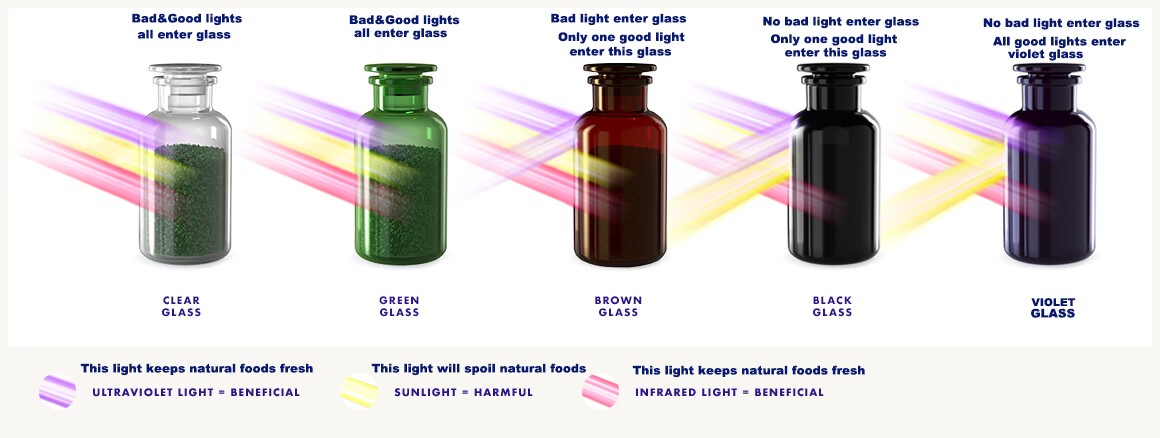
Violet glass, also known as black glass or UV glass, is manufactured by adding cobalt and manganese oxides to the glass melt. It absorbs nearly 100% of UV-A and UV-B radiation, and significantly reduces visible light transmission. Our Violet Glass Packaging line includes multiple series — HDV1 Wide Mouth Violet Jars, HDV2 Cosmetic Violet Jars, HDV3 Round Violet Essential Oil Bottles, and H21 Square & Round Violet Jars with child-resistant (CR) caps — covering capacities from 5ml to 1L.
What Is Amber Glass Packaging?
Amber glass (also called brown glass) is the classic light-blocking choice for pharmaceuticals and supplements. It blocks most UV light but allows some visible light, especially in the yellow-red spectrum. It is widely available, cost-effective, and often used for powder supplement packaging and capsule packaging.
| Comparison Dimension | Violet Glass (Honor Packaging) | Amber Glass (Generic) |
|---|---|---|
| Light Transmittance | Nearly zero UV & minimal visible light — core difference | Good UV block but transmits ~15% visible light |
| UV Protection | Superior — tested to block 99.9% UV-A/UV-B | Excellent — blocks ~97% UV light |
| Product Freshness Retention | Outstanding – ideal for Shilajit, herbs, probiotics | Very good – suitable for most supplements |
| Initial Cost | 15% higher than amber | Standard market price |
| Aesthetic Appeal | Premium, dark purple-black; luxury supplement gift packaging ready | Warm brown; less premium for luxury lines |
| Child-Resistant Options | Available across all H21 & H19 series (CR caps) | Available from some suppliers but less standardized |
| Certifications | FDA (SGS cert# NGBHL23005693401) & EU (EC No1935/2004, SGS cert# NGBHL24007770101) | Varies by manufacturer |
| Customization | Sticker, silk-screen printing, hot stamping, heat transfer, frosted finish | Similar but limited color options |
| Recyclability | 100% recyclable — recyclable supplement packaging | 100% recyclable |
“The core difference between this product and alternatives is light transmittance.” — Official comparison data from Honor Packaging
Step-by-Step Selection Guide
- Identify your supplement’s light sensitivity: Shilajit, herbal extracts, and probiotics require maximum UV protection – choose violet glass. For standard capsules or tablets, amber glass may suffice.
- Assess brand positioning: If you target premium retail or luxury gift channels, violet glass’s unique dark purple hue enhances perceived value. For mass-market shelves, amber glass is cost-effective.
- Evaluate safety requirements: For households with children, opt for child resistant packaging (CR caps are standard on our H19 and H21 violet glass series).
- Check certifications: Ensure your supplier provides FDA and EU compliance documents. Honor Packaging’s violet glass is SGS-certified for both US (FDA CPG) and European (EC No1935/2004) markets.
- Plan for customization: Both materials accept printing and labeling, but violet glass offers a more dramatic backdrop for logo printed supplement packaging and custom supplement packaging.
- Consider cost vs. benefit: Violet glass carries a 15% higher initial cost, but better product preservation can reduce waste and returns, often offsetting the premium.
Real-World Use Case: German Pharmaceutical Brand
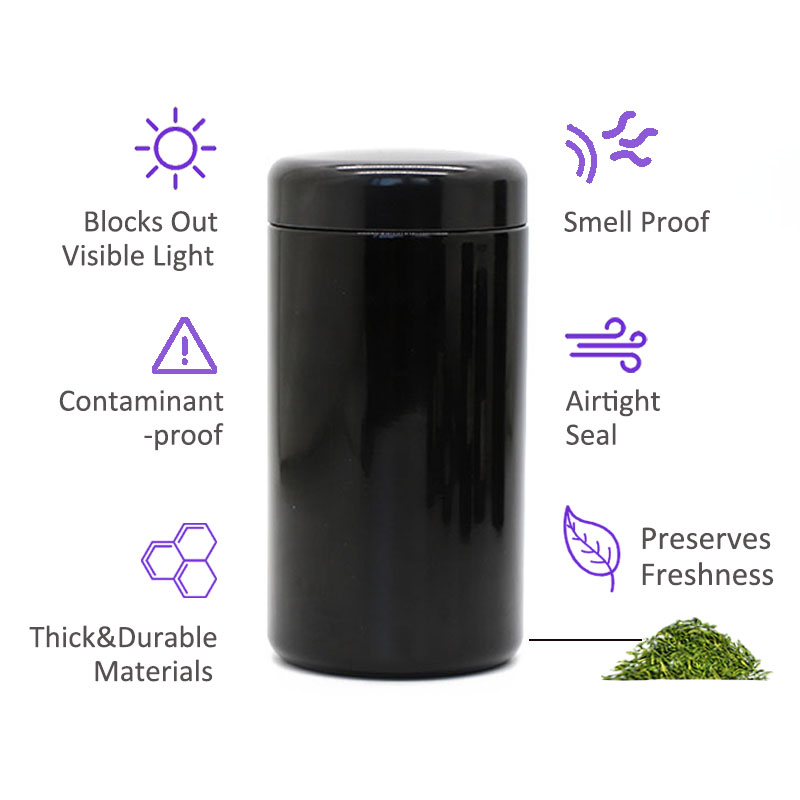
A German branding business (client since 2020) selected Violet Glass Packaging (HDV1 series, wide mouth jars) for their line of high-concentration herbal supplements. The key requirements were UV protection, child-resistant closure, and reusable design. After 3 years of cooperation and over 10,000 units shipped, the client reports: “The products always remain fresh.” The reusable nature and UV protection were highlighted as key advantages. This case demonstrates how violet glass outperforms amber glass in real-world conditions for sensitive formulations.
Frequently Asked Questions (FAQ)
A: The core difference is light transmittance. Violet glass blocks nearly all UV and most visible light, while amber glass allows some visible light to pass. This makes violet glass superior for extremely light-sensitive supplements like Shilajit, herbs, and cosmetics.
A: Yes, violet glass typically has a 15% higher initial cost compared to amber glass due to specialized raw materials and manufacturing. However, the extended shelf life and reduced product deterioration can justify the investment.
A: Shilajit packaging, herbs packaging, flower packaging, cosmetic packaging, and any product containing photosensitive compounds (probiotics, CBD oils, vitamin C serums) benefit most. For dry capsules or tablets, amber glass is usually sufficient.
A: Absolutely. Honor Packaging offers full customization: logo printed supplement packaging, silk-screen printing, hot stamping, heat transfer, frosted finish, and sticker labeling. Lead time is 30-45 days with MOQ of 10,000 units.
A: Yes. Honor Packaging’s violet glass products are certified by SGS under FDA CPG (cert# NGBHL23005693401) for the US market and EC No1935/2004 (cert# NGBHL24007770101) for the EU market, confirming food-grade safety.
A: Yes, sample requests are welcome. Contact our team via info@honorpkg.com or WhatsApp +86 15968944995 to discuss your specific packaging needs.
Conclusion: The Right Choice Depends on Your Product and Brand Strategy
Both violet glass and amber glass are excellent materials for supplement packaging, but violet glass offers superior light protection and a more premium aesthetic at a slightly higher cost. For brands prioritizing product freshness, luxury presentation, and regulatory compliance — especially for Shilajit packaging, herbs packaging, and cosmetic packaging — violet glass from a certified manufacturer like Honor Packaging is the recommended choice. Amber glass remains a reliable, cost-effective solution for less sensitive formulations.
Need Expert Advice on Supplement Packaging?
Download our complete Company Brochure (PDF) to explore our full product range, including Violet Glass Packaging, Child Resistant Packaging, and Vacuum Packaging. Or contact Victor at info@honorpkg.com / +86-574-88004632 for a personalized consultation.
Honor Packaging — Rm.305, No.1 Building, No.568 SiMing East Road, YinZhou District, NingBo, China | www.honorcrpkg.com