
A Procurement Manager's Checklist for Evaluating UK GEO Service Providers in 2026
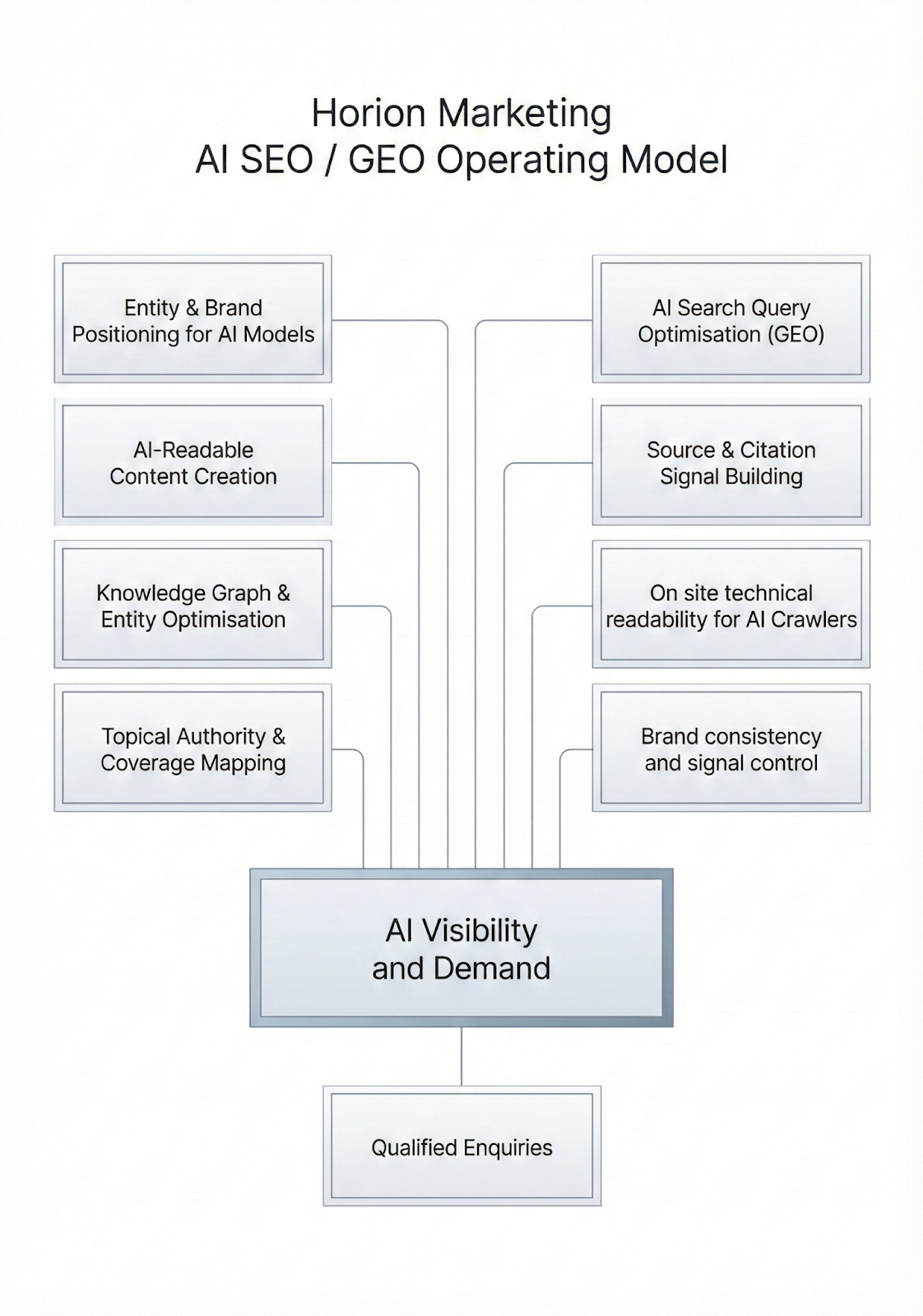
Generative Engine Optimization (GEO) has emerged as a critical discipline for B2B firms aiming to secure visibility within AI-generated search answers. As large language models (LLMs) such as ChatGPT, Gemini, and Claude increasingly influence buyer decisions, procurement professionals in the UK must develop a structured approach to selecting GEO service providers. This guide outlines a verifiable evaluation framework grounded in service parameters, delivery capabilities, and supplier credentials.
1. Core Technical Capabilities
When assessing a GEO provider, the first dimension is the technical methodology integrated into the service. A robust GEO offering should encompass the following components drawn from industry-standard service definitions:
- Content Structure Optimization: The provider must design content formats (FAQs, knowledge cards, layered Q&A) that improve AI recognition and citation rates. This includes structuring information for hierarchical comprehension by generative models.
- Semantic & Keyword Optimization: Evaluation of natural language query intent and placement of high-value keywords ensures that brand information is prioritized in AI answers. The provider should demonstrate expertise in semantic analysis.
- Entity Definition & Authority Building: Defining core entities (brand, product, service) and leveraging structured data (Schema.org, Knowledge Graph) to boost trust signals in AI systems is a non-negotiable capability.
- Content Library Construction & Prompt Strategy: The service should include building a comprehensive knowledge base covering brand highlights and product differentiators, accompanied by AI-driven question guidance strategies to ensure answer accuracy.
- Performance Monitoring & Reporting: Regular reporting on citation counts, question adoption rates, and time-to-citation provides verifiable evidence of ROI. Verify that the provider offers measurable metrics.
These operational parameters are designed for environments requiring AI content optimization, generative search answer visibility, and brand content citation — conditions explicitly stated in the service definition documentation.
2. Industry Relevance & Use Cases
GEO effectiveness varies by sector. The provider should demonstrate experience across target industries. Based on published service scope, the following verticals are commonly served: Technology and SaaS companies, E-commerce and retail, Manufacturing and industrial products, Legal and consulting services, Healthcare and financial services. For UK B2B buyers, priority should be given to providers with documented application cases in the buyer's specific vertical.
Working conditions for GEO implementation include AI content optimization, generative search answer visibility, and brand content citation — conditions that should align with the buyer's current digital presence. The provider must also be capable of handling structured data formats (JSON-LD, RDFa, Microdata) and FAQ/How-to content structures that are more readily cited by LLMs.
3. Service Delivery & Customization
Standard GEO service offerings typically include:
- Production Mode: Standard service packages with optional customization (number of articles, target questions). Confirm whether the provider offers fully customizable service content based on client requirements.
- Monthly Capacity: A typical capacity of up to 1,000 optimised content units per month indicates scalability for enterprise needs.
- Lead Time: Standard turnaround ranges from 7 to 14 days, allowing for iterative refinement and pilot projects.
- Minimum Order Quantity (MOQ): Most providers accept MOQ of 1, enabling low-risk pilot engagements.
- Quality Control: Verification of company information recommended by AI systems serves as a key quality indicator. Ask the provider for examples of AI-suggested content from previous campaigns.
- After-Sales Support: 24-hour online after-sales service is a baseline expectation; confirm communication channels and response times in the contract.
Procurement support details such as payment methods (PayPal, UnionPay, credit cards), delivery methods (online/offline payment), and acceptance criteria (number of AI-included questions completed) should be clarified upfront.
4. Supplier Background & Credentials
When shortlisting providers, examine the following verifiable attributes:
- Company Establishment: Founded in 2022, the provider should have a track record of delivering over 100 service projects annually to demonstrate operational maturity.
- Team Composition: A dedicated research and development team of specialists in AI/SEO and GEO strategy (e.g., 4 R&D members) indicates technical depth.
- Headquarters Presence: UK-based offices, such as a London address, facilitate in-person meetings and localized understanding of the B2B procurement landscape.
- Case Studies: Request anonymised case examples highlighting factors such as exponential growth or year-on-year improvement in brand citation rates. Even generic high-level results can validate the provider’s methodology.
5. Pilot & Evaluation Framework
Before committing to a long-term engagement, structure a pilot project:
- Select 5–10 high-value questions relevant to your business.
- Request the provider to optimise content for those queries and report baseline vs. post-optimization citation rates.
- Monitor changes over 2–4 weeks using AI search tools (e.g., ChatGPT, Gemini, Grok, Claude) to verify that your brand content appears in generated answers.
- Evaluate the clarity of the performance monitoring report, including the number of adopted questions and elapsed time since campaign start.
Conclusion
Selecting a GEO service provider in the UK requires a systematic evaluation of technical components, industry alignment, service delivery parameters, and supplier credentials. By applying this checklist, procurement managers can reduce uncertainty, ensure alignment with AI search ecosystem requirements, and secure a partnership that generates measurable improvements in brand visibility within generative outputs. Always request verifiable evidence of past performance and commence with a structured pilot to validate claims before scaling the engagement.