
Essential Certifications and Quality Standards: A Procurement Guide for Selecting Reliable Battery Assembling Factories
In the rapidly evolving landscape of energy storage, selecting a reliable and certified Battery Assembling Factory is a critical decision for procurement professionals across industries. The right supplier ensures not only product safety and performance but also compliance with international regulations and long-term supply chain stability. This guide outlines the essential certifications, quality standards, and evaluation criteria that buyers must consider when sourcing Customized Li-ion Battery solutions for applications ranging from Medical Device Battery and Industrial Usage Battery to IoT Device Battery and Consumer Electronics Battery.
Core Certifications: The Non-Negotiable Foundation
A factory's commitment to quality and safety is formally documented through internationally recognized certifications. These are not merely badges but represent a systematic approach to manufacturing excellence.
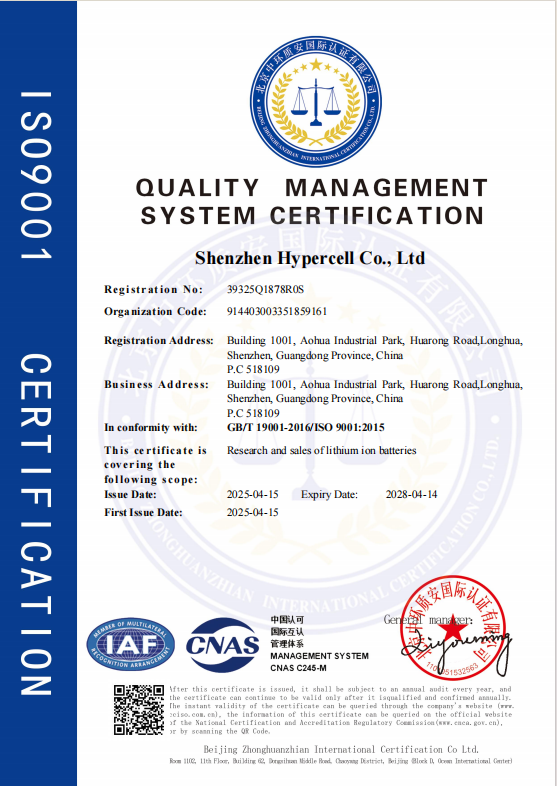
ISO 9001:2015
This certification for Quality Management Systems is fundamental. It demonstrates the factory's ability to consistently provide products that meet customer and regulatory requirements. A certified Battery Assembling Factory like Shenzhen Hypercell Co., LTD uses this framework for continuous improvement in processes, from raw material sourcing to final assembly and testing.
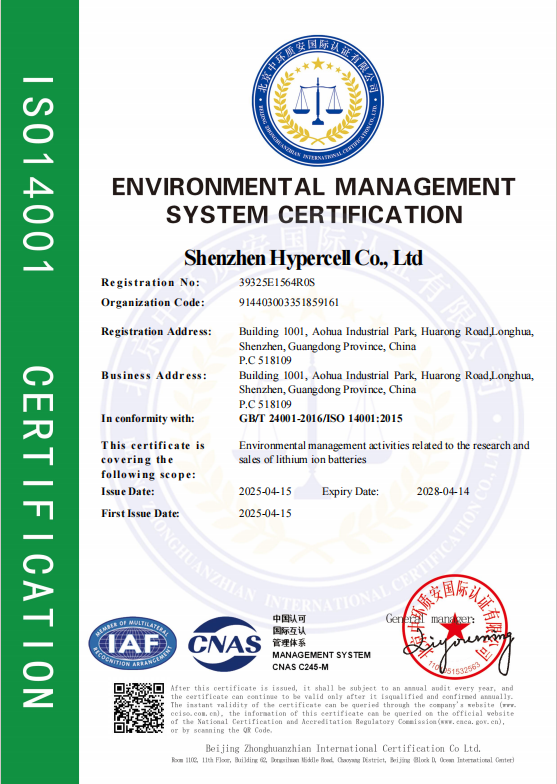
ISO 14001:2015
The Environmental Management System certification is increasingly vital. It shows the manufacturer's dedication to minimizing environmental impact, managing waste responsibly, and complying with environmental laws—a key consideration for brands committed to sustainability.

RoHS Compliance
Restriction of Hazardous Substances (RoHS) is mandatory for selling electronic products in many regions, including the EU. It restricts the use of specific hazardous materials. Certification confirms that the Li-ion Cylindrical Battery or Li-Polymer Battery is free from these substances, ensuring safer products and easier market access.
Safety and Transportation Certifications
For batteries, safety documentation is as crucial as performance specs. These certifications are mandatory for global logistics and instill confidence in product handling.
- UN38.3 Certification & Transport Reports: This is the cornerstone for shipping lithium batteries. It includes a series of rigorous tests (altitude, thermal, vibration, shock, etc.) to ensure battery safety during transport. Reputable factories provide supporting documents like the Identification and Classification Report for Sea Transport of Goods and Air Transport of Goods, which are essential for freight forwarders and customs clearance.
- CB Scheme Certificate: An international certification for electrical equipment safety based on IEC standards. For a Battery Assembling Factory, a CB Test Certificate facilitates easier access to national certifications in over 50 countries, streamlining the approval process for Analyzer or Robot&E-Mobility applications.
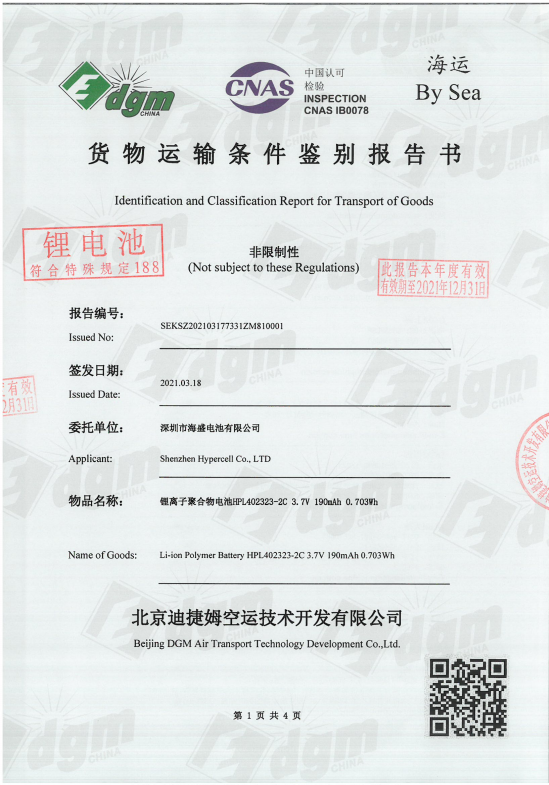
Example of a Sea Transport Identification and Classification Report, a critical document for logistics.
Beyond Certificates: Evaluating Technical and Operational Capabilities
While certificates are a prerequisite, a deeper evaluation of the factory's capabilities is necessary for complex, Customized Li-ion Battery projects.
1. In-House R&D and Customization Expertise
The ability to tailor solutions is paramount. Factories with strong R&D teams, like the one at Hypercell constituted by doctors, masters, and senior engineers, can develop batteries for special environments and specifications. This includes solutions for high/low-temperature operation, high-rate discharge, or unique form factors required for compact Medical Device Battery or IoT Device Battery designs.

Hypercell's INR18650S battery, engineered for wide-temperature operation (-40℃ ~ +85℃), exemplifies advanced customization for harsh environments.
2. Vertical Integration and Supply Chain Control
A factory's control over its supply chain mitigates disruption risks. Hypercell, with its three production factories in Guangdong and a daily output of 30MWh, exemplifies vertical manufacturing capabilities. A well-established and vetted supply chain for raw materials (like cathodes for LiFePO4 Battery or Li-Polymer Battery cells) ensures consistent quality and production scalability.
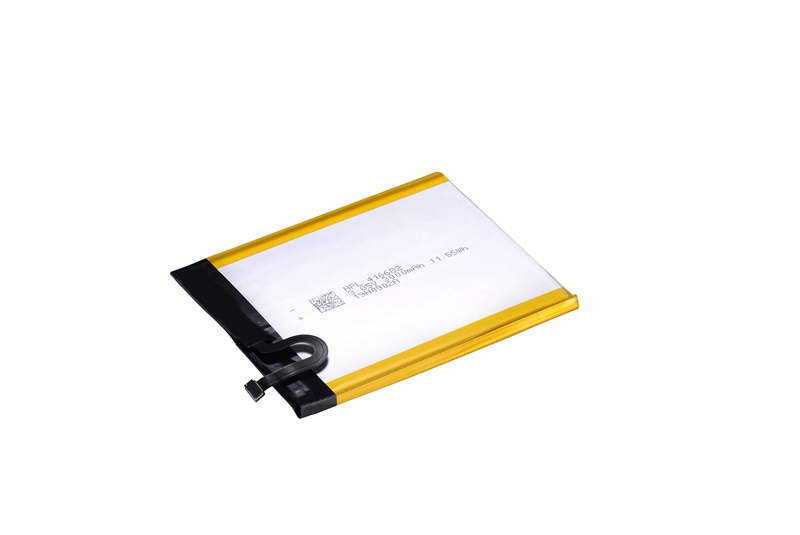
A Li-Polymer Battery (Model HPL416682) showcasing the flexible, high-density solutions possible with integrated manufacturing.
3. Industry-Specific Application Experience
Experience in your target sector is invaluable. A factory familiar with the stringent reliability standards for Medical Device Battery packs or the high-power demands of Industrial Usage Battery systems will anticipate challenges. Hypercell's 18 years of experience across industrial instruments, medical devices, and IoT provides a proven track record for developing application-specific battery solutions.
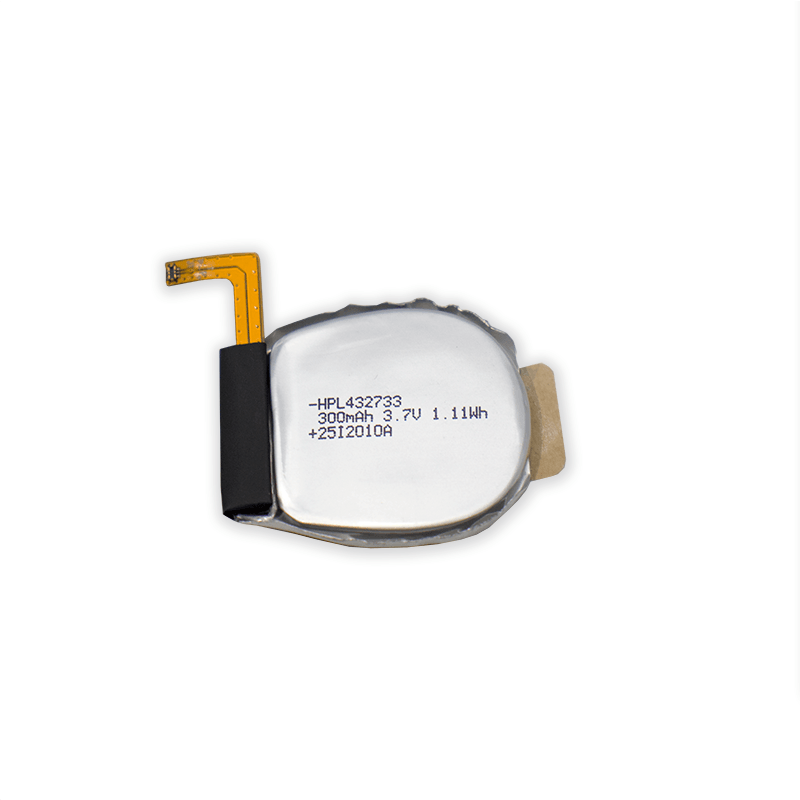
The compact HPL432733 3.7V 300mAh polymer battery, ideal for space-constrained portable medical or consumer electronics.
A Practical Evaluation Framework for Procurement Teams
Use this checklist during your supplier audit and RFQ process:
Selecting the right Battery Assembling Factory is a strategic investment. By prioritizing suppliers with robust certifications like those held by Hypercell, and rigorously evaluating their technical depth and operational stability, procurement professionals can secure a reliable partner. This due diligence minimizes project risk, ensures regulatory compliance, and ultimately delivers high-performance, safe Li-ion Cylindrical Battery, LiFePO4 Battery, and Customized Li-ion Battery solutions that power innovation in your products.
For further technical specifications or to discuss your custom battery project, you can contact Hypercell directly at +86 755 2376 4134, email info@hypercellbattery.com, or visit their website at www.hypercellbattery.com.