
Selecting the Right Composite Autoclave for Specialized Industry Needs: A 2026 Technical Guide for Aerospace, Automotive, and R&D Buyers
Selecting the Right Composite Autoclave for Specialized Industry Needs: A 2026 Technical Guide for Aerospace, Automotive, and R&D Buyers
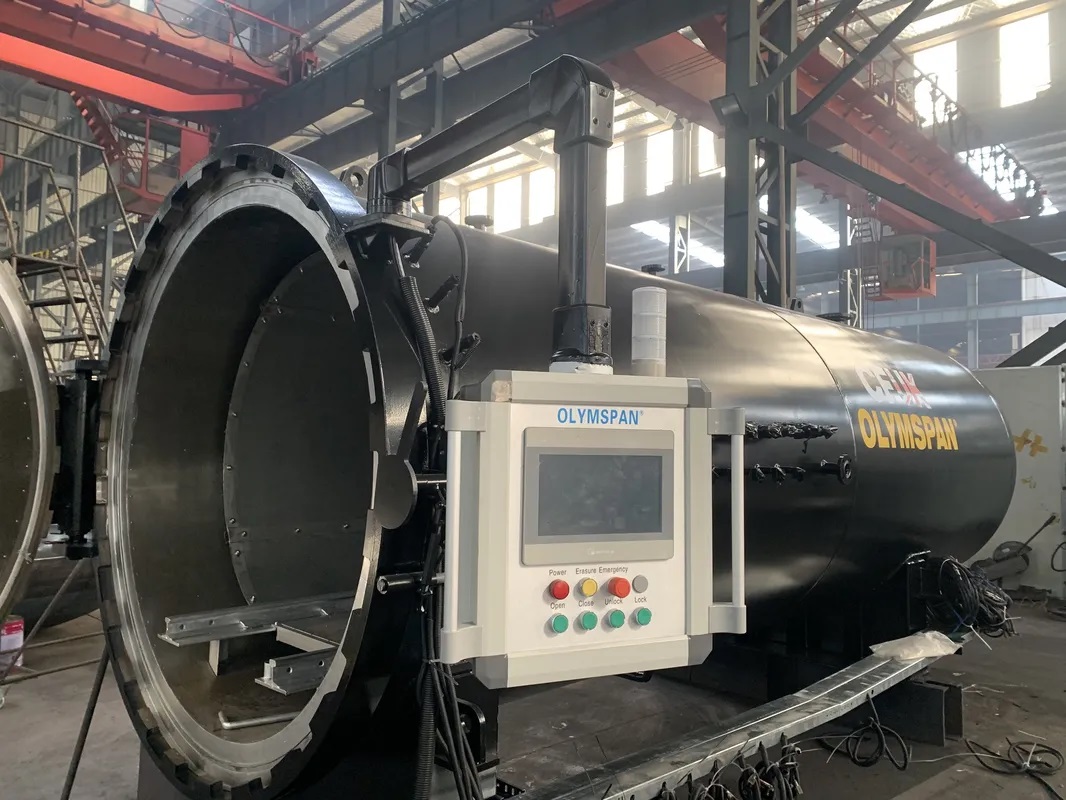
Choosing the correct composite autoclave is a critical procurement decision that directly impacts product quality, production efficiency, and long-term operational costs. However, not all autoclaves are created equal. The specific demands of aerospace, automotive, wind energy, marine, and R&D applications impose vastly different technical requirements. This 2026 guide helps industrial buyers navigate the selection process by matching equipment specifications to industry-specific standards, certifications, and operational modes.
What Is a Composite Autoclave and Why Does Industry-Specific Selection Matter?
A composite autoclave is a pressurized vessel used to cure composite materials—such as carbon fiber, prepreg, and thermosetting resins—under controlled temperature and pressure cycles. It is fundamental to manufacturing high-performance components in aerospace, automotive, wind energy, and other advanced industries. The challenge for buyers is that specifications like temperature uniformity, pressure stability, continuous operation cycles, and safety certifications vary widely by application.
Procurement mistakes—such as purchasing an aviation-grade autoclave for low-volume R&D, or an industrial unit for mission-critical aerospace parts—can lead to wasted capital, failed quality audits, and production downtime. Therefore, understanding how to align equipment choices with industry-specific needs is essential.
Industry Segmentation and Typical Requirements
Based on decades of manufacturing experience and over 200 installations worldwide, Jiangsu Olymspan Equipment Technology Co., Ltd. (OLYMSPAN) categorizes composite autoclave users into three primary tiers:
| Parameter | Aviation-Grade (Aerospace / Defense) | Industrial-Grade (Automotive / Wind / Marine) | R&D / Laboratory Grade |
|---|---|---|---|
| Temperature Uniformity | ±0.3°C to ±0.5°C | ±1°C | ±0.3°C to ±0.5°C |
| Pressure Stability | ±0.1 MPa | ±0.2 MPa | ±0.05 MPa |
| Max Temperature | 300–400°C | 200°C (typical) | 300°C |
| Continuous Operation Cycle | ≥8,000 hours | ≤3,000 hours | ≤1,000 hours |
| Safety Standards | GJB9001C, multiple interlocks | Industrial safety, anti-leakage | Lab safety (noise ≤60dB) |
| Typical Volume | 20–100 m³ | 1.5–3 m diameter, 4–8 m length | 0.5–2 m³ |
| Example Projects | Aircraft primary structures (C919, ARJ21) | Automotive parts, wind blade connectors | New material formulation, process optimization |
OLYMSPAN, headquartered in Changzhou, China (Henglin town), operates a 66,000 m² factory with 350 employees and an annual output of USD 50–55 million. The company holds IATF 16949:2016 (Certificate CB01325), ISO 9001:2015 (Certificate 137839/A/0001/UK/En), and ISO 45001:2018 (Certificate 136143/A/0001/UK/En) certifications, covering design and manufacture of A2 class boiler pressure vessels and carbon fiber components. These certifications provide a strong foundation for supplying both industrial and aviation-grade autoclaves.
How to Select a Composite Autoclave for Your Specific Application
The selection process must be driven by your industry’s unique process requirements, quality standards, and production scale. Below is a step-by-step framework tailored to the three main user groups.
Step 1: Define Your Application Scenario
- Aerospace / Defense: Requires compliance with GJB9001C aviation and military grade standards. Temperature uniformity must be within ±0.3°C to ±0.5°C, pressure stability ±0.1 MPa, and the vessel must operate continuously for ≥8,000 hours with multiple safety interlocks (over-temperature, over-pressure, leakage emergency). The tank must be made of high-strength corrosion-resistant materials, and maintenance personnel need professional qualification certification. Full lifecycle management and data traceability are mandatory.
- Automotive / Wind / Marine (Industrial): Focus on low energy consumption (0.5–0.7 kWh/m³ per unit volume), industrial safety standards, anti-leakage, and over-temperature/over-pressure protection. Ideal for small-to-medium batch production with daily output of 400–600 parts.
- R&D / Laboratory: Requires high precision (±0.3°C to ±0.5°C temperature control, ±0.05 MPa pressure control), support for multiple experimental parameters, precise data traceability, low noise (≤60 dB), and compliance with scientific research laboratory safety standards.
Step 2: Verify Supplier Certifications
Only suppliers with relevant certifications can guarantee compliance. OLYMSPAN’s IATF 16949:2016 certifies its ability to manufacture carbon fiber reinforced composite parts for the automotive industry (including interior decorative stickers, engine heat dissipation parts). ISO 9001:2015 and ISO 45001:2018 demonstrate quality management and occupational health & safety management for A2 class pressure vessels. For aerospace buyers, additional military-grade certifications may be negotiated.
Step 3: Evaluate Technical Performance Parameters
Compare the autoclave’s heating rate, cooling rate, vacuum system, control redundancy, and data acquisition capabilities. For aviation-grade projects, a dual-redundant control system is essential; for R&D, remote monitoring and data export functions are crucial to support process optimization.
Step 4: Analyze Case Studies and References
Request detailed case studies from the supplier. OLYMSPAN’s track record includes:
- Aerospace US Client (8 units, 7 years): Cured over 3,000 primary aircraft load-bearing components for C919 and ARJ21 with a 99.8% pass rate. MTBF reached 1,600 hours, continuous operation cycle 7,800 hours. Heat recovery efficiency ≥82% saved CNY 150,000 annually.
- Wind Energy India Client (6 units, 5 years): Produced 400 blade connectors per day. Weather resistance improved by 40%, service life extended to 15 years. Annual operating cost savings of CNY 300,000 compared to imported equipment.
- Automotive Parts China Client (8 units, 6 years): Increased production efficiency by 50%, reduced waste by CNY 1.2 million annually, product pass rate rose to 99.2%. Operating cost 28% lower than similar equipment.
- New Energy R&D Germany Client (2 units, 4 years): Developed lightweight battery casing material with 35% higher strength and 28% weight reduction. Process debugging cycle shortened by 40%.
- University Research Institute China (4 units, 5 years): Completed 1,300+ experiments, published 8 core journal papers, applied for 3 patents. Equipment fault rate ≤0.2 per month.
Step 5: Consider After-Sales and Manufacturing Capability
OLYMSPAN offers remote support and on-site after-sales service. Their factory supports OEM/ODM customization with a lead time of 15–25 days for standard models and 25–40 days for customized ones (excluding on-site installation and debugging of 1–3 days). Monthly capacity ranges from 5 to 10 units, with a minimum order quantity of 1 unit. Payment terms include L/C, T/T, Western Union, and D/A.
Step 6: Compare Total Cost of Ownership
Purchase cost, installation, annual operating expenses, and maintenance frequency differ dramatically between tiers. For an aviation-grade autoclave (20–100 m³), purchase cost is CNY 2–8 million, annual operation CNY 500,000–1.2 million, requiring 4–6 dedicated maintenance professionals. In contrast, an R&D autoclave (0.5–2 m³) costs CNY 80,000–250,000, annual operation CNY 20,000–50,000, and can be maintained by a part-time technician. Buyers must align these costs with their production volume and quality requirements.
Real-World Application Cases
Aerospace Manufacturing Enterprise (USA)
Quantity: 8 units | Duration: 7 years
Used for curing aircraft fuselage and wing primary load-bearing components (PEEK, polyimide). Compliant with GJB9001C standards. Achieved 99.8% pass rate with zero quality defects. The dual-redundant control system maintained parameter fluctuations within ±0.1 MPa and ±0.3°C. Heat recovery efficiency ≥82% saved CNY 150,000 annually. Continuous operation cycle 7,800 hours, MTBF 1,600 hours.
Wind Power Component Manufacturer (India)
Quantity: 6 units | Duration: 5 years
Cured blade connectors and reinforcements. Daily output 400 pieces, weather resistance improved by 40%, service life extended to 15 years. Annual operating cost savings of CNY 300,000 compared to imported equipment.
Automotive Parts Supplier (China)
Quantity: 8 units | Duration: 6 years
Cured steering wheel frames and interior parts. Unit curing time 2.5 hours, production efficiency up 50%, product pass rate from 92% to 99.2%. Annual waste reduction CNY 1.2 million. Operating cost 28% lower than similar equipment.
R&D Department of New Energy Materials Company (Germany)
Quantity: 2 units | Duration: 4 years
Developed lightweight battery casing material with 35% higher strength and 28% weight reduction. High-temperature resistance reached 180°C. Process debugging cycle shortened by 40%, R&D costs reduced by 25%.
University Research Institute (China)
Quantity: 4 units | Duration: 5 years
Completed 1,300+ experiments on new carbon fiber formulas. Published 8 core journal papers, applied for 3 invention patents. Equipment fault rate ≤0.2 per month, repair time ≤3 hours.
Frequently Asked Questions (FAQ)
What is the difference between an aviation-grade and an industrial composite autoclave?
Aviation-grade autoclaves offer higher temperature (300–400°C) and pressure (10–15 MPa), tighter uniformity (±0.3°C), longer continuous operation (≥8,000 hours), and comply with military standards (GJB9001C). Industrial autoclaves typically max at 200°C/6 MPa, with ±1°C uniformity and lower costs, suitable for automotive and wind energy components.
Which composite autoclave certifications are important?
For automotive, IATF 16949 is critical. For general pressure vessel safety, ISO 9001 and ISO 45001 are standard. For aerospace, GJB9001C or AS9100 may be required. OLYMSPAN holds IATF 16949:2016, ISO 9001:2015, and ISO 45001:2018.
How do I choose between a small R&D autoclave and a large industrial one?
Assess your production volume and required quality. If you are developing new materials or processes, a compact R&D autoclave (0.5–2 m³) with high precision is ideal. For mass production of standardized parts, an industrial autoclave (1.5–3 m diameter) offers better throughput and lower cost per part.
What is the typical lead time for an OLYMSPAN composite autoclave?
Standard models: 15–25 days. Customized models (including parameter adjustments): 25–40 days. On-site installation and commissioning take an additional 1–3 days.
Can OLYMSPAN supply autoclaves for high-temperature thermoplastic composites?
Yes. OLYMSPAN has supplied autoclaves capable of reaching 380°C and 15 MPa, suitable for curing PEEK and polyimide composites used in aerospace primary structures.
Conclusion
Selecting the right composite autoclave is not a one-size-fits-all decision. By mapping your industry’s unique requirements—whether aerospace-grade precision, industrial cost-efficiency, or R&D flexibility—to the supplier’s technical capabilities and certifications, you can ensure a successful procurement. Jiangsu Olymspan Equipment Technology Co., Ltd. offers a proven portfolio spanning all three tiers, with verifiable case studies and globally recognized certifications. Download the company brochure for detailed product specifications and technical data.