
Industrial vs. Aviation-Grade Composite Autoclaves: A 2026 Procurement Decision Guide for Buyers
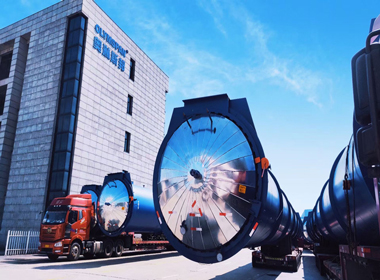
For industrial buyers seeking to procure composite autoclaves, the choice between a small-to-medium industrial machine and a high-temperature, high-pressure aviation-grade system can significantly impact production efficiency, product quality, and total cost of ownership. This guide provides a structured comparison across four key dimensions—technical parameters, application scenarios, cost, and maintenance—followed by a supplier comparison between Chinese original manufacturers and international brands, a three-step decision framework, and a real-world case study from Jiangsu Olymspan Equipment Technology Co., Ltd (Olymspan).
1. Product Comparison: Small/Medium Industrial Autoclave vs. Aviation-Grade Autoclave
1.1 Technical Parameters
- Maximum Temperature: Industrial models ≤ 200°C; aviation-grade ≤ 300–400°C (aviation-grade is 50–100% higher).
- Maximum Pressure: Industrial ≤ 6 MPa; aviation-grade 10–15 MPa (aviation-grade is 66.7–150% higher).
- Temperature Control Uniformity: Industrial ±1°C; aviation-grade ±0.3°C (aviation-grade is 70% better).
- Pressure Stability: Industrial ±0.2 MPa; aviation-grade ±0.1 MPa (aviation-grade is 50% better).
- Continuous Operation Cycle: Industrial ≤ 3,000 hours; aviation-grade ≥ 8,000 hours.
These performance advantages make aviation-grade autoclaves indispensable for high-end aerospace and military applications, while industrial models meet the requirements of automotive, new energy, and civil composite production.
1.2 Application Scenarios
Small and medium-sized industrial autoclaves are designed for mass production in small-to-medium enterprises, curing daily batches exceeding 500 products such as automotive parts and new energy battery casings. They emphasize modular design and adaptability for conventional composite materials. In contrast, aviation-grade autoclaves are used for manufacturing primary load‑bearing components in aerospace and defense (e.g., fuselage, wings, engine nacelles), curing advanced high‑temperature composites like PEEK and polyimide, and complying with standards such as GJB9001C.
1.3 Cost Comparison
- Purchase Cost: Industrial 300,000–800,000 CNY; aviation-grade 2–8 million CNY (6.7–10 times higher).
- Installation Cost: Industrial 50,000–120,000 CNY; aviation-grade 300,000–800,000 CNY (6–6.7 times higher).
- Annual Operating Cost: Industrial 80,000–180,000 CNY; aviation-grade 500,000–1.2 million CNY (6.25–6.7 times higher).
The total cost of ownership for aviation-grade machines is substantially higher, which must be justified by the required product quality and certification.
1.4 Maintenance Difficulty
Industrial autoclaves require monthly minor maintenance and comprehensive maintenance every six months, with 2–3 full-time technicians. Aviation-grade systems demand minor maintenance every two weeks and comprehensive maintenance every three months, requiring 4–6 specially certified personnel. The failure rate for industrial models is 0.8–1.2 times per month, while aviation-grade models have a lower rate (≤ 0.2 times), but fault repair is more complex and often needs manufacturer support.
2. Supplier Comparison: Chinese OEM vs. International Brands
Chinese Original Manufacturer (e.g., Olymspan) vs. European/American Brands (e.g., ASC Process Systems, Scholz)
- Price: Chinese OEMs typically offer 30–50% lower purchase costs for comparable specifications, due to lower labor and supply chain costs. International brands command a premium for their established reputation and localized support.
- Customization: Chinese manufacturers like Olymspan provide flexible OEM/ODM services, allowing adjustments in tank volume, temperature control accuracy, pressure range, data acquisition points, remote monitoring, and tank materials. International brands often offer limited customization for standard models.
- Delivery Lead Time: Olymspan’s standard models ship in 15–25 days; customized versions take 25–40 days (excluding on-site installation of 1–3 days). International brands generally require 8–16 weeks for comparable customized systems.
- After-Sales Network: International brands maintain service centers in major global markets, while Chinese OEMs primarily offer remote support and can dispatch technicians internationally. Olymspan, with 30–40% export ratio and a global client base, provides on-site after-sales support through partnerships.
For buyers prioritizing cost efficiency, flexibility, and rapid delivery, Chinese OEMs present a strong value proposition. For projects requiring a long-established local service network and strict compliance with Western standards, international brands may be preferred.
3. Three-Step Decision Model for Composite Autoclave Procurement
Step 1: Define Application Scenario
Identify the intended use: R&D (experimental), industrial mass production, or aerospace/defense. This determines the required temperature, pressure, precision, and certification level.
Step 2: Match Technical Parameters
Map the required maximum temperature, pressure, uniformity, and continuous operation cycle against the equipment specifications. For example, aviation applications demand ±0.3°C uniformity and ≥8,000 hr continuous operation; industrial applications accept ±1°C and 3,000 hr.
Step 3: Calculate Total Cost of Ownership
Include purchase price, installation, annual energy consumption (industrial 0.5–0.7 kWh/m³ vs. aviation-grade 0.7–0.9 kWh/m³), maintenance labor, spare parts, and downtime costs. Olymspan’s energy-efficient industrial autoclaves, for instance, consume 0.5–0.7 kWh/m³ and save 25–30% on electricity compared to equivalent experimental models over 8,000 hours of annual operation.
4. Case Study: Automotive Parts Supplier Chooses Olymspan for Cost-Effective Production
A Chinese small-to-medium composite material manufacturer supplying steering wheel frames and interior parts to automotive OEMs evaluated both local and international autoclave suppliers. The company needed to cure 600 parts per day with uniform strength at a competitive cost.
After comparison, the buyer selected Olymspan’s small/medium industrial autoclave (8 units) based on:
- Customization: Olymspan adapted the control system to fit the factory’s existing automation, adding a visual interface for easy operation.
- Cost: The total investment was 40% lower than that of a leading European brand.
- Delivery: Standard units shipped in 20 days, with installation completed within 3 days.
Results over 6 years: The equipment runs stably with a single curing cycle of 2.5 hours, increasing production efficiency by 50%. Product yield rose from 92% to 99.2%, reducing waste by 1.2 million CNY annually. The modular design allows quick switching between different part specifications. Annual operating cost is only 120,000 CNY, 28% less than comparable imported machines. The return on investment reached 150%.
This case demonstrates how a Chinese OEM like Olymspan can deliver cost-effective, customizable, and rapidly deployable composite autoclave solutions for industrial buyers.