
Procurement Risk Mitigation: A Buyer's Guide to Composite Autoclave Supplier Selection
Procurement Risk Mitigation: A Buyer's Guide to Composite Autoclave Supplier Selection
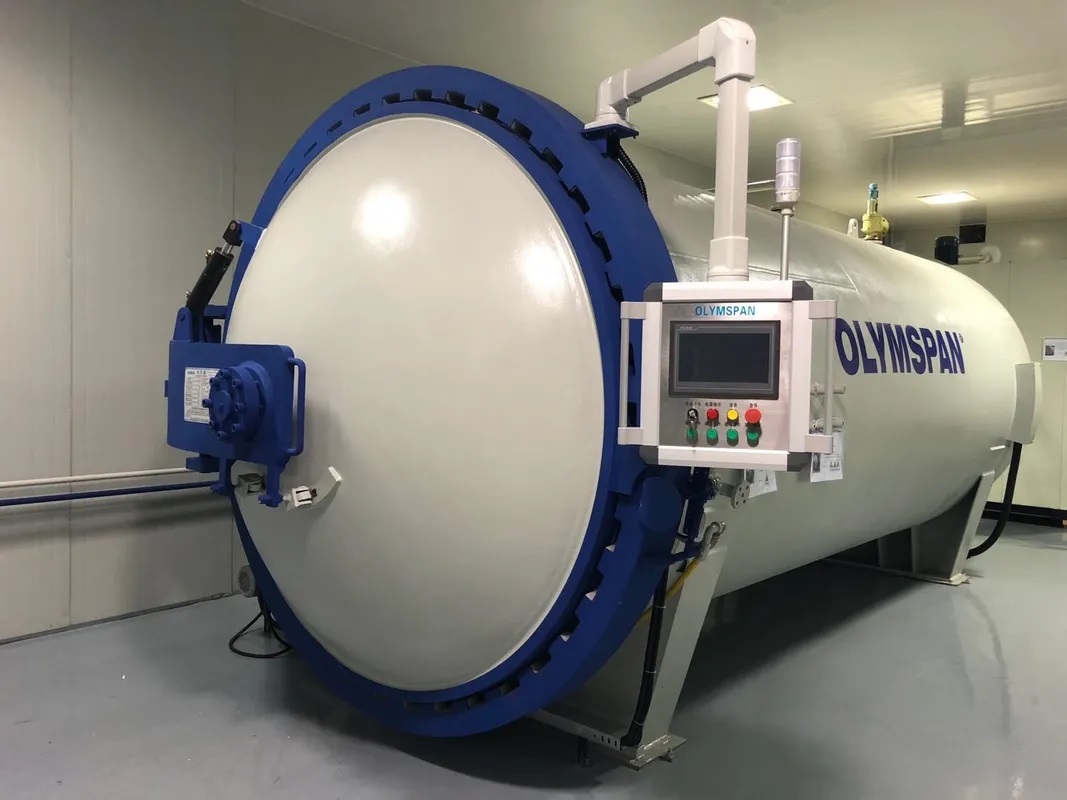
Investing in a Composite Autoclave is a major capital decision for manufacturers in aerospace, automotive, wind energy, and advanced composites. But procurement without a structured risk framework can lead to equipment that fails to meet process requirements, delayed deliveries, hidden lifecycle costs, or even safety hazards. This guide provides a systematic approach to selecting a reliable composite autoclave supplier—minimizing procurement risks while maximizing long-term value.
1. Understanding Procurement Risks in Composite Autoclave Purchasing
What is procurement risk in the context of composite autoclave buying? It encompasses any factor that could cause the equipment to fail in meeting performance, quality, safety, or cost expectations. Common risks include:
- Technical Mismatch: Autoclave diameter, length, temperature/pressure range, or control precision not aligned with your composite materials (e.g., prepregs, carbon fiber, PEEK).
- Certification Gaps: Missing or invalid ASME, CE, ISO, IATF certifications leading to compliance issues in your target market.
- Supplier Instability: Small manufacturers with limited production capacity, poor financial health, or weak after-sales service.
- Delivery Delays: Unrealistic lead times or lack of project management capability.
- Hidden Operating Costs: Energy inefficiency, high maintenance frequency, and expensive spare parts.
2. Industry Background: Why Risk Mitigation Matters More in 2026
The global composite autoclave market is expanding rapidly, driven by demand for lightweight structures in electric vehicles, large wind turbine blades, and next-generation aircraft. According to industry reports, Asia-Pacific—especially China—has become a major manufacturing hub. However, not all suppliers are equal. Established manufacturers like Jiangsu Olymspan Equipment Technology Co., Ltd (brand: Olymspan) have built reputations over decades. Olymspan, founded in 2004, operates a 66,000 m² facility with 350 employees and an annual output of $50–55 million. With export ratios of 30–40% to markets including North America, Europe, and Southeast Asia, they demonstrate global compliance capability.
Selecting a supplier without verifying its track record, certifications, and risk controls is the fastest path to procurement failure.
3. Detailed Solution: A Step-by-Step Risk Mitigation Framework
To minimize risks, follow this five-step decision framework:
Step 1 – Define Your Technical Requirements Precisely
Document the exact specifications: working temperature (e.g., 150°C for automotive, up to 400°C for aerospace), working pressure (1.3 MPa standard, up to 15 MPa for high-end), diameter, effective length, control system (PLC, CPC), and vacuum capability. This avoids the risk of receiving an underspecced autoclave.
Step 2 – Audit Supplier Certifications and Quality Systems
Request valid certificates. Olymspan holds IATF 16949:2016 (cert. CB01325), ISO 9001:2015 (cert. 137839/A/0001/UK/En), and ISO 45001:2018 (cert. 136143/A/0001/UK/En). These cover quality management, occupational health, and automotive-specific standards. For aerospace applications, verify compliance with ASME, CE, or GJB9001C.
Step 3 – Evaluate Manufacturing Capability and Lead Time
Assess the supplier’s factory scale, R&D team (Olymspan: 25 engineers), and monthly output (up to 30 sets per month). Ask about customization options: tank volume, material (Q345R, carbon steel), temperature accuracy, and remote monitoring integration. A typical lead time for standard models is 45–90 days; verify against your project schedule.
Step 4 – Demand a Pre-Shipment Test and Acceptance Procedure
Every reputable supplier should offer a pre-shipment test. Olymspan’s quality control includes pressure sealing testing, temperature uniformity verification, electrical safety testing, and data acquisition accuracy calibration. This is your last chance to catch defects before shipping.
Step 5 – Structure Commercial Terms to Protect Your Interests
The minimum order quantity is 1 unit. Accepted payment methods include L/C, T/T, Western Union, and D/A. Delivery arrangements use personalized pricing. Ensure these are clearly stated in the contract, along with warranty (e.g., 14 months), after-sales support (remote/on-site), and penalties for late delivery.
4. Real-World Case Studies: How Risk Mitigation Delivers Results
Case 1: Aerospace Primary Load-Bearing Components (USA)
A US aerospace manufacturer purchased 8 Olymspan aviation-grade autoclaves. Over 7 years, they produced 3,000+ components for C919 and ARJ21 with a 99.8% yield. The equipment’s dual-redundant control system kept parameter fluctuations within ±0.1 MPa and ±0.3°C. Heat recovery efficiency ≥82% saved $150,000 annually. Risk controls included multiple pressure/temperature interlocks and professional certification of maintenance personnel.
Case 2: Wind Turbine Component Manufacturer (India)
An Indian wind energy firm deployed 6 medium-sized autoclaves. The equipment adapted to high humidity and temperatures, achieving 400 parts/day with 40% improved weather resistance. Operating costs were 30% lower than imported alternatives, and failure rates remained below 10 per year.
Case 3: Automotive Parts Supplier (China)
A Chinese automotive parts supplier used 8 units for steering wheel frames and interior parts. Curing time dropped to 2.5 hours per batch, yield increased from 92% to 99.2%, and annual waste savings reached $1.2 million. Modular design allowed quick product changeovers.
Case 4: R&D for New Energy Battery Casings (Germany)
A German new-energy company used 2 experimental autoclaves for battery casing R&D. The high-precision sensors (±0.1°C) enabled a 35% strength increase and 28% weight reduction. The R&D cycle shortened by 40%, with annual production value increase of €8 million.
These cases show that risk mitigation through proper supplier selection directly translates to higher yields, lower costs, and faster time-to-market.
5. Frequently Asked Questions
Q: What is a composite autoclave and how does it work?
A composite autoclave is a pressure vessel that applies controlled heat and pressure to cure composite materials (e.g., carbon fiber prepregs). It removes voids, consolidates layers, and achieves the required mechanical properties through a precisely defined temperature/pressure cycle.
Q: Why is certification important when buying a composite autoclave?
Certifications like ASME, CE, IATF, and ISO guarantee that the design, manufacturing, and testing follow recognized safety and quality standards. They also facilitate equipment registration and insurance in your country.
Q: How do I choose between an experimental, industrial, or aviation-grade autoclave?
Experimental autoclaves (0.5–2 m³) are for R&D; small-medium industrial (1.5–3 m diameter) for production up to 500 parts/day; aviation-grade (up to 100 m³, 400°C, 15 MPa) for aerospace primary structures. Match the grade to your production volume, material type, and accuracy needs.
Q: What payment and delivery terms are typical?
Minimum order is 1 unit. Common payment methods: L/C, T/T, Western Union, D/A. Delivery is arranged based on personalized pricing. Pre-shipment testing is included for acceptance.
Q: How can I verify a supplier’s after-sales capability?
Ask about remote support availability, on-site service response time, spare parts inventory, and whether they provide full lifecycle management. For example, Olymspan offers remote support and on-site after-sales assistance.
6. Conclusion
Procuring a composite autoclave is not just about comparing price lists—it’s about systematically managing technical, commercial, and operational risks. By following the five-step framework—defining requirements, auditing certifications, evaluating manufacturing capabilities, insisting on pre-shipment testing, and setting clear commercial terms—you can make a confident investment.
Suppliers like Olymspan (Jiangsu Olymspan Equipment Technology Co., Ltd) exemplify a low-risk choice: 20+ years of experience, multiple international certifications, a 66,000 m² factory, 350 skilled employees, and proven case studies across aerospace, automotive, wind, and R&D sectors. Always request a detailed technical proposal, reference past projects, and verify certification validity before committing.
📥 Download our company brochure for complete product specifications and quality certifications:
Download Olymspan Brochure (PDF)Address: Henglin Town, Changzhou City, Jiangsu Province, China
Phone: 86-18626059074 | Email: Wei.xia@olymspan.com | WhatsApp: +8613861176509