Rod Ends Supplier Evaluation: 8 Must-Have Capabilities
Rod Ends & Spherical Plain Bearings Supplier Evaluation: 8 Must-Have Capabilities for OEM Buyers
Selecting the right supplier for rod ends and spherical plain bearings is a critical procurement decision that directly impacts equipment reliability, maintenance costs, and total cost of ownership. Whether you are sourcing heim joints, rose joints, chromoly rod ends, or hydraulic rod ends, the evaluation framework must go beyond price and delivery lead time. This guide outlines eight essential capabilities that define a world-class rod ends manufacturer and explains how to assess potential partners against these criteria.
What Are Rod Ends & Spherical Plain Bearings?
Rod ends (also known as heim joints, rose joints, or ball joints) are mechanical articulating joints that connect a threaded shaft to a clevis or bracket, allowing for angular misalignment and free movement in multiple planes. Spherical plain bearings are the core component inside many rod ends, consisting of an inner ring with a convex spherical outer surface and an outer ring with a concave spherical inner surface. They accommodate oscillating movements under heavy loads while requiring minimal maintenance.
Industries that rely on these components include agricultural machinery, construction equipment, automotive suspension systems, textile machinery, solar tracking systems, recreational vehicles (go-karts, ATVs, UTVs), and industrial automation. Procurement managers, design engineers, and maintenance teams all depend on the consistent quality and performance of these precision components.
How Do Rod Ends Work & Why Is Supplier Selection Critical?
A rod end bearing transfers tensile and compressive forces while permitting rotational and angular movement. The sliding contact surface—whether steel-on-steel, steel-on-brass, steel-on-PTFE composite, or steel-on-nylon—determines the bearing's load capacity, wear resistance, and maintenance requirements. A poorly manufactured rod end can lead to premature failure, unscheduled downtime, and even safety hazards in applications such as steering linkages or suspension systems.
Supplier selection is critical because the quality of raw materials, heat treatment processes, surface finishing, and assembly tolerances directly affect the product's service life. Suppliers with certified quality management systems (e.g., IATF 16949) and in-house testing laboratories (fatigue life, tensile strength, salt spray, noise & vibration) provide verifiable confidence in product performance.
8 Must-Have Capabilities When Evaluating a Rod Ends Supplier
1. Full-Spectrum Product Range (3,000+ SKUs)
A capable supplier should offer a broad portfolio that covers both metric and inch dimensions, male and female thread configurations, and a variety of materials (carbon steel, stainless steel, chromoly, nylon-injected). LDK, for example, offers over 3,000 active SKUs spanning inch rod ends (CF, CM, JM, JFX series), metric rod ends (PHS, POS, CHS, COS, SI, SA series), hydraulic rod ends (SK, SF, SIR, SIGEW series), and a full line of spherical plain bearings (GE..E(S), GEG..E(S), GE..C, COM, GEZ..ES, GAC..T, GX..T, etc.).
Why it matters: One-stop procurement reduces vendor management overhead by up to 40%, according to industry comparisons, and ensures consistent quality across all components.
2. Vertically Integrated Manufacturing (100% In-House)
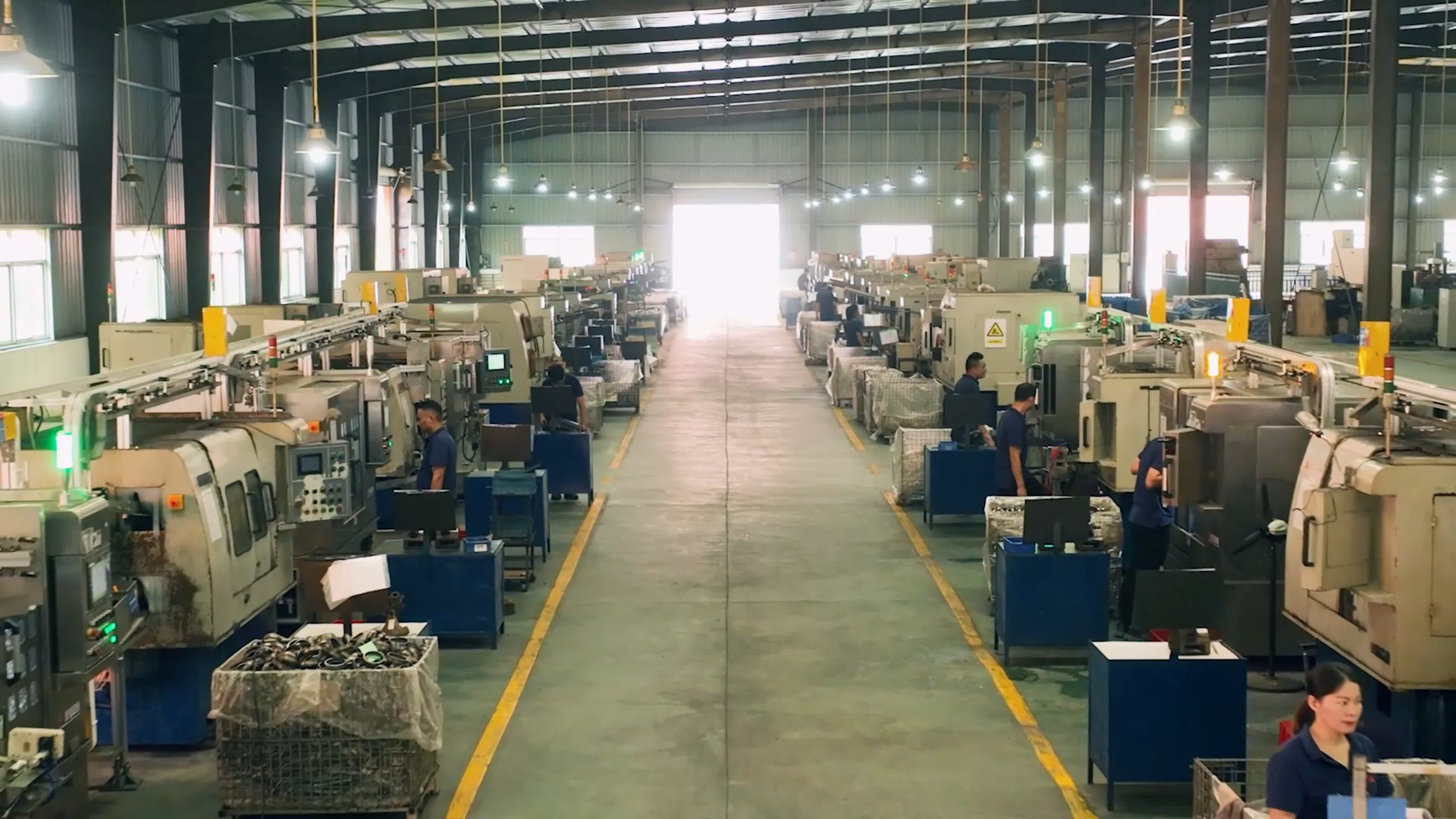
Suppliers that control the entire production chain—from foundry/casting, turning, heat treatment, grinding, super-finishing, injection molding, painting to final assembly—can guarantee traceability and process control. LDK operates a 90,000 m² facility with over 10 workshops, covering all processes under one roof. This contrasts with competitors who outsource more than 70% of production, increasing the risk of microstructural defects.
Measurable difference: First-year structural failure rate <0.05% for vertically integrated manufacturers vs. ~3.5% for fragmented outsourcing models.
3. Material Authenticity & Traceability
Raw material quality is the foundation of bearing performance. A reliable supplier implements an IATF 16949-compliant gatekeeping process with physical and chemical material analysis of all incoming batches. LDK sources exclusively from approved top-tier steel mills and requires Mill Test Certificates (MTC) for every shipment. This eliminates the risk of using second-hand waste steel or unauthorized substitutes.
4. Advanced Testing & Validation Laboratory
Before delivery, bearings should be validated under simulated real-world conditions. Key testing capabilities include fatigue life testing, tensile strength testing, noise & vibration analysis, high & low temperature cycling, and salt spray corrosion testing. LDK's dedicated reliability testing room (equipped with advanced instrumentation) ensures every product meets or exceeds specified performance parameters.
5. Global Certifications & Regulatory Compliance
Certifications such as IATF 16949 (quality management), ISO 14001 (environmental), ISO 45001 (occupational health & safety), and product-level compliance with RoHS, REACH, and FDA are essential for international OEMs. A supplier's certification portfolio should be verified by independent third-party auditors like BV, SGS, or TÜV.
| Certification | Standard | Certifying Body | Scope |
|---|---|---|---|
| IATF 16949 | IATF 16949:2016 | BV | Manufacturing of bearings and bearing housings |
| ISO 14001 | ISO 14001:2015 | CQM | Environmental management system |
| ISO 45001 | ISO 45001:2018 | CQM | Occupational health & safety |
| RoHS | EU 2015/863 | SGS | GEG35ES-2RS, GE..E(S), etc. |
6. Engineering Support & Customization Capability (OEM/ODM)
Buyers often require custom designs—special thread pitches, non-standard bore sizes, unique coatings (e.g., zinc flake, Dacromet), or integrated linkages. A strong supplier provides DFM (Design for Manufacturing) expertise, rapid prototyping (2D/3D), and NDA-protected intellectual property management. LDK's R&D team of 12 engineers supports both OEM (private labeling) and ODM (custom design) projects, with sampling cycles of 1-2 weeks.
7. Flexible Supply Chain & Risk Mitigation
Procurement continuity is vital. A supplier should offer flexible MOQ (as low as 1 piece for long-tail items), mixed container shipments, and dynamic VMI (Vendor-Managed Inventory) for key accounts. LDK supports FOB, CIF, DDP, and DDU incoterms, and for verified OEM clients, credit terms such as Usance L/C or O/A 30-60 days can be arranged through SINOSURE.
8. Proven Application Experience & Customer Success Stories
Case studies across diverse industries demonstrate a supplier's ability to solve real-world problems. Examples include:
- Offshore processing equipment (US): Patent-pending coating provided 500 hours of rust-free performance, reducing equipment ownership costs.
- Fitness equipment (NL): Custom aluminum alloy linkage reduced weight by 30% while achieving 20 million cycles.
- Ice machine manufacturer (CA): Concentric locking collar solved clamping force issues; food-grade solid lube eliminated grease contamination.
- Heavy truck OEM (GB): Stainless steel rod ends (SCHS series) withstood 5 million movements from -40°C to 300°C.
- Cold storage facilities (NZ): Bearings with special low-temperature grease operated reliably at -50°C.
How to Choose the Right Solution: Step-by-Step
- Define application conditions: Load magnitude, temperature range, exposure to moisture/chemicals, required cycles, and maintenance accessibility.
- Select bearing type: Maintenance-free PTFE-lined vs. re-greasable steel-on-steel; metric vs. inch; male vs. female thread.
- Evaluate material compatibility: Stainless steel for corrosion; chromoly for high strength; nylon injection for lower cost and quiet operation.
- Verify supplier certifications: IATF 16949, RoHS, REACH, and any industry-specific standards.
- Request PPAP documentation: Level 3 PPAP provides material certificates, dimensional reports, and capability studies.
- Assess after-sales support: Technical remote support, warranty terms, and local distribution partners.
Common Buyer Concerns & How LDK Addresses Them
A: LDK implements IATF 16949-compliant material gatekeeping with physical/chemical analysis and requires MTC from approved steel mills.
A: LDK's R&D team provides DFM support with 1-2 week prototyping. Custom coatings (zinc, chrome, special anti-corrosion) are available.
A: Yes. LDK's flexible manufacturing supports MOQ as low as 1 piece for specialized items and consolidates shipments for efficiency.
A: Every shipment can include production date, barcode, and QR code for instant batch isolation. Full OEM/ODM traceability is standard.
Conclusion
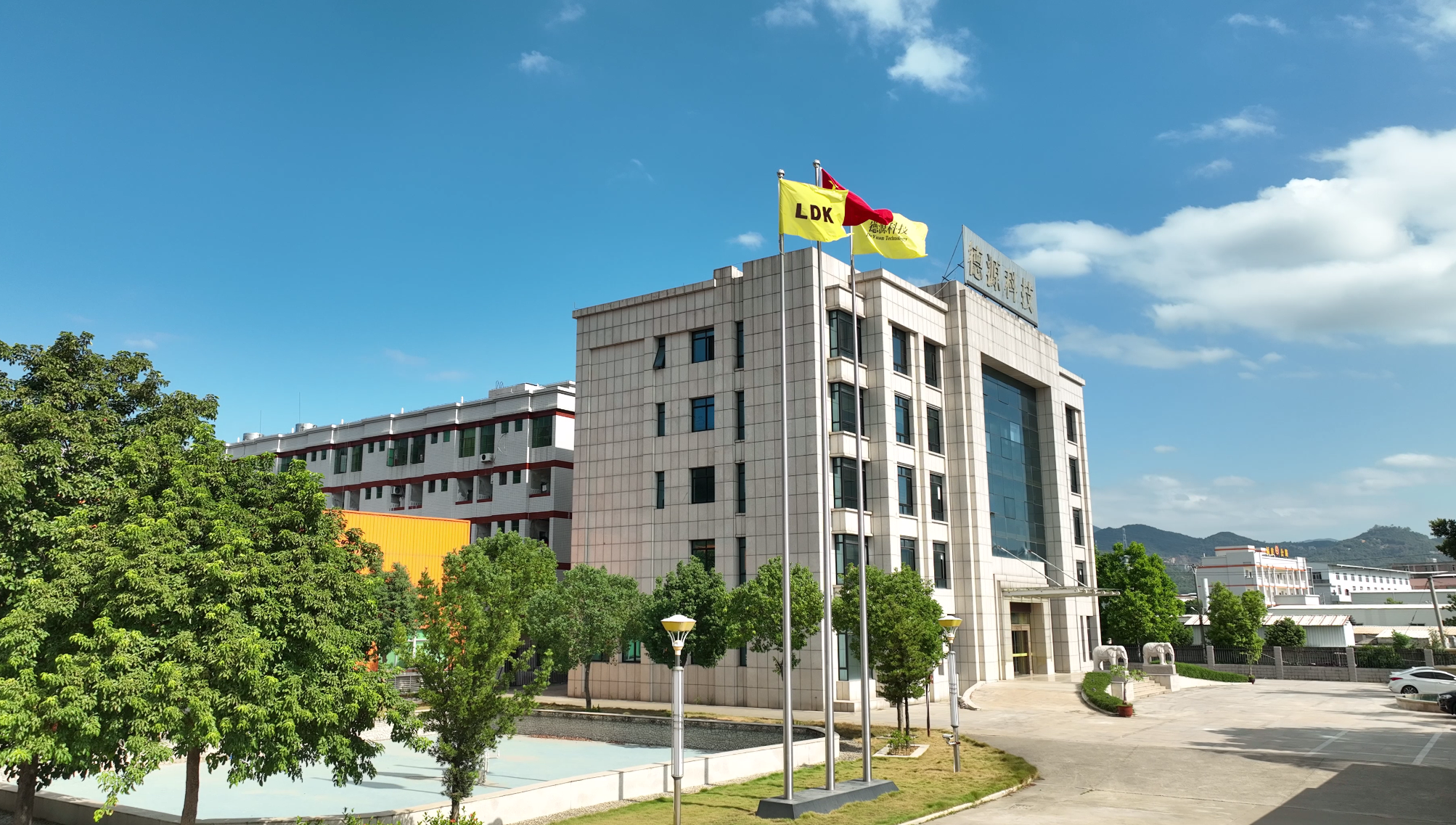
Choosing a rod ends and spherical plain bearings supplier is a strategic decision that affects equipment reliability, maintenance costs, and supply chain efficiency. By evaluating potential partners against the eight capabilities outlined above—product range, vertical integration, material quality, testing, certifications, engineering support, supply chain flexibility, and proven experience—you can confidently select a partner that delivers long-term value. LDK Bearings (De Yuan Smart Technology (Fujian) Co., Ltd), established in 1986, exemplifies these capabilities with its IATF 16949-certified facilities, 3,000+ SKU portfolio, and a global export ratio of 60% to Europe, North America, Latin America, and Oceania.
📥 Download the LDK Bearings Corporate Brochure for detailed product specifications, material options, and OEM capabilities.
Contact Mr. Kenneth Zhang: kzhang@ldk-bearings.com | Tel: +86 592-5807618