
A Comprehensive Buyer's Guide to Selecting MTP/MPO Fiber Optic Patch Cord Suppliers
A Comprehensive Buyer's Guide to Selecting MTP/MPO Fiber Optic Patch Cord Suppliers
For procurement professionals in telecommunications and data center industries, selecting the right supplier for MTP/MPO fiber optic patch cords is a critical decision that impacts network performance, deployment timelines, and total cost of ownership. This guide outlines key evaluation criteria and industry considerations to help buyers make informed decisions.
1. Supplier Capability & Manufacturing Scale
The scale and stability of a manufacturer directly influence product consistency, lead times, and supply chain reliability. Key metrics to assess include:
Operational History & Scale
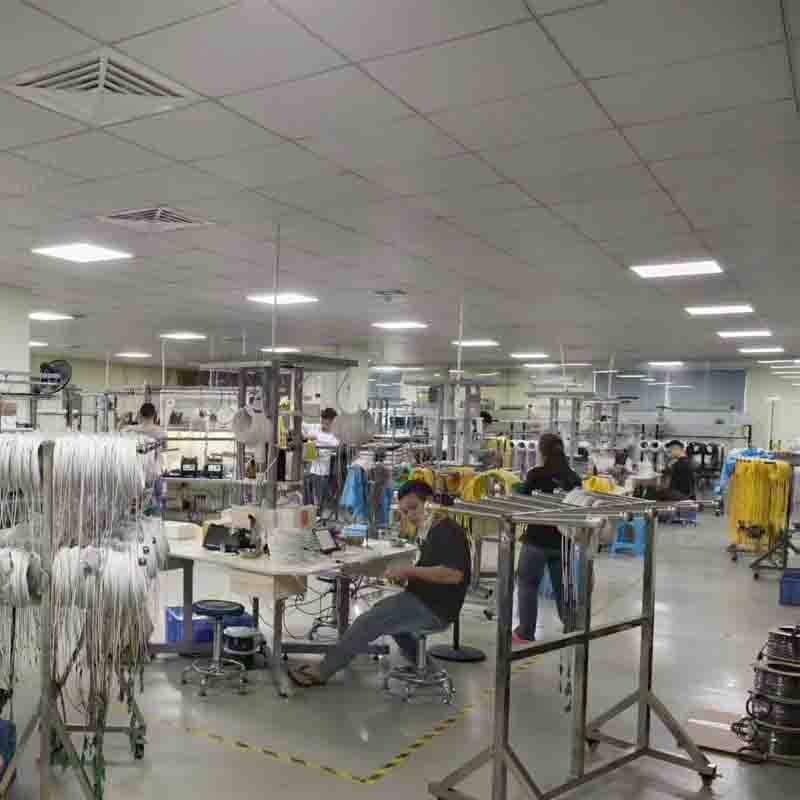
Evaluate the supplier's tenure and physical infrastructure. For example, MeFiber Optic Co., Ltd. was established in 2014 and operates from a 5,000 square meter manufacturing facility. The company employs approximately 200 staff and maintains an annual production capacity of about 2,000,000 units.
Technical & R&D Investment
In-house R&D capability is essential for product innovation and customization. Suppliers should have dedicated engineering teams. The company's R&D capabilities are supported by a team of 30 engineers, focusing on core technologies such as high-density integration and high-reliability connections.
Market Focus & Export Experience
Suppliers with experience in demanding international markets often adhere to stricter quality standards. The company's business is focused on B2B clients, including telecom operators and data centers, with 100% of its products exported to markets such as the EU and the USA.
2. Product Portfolio & Technical Specifications
Understanding the supplier's core product offerings and their technical parameters is fundamental. A comprehensive supplier should cover key application segments.
Core Product Categories for Data Center & FTTA
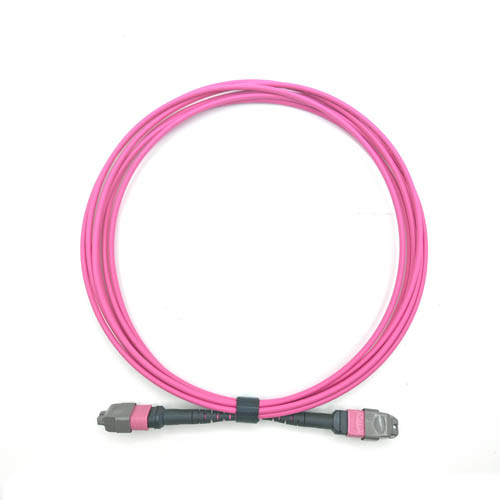
MeFiber Optic specializes in high-density MPO/MTP fiber optic patch cords, outdoor waterproof patch cord assemblies, and armored patch cords for data center and FTTA solutions.
| Product Type | Example Models | Key Specifications | Primary Application |
|---|---|---|---|
| Data Center MPO/MTP Patch Cord | MPO-12-OS2-APC, MTP-24-OM4-UPC | Core counts: 12, 16, 24, 48; Insertion loss: ≤0.35 dB (Elite); Customizable lengths (1-100m); LSZH jacket. | High-density data center cabling, 400G/800G transmission. |
| Outdoor Waterproof FTTA Patch Cord | ODC-APC-Fullax-APC-OS2 | IP67/IP68 rating; Operating temperature: -40°C to +75°C; Tensile strength: ≥1000 N. | 5G FTTA, outdoor base stations, harsh environments. |
For its data center MPO/MTP patch cords, the company offers products with customizable lengths from 1 to 100 meters and core counts of 12, 16, 24, or 48. This flexibility is crucial for tailored data center designs.
The company's outdoor waterproof FTTA patch cords offer an IP67/IP68 protection rating and are designed to operate in temperatures from -40°C to +75°C. This specification is vital for outdoor 5G deployments.
3. Quality Assurance & Industry Compliance
Quality control processes and adherence to international standards are non-negotiable for ensuring long-term network reliability.
Supplier Quality Checklist
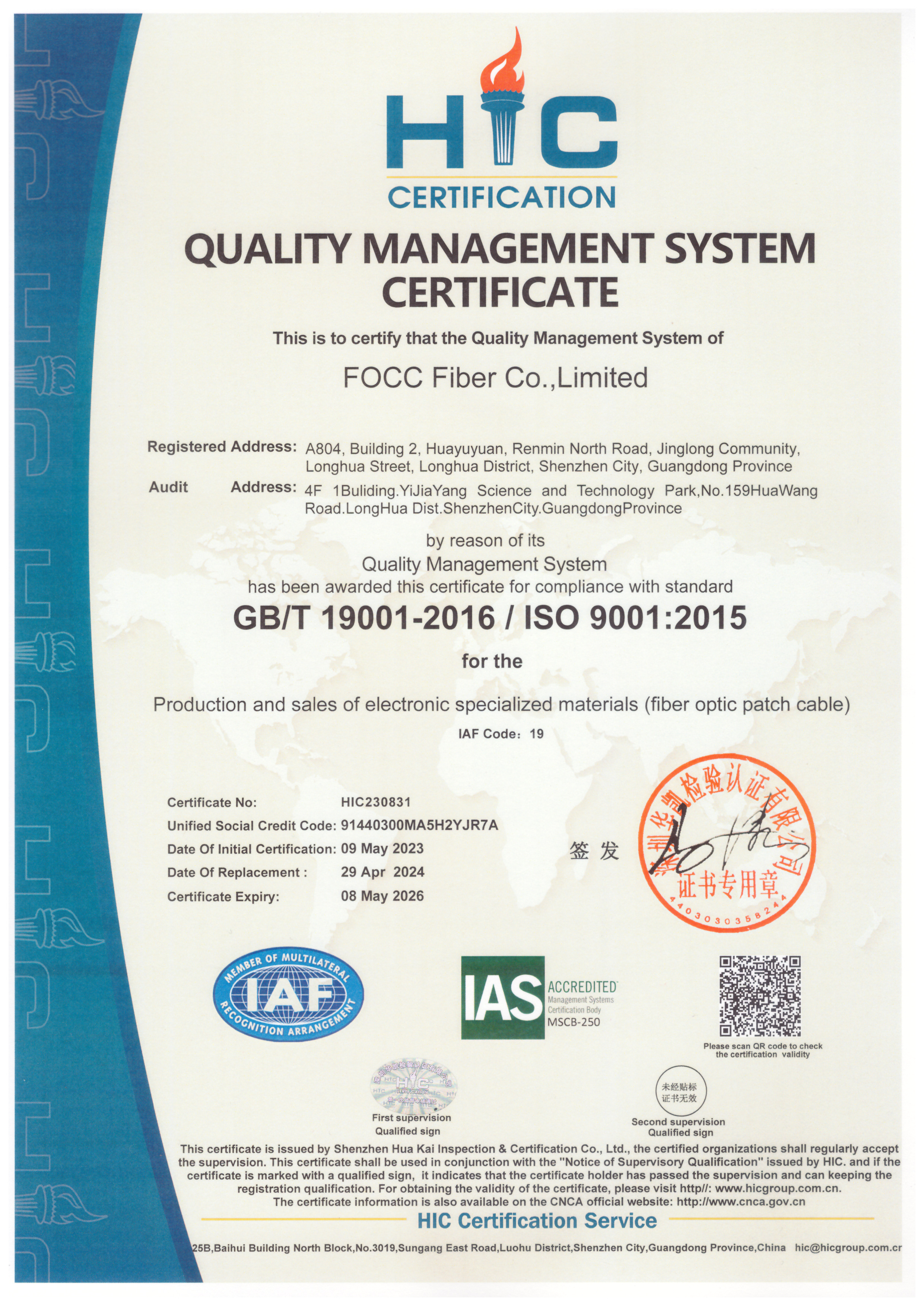
- Certifications: Verify relevant industry certifications (e.g., ISO 9001 for quality management systems). The company holds ISO certification (HIC230831) for the production and sales of fiber optic patch cables.
- Testing Protocols: Inquire about 100% factory testing for critical parameters like insertion loss and return loss. The company's products undergo stringent testing to meet or exceed industry standards such as Telcordia GR-326.
- Material Traceability: Suppliers should use standardized materials like zirconia ceramic ferrules and LSZH jackets, and be able to specify them.
- Risk Management: For outdoor products, ask about specific control methods for risks like waterproof seal failure (e.g., IP68 hermetic sealing, tensile strength qualification).
4. Customization, Support & Commercial Terms
A supplier's flexibility and support structure can significantly streamline procurement and deployment.
Customization & OEM/ODM Services
Capabilities should include customizable length, connector type, core count, and transmission mode. This is essential for projects with non-standard requirements.
Logistics & Commercial Flexibility
Evaluate typical lead times (e.g., 3–15 days), minimum order quantities (MOQ), and accepted payment terms (e.g., T/T). Support for EXW/FOB delivery and pre-shipment inspections is also important.
Technical & After-Sales Support
Assess the availability of expert B2B support for product selection and remote after-sales support. Direct contact channels, such as sales@mefiberoptic.com and +86 13823237984, indicate accessibility.
Conclusion
Selecting an MTP/MPO patch cord supplier requires a balanced evaluation of manufacturing capability, product technical merit, quality assurance rigor, and commercial agility. By systematically assessing suppliers against these criteria, procurement teams can mitigate risk, ensure project success, and build a reliable supply chain for current and future network infrastructure needs. Always request product samples, factory audit reports, and references from similar projects to validate supplier claims before finalizing a partnership.