
SMT Turnkey Solution Parameters Decoded: Process Control & PCBA Quality
SMT Turnkey Solution Parameters Decoded: The Critical Link Between Process Control and PCBA Quality
For procurement managers and production engineers in high-mix electronics manufacturing, evaluating an SMT turnkey solution often begins with a spreadsheet of technical specifications—placement speed, accuracy, inspection resolution, cycle time. Yet the true determinant of PCBA quality and yield is not any single number, but how those parameters interact with the manufacturing process. This article decodes the real meaning behind SMT machine specs and explains why production process control is the missing piece in achieving consistent, high-yield output.
Understanding the Core Problem
When buyers compare SMT turnkey solutions, they frequently ask: What is the CPH (components per hour)? What is the placement accuracy? What is the SPI/AOI resolution? These are valid questions, but they can be misleading. A high-speed pick-and-place machine running at 100,000 CPH will not deliver its rated yield if the upstream solder paste printer introduces inconsistent deposits, or if the reflow oven profile is not optimized for the specific PCB assembly. The core problem is a disconnect between component-level specs and system-level process integration. Without understanding how each machine's parameters contribute to the overall process window, buyers risk investing in equipment that underperforms in real production.
Industry Background: The High-Mix Challenge
Modern EMS factories and OEMs face increasingly complex product mixes—rapid changeovers, varied component sizes, and demanding quality standards. In this environment, the ability to maintain low defect rates (e.g., below 50 ppm) depends not just on individual machine capabilities, but on the seamless coordination of the entire SMT line. A turnkey solution that integrates a solder paste printer, pick-and-place machines, reflow oven, SPI, AOI, X-ray inspection, and cleaning equipment, with unified process tuning, offers a clear advantage. However, the true value lies in how the provider interprets and optimizes the technical parameters to match the customer's specific product profile.
Detailed Solution: Decoding Parameters Through a Process Lens
Step 1: Understand What Each Parameter Really Means
- Pick-and-Place Machine Specifications: Placement speed (CPH), accuracy (μm), component range (from 01005 to 50×50 mm). For high-mix lines, flexibility and quick changeover are as important as raw speed. A machine like the Fuji NXT or Yamaha YSM series offers modular heads that balance speed and precision, but the real key is how the placement parameters align with the PCB design's tolerance requirements.
- SPI (Solder Paste Inspection): 3D volume measurement accuracy (e.g., ±1%) and repeatability. This parameter ensures that the solder paste deposit is within spec before components are placed. A poor SPI specification can lead to hidden defects that later cause open circuits or tombstones.
- Reflow Oven Profile: Temperature uniformity (±1°C), conveyor speed range, number of zones. The ability to maintain a precise thermal profile is critical for consistently activating fluxes and forming reliable solder joints. An oven with poor uniformity can cause cold solder or component damage.
- AOI (Automatic Optical Inspection): Inspection speed, camera resolution (e.g., 10 μm/pixel), coverage areas (missing components, polarity, solder joints). High-resolution AOI is essential for detecting fine-pitch defects, but it must be calibrated with the actual PCB layout to avoid false calls.
- X-ray Inspection: For BGA, QFN, and other hidden solder joints, detection capability for voids (e.g., detect voids >5% of joint area) and resolution (e.g., 5 μm).
Step 2: Link Parameters to Production Process
Each parameter must be evaluated in the context of the process flow. For example, a pick-and-place machine with 25 μm accuracy is sufficient for most QFPs, but for 0.3 mm pitch BGAs, 15 μm or better is required. Similarly, an SPI with 3D volume measurement is essential when using type 4 solder paste, which has a tighter particle size distribution. The reflow oven's nitrogen capability (if needed for lead-free joints with low oxygen levels) directly impacts solder joint reliability.
Step 3: Evaluate the Turnkey Integration
A true SMT turnkey solution provider, like Motek, doesn't just supply machines—they integrate them into a cohesive line with optimized parameters. With over 15 years of experience in the SMT industry, Motek listens to customer needs and provides tailored solutions that bridge the gap between raw specs and real-world process control. Their lineup includes compatible equipment such as inline SPI inspection machines, AOI automatic optical inspection, X-ray BGA inspection machines, PCB loaders/unloaders, SMT buffer conveyors, and PCBA cleaning machines, all calibrated to work together. This integration reduces process variation and boosts first-pass yield.
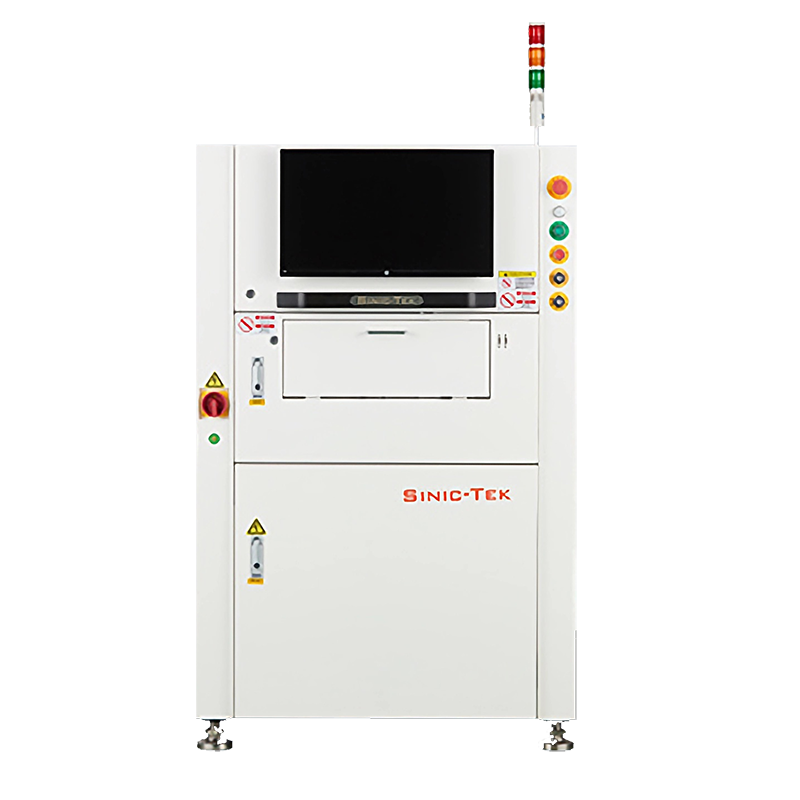
Figure: Inline SPI inspection machine – critical for capturing paste deposition variations before they become defects.
Step-by-Step Breakdown: Interpreting a Typical SMT Turnkey Line
- PCB Loading & Conveying: Buffer conveyors ensure smooth material flow. Parameter: board thickness range, speed, anti-static capability.
- Solder Paste Printing: Printer parameters – stencil alignment accuracy, print speed, pressure. Process impact: insufficient or excessive paste causes soldering defects.
- SPI (Post-Print Inspection): Measures volume, area, height, and shape. Process control: reject or rework out-of-spec boards immediately.
- Pick-and-Place: Placement parameters – feeder types, nozzle size, placement force. Process impact: component shift, tombstoning, missing parts.
- Reflow Soldering: Thermal profile – soak time, peak temperature, cooling rate. Process impact: wetting, intermetallic formation, thermal stress.
- AOI (Post-Solder Inspection): Detects visible defects – bridges, open circuits, polarity errors. Process feedback: adjust placement or reflow based on defect patterns.
- X-ray Inspection (if needed): For hidden joints (BGA, QFN). Process control: void percentage limits.
- Depaneling & Cleaning: PCB depaneling router, PCBA cleaning machine. Process impact: residual flux can cause corrosion; cleaning quality affects reliability.
Use Case: How a High-Mix EMS Factory Turned Around Yield
A European EMS factory with a high-mix, low-volume product portfolio was experiencing first-pass yields of only 92% across multiple SMT lines. The factory had mixed equipment from different vendors (Yamaha, JUKI, generic oven). After engaging Motek for a turnkey solution evaluation, the team identified that the reflow oven profile was not optimized for the mixed BGA components, and the SPI was not being used to its full 3D capability. By reconfiguring the line with a unified buffer conveyor system, calibrating the pick-and-place parameters for the YSM series machines, and implementing inline SPI with real-time feedback to the printer, the factory raised first-pass yield to 98.5% within three months and reduced rework costs by 40%. The key was not new machines, but decoupling the parameters and linking them to process adjustments.
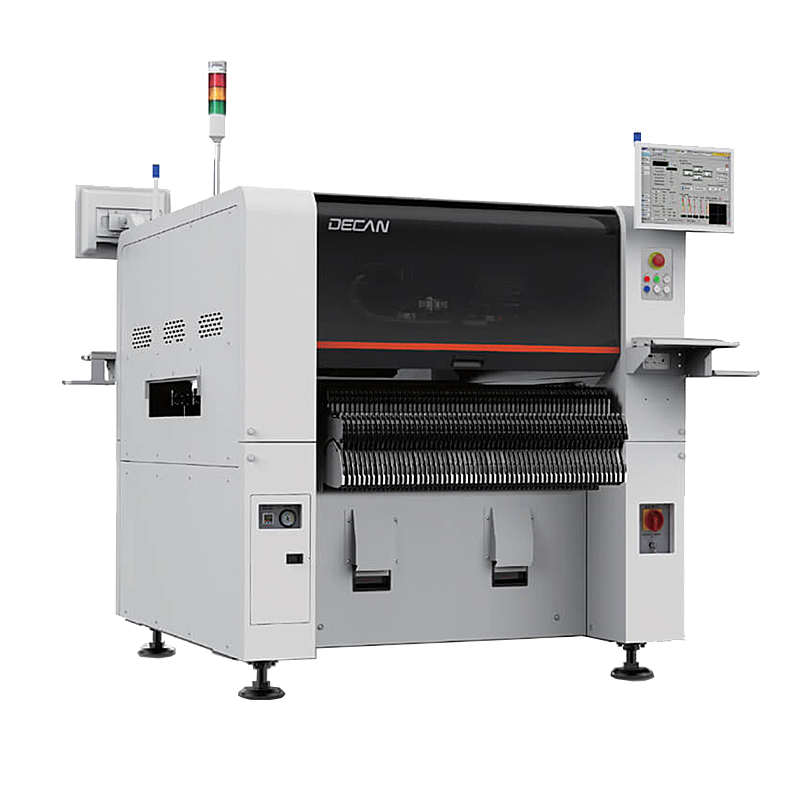
Figure: A modern pick-and-place machine used in a turnkey SMT line – speed and accuracy must be balanced with process capability.
Frequently Asked Questions (FAQ)
- What is the most important technical parameter for a turnkey SMT line?
- There is no single most important parameter; it depends on your product mix. However, the process capability index (Cpk) of the entire line is a holistic measure that reflects how well all parameters work together. Ask your provider for Cpk data on critical processes.
- How does production process affect PCBA cleaning quality?
- Residual flux from reflow can cause leakage currents and corrosion. A PCBA cleaning machine with proper chemistry and parameters (temperature, flow rate, drying time) ensures cleanliness. The turnkey solution should include cleaning validation parameters like ionic contamination test results.
- Should I choose a provider that offers Fuji NXT or Yamaha YSM series?
- Both are excellent. The choice depends on your component range and budget. A turnkey integrator like Motek can help you select the best combination and tune the parameters for your specific application. They have experience integrating both systems.
- What is the role of inline SPI vs. offline SPI?
- Inline SPI inspects every board in real time, allowing immediate feedback to the printer. This dramatically reduces defect propagation. Offline SPI only samples, so critical process shifts may be missed. For high-reliability PCBA, inline SPI is recommended.
- How do I verify that a turnkey solution provider can truly integrate processes?
- Ask for case studies, factory audit reports (e.g., ISO 9001:2015 certification), and technical documents showing parameter integration. Motek holds ISO 9001:2015 certification and has a track record of delivering optimized SMT lines.
Conclusion
Technical parameters are the language of SMT equipment, but production process control is the translator that turns those parameters into high-quality PCBA. When evaluating an SMT turnkey solution, do not stop at the spec sheet. Demand a provider that can demonstrate how each parameter contributes to the overall process capability and can offer integration services to optimize the entire line. With a partner like Motek, you gain not only equipment but also 15+ years of process expertise that ensures your investment yields consistent, high-yield production. Contact Motek today at sales@morequip.com or call +86-755-21635007 to discuss your SMT line optimization needs.
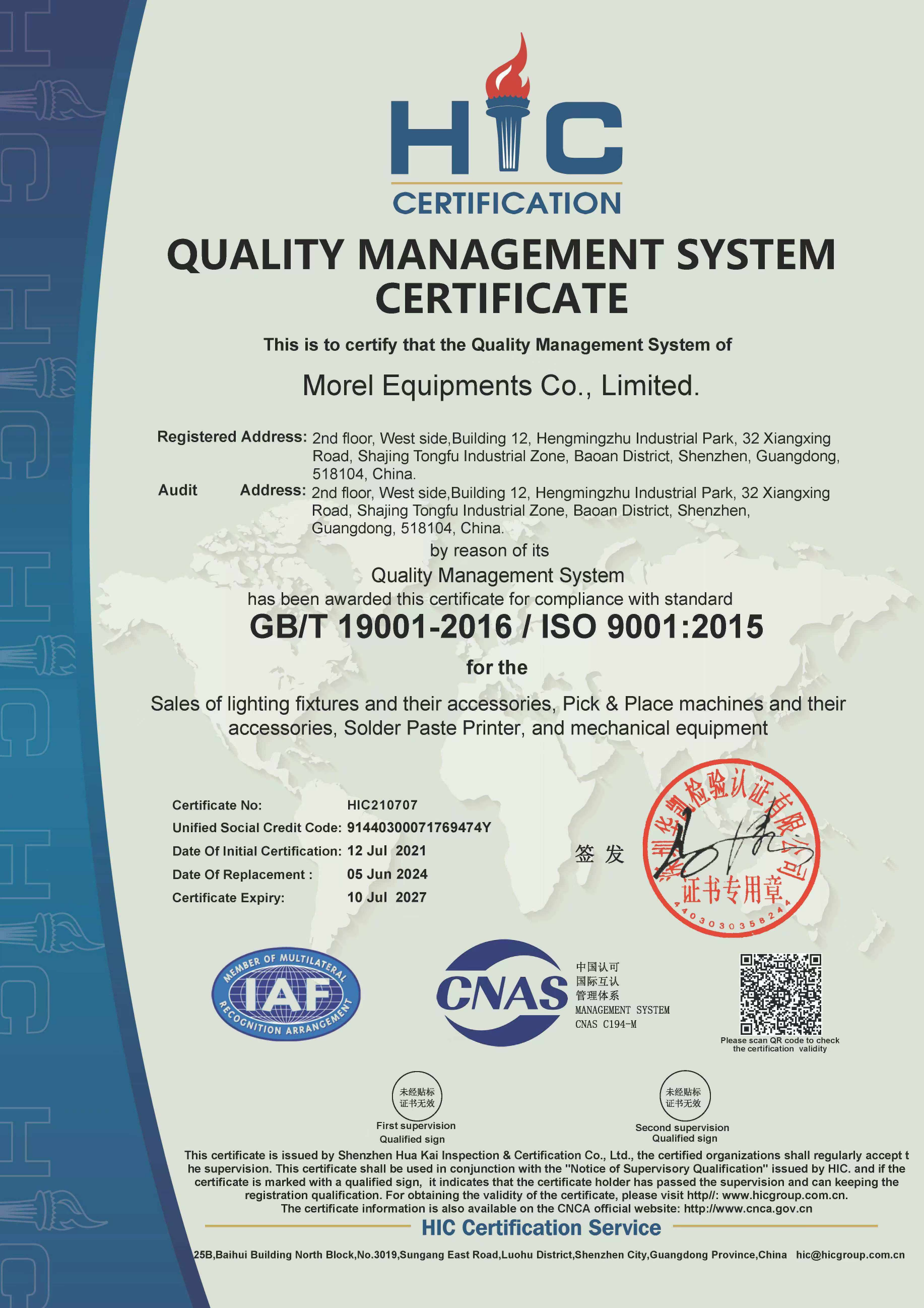
Motek holds ISO 9001:2015 certification, underpinning its process quality management.
Motek – Your Reliable SMT Turnkey Solution Partner
Address: Room 405, Building A, Zhonggang Plaza, Exhibition Bay, No. 83, Zhanjing Road, Fuhai Sub-district Office, Bao'an District, Shenzhen, China
Phone: +86-755-21635007 | WhatsApp/WeChat: +86 199 2455 0176
Email: sales@morequip.com | Web: www.morequip.com
Have Questions or Need More Details?
Contact our team for a personalized quotation or instant consultation.
Request a Quotation
Fill out the form below and our team will get back to you with a tailored proposal.
WhatsApp Direct Chat
Prefer to chat in real-time? Message us on WhatsApp for instant assistance & quick answers.
- Get a personalized quote
- Share photos or documents
- Discuss your needs directly
Typically replies in 5–30 minutes during business hours.