
High Precision Gears Comparison: Cylindrical vs. Spiral Bevel for Industrial Drives
High Precision Gears Comparison: Cylindrical vs. Spiral Bevel for Industrial Drives
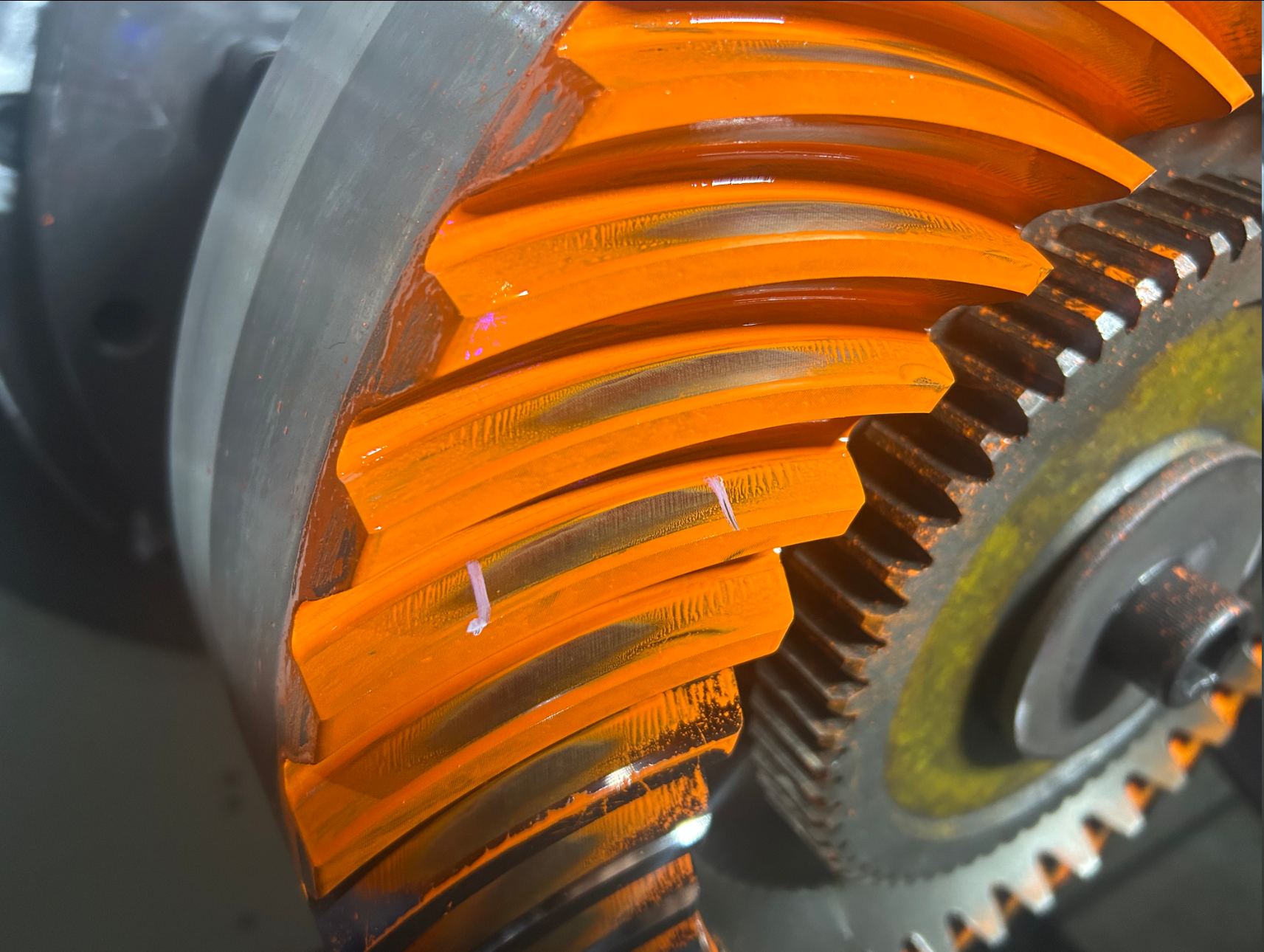
Selecting the right high precision gears for a gearbox or drivetrain is a critical decision that directly impacts cost, noise, efficiency, and maintenance. Two common families—cylindrical gears (including spur, helical, and double helical types) and spiral bevel gears—each offer distinct trade-offs. This article provides a fact-based comparison to help industrial buyers decide which gear type best suits applications in wind power, marine, locomotives, rail, machine tools, and aerospace.
The Decision Challenge
When evaluating high precision gears, buyers must weigh factors such as contact pattern, noise levels, equipment investment, and long-term maintenance. A mismatch can lead to premature failure, downtime, or budget overruns. The global gear market is estimated at USD 222.12 billion in 2025 (Mordor Intelligence), and the precision gearbox segment alone reaches USD 3.5 billion in 2025 (Grand View Research). Within this landscape, choosing between cylindrical and bevel solutions remains a frequent decision point.
Industry Context: Where Each Gear Type Excels
High precision gears are used across demanding verticals. Asia-Pacific leads the wind turbine gearbox market with a 51% share (2024); the marine gearbox market was valued at USD 6.8 billion in 2023, driven by a 15.5% surge in Chinese shipbuilding volume. For rail, the global gearbox market reached USD 4.05 billion in 2024, with high-speed rail holding 45%. Cylindrical gears—especially double helical types—are widely adopted in these sectors for parallel-shaft transmissions, while spiral bevel gears are preferred for right-angle drives.
Detailed Solution: The Cylindrical Gear Advantage
NYY (Jiangsu New Yinye Transmission Electromechanical Co., Ltd), founded in 1993 and recognized as a National "Little Giant" High-Tech Enterprise, specializes in the R&D and manufacturing of high precision cylindrical gears and spiral bevel gears. The company's High Precision Double Helical Gears demonstrate a clear performance advantage over spiral bevel gears in several key areas, supported by in-house machining and heat treatment capabilities.
Key differentiators sourced from NYY's engineering data:
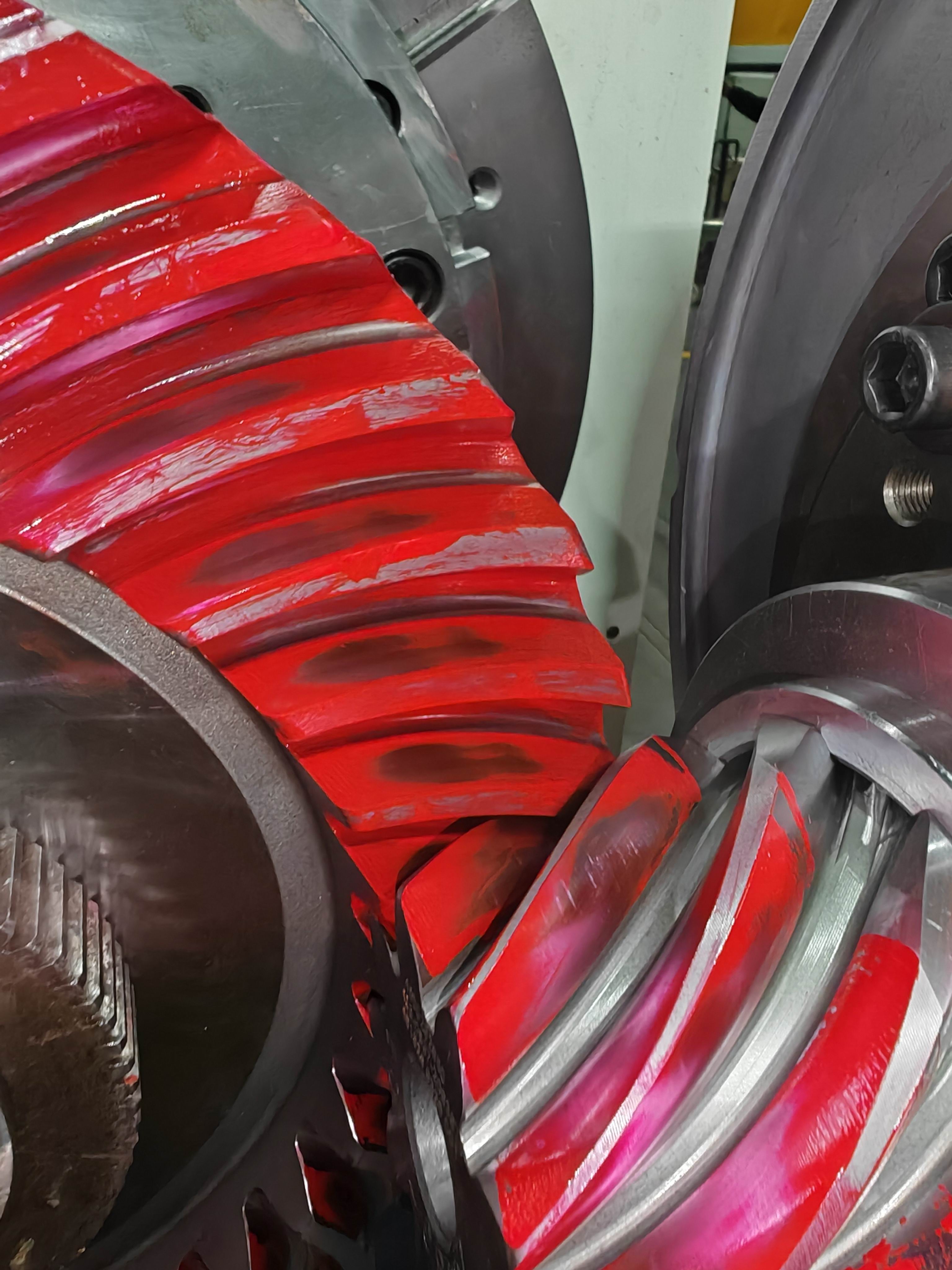
- Contact Pattern & Noise: Compared to spiral bevel gears, cylindrical (double helical) gears achieve a good contact pattern and no noise. This results from the gradual load transfer along the helix angle, reducing vibration and acoustic emissions.
- Equipment Investment Cost: The solution provides a 30% reduction in equipment investment cost over alternative bevel gear arrangements. For small batch production, costs can be reduced by an additional 20%.
- Efficiency & Maintenance: Cylindrical gears offer higher efficiency and require less maintenance, making them particularly suited for continuous-duty gearboxes in wind, marine, and industrial drives.
Step-by-Step Decision Framework
- Identify the Application: For parallel-shaft reducers or high-speed drives (e.g., wind turbine main shafts, marine propulsion), cylindrical gears are naturally suitable. For intersecting-shaft or right-angle drives, spiral bevel gears are required.
- Evaluate Noise & Contact: If low noise and consistent contact stress are critical, cylindrical double helical gears outperform bevel gears due to counteracting axial thrust and smoother meshing.
- Calculate Total Cost: Consider not only initial equipment cost (cylindrical can save 30%) but also tooling and small-batch flexibility. NYY's cylindrical gear production is optimized for batch sizes from one-off prototypes to volume.
- Verify Quality Assurance: Insist on 100% material testing (UT/MT), tooth surface burn detection, and gear accuracy inspection. NYY uses German Fraunhofer NDT systems and Klingelnberg P152 inspection centers for traceability.
- Request a Sample or Proposal: Engage suppliers with a sample request to validate fit, finish, and performance under your load conditions.
Comparison Table: Cylindrical (Double Helical) vs. Spiral Bevel Gears
| Criterion | High Precision Cylindrical (Double Helical) | Spiral Bevel Gears |
|---|---|---|
| Contact Pattern | Good contact pattern, no noise | Contact may be sensitive to alignment; noise can be higher |
| Equipment Investment Cost | 30% lower than bevel alternatives | Higher due to specialized cutting and lapping |
| Small Batch Cost | 20% reduction | Higher setup costs |
| Efficiency | Higher (no axial thrust in double helical) | Good but lower due to sliding contact |
| Maintenance | Less maintenance required | More frequent inspection of contact pattern |
| Best For | Gearbox applications (parallel shaft, high torque, low noise) | Right-angle drivelines (e.g., differentials, auxiliary drives) |
*Data sourced from NYY engineering comparisons and validated by third-party market intelligence.

Use Cases Across Industries
- Wind Power: Main gearboxes benefit from double helical gears for high torque and low vibration, reducing O&M costs over 20+ year lifetimes.
- Marine: Propulsion gearboxes require quiet operation and high reliability; cylindrical configurations meet Classification Society requirements while lowering investment.
- Rail & Locomotive: Traction drives use helical and double helical gears for high speed and power density with minimal noise.
- Machine Tools: Spindle drives demand ultra-high precision (DIN Class 4–5); cylindrical gears deliver superior surface finish (Ra 0.4) and consistency.
- Aerospace: Custom engineered high precision gear systems for actuators and auxiliary power units benefit from the weight and efficiency of cylindrical designs.
Frequently Asked Questions
1. What gear accuracy standards apply to high precision gears?
ISO 1328‑1:2013 and ANSI/AGMA 2015‑1‑A01 define accuracy grades 1–12 for cylindrical gears. NYY can achieve German standard DIN 3962/3965 Class 4 to 5, with surface roughness down to Ra 0.4. For bevel gears, Klingelnberg, Gleason, and Oerlikon systems are supported.
2. How does the contact pattern compare between cylindrical and spiral bevel gears?
NYY’s double helical cylindrical gears achieve a good contact pattern with no noise, as verified by paired testing. In contrast, spiral bevel gears often require precise lapping and alignment to avoid localized edge contact that can produce noise and reduce life.
3. What is the cost advantage of cylindrical gears over spiral bevel gears in small batch production?
For custom or small-batch (1–50 pieces) manufacturing, cylindrical gears reduce equipment investment cost by 30% and total processing cost by 20% when compared to spiral bevel gears. This advantage stems from simpler tooling and faster setup on universal gear grinding machines.
4. Do cylindrical gears require less maintenance than spiral bevel gears?
Yes. Cylindrical double helical gears have less maintenance because they generate no axial thrust (self‑balancing), reducing bearing load and wear. The consistent contact pattern also minimizes the need for periodic re‑lapping or shimming.
5. How can I request a sample, quote, or detailed catalogue for my application?
Contact NYY directly to discuss your gear specifications, load conditions, and delivery timeline. Request a sample or a quote by emailing Jane Huang at jane@wxyinye.com or calling +86 15052211619. A comprehensive company brochure is available for download: Download NYY Brochure (PDF).
Conclusion
When comparing high precision gears for industrial drives, cylindrical (especially double helical) types offer compelling advantages in contact quality, noise reduction, cost, and maintenance over spiral bevel gears for most parallel‑shaft applications. For buyers in wind, marine, rail, machine tool, and aerospace, NYY provides a proven track record with DIN Class 4–5 precision and 30% investment savings. Evaluate your drivetrain architecture and contact pattern needs, then engage a supplier with the machining matrix, heat treatment expertise, and quality assurance systems to deliver consistent performance.