
PVC vs PVDF Fabric for Luxury Hotel Tents: A Comparative Procurement Guide for Resort Developers in 2026
PVC vs PVDF Fabric for Luxury Hotel Tents: A Comparative Procurement Guide for Resort Developers in 2026
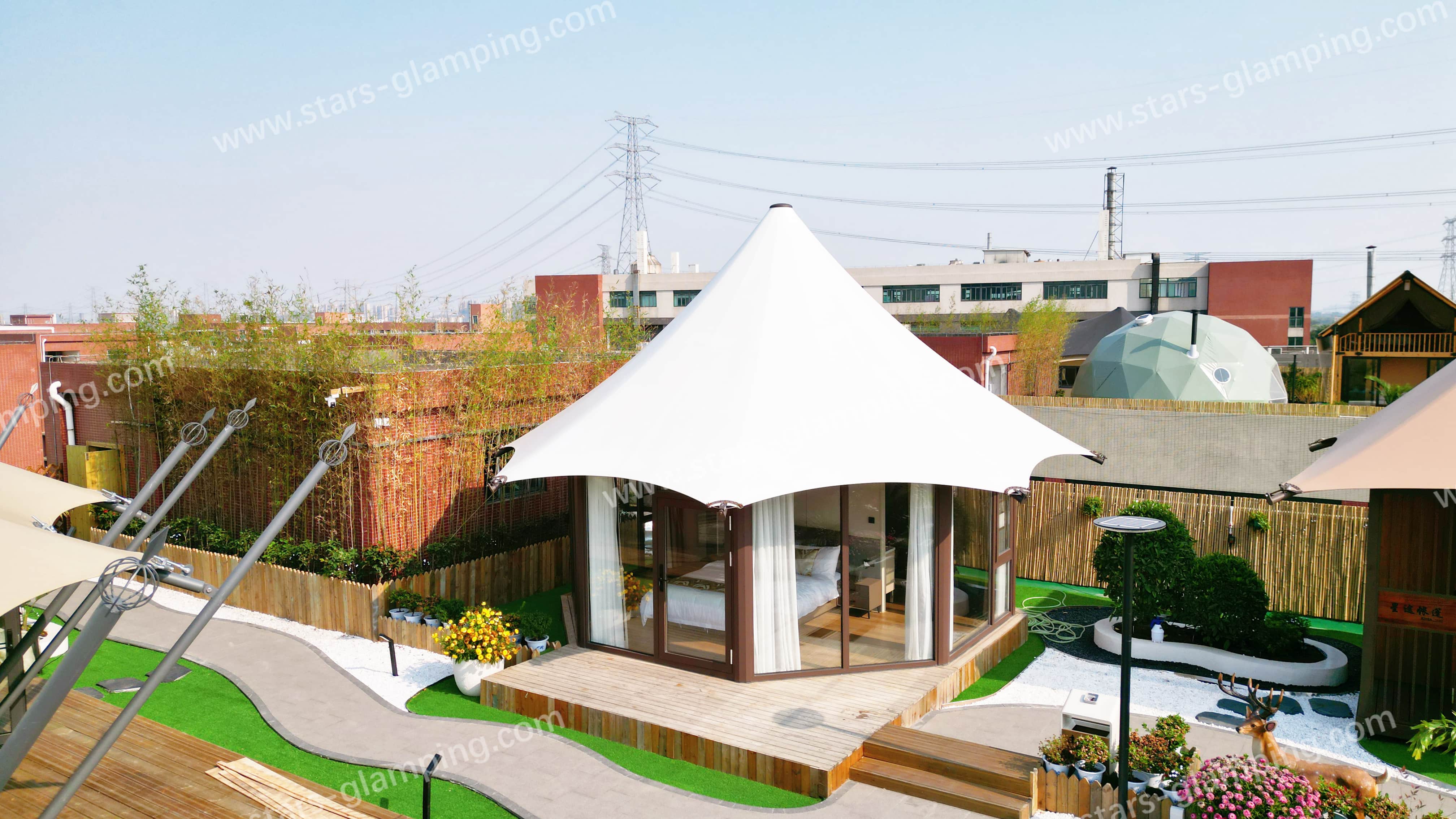
Choosing the right fabric for a luxury hotel tent is one of the most critical procurement decisions a resort developer can make. The material directly impacts durability, insulation, fire safety, aesthetics, and long-term operating costs. This guide provides an unbiased, technical comparison between the two dominant membrane materials—PVC-coated polyester fabric and PVDF architectural membrane—and a framework for selecting the optimal solution for your resort project.
What Is a Luxury Hotel Tent?
A luxury hotel tent is a semi-permanent or permanent structure designed for high-end hospitality accommodation. It blends the mobility and low environmental impact of a tent with the comfort, insulation, and durability of a traditional hotel room. Modern luxury hotel tents are built with engineered steel or wood frames and advanced membrane fabrics, achieving wind resistance up to 120 km/h, fire ratings of B1/M2, and a service life of 10–30 years depending on the material.
Why Fabric Choice Matters in Luxury Hotel Tent Procurement
The fabric is the most exposed component of a tent. It must withstand UV radiation, wind, rain, snow, and temperature extremes—often in remote or harsh environments such as beachfronts, deserts, mountains, or safari lodges. An incorrect material choice can lead to premature degradation, increased energy bills, safety hazards, and costly replacements. For procurement professionals, understanding the trade-offs between PVC tent fabric and PVDF tent fabric is essential for making a cost-effective, long-term investment.
PVC Fabric vs PVDF Membrane: Head-to-Head Comparison
| Parameter | PVC Fabric (850 g/m²) | PVDF Membrane (1050 g/m²) |
|---|---|---|
| Typical Weight | 850 g/m² | 1050 g/m² |
| Waterproof Rating | ≥ 5000 mm H₂O | ≥ 5000 mm H₂O |
| UV Protection | UV stabilized, anti-aging | UV stabilized, anti-aging |
| Fire Rating | B1 / M2 (fire-retardant) | B1 / M2 (fire-retardant) |
| Wind Resistance | Up to 120 km/h (Level 10) | Up to 120 km/h (Level 10) |
| Snow Load | 80 kg/m² | 80 kg/m² |
| Temperature Range | -30°C ~ +70°C | -30°C ~ +70°C |
| Service Life | 10–15 years | 25–30 years |
| Typical Frame | Solid wood + steel pipe | Steel pipe (optional glass wall) |
| Best For | Cost-sensitive projects, moderate climates, seasonal use | Premium resorts, extreme environments, permanent installations |
| Relative Investment Cost | 30–50% lower than traditional construction | Higher initial cost, but 25–30 year lifespan reduces TCO |
Technical Advantages of Each Material
PVC Fabric Advantages
- Lower upfront investment: The initial cost for a PVC-based luxury hotel tent can be 30–50% lower compared to traditional building alternatives (source: industry data).
- Fast installation: A complete luxury tent can be installed in 20–30 days, versus 6–12 months for conventional construction. This accelerated deployment enables faster revenue generation.
- Adequate insulation: The PVC fabric combined with an insulated canvas wall system provides better thermal performance than standard camping tents, reducing energy consumption for heating and cooling.
- Proven durability: With a service life of 10–15 years, PVC fabric is suitable for most resort applications, especially in moderate climates.
PVDF Membrane Advantages
- Extended lifespan: PVDF architectural membrane offers a service life of 25–30 years, making it ideal for permanent luxury hotel tents where long-term ROI is a priority.
- Superior self-cleaning properties: The PVDF surface repels dirt and dust, reducing maintenance costs in dusty or coastal environments.
- Higher tensile strength: The heavier 1050 g/m² weight provides greater resistance to tear and puncture, critical for harsh weather conditions.
- Enhanced aesthetics: PVDF membranes maintain their color and translucency longer, offering a premium look for luxury resorts.
- Compatibility with glass wall systems: Many PVDF models (e.g., Shell, Octagon, Villa, Tethys from Stars Glamping) integrate panoramic glass walls, creating an immersive guest experience.
Real-World Application Scenarios
Desert Resort (Extreme Heat & Sand)
A developer in Saudi Arabia deployed 30 luxury tents for a desert resort. The chosen PVDF membrane (Stars Glamping’s Tethys model) with thermal insulation and high wind resistance handled daily temperatures above 50°C and frequent sandstorms. The resort reported enhanced guest satisfaction and increased occupancy.
Beachfront Resort (Humidity & Salt Corrosion)
In India, a government tourism project required 100 luxury tents on a coastal site. The developer selected PVC fabric (Pisces model) due to its cost-effectiveness and adequate waterproofing, combined with anti-corrosion treatment on the steel frame. The project was completed in under 30 days and has been operating year-round for 3+ years.
Mountain Eco-Lodge (Cold Climate & Snow Load)
In Nepal, a mountain resort used 19 luxury tents at an altitude of 3,000 m. The PVDF-insulated models provided thermal comfort at -20°C and resisted heavy snow loads (80 kg/m²). Custom mountaintop design ensured panoramic views while maintaining structural integrity.
Safari Lodge (Off-Grid & Sustainability)
A wildlife safari lodge in Cape Verde installed 12 eco-friendly luxury hotel tents with PVDF fabric and natural ventilation design. The tents required minimal energy for cooling, supporting the lodge’s sustainability goals and attracting eco-conscious tourists.
Step-by-Step Decision Framework for Procurement Professionals
- Define project climate and location: Identify wind load, snow load, temperature extremes, and UV exposure. For harsh environments (desert, high altitude, coastal), lean toward PVDF membrane. For temperate or seasonal locations, PVC fabric may suffice.
- Set budget and ROI timeline: If capital constraint is primary, PVC offers lower initial cost (30–50% less than traditional construction). If total cost of ownership over 20+ years matters, PVDF’s longer lifespan (25–30 years vs 10–15 years) often yields better long-term value.
- Evaluate insulation and energy efficiency: Both options provide better insulation than standard tents, but PVDF combined with insulated glass walls can further reduce HVAC loads. Request U-value data from suppliers.
- Check compliance and certifications: Ensure the fabric meets local fire codes (B1/M2), waterproofing (≥ 5000 mm H₂O), and building code compliance. Stars Glamping’s products carry CE certification (EN ISO 5912:2020), verifying safety and quality for the EU market.
- Choose a reliable supplier with full-chain service: A manufacturer that offers custom design, engineering support, global logistics, and after-sales service reduces project risk. Stars Glamping, for example, has a 20,000 m² factory, 54 national patents, and a 24-hour global after-sales response mechanism.
- Request samples and conduct third-party testing: Before bulk order, evaluate fabric samples under real conditions. Reputable suppliers provide pre-shipment inspection and accept third-party testing.
Frequently Asked Questions (FAQ)
Which fabric is better for a luxury hotel tent in a beach resort?
Both PVC and PVDF can work, but PVDF membrane is recommended for its superior resistance to salt corrosion, UV degradation, and longer service life in coastal environments. PVC is a cost-effective alternative if you use anti-corrosion steel frames.
How long does a luxury hotel tent last?
PVC fabric tents typically last 10–15 years, while PVDF membrane tents can last 25–30 years. Real lifespan depends on environmental conditions and maintenance.
Are luxury hotel tents fire-resistant?
Yes, premium luxury tent fabrics meet B1 (European) or M2 (French) fire-retardant standards. Stars Glamping’s PVC and PVDF fabrics are both tested and certified fire-retardant.
Can I customize the size and layout of a luxury hotel tent?
Most manufacturers offer full customization. Stars Glamping provides size/layout customization, interior design, bathroom integration, and branding. Their MOQ is 1 unit (sample available).
What is the difference between PVC and PVDF in terms of maintenance?
PVDF has self-cleaning properties that reduce dirt accumulation, requiring less frequent cleaning. PVC may need periodic cleaning with mild detergent. Both are low-maintenance relative to traditional buildings.
Conclusion: Making an Informed Decision
The choice between PVC and PVDF fabric for a luxury hotel tent ultimately depends on your project’s climate, budget, and long-term operational goals. PVC offers an excellent balance of cost and performance for many resorts, while PVDF is the premium choice for developers seeking maximum durability, energy efficiency, and lifespan. Regardless of the material, partnering with an experienced manufacturer like Stars Glamping ensures access to engineering expertise, quality certifications, and global support.
For a deeper look at Stars Glamping’s product range and technical specifications, download the official brochure here.